









The Thai are the second-largest ethnic group in Vietnam in terms of population, with an estimated 1.5 million people. This population is divided into two distinct groups within Vietnam: the White Thai (Tai Don) and the Black Thai (Tai Dam). They are mainly settled in the northern valleys of Vietnam, in the provinces of Hoa Binh, Yen Bai, and Dien Bien Phu.
The History of the Thai Ethnic Group in Vietnam
Several ethnic groups living in what is now Yunnan and speaking languages from the Thai language group migrated to the Indochinese Peninsula around the 10th century AD. According to legend, the Thai “people” were born as such in the area corresponding to present-day Dien Bien Phu. The Thai then created their own mythology, making Khoun Borom, the son of the King of the Gods, the first ruler of the Thai Kingdom.
The “people” later migrated and likely dispersed in search of new arable lands for rice cultivation.
In the 1860s, French soldiers established a presence in what is now northwestern Vietnam, which they called Tonkin. This region became strategically important in 20th-century conflicts, serving as a crossroads between Vietnam, Laos, and China. The French attempted to turn Thai leaders into allies by offering to make the Thai region an autonomous state within the French Protectorate. Many Thai subsequently sided with the French to defend their territory against the Viet Minh.
After the defeat at Dien Bien Phu and the Geneva Accords that ended the French colonial Empire in Indochina, many Thai decided to flee to South Vietnam and Laos in the summer of 1954.
For those who remained in northern Vietnam, the Thai region became an autonomous area starting in 1955, before being fully integrated into the Vietnamese state and nation in 1975.
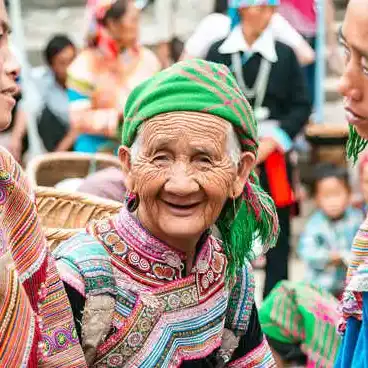
Today, to simplify matters (as there are subgroups!), two main groups are identified in Vietnam: the White Thai (Tai Don) and the Black Thai (Tai Dam). The primary and most visible difference between these two populations, who often live together in many areas, lies in the color and style of their clothing, particularly for women. Traditionally, Black Thai women wear a black blouse with a high collar and a black skirt, while White Thai women wear a white blouse with a heart-shaped collar and a black skirt.
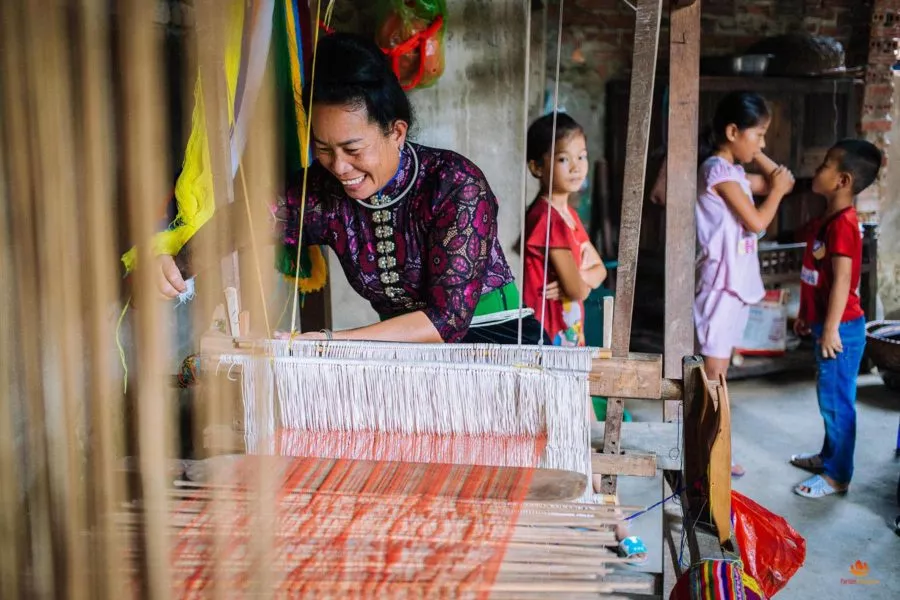
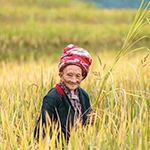
Thai Woman in Nghia Lo
Where do the Thai people live in Vietnam?
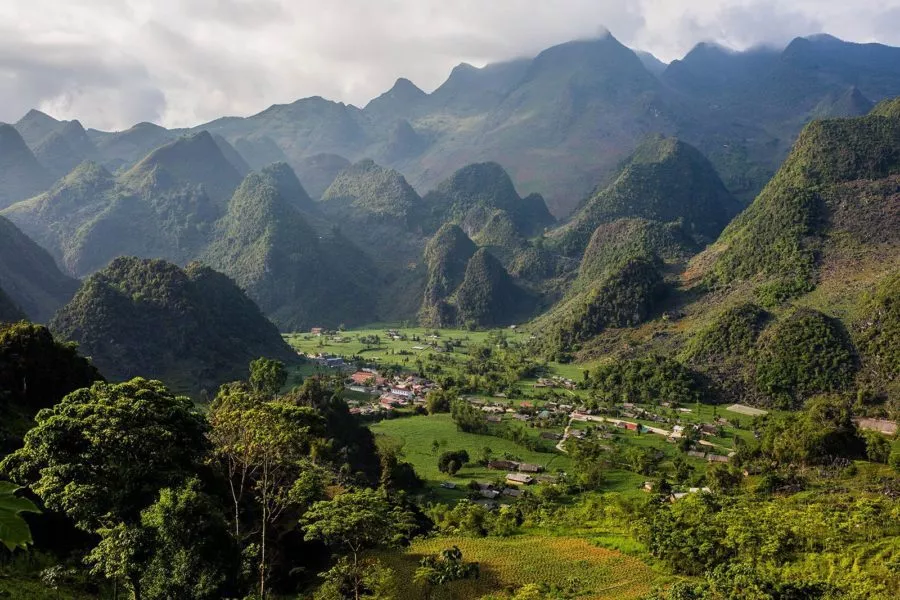
Several provinces in Vietnam are home to Thai populations, including Lai Chau, Dien Bien, Son La, Yen Bai, Hoa Binh, Nghe An, and Thanh Hoa. In general, all Thai communities are located in northern Vietnam.
The Black Thai (fewer than 400,000 people) primarily live along the Red and Black rivers, in the provinces of Hoa Binh, Son La, and Dien Bien.
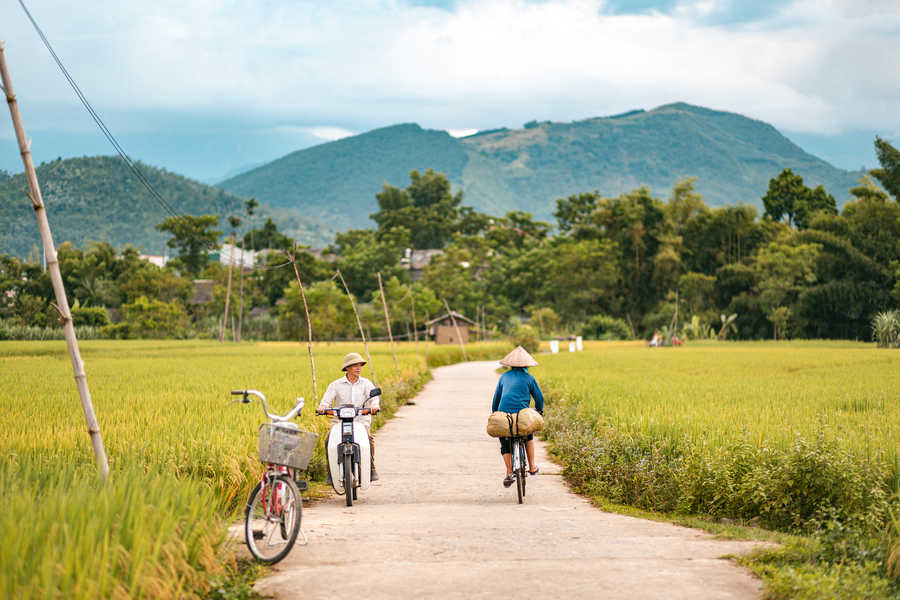
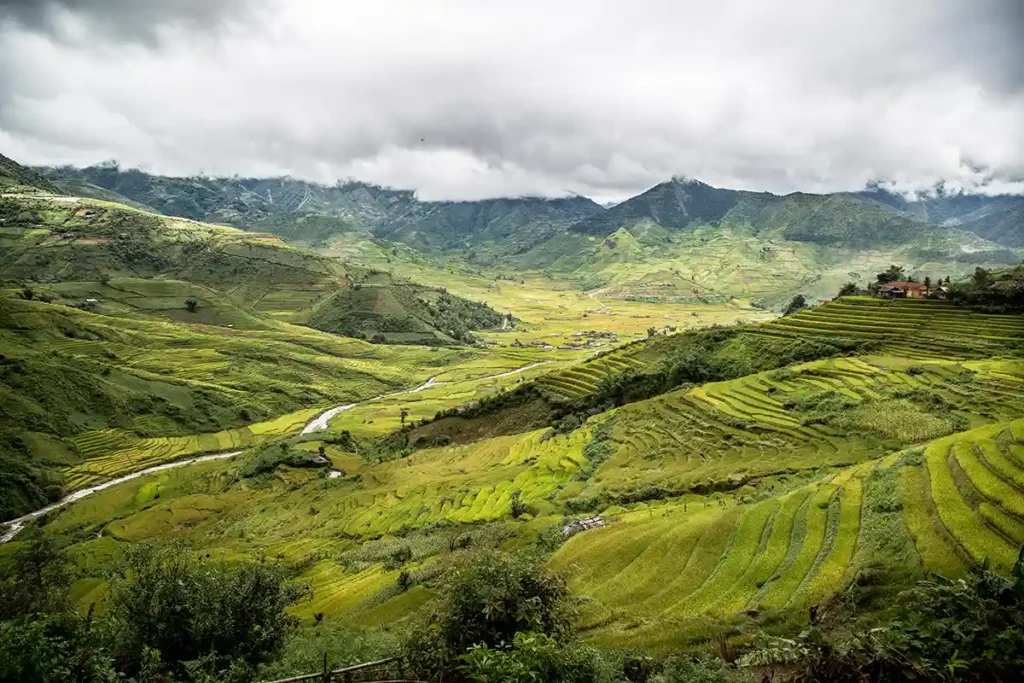
The White Thai (around 1 million people) primarily live in the provinces of Yen Bai and Dien Bien Phu. They are particularly present in the Muong Lo Valley, located in Yen Bai province. Thanks to favorable climatic conditions, the Thai population is able to grow two rice harvests per year. Muong Lo is regarded by the Black Thai as the cradle of their people.
How Do the Thai people Live?
Thai people live in stilt houses with distinct roof shapes: Black Thai reside in houses with rounded, convex roofs that can somewhat resemble turtle shells. These houses are called khau cut. White Thai, on the other hand, live in rectangular houses with long, very high roofs.
Typical Thai Dishes
Thai cuisine is similar to that of their distant Lao cousins. The most popular typical dish is “sticky rice,” cooked and served in banana flowers. On festive days, “khau cam” is prepared: five-colored rice (white, green, red, purple, and yellow) is presented in the shape of a bauhinia, a flower native to the Muong Lo region. Each color carries a symbolic meaning: red for aspiration; purple for the abundance of the land; yellow for prosperity; green for the lushness of the forests; and white for eternal love. These festive occasions are also an opportunity to offer prayers for prosperity and happiness.
The Beliefs of the Thai
Like most populations in Vietnam, the Thai are animists but also practice ancestor worship.
Sources of the article:
On the History of the Thai People and their legends: Tai Studies Center
Muong Lo in Yen Bai Province: Courrier du Vietnam