















Sapa is only about 320 kilometres from Hanoi, yet the way you get there shapes your first impression of Vietnam’s northern mountains. A night rocked by the train, a quick run up the expressway in a limousine van, or a private car that stops wherever you like: each option has its own logic, pace and budget.
Based in Hanoi since 2005, we arrange transfers to Sapa for our travellers every week. Here is what we have learned on the ground, with realistic travel times, indicative 2026 prices and the pitfalls to avoid so you arrive rested.
What is the best way to get from Hanoi to Sapa?
For most travellers the limousine van on the expressway is the simplest option, while a private car with a driver offers the most comfort.
The night train still has real charm and saves you a hotel night, but it means a very early arrival in Lao Cai and a one-hour transfer up to Sapa. Since the Noi Bai – Lao Cai expressway opened, the road has become faster than the railway. The table below sums up the four options we arrange most often.
| Transport | Door-to-door time | Indicative price | Best for |
|---|---|---|---|
| Night train + transfer | 9 to 10 hours | About US$15 to US$60 per person | Rail lovers who want to save a hotel night |
| Sleeper bus | 5.5 to 6.5 hours | About US$11 to US$18 per person | Tight budgets and solo travellers |
| Limousine van | 5.5 to 6 hours | About US$15 to US$22 per person | A good balance of price, comfort and speed |
| Private car with driver | 5 to 6 hours | From about US$160 per vehicle | Families, seniors, small groups and tailor-made trips |
These are ranges we observed in 2026. They vary with the company, the season and how early you book, and they rise sharply during Tet and Vietnamese long weekends.
How long does it take to travel from Hanoi to Sapa?
Allow about six hours by road, and around nine to ten hours by night train including the transfer from Lao Cai station to Sapa.
Most of the road journey follows the CT05 Noi Bai – Lao Cai expressway, opened in 2014, along the Red River valley. The last 35 kilometres, from Lao Cai city up to Sapa, are a winding mountain road climbing to around 1,500 metres. That is where time is lost, especially in fog or rain.
The train does not reach Sapa. It stops at Lao Cai station, on the Chinese border, after seven and a half to eight hours, and you continue by road. Administratively, Sapa is still in Lào Cai province, which absorbed the former Yên Bái province in the 2025 reform. This changes nothing for your journey.
How does the Hanoi – Lao Cai night train work?
The night train leaves Hanoi station around 10 pm and reaches Lao Cai at dawn, leaving roughly one hour by road to Sapa.
You board in the evening, sleep in a berth and wake up at the foot of the mountains. Many of our travellers remember it fondly, provided they know what to expect.
Timetable and journey time
Times change regularly, but in 2026 the pattern remains the same:
- northbound, two or three night departures between about 9:45 pm and 10:40 pm, arriving in Lao Cai between 5:30 am and 6:30 am;
- southbound, night departures around 9:30 to 10 pm and, on some days, a daytime train in the late morning;
- a journey of about seven and a half to eight hours, with a few station stops.
Trains leave from Hanoi’s main station, but passengers for Lao Cai use the rear entrance on Tran Quy Cap street. Arrive 30 to 45 minutes early: finding your carriage on a dimly lit platform always takes a while.
Public or private carriages: what is the difference?
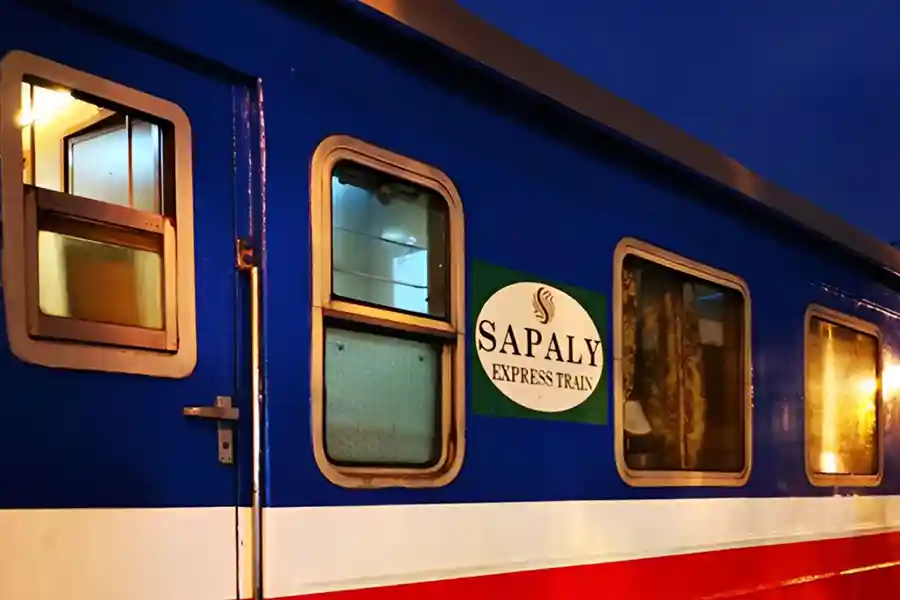
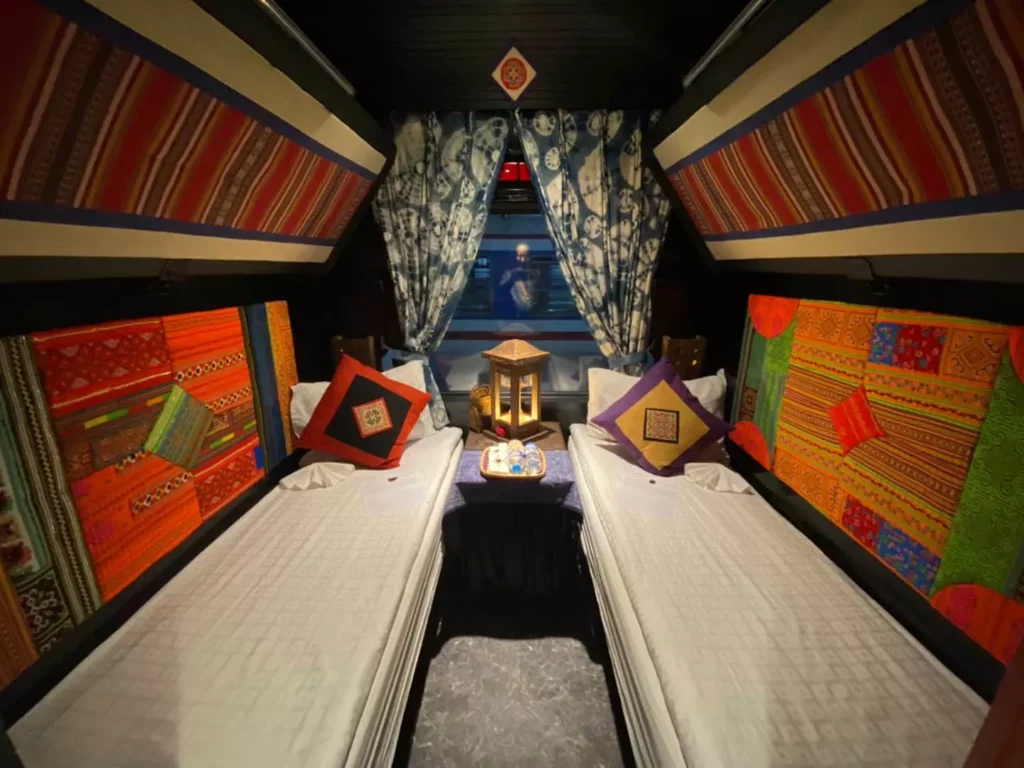
The same train carries Vietnam Railways carriages and carriages leased by private companies such as Chapa Express, Sapaly Express or Laman Express. The four-berth compartments are similar, but private carriages are usually better kept, with fresher linen, a bottle of water and more attentive staff.
- Berth in a public carriage: about US$15 to US$25, bookable on dsvn.vn.
- Berth in a private carriage: about US$35 to US$60.
- Two-berth compartment: from about US$80 per person depending on the company.
From experience, we recommend lower berths, which are easier to reach, and earplugs: the train brakes and creaks, and few people sleep straight through. If you are travelling as a couple, booking the whole compartment spares you sharing with strangers.
How do you get from Lao Cai station to Sapa?
Outside the station, several options cover the remaining 35 kilometres:
- public bus no. 01, around 30,000 VND or just over US$1, running every 20 to 30 minutes from early morning;
- shared minivans, about US$2 to US$4 per person, often to your hotel door;
- a taxi or pre-booked private transfer, about US$16 to US$25 per vehicle.
Reaching Sapa around 7 am raises a practical question: your room probably will not be ready. We often ask our partner hotels for early check-in or, failing that, a shower and breakfast so the day starts well.
Is the limousine bus a good alternative to the train?
Yes, the limousine bus is often faster than the train and drops you right in Sapa, but comfort depends heavily on the company you pick.
Bus services on this route have improved a lot in recent years. Departures run from morning to night, with pick-up in Hanoi’s Old Quarter and sometimes at Noi Bai airport, which is handy if you head straight to the mountains on arrival.
Sleeper bus, VIP cabin or limousine van
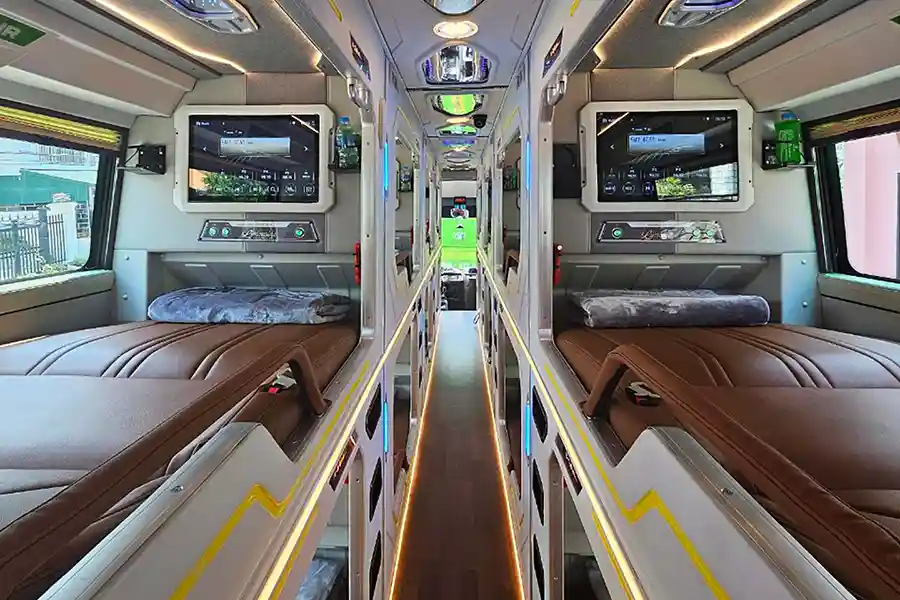
- The classic sleeper bus has reclining berths on two levels. It is the cheapest option, but space is tight for taller travellers.
- Buses with single or double cabins offer more privacy, with a curtain or sliding door, for a reasonable extra cost.
- The nine to eleven-seat limousine van, with wide leather seats, is our favourite for a daytime trip: it is quick, quieter and better suited to travellers who struggle with bends.
What to know before you book
Most buses have no toilet on board and make one or two 15-minute stops on the expressway. The drop-off point varies: some companies stop in central Sapa, others at their office or on the edge of town, so check your ticket. Night buses often arrive around 3 or 4 am; some companies let passengers sleep on board until dawn, but not all.
If you get car sick, take something suitable before the last climb to Sapa, which is very twisty, and choose a seat near the front.
Should you choose a private car with a driver?
A private car is the most comfortable and flexible solution, especially for families or groups, since the cost is shared between passengers.
For our travellers it is also a way to turn a plain transfer into a day of discovery. The driver can stop for coffee overlooking the rice terraces, detour to Bac Ha market on a Sunday or take you straight to your lodge in a remote valley. This is how we run our Sapa and the terraced rice fields of northern Vietnam tour, linking the Sapa valleys with Mu Cang Chai without depending on bus timetables.
Expect from about US$160 for a sedan or people carrier one way, depending on the season and vehicle. Split between four people, it costs about the same as a private train compartment, while saving time and sleep. We particularly recommend it for seniors, families with young children and travellers combining Sapa with Ha Giang or Halong Bay.
When should you book, and how do you avoid unpleasant surprises?
Book one to two weeks ahead in normal times, and much earlier for Tet, Vietnamese long weekends and the golden rice season in early autumn.
A few tips from our experience:
- The train and the better bus companies sell out during Tet, around 30 April and 2 September, and on Friday evenings when Hanoi families head to Sapa.
- The official Vietnam Railways ticket site is dsvn.vn. For private train carriages, book through the company or your travel agency.
- From May to September, heavy rain can trigger landslides on the last stretch of road, so a daytime journey is safer than arriving in the middle of the night.
- From December to February, Sapa can drop close to freezing at night. Keep a warm layer handy, as vehicles are often heavily air-conditioned.
- Carry your passport, as it may be requested when boarding the train and at your hotel.
Construction of a new railway between Lào Cai, Hanoi and Hai Phong began in late 2025, but it is not expected to open for several years. For your trip, the options described here are the ones that matter.
Which route suits your travel style?
The train appeals to those who love atmosphere, while the road suits those who want to make the most of their first day in Sapa.
- Short on time and keen to hike on arrival: a morning limousine van or a private car.
- You like the idea of sleeping on the move and waking up in the mountains: night train in a private carriage, lower berth.
- Travelling on a tight budget: sleeper bus or a berth in a public carriage.
- Travelling as a family, with seniors or as a group of four: private car, often the cheapest option per person.
- Combining several northern regions: private car, to link Sapa with Bac Ha, Mu Cang Chai or Ha Giang without returning to Hanoi.
A combination also works very well: the road on the way up, by day, to enjoy the scenery, and the night train on the way back to gain a full day in Sapa.
FAQ: getting from Hanoi to Sapa
How long is the journey from Hanoi to Sapa?
Allow about five and a half to six hours by road, in a limousine bus or private car, and nine to ten hours by night train, including the one-hour transfer from Lao Cai to Sapa.
Does the train go all the way to Sapa?
No. The train stops at Lao Cai station. You then cover about 35 kilometres of mountain road by public bus, shared minivan or private transfer.
How much does it cost to travel from Hanoi to Sapa?
In 2026, expect about US$11 to US$18 by sleeper bus, US$15 to US$22 by limousine van, US$15 to US$60 by train depending on the carriage, and from about US$160 per vehicle by private car.
What is the most comfortable way to get to Sapa?
A private car with a driver is the most comfortable: you leave when you want, can stop along the way and are dropped at your accommodation, with no waiting and no transfer.
Do you need to book the night train to Sapa in advance?
Yes, at least one to two weeks ahead in normal times, and much earlier during Tet, long weekends and the golden rice season in September and October.
Can you do Hanoi to Sapa and back in one day?
It is technically possible, but we advise against it: with nearly twelve hours on the road there and back, there is almost no time left to walk in the valleys. Plan at least two nights there.