


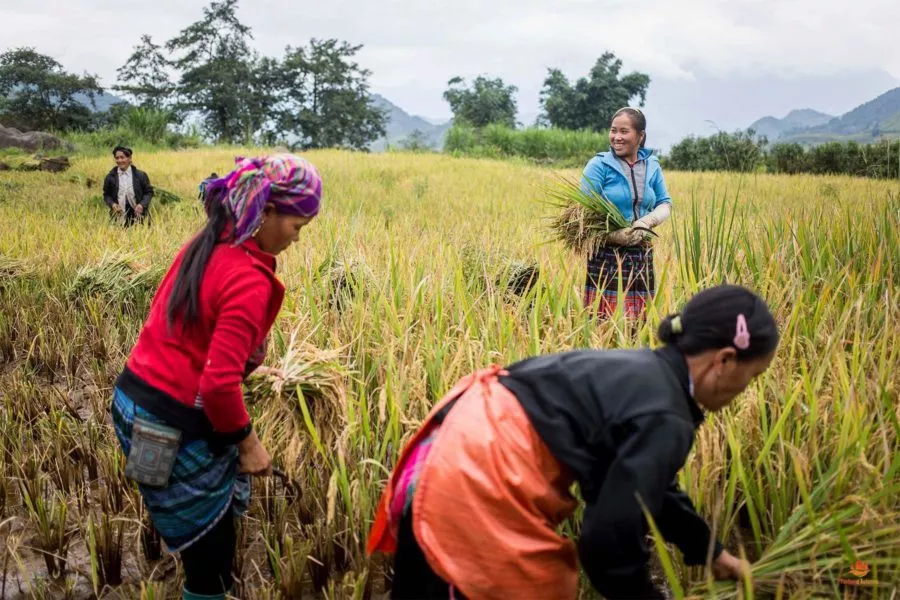
Planning a trip to see Vietnam’s rice terraces without knowing the harvest cycle can leave you facing muddy fields instead of the postcard scenery you were hoping for.
We put our local knowledge to work for you, aligning your departure with the country’s most beautiful natural spectacles. This guide tells you precisely where and when to go to capture the sought-after panoramas, from Sapa to the Mekong Delta.
The rice calendar: choosing the right season for your trip
Vietnam’s rice terraces are worth the effort of good timing. It’s all about timing: get it wrong, and you risk finding mud instead of gold.
The three faces of the northern rice terraces
In May-June, the “water season” turns the terraces into water mirrors. A striking visual shift that many travelers miss simply because they don’t know about it.
July and August mark the “green season.” Young rice covers the mountains in intense green, offering landscapes with raw energy.
September and October bring the “golden season,” harvest time. The terraces ripple with yellow: the moment every photographer is chasing.
Our summary table to keep you on track
As local experts, we’ve put this data together to help you lock in the right dates.
| Destination | Water season (Mirrors) | Green season | Golden season (Harvest) |
|---|---|---|---|
| Sapa | May – June | July – August | Late August – Mid-September |
| Mu Cang Chai | May – June | July – Mid-August | Mid-September – Early October |
| Hoang Su Phi | May – June | July – August | September – October |
| Pu Luong | Feb-Mar & Jun-Jul | Apr-May & Aug-Sep | Mid-May to June & October |
| Mai Chau | January – February | March – May | June – July & October |
| Mekong Delta | Variable | Variable | March, August, November |
This table proves it: October is perfect for Pu Luong, but too late for Sapa. Avoid the classic mistake of arriving to find bare fields.
Insider tip: the famous “photographers’ route” to Mu Cang Chai peaks during the golden season. The panorama there is unforgettable.
The special case of Central and Southern Vietnam
Central Vietnam follows its own rhythm. Favor spring (March-May) for vividly green rice fields, notably in Phu Yen province.
In the South and the Mekong Delta, nature provides three harvests. From January to March and July to September, the landscapes are stunning.
The North’s masterpieces: unmissable terraced rice fields
Now that you know when to go, let’s take you to the iconic places to admire these landscapes sculpted by human hands.
Sapa, the star of the mountains
Sapa is often a victim of its own success, that’s a fact. Still, it would be a shame to overlook the Muong Hoa Valley, where Vietnam’s rice terraces put on a grand show. These terraces, among the most famous in Asia, remain an absolute visual reference.
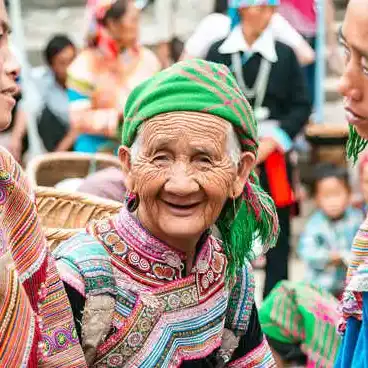
Along the trails, you’ll meet the Hmong and Red Dao ethnic groups, whose presence brings the local markets to life. Keep this in mind: to see the golden fields, the window is short, from late August to mid-September.
Despite the crowds, it remains an excellent starting point for many hikes suitable for all levels.
Mu Cang Chai, pure authenticity
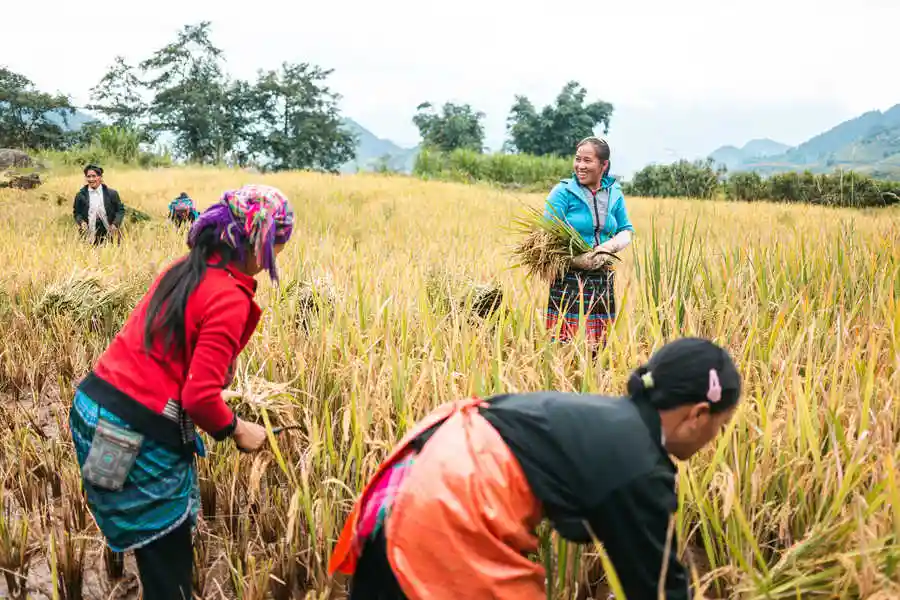
If you’re after a wilder alternative, Mu Cang Chai is our recommendation without hesitation. Here, the terraces are true “mountainside sculptures,” a paradise for photographers seeking fresh angles without Sapa’s crowds.
The calendar shifts slightly compared to its neighbor. Peak harvest season runs from mid-September to early October, when the valleys blaze with spectacular colors.
To go further, our complete guide to Mu Cang Chai will be very useful to prepare for this stop.
Hoang Su Phi, adventure off the beaten path
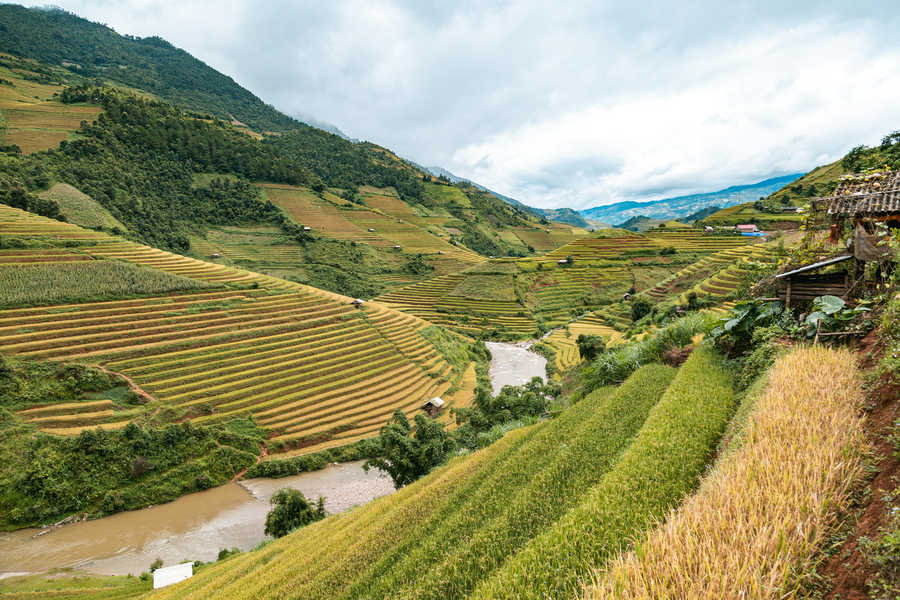
For travelers seeking peace and quiet, head to the Ha Giang area and Hoang Su Phi (now administratively part of Tuyen Quang province since the July 2025 merger). These terraces, listed as national heritage, are worth the effort: the tracks getting there can be rough, but they guarantee an experience untouched by mass tourism.
The harvest in September and October is simply stunning. We’ve dedicated a full guide to help you prepare your discovery of the Hoang Su Phi rice terraces and plan the logistics on the ground.
Beyond the mountains: other rice treasures to discover
Think Vietnam’s rice fields are limited to the North’s big names? That’s a common mistake. While the Sapa – Mu Cang Chai – Hoang Su Phi trio is spectacular, other lesser-known but equally beautiful regions deserve your attention, each with its own distinct advantages.
Pu Luong, the nature reserve with two harvests
Pu Luong is an excellent alternative, much closer to Hanoi. The scenery here blends terraced rice fields, dense jungle, and traditional villages. It’s a truly soothing setting.
Its main advantage remains its two rice harvests a year. That makes it a top destination in June or October. A rare luxury in the North.
Don’t miss the bamboo water wheels. A unique feature of the region.
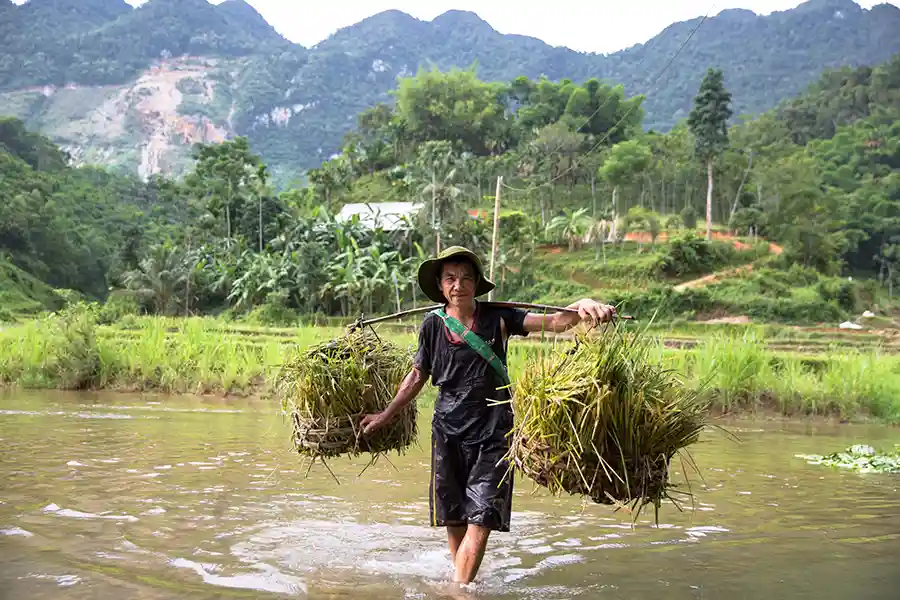
Mai Chau, the gentleness of a peaceful valley
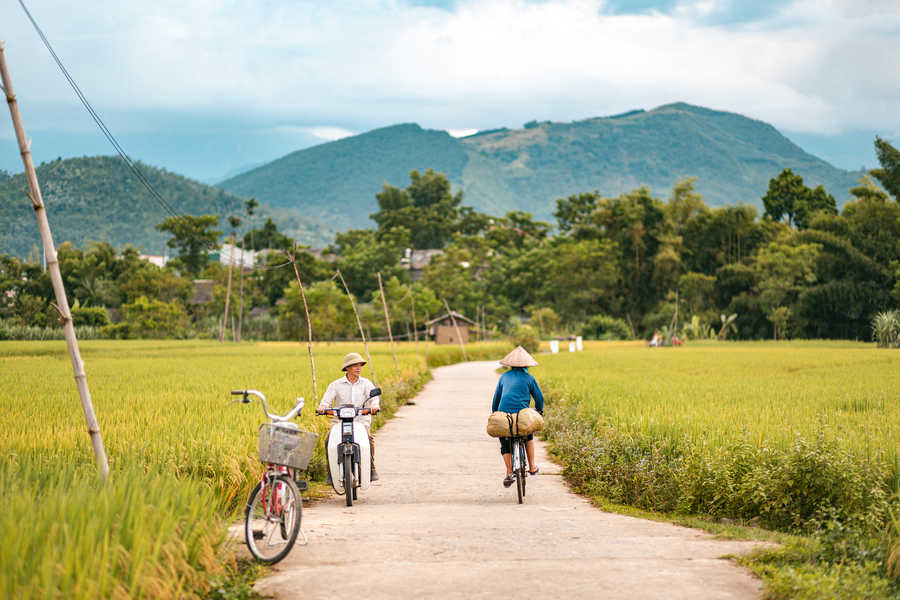
You don’t visit Mai Chau for dizzying terraces. Here, it’s a wide valley carpeted with flat rice fields, surrounded by karst mountains. The scenery is much gentler.
Like Pu Luong, the valley offers two annual harvests. This considerably widens the window for visiting outside of autumn. You get more flexibility.
We also have a full guide dedicated to Mai Chau (French only for now) with everything you need to plan this stop.
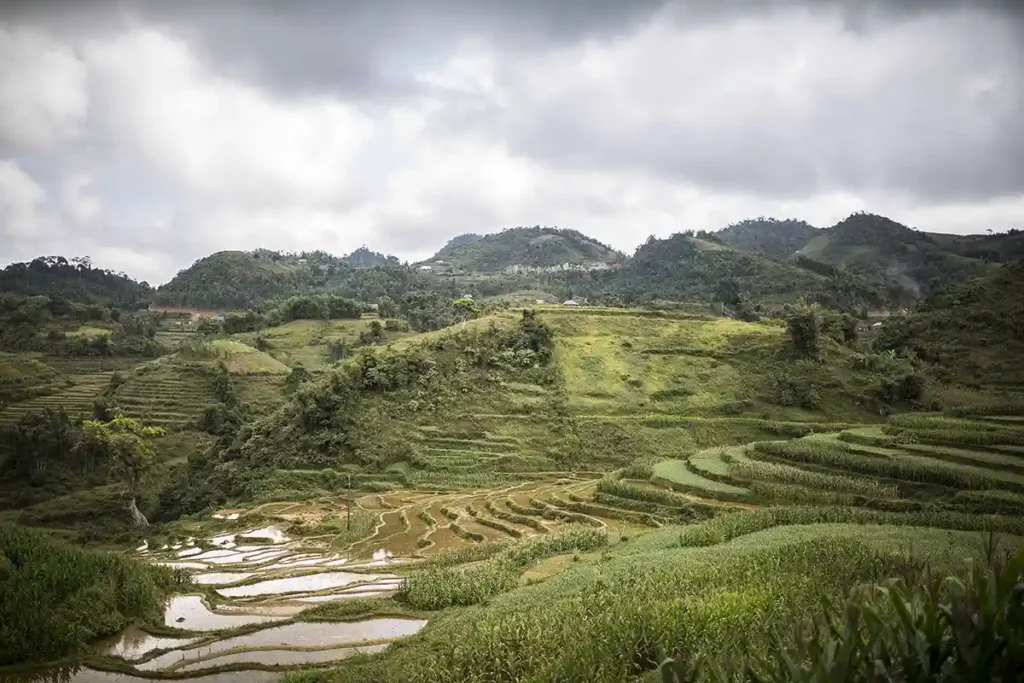
Hidden gems for connoisseurs: Bac Son and Y Ty
These two destinations are perfect for going off the beaten path. The Bac Son valley offers an incredible panorama from the top of Mount Na Lay. The view rewards the effort.
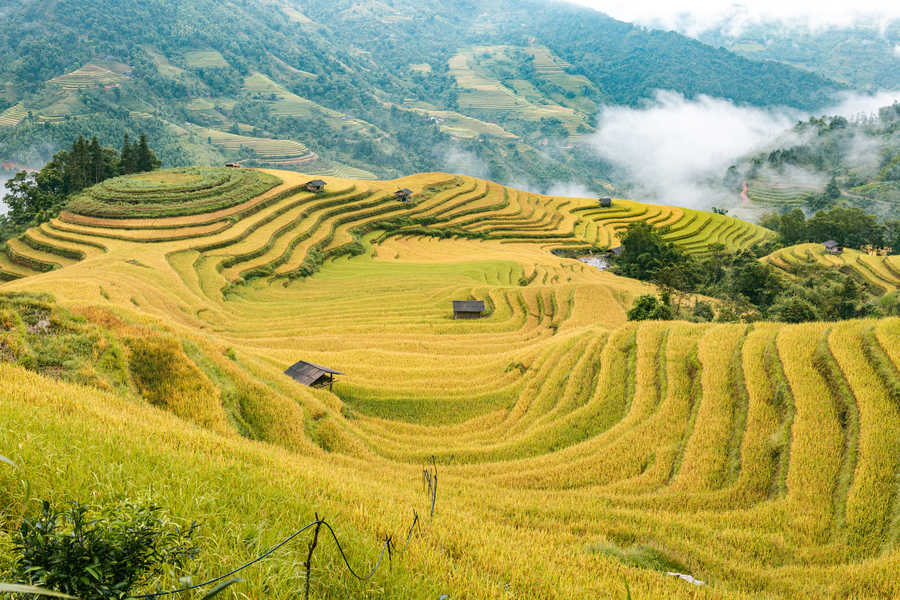
Y Ty is even more remote, right on the Chinese border. Its circular rice terraces and “seas of clouds” leave a lasting impression. The ideal window runs from late April to late September. An experience for adventurers.
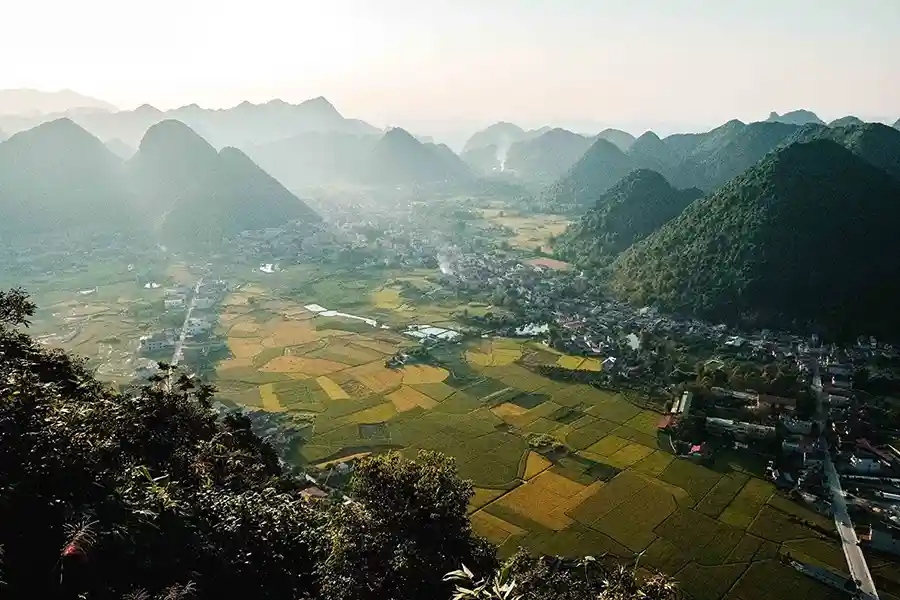
The Mekong Delta: Vietnam’s rice granary
A green checkerboard as far as the eye can see
Forget the dizzying terraces of the North climbing toward the sky. Here, the scenery changes radically into an immense, flat, lush green plain. A true fertile checkerboard stretches before your eyes, crisscrossed by a labyrinth of canals and waterways where water reigns supreme.
It’s not for nothing that we call this region Vietnam’s “rice granary.” Thanks to the rich silt deposited daily by the powerful river, the soil here is exceptionally fertile, capable of feeding a large share of the country’s population.
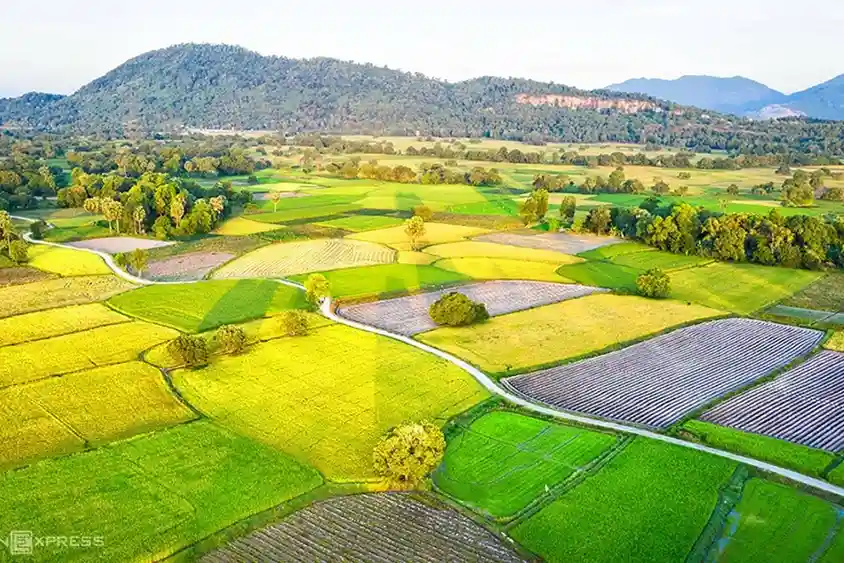
The relentless pace of three annual harvests
The major difference from the northern mountains lies in the production pace. The humid tropical climate allows for up to three harvests a year here, an impressive yield. It’s a race against time; work in the fields practically never stops for delta farmers.
To admire Vietnam’s rice fields at their finest here, aim specifically for January to March or July to September. Outside these windows, the fields are often being prepared or lying fallow, offering a much starker look than you’d hope for.
The Mekong experience: between rice fields and floating markets
Our expert tip: don’t visit these vast rice fields on foot, but from a traditional boat. Gliding silently over the water in provinces like Dong Thap or An Giang offers a unique perspective, right up close to the rice stalks and local life.
This intensive farming is inseparable from the river life that animates the region. The famous floating markets are its beating economic heart: it’s there, right on the water, that tons of rice and fresh farm produce are traded between locals.
The rice field experience: more than just scenery
Admiring rice fields is one thing, but living them is another. Immersing yourself in these landscapes is, above all, a human experience.
Hiking, the best way to soak it all in
It can’t be said enough: walking is the only real option to grasp the sheer scale of Vietnam’s rice terraces. Forget the car. Trekking is how you reach the hidden panoramas, where the road stops short.
The effort can range from a few hours to several days of adventure. From experience, we know that a longer immersion, like the one offered on our tours dedicated to the rice fields, radically changes your perception of the country. That’s where the magic truly happens.
Meeting the makers of these landscapes
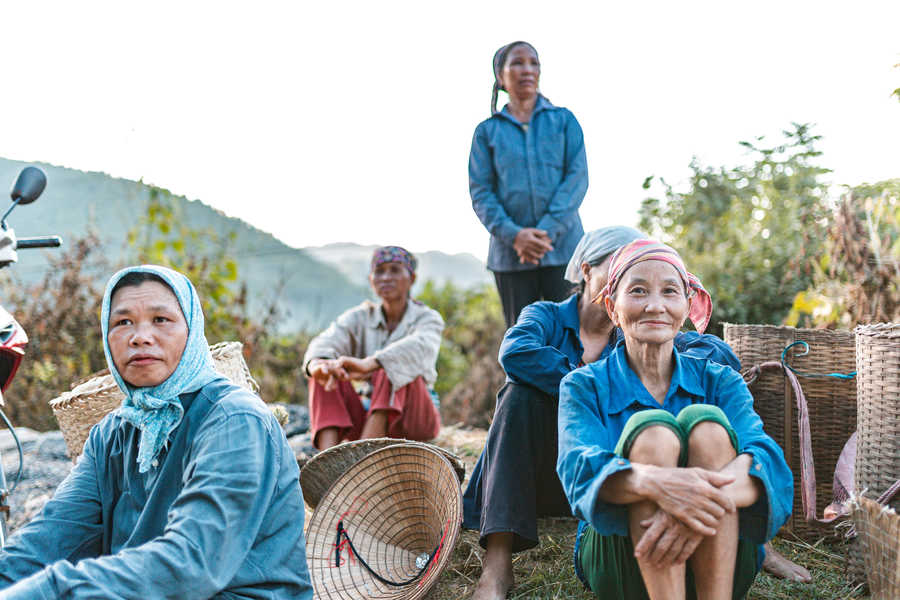
Make no mistake, this scenery is not wild. It has been shaped by hand, century after century, by farmers from ethnic minority groups. Hmong, Dao, or Tay, these architects of the land sculpt the mountain with incredible patience.
Traveling here means embracing the encounter. We often insist on this: staying with locals isn’t a default option, it’s the key to sharing a meal, a laugh, and understanding the harshness of their daily lives.
Our tips for a successful trek
To make your experience perfect, here are a few tips from the field drawn from our own experience.
- Good hiking shoes: The ground is often muddy and slippery, this is the non-negotiable item.
- A local guide: Essential for not getting lost, but above all for breaking the ice with locals.
- Sun protection and insect repellent: The sun is strong at altitude and insects lurk near wet areas.
- A light bag: Only bring the strict essentials, your back will thank you after three days of walking.
Finally, walk through these lands with humility. Respect the environment and local customs, it’s the very least you can do.
Rice on the plate and in Vietnam’s economy
Vietnam, a global rice giant
It’s not always obvious standing in front of a picturesque postcard scene. Yet Vietnam ranks among the world’s leading exporters of this vital grain. This agricultural powerhouse radically reshapes how you should read the landscapes you’re passing through. It’s a colossal industry that feeds part of the planet.
But quantity isn’t everything here. Take ST25 rice, a national point of pride recently crowned “world’s best rice.” This recognition reflects a genuine pursuit of excellence. Taste now matters more than pure volume.
A few specialties not to miss
Forget plain white rice. Local creativity around this grain is simply endless.
- Com Lam: Sticky rice steamed inside a fresh bamboo tube. A specialty of the mountain ethnic groups.
- Xoi (sticky rice): Comes in dozens of savory or sweet versions, often colored with plant extracts.
- Banh chung: A filled sticky rice cake, emblematic of Tet (Lunar New Year).
- Rice paper (Banh trang): The base of many dishes, including the famous spring rolls.
Tasting these dishes is an integral part of the trip. It’s an experience just as memorable as admiring Vietnam’s rice fields.
A pillar of Vietnamese culture
Rice goes far beyond the status of a simple staple food. It is a genuine cultural symbol that sets the pace for daily life and sacred rituals. Festivals in the lunar calendar often follow the harvest cycles. It’s the country’s natural clock.
Taking an interest in this grain offers a unique lens on the country. You’ll better grasp the soul of Vietnam, from the farmers’ hard labor to the conviviality of shared meals. It all starts with this grain. It’s the thread that links generations.
Beyond the postcard, discovering the rice fields is a genuine deep dive into the soul of Vietnam. Because the success of this experience depends closely on the agricultural calendar, we’re here to help design the itinerary that fits you, guiding you to the right region, at the right time.
FAQ
Where can you see the most beautiful terraced rice fields in Vietnam?
To see the most spectacular terraces, we point you without hesitation toward the mountains of the North. Mu Cang Chai is arguably our favorite for the sheer scale of its heritage-listed landscapes, while Hoang Su Phi offers a wilder, more authentic experience. If Sapa remains the most famous and accessible destination, the Pu Luong Nature Reserve is a wonderful alternative closer to Hanoi, combining rice fields with traditional villages.
What is the best season to see the rice fields?
The answer depends on the region and the spectacle you’re after. In the North (Sapa, Mu Cang Chai), the golden harvest season runs from late August to early October; it’s the most sought-after time for photographers. To see the “water mirrors” during flooding, aim for May and June. Note that regions like Pu Luong or the Mekong Delta offer several harvests a year, widening the possible visiting windows in spring and autumn.
Are there months to avoid for seeing rice fields in the North?
If your priority is seeing green or golden rice fields in the northern mountains, we recommend avoiding the period from November to March. During these winter months, the terraces are generally fallow (earth/mud colored) and the weather is often hazy, which can hurt visibility. To see green fields in winter, it’s better to head south toward the Mekong Delta.
Which region is best for grand rice terrace landscapes?
The most impressive area for rice fields is undoubtedly Northwest Vietnam. This is where the agricultural genius of ethnic minorities (Hmong, Dao, Tay) fully expresses itself through terraces carved into mountainsides across hundreds of meters of elevation change. It’s a region we highly recommend for hiking and photography enthusiasts seeking full immersion in local culture.