






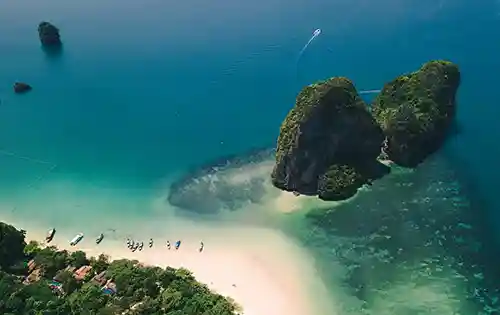

A UNESCO World Heritage Site since 1995, Luang Prabang is often the highlight of a trip to Laos. Tucked between the Mekong and the Nam Khan river, the former royal capital is best explored on foot, to the sound of monastery bells, past colonial houses, flower-lined lanes and evening markets.
We have been bringing travellers here from our base in Hanoi for almost twenty years. Here is what we recommend you see, in which order, and the few habits worth knowing to enjoy the town without disturbing it.
How many days should you spend in Luang Prabang?
Plan three full days: the old town and its temples, a boat trip up the Mekong to Pak Ou, then the turquoise Kuang Si waterfalls.
If you would rather have a ready-made programme, our Luang Prabang and its surroundings 4-day tour covers the temples, the Pak Ou caves, Kuang Si and the morning alms giving at a relaxed pace, with a local guide.
Two days are enough for the highlights, but the schedule gets tight: the alms giving means getting up before 5:30 am, and the midday heat is better spent resting. With four days or more, you can add a cooking class, a walk on the far bank of the Mekong or a trip north to Nong Khiaw.
Which temples should you visit first in Luang Prabang?
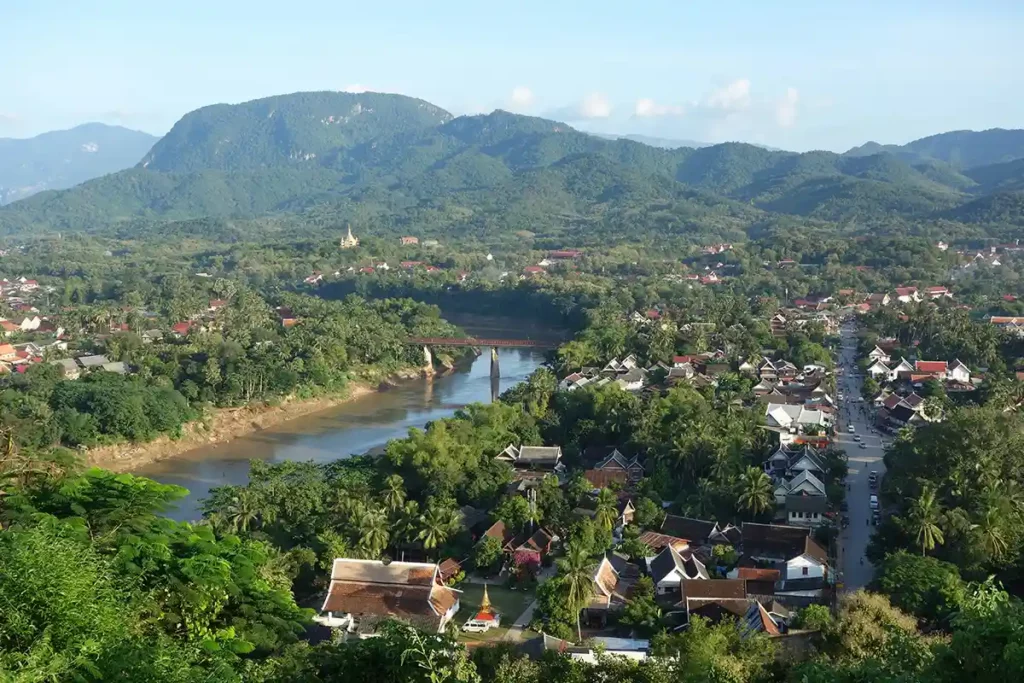
Wat Xieng Thong, Wat Mai, Mount Phousi and the Royal Palace form the heart of any visit, and they are all within easy walking distance.
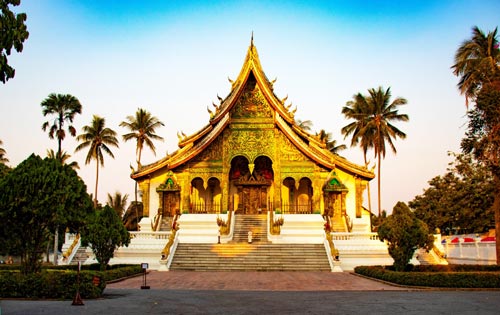
The historic peninsula has dozens of monasteries still home to monks and novices. There is no need to see them all: a handful is enough to understand Lao architecture, with its layered roofs sweeping almost to the ground and its carved, gilded doors.
Wat Xieng Thong, the jewel of the peninsula
Built in the 16th century at the tip of the peninsula, where the Nam Khan meets the Mekong, Wat Xieng Thong is the town’s most famous monastery. Walk around the main hall to see the glass mosaic of the tree of life on its back wall. We suggest going at opening time, before the groups arrive, while the light is still soft.
The Royal Palace and Wat Mai
The former royal residence, now the National Museum, tells the story of the Lao monarchy until 1975. In its grounds, a pavilion houses the Pha Bang, the Buddha statue that gave the town its name. Photos are not allowed inside, and shoulders and knees must be covered. Next door, Wat Mai stands out for its gilded façade carved with scenes from the Ramayana.
Mount Phousi at sunset
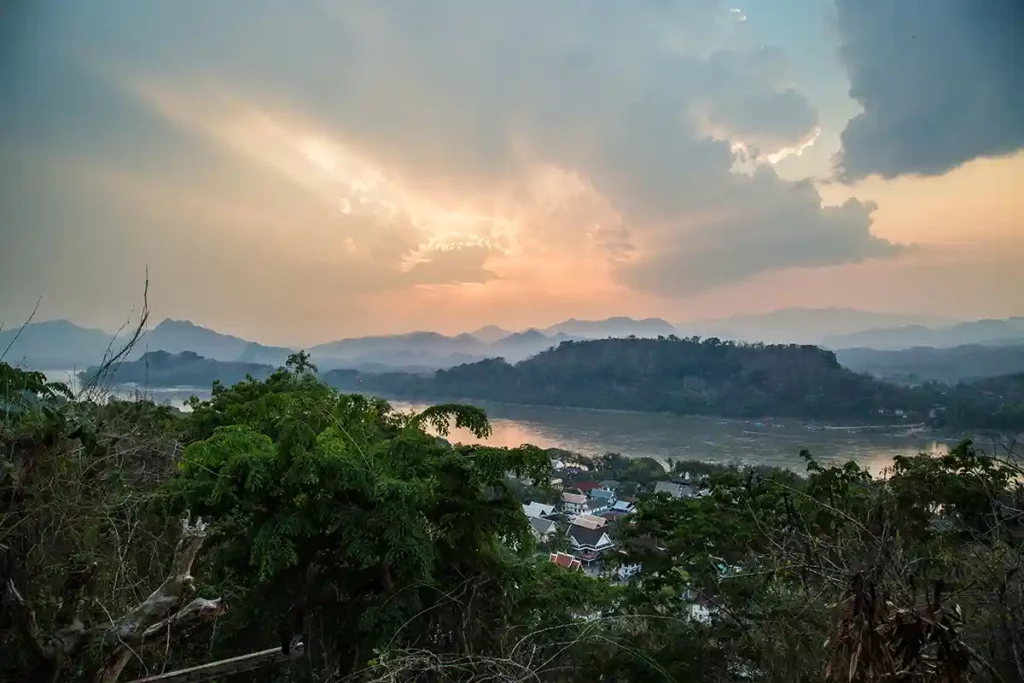
In the middle of town, Phousi hill is reached by a staircase of more than 300 steps. At the top, That Chomsi stupa offers a sweeping view over the rooftops, the Mekong and the mountains. Sunset draws big crowds: if you prefer peace and quiet, go early in the morning, or arrive at least forty minutes before sunset to find a spot.
How can you watch the alms giving without intruding?
Watch the alms giving at dawn from a respectful distance, in silence and without flash, and only give if this religious gesture matters to you.
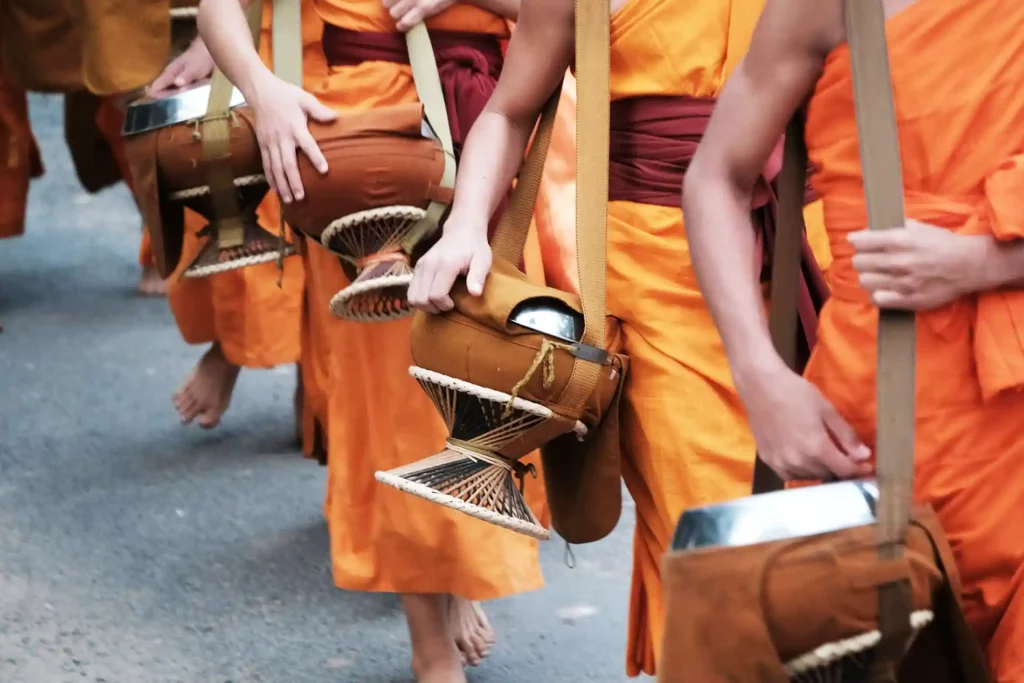
Every morning at dawn, monks leave their monasteries in single file to receive the sticky rice offered by local people. This ritual, called tak bat, is a daily religious practice, not a show. On the main street it has sadly become very crowded, and some visitors’ behaviour upsets residents.
These are the rules we share with all our travellers:
- Stay on the other side of the street or several metres away, and never cut through the procession.
- Keep quiet and do not use flash.
- Wear clothes that cover your shoulders and knees.
- Do not touch the monks; women should avoid any contact, even with their robes.
- If you wish to give, buy rice from a trusted local rather than from street vendors targeting tourists, and kneel as the faithful do.
Our guides prefer quieter lanes away from Sisavangvong Road, where the ceremony keeps its serenity. Afterwards, the nearby morning market is ideal for a first Lao coffee and a breakfast of noodle soup.
How do you get to the Pak Ou caves?
The Pak Ou caves are reached by boat in under two hours, a peaceful Mekong journey almost as memorable as the caves themselves.
Located about 25 km upstream, opposite the confluence of the Mekong and the Nam Ou river, the two caves of Tham Ting and Tham Theung hold thousands of Buddha statues left by worshippers over the centuries. The lower cave opens directly onto the river; the upper one is darker, so bring a torch.
Most boats stop at Ban Xang Hai, a village known for its rice spirit, or at a weaving village. The return trip, with the current, is faster. Leave in the morning: in the dry season the light on the river is beautiful and you will be back for lunch. You can also go up by boat and return by road, which frees the afternoon for another visit.
Are the Kuang Si waterfalls worth the trip?
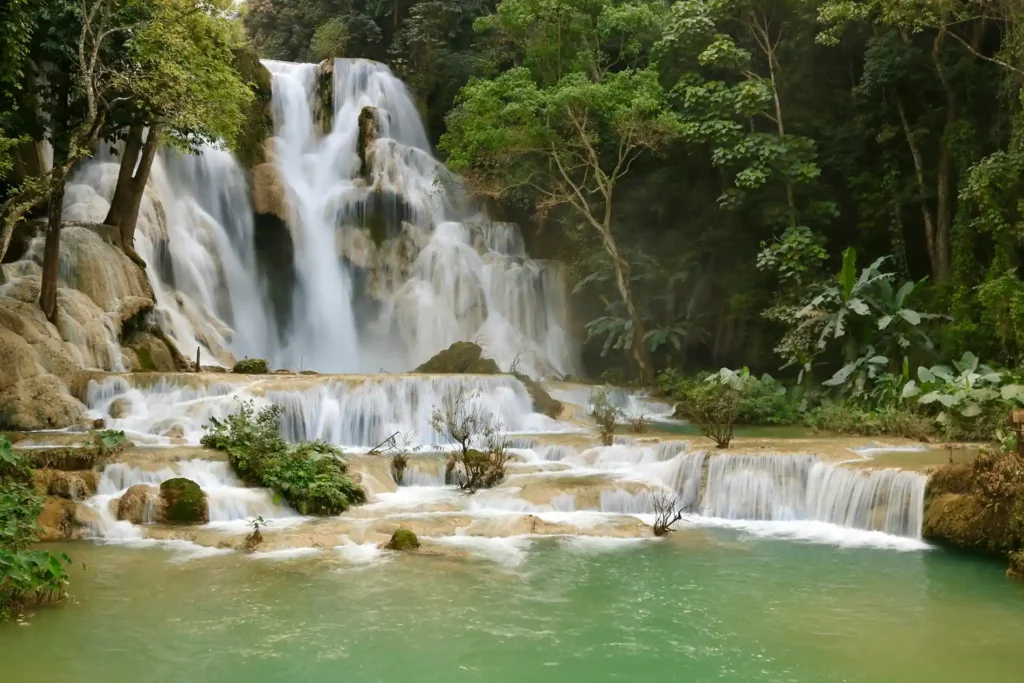
Yes, Kuang Si is the most spectacular excursion around Luang Prabang, especially from November to May, when the water turns turquoise.
About thirty kilometres south of town, a 45-minute to one-hour drive, the river tumbles down a series of limestone pools before a main drop of around sixty metres. A trail climbs to the top of the falls; it gets slippery in the rainy season, so wear good shoes.
At the entrance, a rescue centre cares for Asiatic black bears saved from poaching. Some pools are open for swimming: stick to the marked areas and cover up when walking to the food stalls. To avoid the crowds, arrive at opening time or late in the afternoon. After heavy rain, the water can turn cloudy and lose its colour.
What else is there to do in and around Luang Prabang?
Once you have seen the main sights, Luang Prabang often reveals itself when you slow down. Some of our favourite activities:
- Browse the night market on Sisavangvong Road, set up in the late afternoon, with textiles, mulberry paper and an alley of cheap food stalls.
- Visit the Traditional Arts and Ethnology Centre, a small, very clear museum on the Hmong, Akha and Khmu peoples of northern Laos.
- Join a weaving or natural dyeing workshop at Ock Pop Tok, on the banks of the Mekong.
- Take a Lao cooking class to learn laap, jeow and how to steam sticky rice.
- Cross the Mekong by ferry to the Chomphet bank, with its villages and little-visited temples.
- Swim at the Tad Sae falls, smaller than Kuang Si, lovely after the rainy season but often almost dry at the end of the dry season.
- Head north to Nong Khiaw, about four hours by road, for its karst peaks along the Nam Ou river.
Note that the town goes to bed early: most bars in the old town close around 11:30 pm, and the streets are very quiet afterwards.
How should you organise your days there?
Explore temples and caves in the morning, rest through the midday heat, and save late afternoon for Mount Phousi or the night market.
Here is the three-day programme we most often suggest to our travellers:
| Day | Morning | Afternoon | Evening |
|---|---|---|---|
| Day 1 | Alms giving, morning market, Wat Xieng Thong | Royal Palace, Wat Mai, Traditional Arts and Ethnology Centre | Mount Phousi, night market |
| Day 2 | Boat to the Pak Ou caves and Ban Xang Hai | Weaving workshop or cooking class | Dinner by the Mekong |
| Day 3 | Kuang Si waterfalls and bear rescue centre | Rest, then ferry to the Chomphet bank | Stroll along the Nam Khan |
Entrance fees remain modest, usually a few tens of thousands of kip per site, which is generally 1 to 3 US dollars. Prices change regularly, so carry small notes in cash.
When is the best time to visit Luang Prabang?
The best time to visit Luang Prabang is from November to February, with dry skies, cool mornings and pleasant days for walking around.
From March to May, the heat rises sharply and agricultural burning often leaves a haze, especially in March and April. The rainy season, from June to October, turns the countryside lush green and the town quieter, but showers are frequent. In December and January, pack a fleece: at dawn, during the alms giving, it can be barely above 10 °C.
Two festivals are worth planning around: Lao New Year, Pi Mai, in mid-April, joyful but very busy, and Boun Ok Phansa in October, when the town is lit with lanterns and illuminated boats drift on the Mekong. Book your accommodation well in advance for these dates.
How do you get to Luang Prabang from Vietnam?
The easiest option is the direct flight from Hanoi, about one hour, then the fast train if you continue on to Vang Vieng or Vientiane.
Direct flights link Hanoi and Luang Prabang; this is the option we recommend to combine northern Vietnam and Laos without losing a day. From Vientiane, the Laos-China railway takes about two hours, compared with nearly ten hours on the old mountain road. Tickets sell out quickly in high season, so book a few days ahead. For formalities, check the current visa rules before you leave: Laos offers both an e-visa and a visa on arrival.
In town, the old quarter is easy to explore on foot or by bicycle. For Kuang Si and the surroundings, agree on tuk-tuk fares before setting off, or let your driver handle it if you travel with us.
FAQ: your questions about Luang Prabang
How many days should I stay in Luang Prabang?
Three days let you see the old town, the Pak Ou caves and the Kuang Si waterfalls without rushing. Two days cover the essentials if your itinerary is tight.
What time does the alms giving take place?
It starts around 5:30 am and lasts about twenty minutes. Keep your distance, stay silent, do not use flash, and cover your shoulders and knees.
How long does it take to get to the Kuang Si waterfalls?
Allow 45 minutes to one hour by road for about thirty kilometres, and half a day in total including the visit and a swim.
How do I get to the Pak Ou caves?
By boat on the Mekong from the town pier, in under two hours upstream. The return trip is quicker thanks to the current.
What is the best season to visit Luang Prabang?
November to February, for dry weather and pleasant temperatures. March and April are hot and often hazy because of agricultural burning.
Is there a dress code for visiting temples?
Yes: cover your shoulders and knees, take off your shoes before entering the sanctuaries and avoid pointing your feet towards Buddha statues.