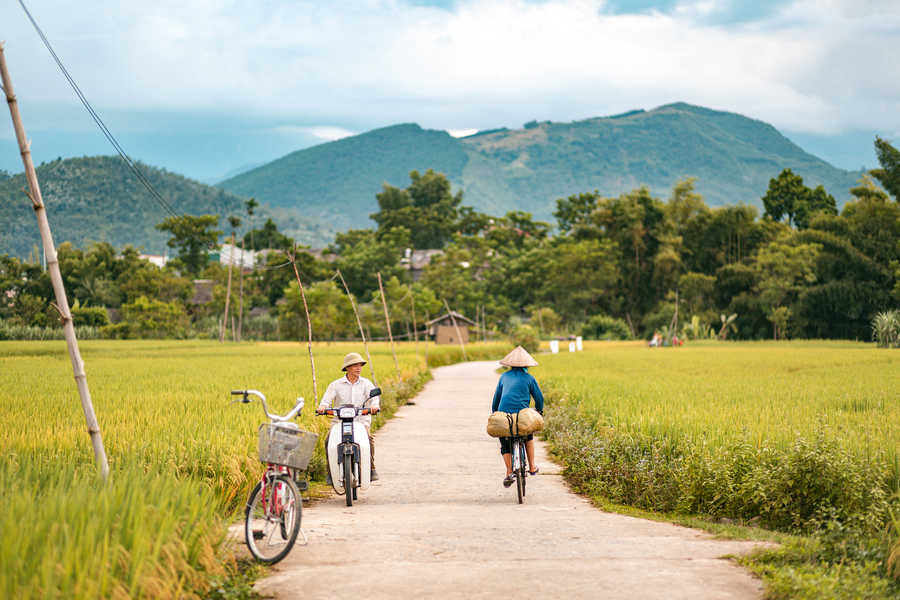









Laos can be visited all year round, but the experience changes a great deal from one season to the next. Between the crisp, bright days of December, the fierce heat of April and the monsoon rains that turn the rice fields green again, the time you choose shapes your activities, your comfort and even some of your journeys.
Based in Hanoi since 2005, we regularly organise trips to Laos, often combined with Vietnam. Here is what we see on the ground, month by month and region by region, and the advice we give our travellers to help them pick the right moment.
When is the best time to visit Laos?
The best time to visit Laos is from November to February, when the weather is dry, sunny and pleasantly warm across most of the country.
This is the cool dry season: skies are clear, humidity is moderate and daytime temperatures hover between roughly 20 and 28°C in the lowlands. It is also the period we favour for our Vietnam and Laos tours, since northern Vietnam enjoys its own dry season at the same time.
Dirt roads are passable, the Mekong is easy to navigate and the landscapes stay green after the monsoon. The downside is that this is high season: Luang Prabang gets busier and accommodation needs to be booked earlier, especially around Christmas and New Year. October and early March are good compromises, with fewer visitors and generally settled weather.

What are the three seasons in Laos?
Laos has three main seasons: cool and dry from November to February, hot from March to May, then rainy from May to October.
Laos is a landlocked country with a tropical monsoon climate, tempered by its terrain. The mountainous north is cooler, while the lower-lying south, close to Cambodia, stays warm all year.
The cool dry season, November to February
Days are sunny and mild, evenings pleasant. In December and January, nights turn chilly in the north: in Luang Prabang the thermometer often drops to around 14°C at dawn, and at altitude, around Phongsaly or Xieng Khouang province, it can approach 5°C. A fleece and a light jacket are well worth packing for early starts, such as the monks’ alms giving or a sunrise boat trip on the Mekong.
The hot season, March to May
From March, the heat builds quickly. In April, the hottest month, highs regularly exceed 35°C and can approach 38 to 40°C in the lowlands. The air is dry, the vegetation turns yellow and haze from agricultural burning often reduces visibility. It is best to adjust your pace: sightseeing early in the morning, a break during the hottest hours and time by the water later in the day.
The rainy season, May to October
The first showers arrive in May, then the monsoon sets in. The wettest months are July, August and September, usually peaking in August. Yet it rarely rains all day: the most common pattern is a reasonable morning followed by a heavy, sometimes stormy downpour in the afternoon. The Bolaven Plateau in the south is the wettest part of the country.
What is the weather like in Laos month by month?
November to February bring the most pleasant weather in Laos, while April is the hottest month and August is usually the wettest.
The table below sums up what we observe. Temperatures are indicative average lows and highs in the lowlands; they vary with altitude and from one year to the next.
| Month | Typical weather | Indicative temperatures | Our view |
|---|---|---|---|
| January | Dry and sunny, cool nights in the north | 15 to 28°C | Excellent |
| February | Dry, first burning late in the month | 18 to 30°C | Very good |
| March | Hot, often hazy skies | 22 to 34°C | Fair |
| April | Very hot, haze, Lao New Year | 26 to 38°C | Mainly for Pi Mai |
| May | Humid heat, first rains | 25 to 33°C | Fair |
| June | Regular rain, green rice fields | 24 to 32°C | Possible |
| July | Frequent showers | 23 to 30°C | Possible with flexibility |
| August | Peak of the monsoon | 23 to 30°C | Most challenging |
| September | Heavy rain, Mekong in flood | 22 to 30°C | Challenging |
| October | End of the rains, lush scenery | 21 to 29°C | Very good |
| November | Dry and bright | 18 to 28°C | Excellent |
| December | Dry and cool, high season | 15 to 27°C | Excellent, book early |
When should you go depending on the region you visit?
Northern Laos is best from October to February, while the south and the 4,000 Islands are most pleasant from November to February.
The north: Luang Prabang, Nong Khiaw and Phongsaly
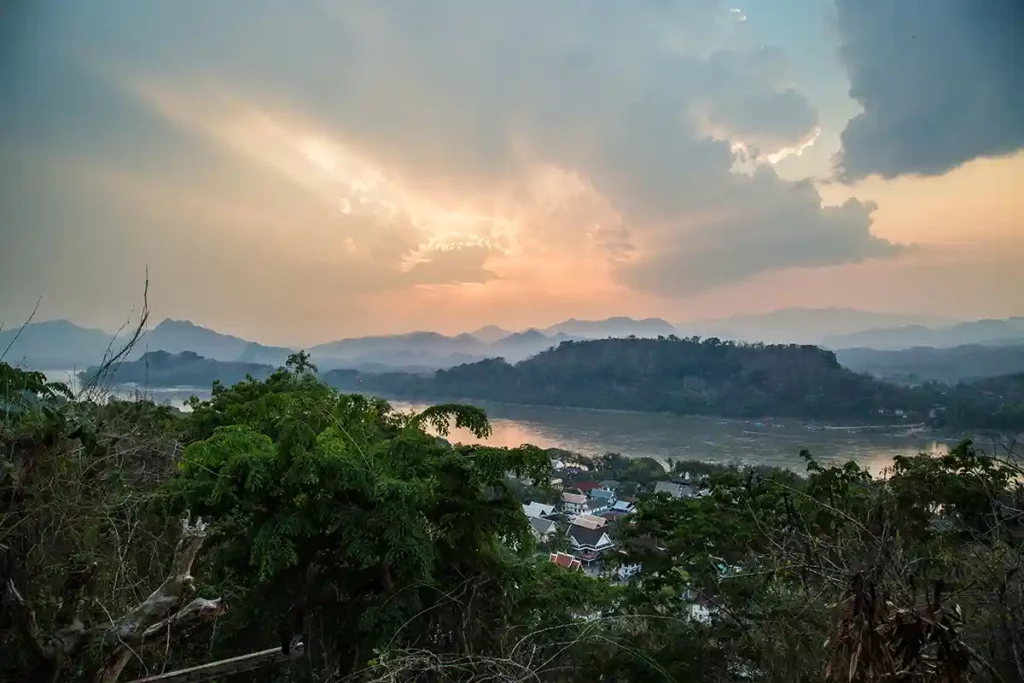
The north is mountainous and cooler. October and November are superb: the rice fields are still green or golden with the harvest, the Kuang Si waterfalls are in full flow and the skies are clear. From February to April, the view from Mount Phousi or the Nong Khiaw viewpoints is often hidden by haze. During the monsoon, mountain roads towards Phongsaly can be cut off by landslides.
The centre: Vientiane, Vang Vieng and the Plain of Jars
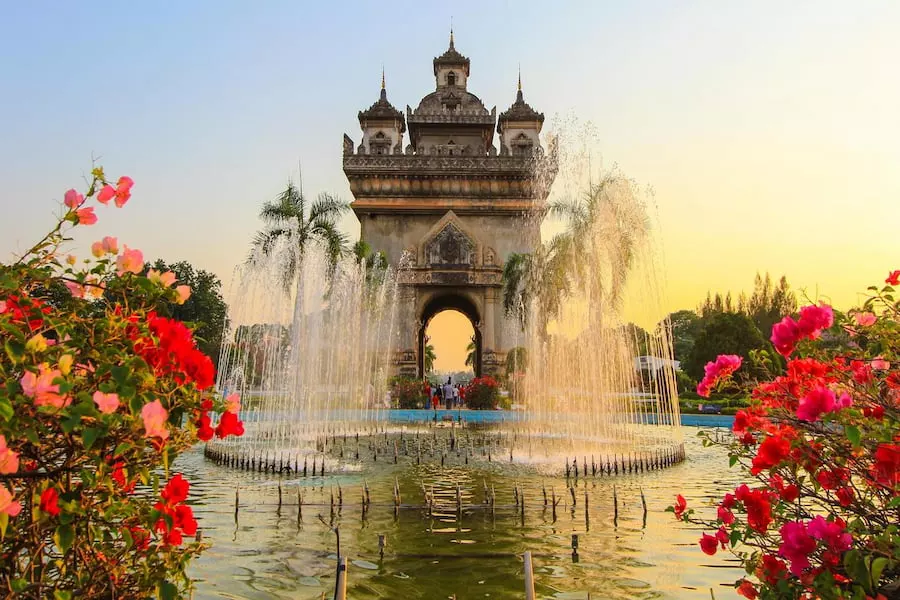
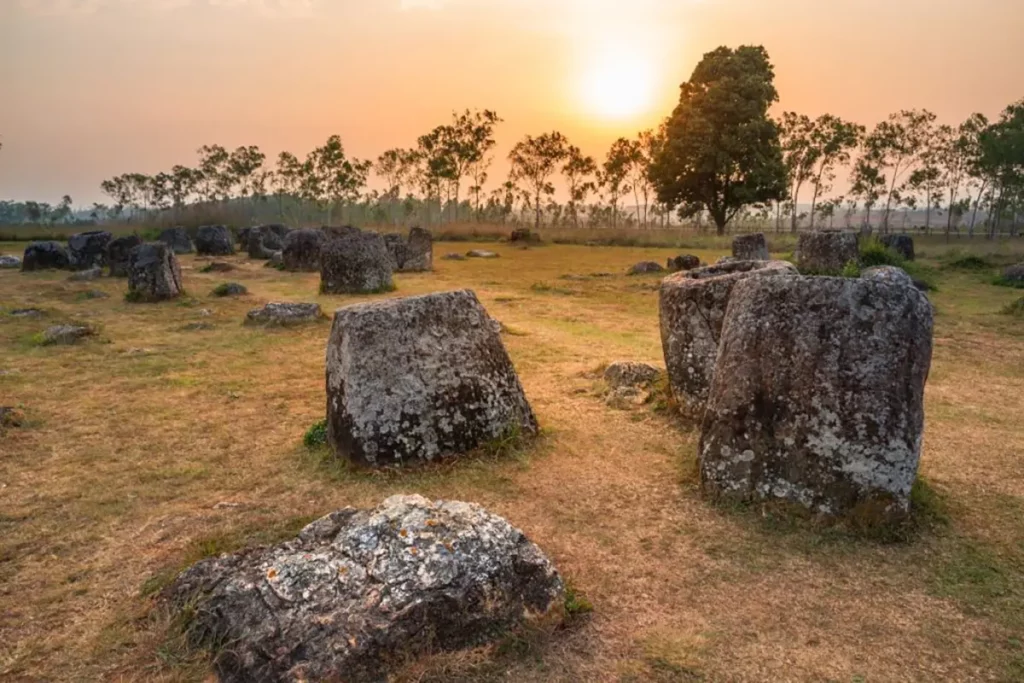
Vientiane and Vang Vieng follow the country’s general pattern, with marked heat in April. The Plain of Jars, more than 1,000 metres above sea level around Phonsavan, is noticeably cooler: bring warm clothes from December to February. In Vang Vieng, activities on the Nam Song river are enjoyable at the end of the rainy season, when water levels are good, but caution is needed after heavy rain.
The south: Pakse, the Bolaven Plateau and the 4,000 Islands
The south stays hot all year, with little variation in temperature. The best period runs from November to February. In August and September, the Mekong is in flood, currents are strong and some channels around the 4,000 Islands become dangerous for swimming and kayaking. The Bolaven Plateau waterfalls are spectacular at the end of the monsoon, in October, though tracks can be muddy then.
Should you avoid the rainy season in Laos?
You don’t need to avoid the rainy season, as showers are often short, but you should plan a flexible itinerary with time to spare.
Every year we look after travellers who can only travel in July or August. Their trips generally go very well, as long as they accept a few adjustments. The advantages are real:
- Intensely green landscapes, with rice fields in full growth.
- Fewer visitors at the busiest sites, especially in Luang Prabang.
- Heat that is a little less overwhelming than in April.
- Accommodation prices that are often lower.
Some constraints should be anticipated, though:
- Secondary roads sometimes cut by landslides or flooding, in the north as well as the south.
- Journeys that take longer than planned, so your itinerary needs some slack.
- Murkier water at the Kuang Si waterfalls, with pools where swimming may be discouraged after heavy rain.
- Slippery hiking trails, with leeches in the forest.
In these conditions we stick to the main routes and avoid scheduling a long road transfer on the same day as a flight. The railway linking Vientiane, Vang Vieng and Luang Prabang is a real asset during the monsoon, as it avoids the mountain roads.
What is the burning season, and should you worry about it?
From late February to April, agricultural burning often blankets northern Laos in haze and lowers air quality, especially around Luang Prabang.
Before the rains, many farmers burn their plots to prepare for planting. The smoke adds to haze drifting in from neighbouring countries and gets trapped in the valleys. In April 2026, the Lao authorities recorded an air quality index of around 240 in Luang Prabang, a level considered very unhealthy.
For most travellers, this means white skies, hazy sunsets and disappointing views. People with asthma, young children and anyone with sensitive airways would do better to avoid the north at this time, or to bring filtering masks and check an air quality app every day.
Which Lao festivals can you experience, depending on when you travel?
Lao festivals follow the lunar calendar, with Lao New Year in mid-April and the end of Buddhist Lent in October as the highlights.
- Pi Mai Lao, Lao New Year, around 14 to 16 April: processions, water throwing and great fervour in Luang Prabang. Accommodation is in high demand and you will get thoroughly soaked.
- Boun Bang Fai, the rocket festival, in May or June depending on the village, to call for rain.
- Boun Khao Phansa, the start of Buddhist Lent, in July, when monks stay in their monasteries.
- Boun Ok Phansa, the end of Lent, in October: illuminated boats on the Mekong in Luang Prabang during Boun Lai Heua Fai, and boat races in Vientiane. In 2027 it is expected to fall on 15 October.
- Boun That Luang, in November in Vientiane, the country’s largest religious festival, held around the great stupa. It peaks on 24 November in 2026 and should take place around 13 November in 2027.
- Hmong New Year, between late November and December depending on the village, in the northern provinces.
Exact dates are set each year according to the lunar calendar, so it is wise to confirm them before booking your flights.
Which period suits your travel style?
- First trip to Laos: November to February, for reliable weather and a hassle-free itinerary.
- Photography and landscapes: October and November, for the rice fields, clear light and generous waterfalls.
- Trekking in the north: November to January, when trails are dry and temperatures cool.
- A quieter, budget-friendly trip: May, June or September, with fewer visitors and more flexible rates.
- Combining with Vietnam or Cambodia: November to March, the dry season in both northern Vietnam and Cambodia, bearing in mind that central Vietnam is still rainy in November.
- Families with young children: November to February, avoiding the April heat and the spring haze.
There is no truly bad season to discover Laos, only different ways of experiencing it. By choosing your dates according to your interests and the regions you want to explore, you will make the most of the gentle Lao way of life.
FAQ: when to visit Laos
What is the best month to visit Laos?
November, December and January are the most pleasant months, with dry weather, clear skies and mild temperatures. November has the advantage of landscapes that are still very green after the monsoon.
When is the rainy season in Laos?
It runs from May to October, with the heaviest rain from July to September and a peak usually in August. Showers mostly fall in the afternoon.
Is it cold in Laos in winter?
In the lowlands, days stay mild. Nights, however, are chilly in the north in December and January and can approach 5°C at altitude, notably around Phongsaly or the Plain of Jars.
What is the hottest month in Laos?
April is the hottest month, with highs often above 35°C. It is also the month of Lao New Year, Pi Mai, celebrated around mid-April.
Can you visit the 4,000 Islands in the rainy season?
Yes, but with caution: in August and September the Mekong is in flood and currents are strong. The best time for the 4,000 Islands is from November to February.
What is the burning season in Laos?
From late February to April, farmers burn their plots before planting. The smoke blankets the north in haze and lowers air quality, which can affect sensitive people.