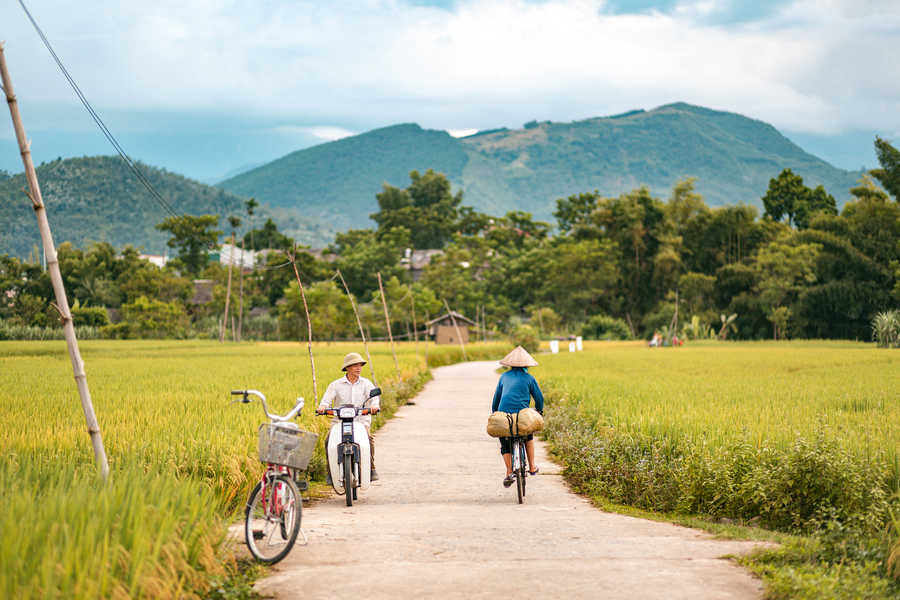








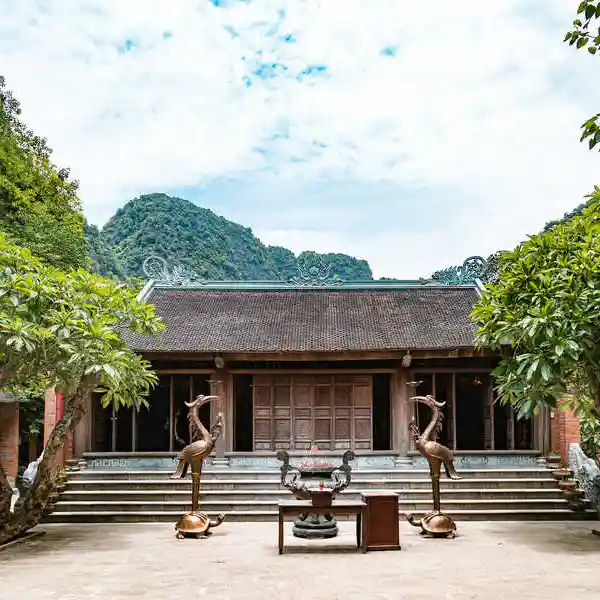


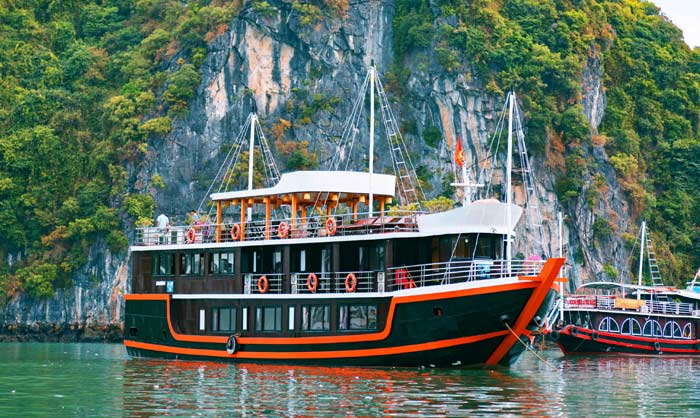
Ten days is the length we most often recommend to travellers who want to discover Laos without rushing. The country looks small on the map, but mountain roads are slow and the south is a long way from the north. Since the Laos-China railway opened at the end of 2021, the picture has changed: Luang Prabang, Vang Vieng and Vientiane are now only a few hours apart. Here is the route we regularly put together for our travellers, from north to south, with realistic travel times, the stops not to miss and the practical points to plan ahead.
What is the best 10-day Laos itinerary from north to south?
In ten days, the most balanced route links Luang Prabang, Vang Vieng, Vientiane, Champasak and the 4,000 Islands by train and then by plane.
The idea is simple: travel down the country from north to south, using the train for the northern half and a domestic flight to reach the south. You avoid long days on the road and keep time to slow down, which is what travelling in Laos is all about. The table below sums up the route day by day.
| Day | Programme | Overnight | Getting there |
|---|---|---|---|
| 1 | Arrival, sunset on Mount Phousi, night market | Luang Prabang | International flight with a connection |
| 2 | Morning alms round, old town, Wat Xieng Thong, Royal Palace | Luang Prabang | On foot or by bike |
| 3 | Pak Ou caves by boat, Kuang Si waterfalls | Luang Prabang | Boat on the Mekong, then road |
| 4 | Train to Vang Vieng, walk along the Nam Song | Vang Vieng | Train, about 1 hr |
| 5 | Kayaking, caves, lagoons and rice fields | Vang Vieng | Local |
| 6 | Train to Vientiane, That Luang, Wat Si Saket, Mekong riverside | Vientiane | Train, about 1 hr |
| 7 | Flight to Pakse, drive to Champasak | Champasak | Flight just over 1 hr, then 1 hr by road |
| 8 | Wat Phou temple, then on to the 4,000 Islands | Don Khon | Road and boat, 2 to 3 hrs |
| 9 | Li Phi falls, French bridge, Khone Phapheng | Don Khon | Bike or tuk-tuk |
| 10 | Back to Pakse and departure flight | — | Boat and road, 2.5 to 3 hrs |
The route works just as well in reverse. If your international flight lands more easily in Vientiane, or if you are coming from Cambodia, simply turn it around. Pakse airport has connections to Bangkok, Ho Chi Minh City and Siem Reap, which makes arriving or leaving through the south easy.
How many days do you need in Luang Prabang?
Three full days in Luang Prabang cover the old town, the morning alms round, the Pak Ou caves and the spectacular Kuang Si waterfalls.
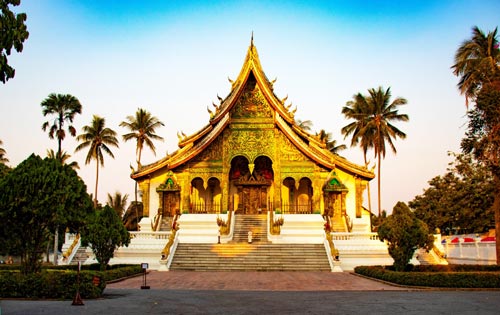
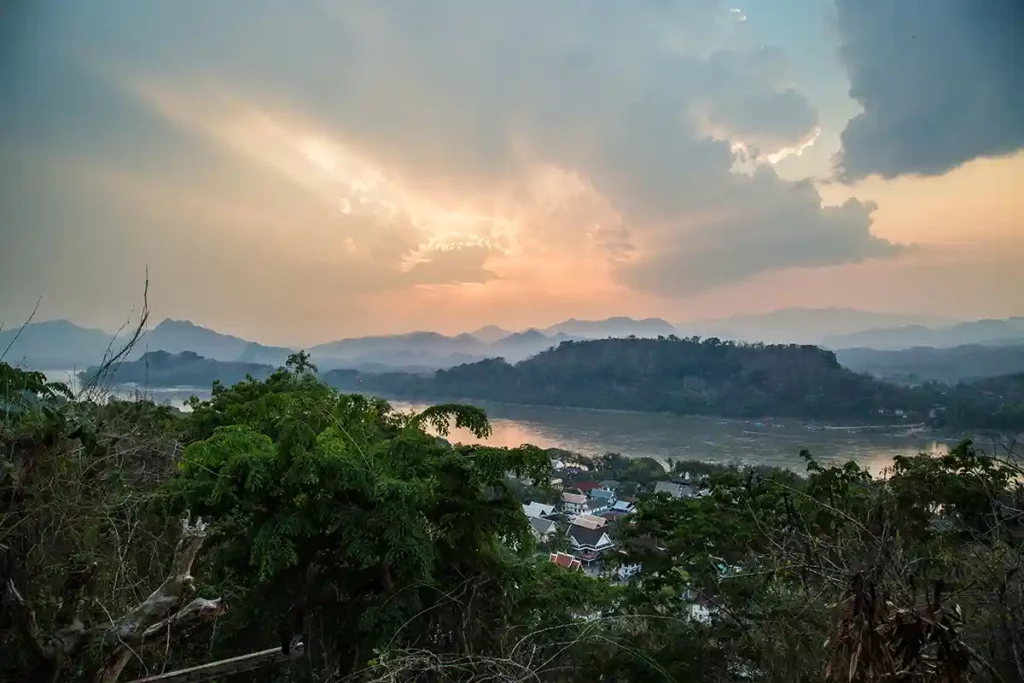
A former royal capital listed as a UNESCO World Heritage Site, Luang Prabang is the heart of the trip. On your first evening, climb Mount Phousi to watch the sun set over the Mekong and the Nam Khan, then wander down to the night market, where craftspeople from nearby villages sell textiles and mulberry paper.
Day two starts early, around 5:30 am, with tak bat, the monks’ alms round. Keep your distance, skip the flash and avoid the rice sold by street hawkers: if you would like to take part, your guide can show you how to do so respectfully. The morning continues at Wat Xieng Thong, the city’s finest temple, and the Royal Palace, now the national museum.
On day three, take a boat up the Mekong to the Pak Ou caves, filled with thousands of small Buddha statues, then head in the afternoon to the Kuang Si waterfalls, about 30 km south of town. Go early or late in the day: the turquoise pools are far more peaceful outside peak hours.
How do you travel between Luang Prabang, Vang Vieng and Vientiane?
The Laos-China railway connects Luang Prabang, Vang Vieng and Vientiane, each section taking roughly one hour, so book your tickets early.
The train has transformed travel in Laos. What used to be a full day on winding roads now takes about an hour between Luang Prabang and Vang Vieng, and about the same between Vang Vieng and Vientiane. A one-way second-class ticket from Vientiane to Vang Vieng costs around 171,000 kip, just a few dollars.
A few rules to know before boarding:
- Tickets only go on sale a few days before departure, through the official LCR Ticket app or at the station, and trains often sell out in high season.
- Your passport is required both when buying and when boarding, so keep it with you.
- Stations are far from the town centres, especially in Luang Prabang and Vientiane, so plan a transfer.
- Arrive at least 45 minutes before departure, as the baggage check is similar to an airport’s.
This is exactly where a local agency saves you time: we book tickets as soon as sales open and arrange transfers between the stations and your hotels.
What is there to do in Vang Vieng and Vientiane?
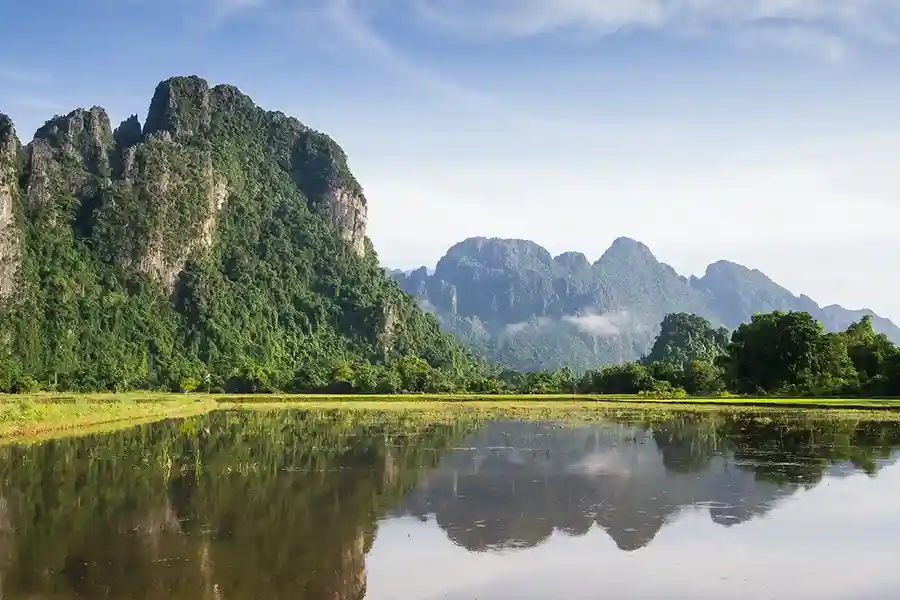
Vang Vieng, limestone peaks along the Nam Song
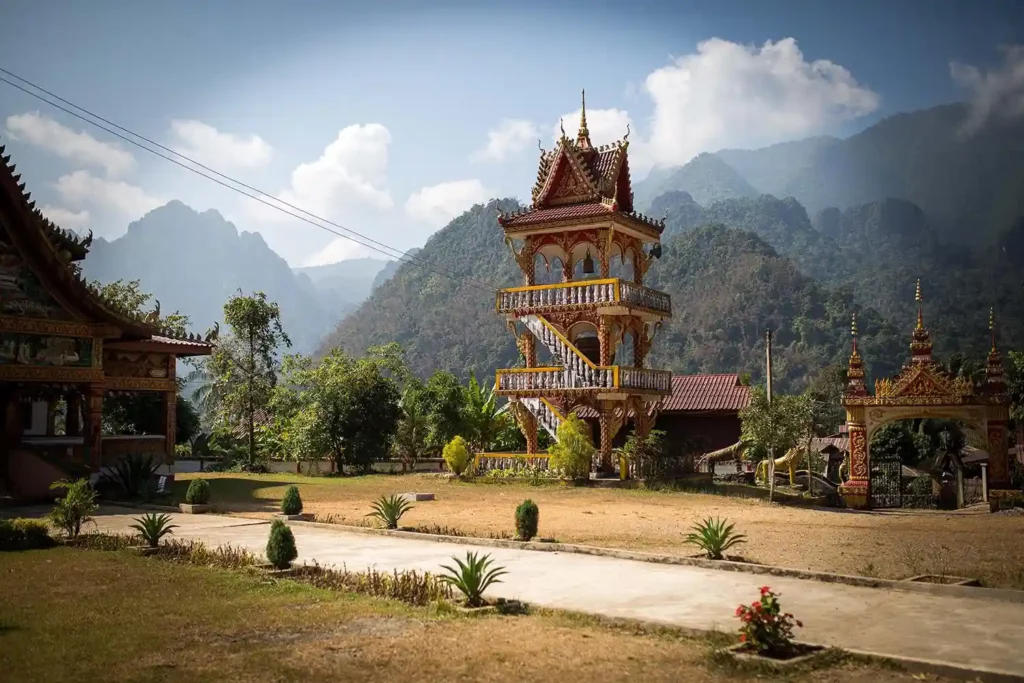
Vang Vieng long had a reputation as a party town for backpackers. It has calmed down, and today it is the scenery that draws travellers: limestone peaks rising above the rice fields, the Nam Song river and caves such as Tham Chang. A full day lets you kayak down the river, explore a cave or two and swim in one of the blue lagoons. Early risers can float over the valley in a hot-air balloon at dawn.
Vientiane, a capital you can see in a day
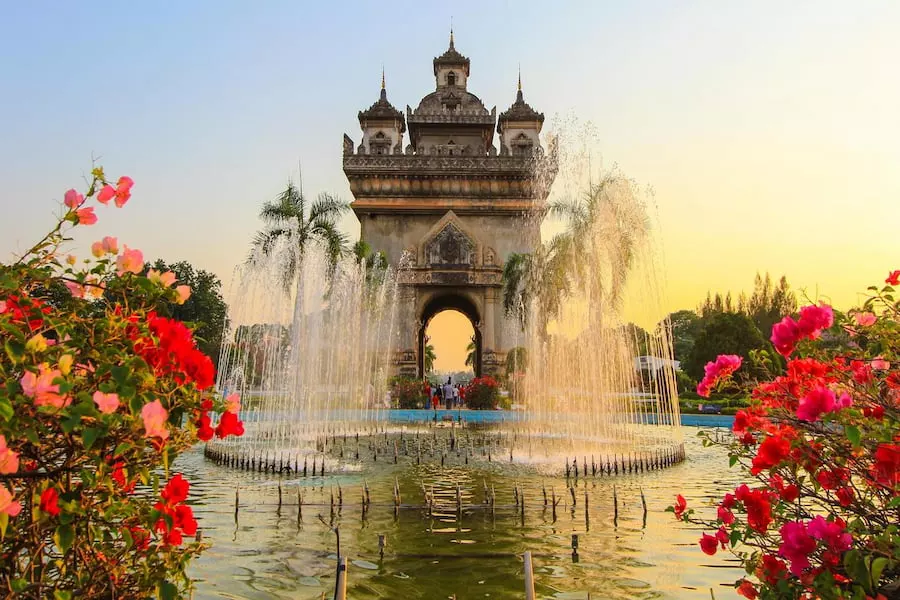
Vientiane is surprisingly relaxed. One day is enough to see That Luang, the great golden stupa that has become the national emblem, Wat Si Saket with its thousands of Buddha niches, and the Patuxai arch. In the late afternoon the Mekong riverside comes alive: the perfect time for dinner facing Thailand on the far bank.
How do you get to southern Laos from Vientiane?
The easiest option is a domestic flight from Vientiane to Pakse rather than the night bus, which is exhausting and officially discouraged.
The south lies more than 600 km from the capital. Night buses cover the distance, but several governments, including France, strongly advise against them because accidents are frequent. The Vientiane to Pakse flight, operated by Lao Airlines or Lao Skyway, takes just over an hour and saves you a full day.
From Pakse airport, Champasak is about 40 km to the south, roughly an hour by road. We recommend staying there rather than in Pakse: the village is peaceful, set right on the Mekong, and lets you reach the temple as soon as it opens.
What is there to see in Champasak and the 4,000 Islands?
In the south, spend one day exploring Wat Phou near Champasak, then two nights on the 4,000 Islands for waterfalls and Mekong village life.
Wat Phou, the great Khmer temple of Laos
A UNESCO World Heritage Site, Wat Phou is a Khmer sanctuary older than Angkor Wat, built against the mountainside. Visit early in the morning: the climb to the upper sanctuary, up a stairway lined with frangipani trees, is hard work under the midday sun, and the view over the plain is lovelier in the soft light.
Si Phan Don, the 4,000 Islands archipelago
Further south, just before the Cambodian border, the Mekong widens and splits into countless islands and islets: this is Si Phan Don, the 4,000 Islands. You drive to the Nakasang pier, then reach Don Det or Don Khon after a few minutes by boat. Don Det is the livelier island, Don Khon the quieter one, and it is the one we usually choose for our travellers.
Once there, rent a bike to ride to the Li Phi falls, cross the old railway bridge built in French colonial times and watch village life go by. The Khone Phapheng falls, often described as the most powerful in Southeast Asia by volume, are reached from the eastern bank of the river.
A word about the Irrawaddy dolphins, still often advertised: the last dolphin in the border pool near Don Khon died in February 2022. The roughly 118 individuals estimated in 2026 live on the Cambodian side, around Kratie and Stung Treng. If you continue into Cambodia, that is where to see them.
When is the best time for a 10-day trip to Laos?
The ideal period runs from November to February, when weather is dry and mild, before spring burning season and the heavy summer rains.
From November to February, the landscapes are still green after the monsoon and mornings can even be cool in Luang Prabang. From late February to April, the heat builds and agricultural burning often leaves a haze over the north. From May to October, the rainy season makes some roads difficult, but the train and the flight keep this route workable, and the southern waterfalls are at their most impressive.
What paperwork and budget should you plan for Laos?
French, Belgian and Swiss travellers need a Lao visa, issued on arrival or online, plus a passport valid six months beyond departure.
- Visa: most European travellers need a 30-day tourist visa, issued on arrival at international airports and main border crossings, or applied for online before departure on the official laoevisa.gov.la portal. On arrival, bring a passport photo and around 40 USD in cash, as the fee varies by nationality.
- Arrival form: a digital immigration form, the Lao Digital Immigration Form, has been required at the main entry points since September 2025. It is free and filled in online a few days before your trip.
- Entry stamp: check that it is in your passport, as a missing stamp can lead to a fine when you leave.
- Currency: the local currency is the kip, at roughly 25,000 kip to 1 euro, with noticeable fluctuations. US dollars and Thai baht are accepted in many tourist spots.
Budget-wise, Laos remains affordable: train tickets, entrance fees and meals in local restaurants cost little. The main expenses are the domestic flight, accommodation and, if you wish, a private guide and driver for transfers.
What if you have 15 days in Laos?
With fifteen days, add Nong Khiaw in the north, the Plain of Jars, the Kong Lor cave or the Bolaven Plateau further south.
If the Plain of Jars intrigues you, our private Mysteries of Laos 7-day tour, from Vientiane to Luang Prabang via Phonsavan shows how to fit it into the north of the country.
With five extra days, other options open up. In the north, Nong Khiaw, three to four hours by road from Luang Prabang, is ideal for hikes between cliffs and villages along the Nam Ou. In the centre, the Thakhek loop leads to the Kong Lor cave, an underground river several kilometres long that you cross by canoe. In the south, the Bolaven Plateau, east of Pakse, is known for its waterfalls and coffee plantations. Finally, from the 4,000 Islands it is easy to continue into Cambodia, to Angkor or Phnom Penh.
FAQ: your questions about Laos in 10 days
Can you see Laos from north to south in 10 days?
Yes, as long as you combine the train between Luang Prabang, Vang Vieng and Vientiane with a domestic flight to Pakse. Without a flight, you will have to drop the south or one northern stop.
How long is the train from Luang Prabang to Vientiane?
About two hours on the fast train, with an optional stop in Vang Vieng halfway. Tickets go on sale a few days before departure and your passport is required.
Do I need a visa for Laos?
Yes, for French, Belgian and Swiss travellers, as for most Europeans. You can get it on arrival, paid in cash, or online before departure. Your passport must be valid for at least six months after you leave.
How do you get from Vientiane to the 4,000 Islands?
The most comfortable way is to fly to Pakse, then drive to the Nakasang pier and take a short boat ride, about three hours in total from Pakse.
Can you still see dolphins in the 4,000 Islands?
No. The last Irrawaddy dolphin in the border area died in 2022. The Mekong’s remaining dolphins live in Cambodia, around Kratie and Stung Treng.
What is the best time for a 10-day trip to Laos?
From November to February, when the weather is dry and mild across the country. March and April are hot and often hazy in the north, and the rainy season runs from May to October.