















Are you planning a trip to Vietnam but unsure about the best time to go? Wondering when to travel is only natural when exploring a country with so many different faces.
Drawing on our 20 years of on-the-ground experience, we guide you through Vietnam’s climatic nuances. From north to south — from the lush rice fields of Tonkin to the waterways of the Mekong Delta — we show you how to combine cultural discoveries with optimal weather conditions. A subtle balance that turns your trip into a truly memorable experience.
Short on time? Here’s our straightforward answer: the best months to visit Vietnam as a whole are March, April and… May — our local favorite.
At Parfum d’Automne, a local travel agency in Vietnam for over 20 years, we know that a great trip starts with perfect timing. And contrary to what many people think, Vietnam does not have uniform weather from north to south. To avoid rain, oppressive heat or unexpected weather issues, it is essential to understand the seasons region by region.
In this article, we explain when to visit Vietnam based on your priorities: traveling across the entire country, visiting during the low tourist season, admiring terraced rice fields, or avoiding typhoons in Central Vietnam. Our goal is simple: to help you choose the right time, in the right place.
Dry season and rainy season: what you need to know
Vietnam’s climate is as diverse as its landscapes. You should never rely on a single nationwide weather pattern: the country stretches over more than 1,600 kilometers and experiences significant climatic variations between the North, the Central region, and the South.
Broadly speaking, there are two main seasons: the dry season and the rainy season. However, these seasons do not occur at the same time across the country:
– In the North, the dry season runs from October to April.
– In Central Vietnam, it lasts from February to August, with sometimes heavy rainfall between October and December.
–In the South, the dry season begins in December and continues until April.
It is therefore essential to choose the right places at the right time to avoid traveling under persistent rain — or even during a typhoon. Ideally, plan your trip during a period when the weather is dry in all the regions you wish to visit.
When is the best time to visit the whole country?
If you want to travel across Vietnam from North to South, certain periods are clearly preferable.
Our top recommendation: March and April. During these two months:
–The North still enjoys mild temperatures before the first intense heat arrives.
– Central Vietnam is already in the dry season.
– The South remains warm and dry, without being overwhelming.
Please note: March and April are also peak tourist season in Vietnam. Availability for accommodation and cruises can sell out quickly, especially for high-quality services. It is therefore highly recommended to book in advance.
- Find out why March is an ideal month to travel to Vietnam in our complete guide: Vietnam Weather in March: The Complete Guide for a Successful Trip.
- Discover why April is also a perfect time to visit Vietnam in our detailed guide: Vietnam Weather in April: A Successful Trip? Our Expert Advice
Our local expert tip: consider May as well! May is often overlooked, even though good weather prevails across the country. You will enjoy beautiful landscapes, favorable weather conditions, fewer crowds, and more attractive prices.

Pu Luong in April
When is the best time to visit Northern Vietnam?
Northern Vietnam experiences a dry season from October to April (which does not mean there is no rain, but it is not the monsoon), and a hot, humid summer from May to September.
If you want to avoid rain, it is therefore best to travel from October to June.
However, if your goal is to admire the terraced rice fields, especially in mountainous areas such as Sapa, Hoang Su Phi, or Mu Cang Chai, timing is crucial:
- The most spectacular landscapes are found at higher altitudes.
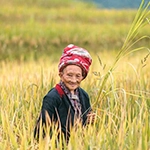
- The best time to see golden rice fields, just before the harvest, is from late September to early October.
- Outside of this period, the rice terraces—particularly in high mountain regions—are often left fallow and may look less impressive.

Northern Vietnam landscapes as the rice harvest approaches
An interesting alternative for those who want to avoid rain without giving up lush green scenery is the Pu Luong region, which has two rice harvests per year. This makes it an excellent option for a Northern Vietnam itinerary outside the peak rice-terrace season, especially between March and May (the period of the first harvest).
In terms of weather, October, November, and December offer an excellent balance of cooler temperatures, clear skies, and bright landscapes.
When is the best time to visit Central Vietnam?
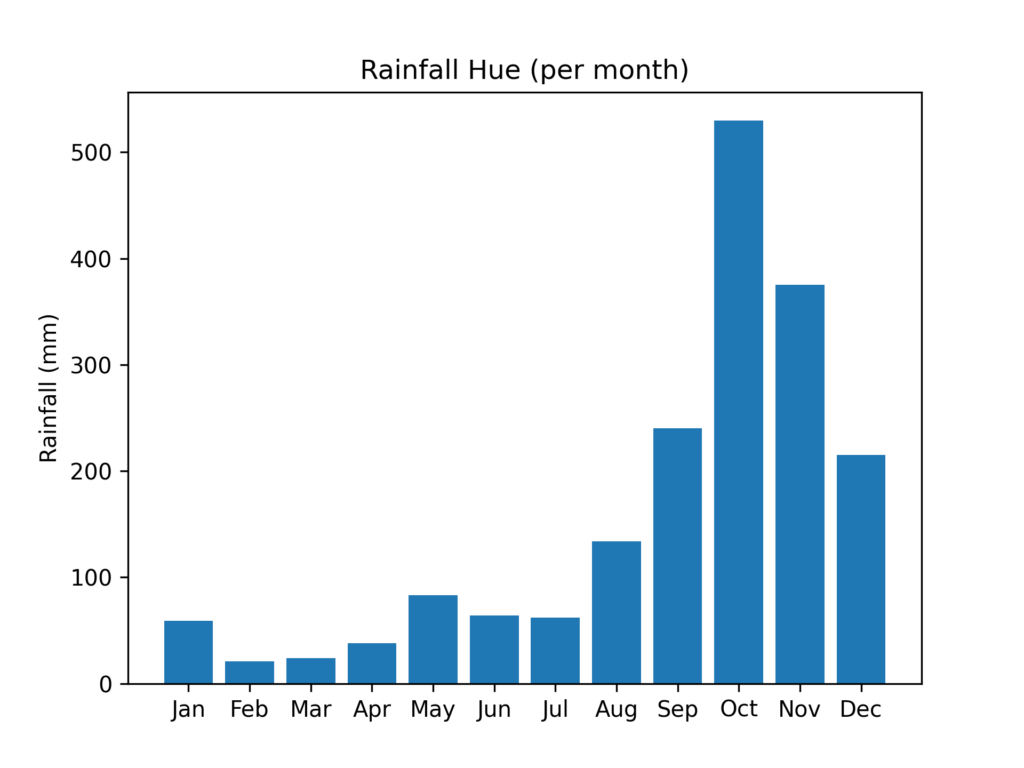
Central Vietnam has a very specific climate: it is the only region of the country that experiences heavy rainfall in autumn.
From mid-October to late December, the region can be affected by intense rain, sometimes accompanied by typhoons or flooding.
During this time, Hoi An can literally turn into a tropical Venice—a charming sight for some, but far from ideal for a classic holiday.
It is therefore strongly recommended to avoid this period.
To visit Hue, Hoi An, Da Nang, or the beaches of Central Vietnam, the best months are January, February, and March:
- The weather is dry, temperatures are pleasant and the heat is not excessive
- This is the ideal period to combine cultural visits, relaxation, and beach time.
Rainfall in Hue :
When is the best time to visit Southern Vietnam?
Southern Vietnam enjoys a tropical climate with two main seasons:
- Dry season: from December to April
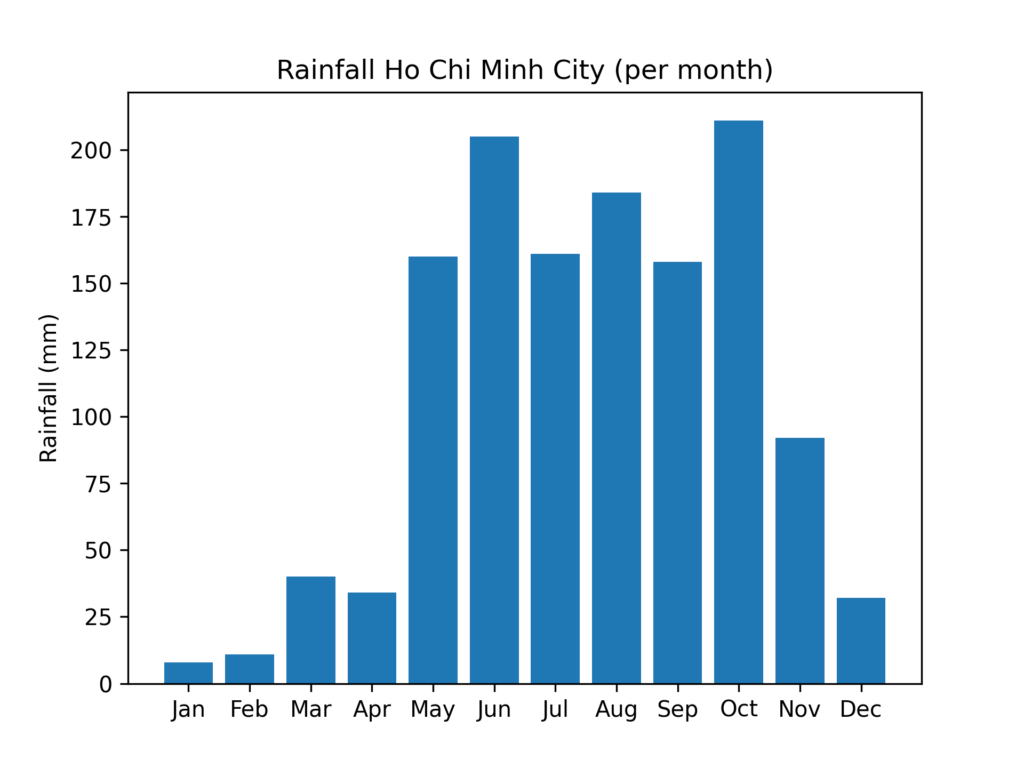
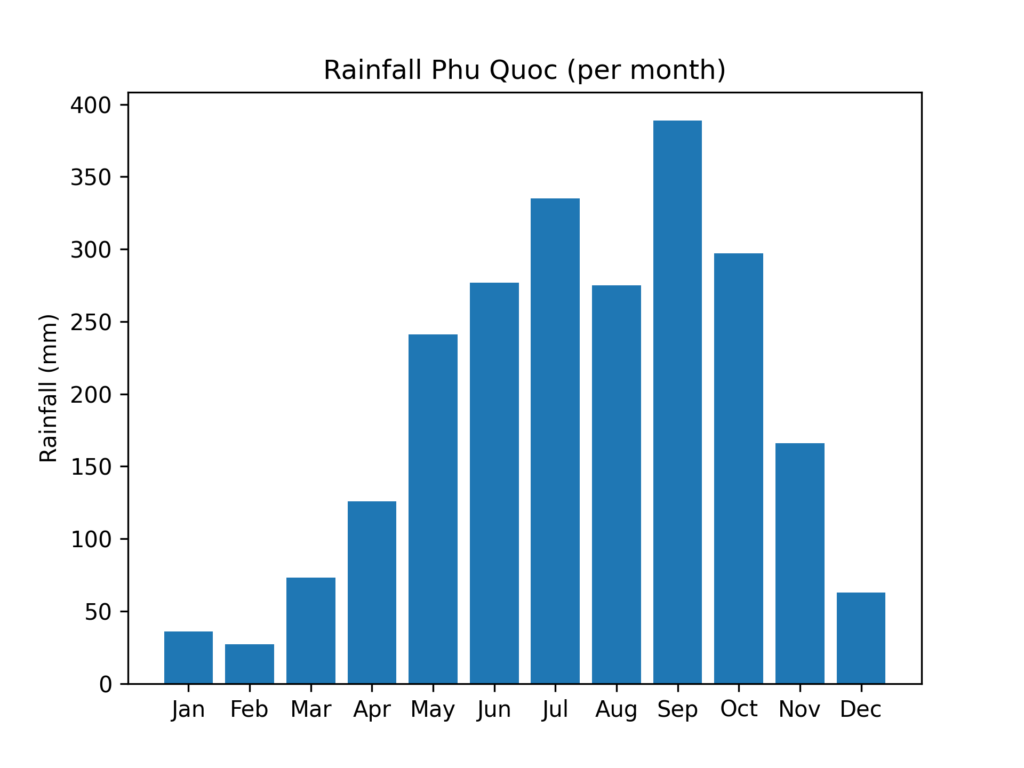
- Rainy season: from May to November, with showers that are often short but intense
To fully enjoy cities such as Ho Chi Minh City, cruises in the Mekong Delta, or the beaches of Phu Quoc, it is best to travel between January and April. During this period, you will benefit from sunny, warm days without excessive humidity, making the trip much more pleasant.
Rainfall in Ho Chi Minh city :
Rainfall in Phu Quoc :
In summary: March and April are the most balanced months for a grand journey across Vietnam, but May truly deserves your attention if you wish to avoid the crowds while still enjoying very favorable weather.
As you have probably gathered, Vietnam does not have a single climate but several distinct regional climates, which can be challenging if you plan to visit all three major regions of the country (North – Central – South).
- If you want to visit all three regions, choose March and April.
- If you are planning a beach holiday in Central and Southern Vietnam, the best period is from December to April.
- If you are looking for an authentic discovery of Northern Vietnam, opt for September and October.
Do you already have a travel project in mind? Contact Parfum d’Automne, your local agency based in Hanoi, and let us design a tailor-made itinerary, at the right time and in the right place!