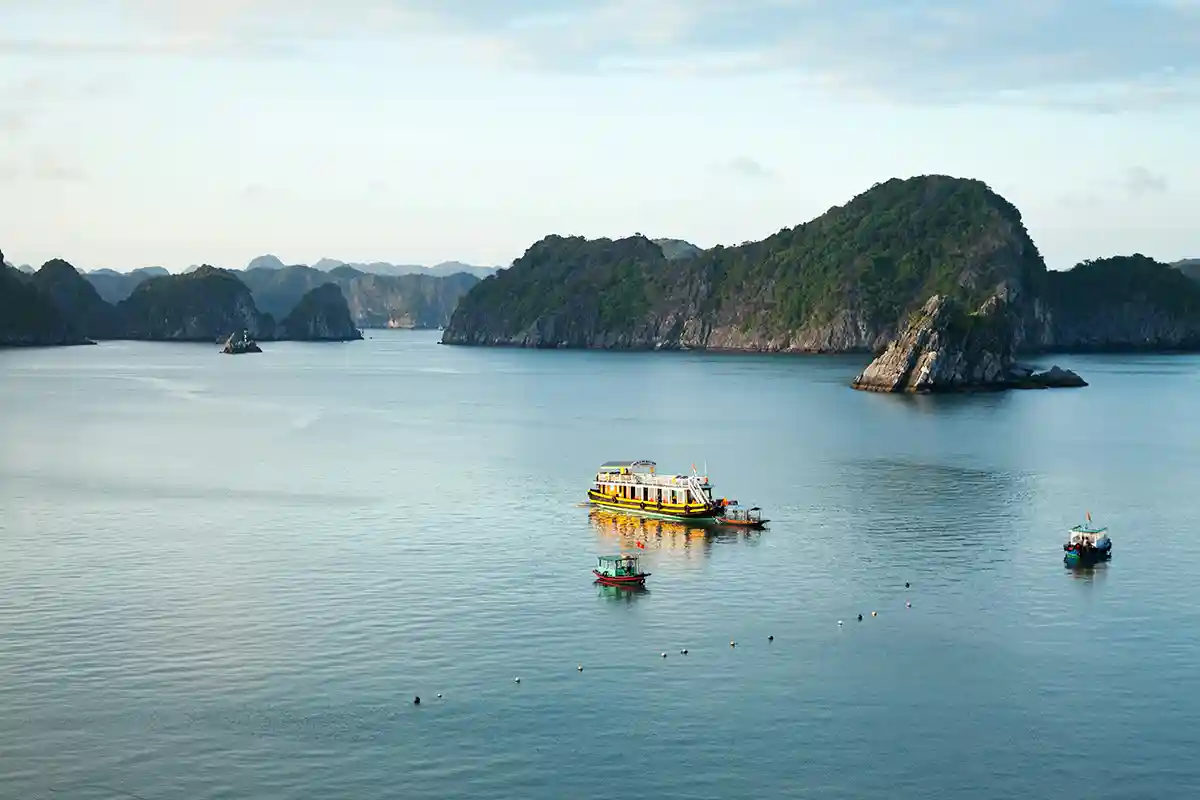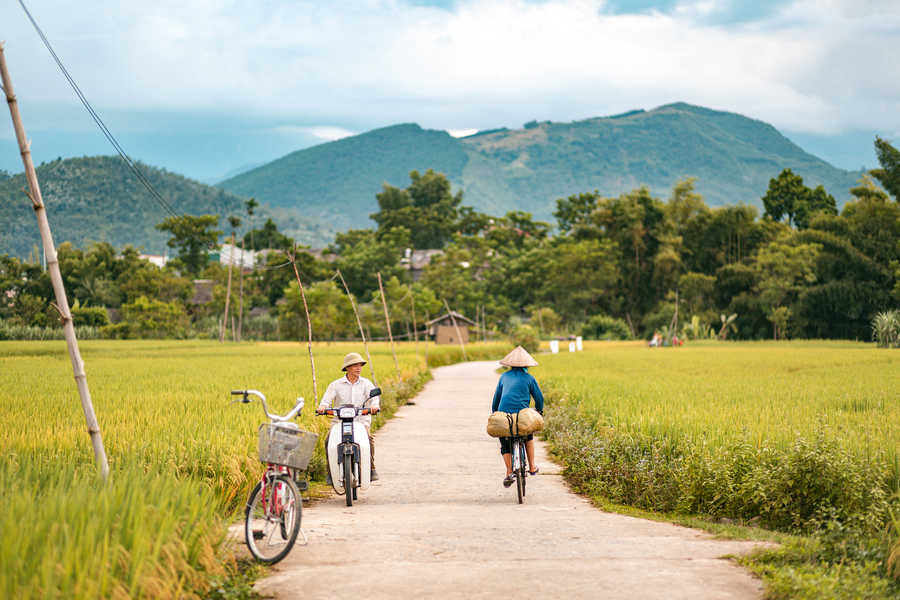











Southern Vietnam is a region of striking contrasts. On one side, the urban frenzy of Ho Chi Minh City driving the country’s economic growth. On the other, the serenity of the Mekong Delta’s canals, the unexpected coolness of the Da Lat highlands, the pristine beaches of Phu Quoc, and the unspoiled solitude of Con Dao. In between, dozens of destinations that reveal a side of Vietnam that hurried travellers never get to see.
Here is our selection, organised by theme — built from twenty years of on-the-ground experience in this region.
For those who want to build a tailor-made itinerary with us, here are our Southern Vietnam tours.
What are the best destinations in Southern Vietnam?
Southern Vietnam can be explored through three main themes: cities, beach destinations, and the Mekong Delta.
Southern Vietnam can be explored through three main themes: cities (Ho Chi Minh City, Da Lat, Buon Ma Thuot), beach destinations (Phu Quoc, Con Dao, Nha Trang, Mui Ne, Vung Tau), and the Mekong Delta (Can Tho, Ben Tre, Chau Doc, Vinh Long).
What are the unmissable cities of Southern Vietnam?
Ho Chi Minh City, Da Lat, and Buon Ma Thuot each offer a radically different experience of Southern Vietnam.
The three major cities of the South each offer a radically different experience — the modern megacity, the colonial highland resort, and the coffee capital. Together, they capture the full diversity of the South.
Ho Chi Minh City — the energy of modern Vietnam
Ho Chi Minh City — still called Saigon by its residents with undying affection — is Vietnam’s largest city, with over 9 million inhabitants. It is the natural entry point to the South for the vast majority of travellers, but it would be a mistake to spend only a few hours here in transit. This is a city to be lived in for a few days — to let yourself be carried by the energy of the streets, to discover the contrasts between the colonial districts and the glass towers of the CBD, to understand how a city can hold both the legacy of war and the ambition of a 21st-century metropolis.
In 2024, the inauguration of the first metro line transformed mobility in the city centre — a powerful symbol of Saigon’s dynamism.

Walking street (Pho Hue) in Ho Chi Minh City
Not to be missed:
- The War Remnants Museum — moving and essential, best visited in the morning
- The Reunification Palace — 1960s architecture preserved intact, a symbol of the war’s end
- Notre-Dame Cathedral and the Central Post Office — two colonial masterpieces standing side by side
- The Cho Lon district — the largest Chinatown in Vietnam
- The Cu Chi Tunnels — 40 km to the north, a half-day excursion not to be skipped
- The Bitexco Tower and rooftop bars for panoramic views over the city
How long: 2 to 3 days minimum, 4 to 5 days including excursions to the surrounding area.
When to go: year-round. December–April (dry season, 28–32°C) is the most pleasant period.
Da Lat — the eternal city of mist and flowers
Da Lat is a surprise in the middle of the tropical South. At 1,500 metres above sea level in the south-central highlands, the city enjoys a permanent spring climate — 18 to 24°C all year round, morning mists, and pine forests that are more reminiscent of the Alps than of Southeast Asia. The French, who had nicknamed it the “Little Paris of the Far East”, built hotels, colonial villas, and a lycée here, several of which still stand today.
Da Lat is also Vietnam’s great market-gardening region — artichokes, strawberries, mushrooms, cut flowers — and in recent years, the country’s first wine-producing terroir.

Dalat at sunrise, aerial view
Not to be missed:
- The Crazy House by Hang Nga — wild organic architecture somewhere between Gaudí and a fairy tale
- The Da Lat Central Market — the most beautiful covered market in the South, open day and night
- Emperor Bao Dai’s Villa — preserved colonial atmosphere
- Datanla Falls and Elephant Falls — hiking through the pine forests
- Cycling routes through the countryside — orchards, lakes, flower-growers’ villages
How long: 2 to 3 days.
When to go: year-round — one of the great advantages of the altitude. December–March for a cooler, more romantic Da Lat.
Buon Ma Thuot — the world capital of robusta coffee
Buon Ma Thuot is the capital of Dak Lak Province in the Central Highlands — and the world capital of robusta coffee. It was here that the French introduced coffee cultivation in 1870, on exceptionally fertile volcanic soil. Today, Dak Lak Province alone produces 30% of Vietnam’s coffee, exported worldwide.
But the Central Highlands are also the territory of the south-central ethnic minorities — Ede, M’Nong, Jarai, Rhade — with traditions and cultures radically different from those of the North. Women carry the jars, men carve wood, and gong ceremonies mark the seasons. A world apart, little known to French-speaking travellers — and that is precisely why it is worth the detour.

Not to be missed:
- A visit to a coffee plantation — from tree to cup, the production techniques
- Don Village — the Elephant King’s tomb, Ede people, forest walks
- Dray Sap Waterfall — the largest in the Central Highlands, 30 km south of the city
- Lak Lake — a natural lake surrounded by forests, with an M’Nong stilt village on its banks
How long: 2 to 3 days.
When to go: November–April (dry season in the Central Highlands).
What are the best beach destinations in Southern Vietnam?
Southern Vietnam is home to some of Southeast Asia’s finest beaches and islands, from Phu Quoc to Con Dao.
Southern Vietnam is home to some of the finest beaches and islands in Southeast Asia. From the turquoise waters of Phu Quoc to the untouched wilderness of Con Dao, the sand dunes of Mui Ne, and the weekend beaches of Vung Tau — each destination has its own character.
Phu Quoc — the white-sand beach island
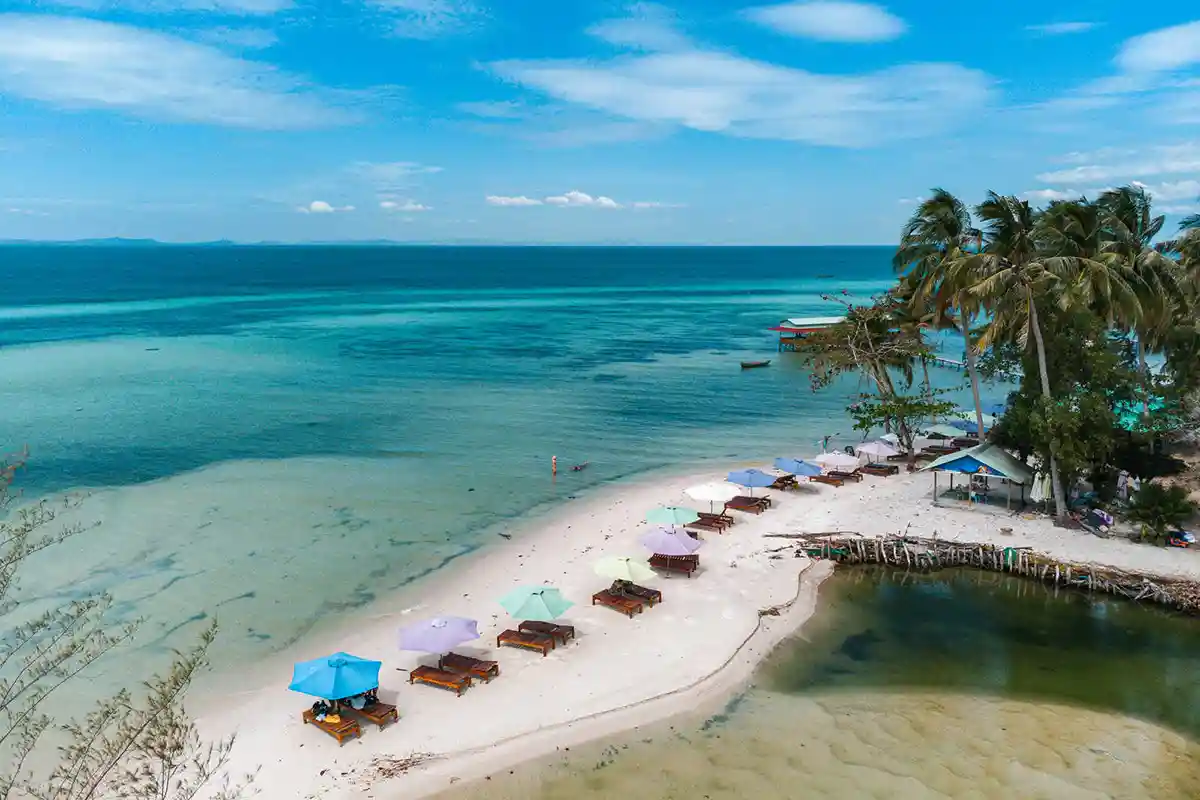
Phu Quoc is Vietnam’s largest island, nestled in the Gulf of Thailand just a short distance from the Cambodian border. Over the past decade, it has undergone a spectacular transformation — luxury hotel complexes have sprung up along the southern coast, a theme park has opened, and infrastructure has expanded significantly. Yet the island retains its fundamental assets: beaches that rank among the finest in Southeast Asia, exceptional turquoise waters, a national park that still covers 40% of its forested surface, and a fish sauce production that is renowned throughout Vietnam.
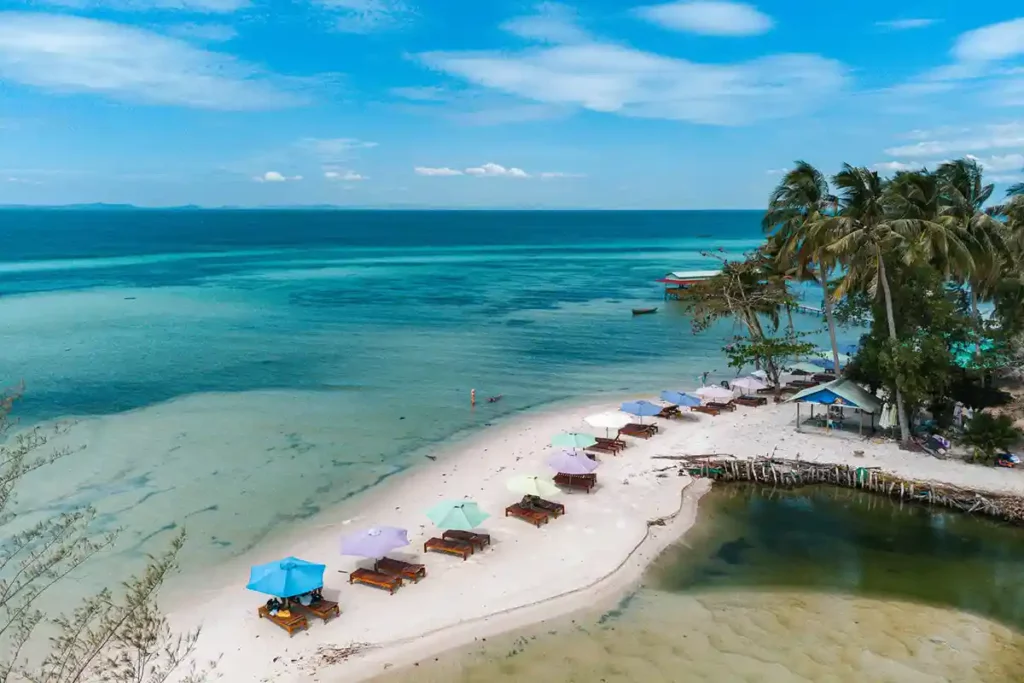
Parasols on a paradisiacal beach in Phu Quoc. Photo: Mathieu Arnaudet
The unmissable beaches:
- Bai Sao — finely powdered white sand, crystal-clear water, minimal development
- Long Beach — 20 km long, the largest, spectacular sunsets
- Bai Khem — one of the most beautiful in the country, partly private (JW Marriott)
Things to do in Phu Quoc:
- Diving and snorkelling around the An Thoi Islands — preserved coral reefs, sea turtles
- Visiting a pearl farm — Phu Quoc is renowned for its saltwater pearls
- Exploring a traditional fish sauce factory
- Duong Dong Night Market — street food and local crafts
How long: 3 to 5 days.
When to go: November–April (dry season, calm sea). Avoid June–September (Gulf of Thailand monsoon).
Con Dao — the preserved natural sanctuary
Con Dao is the antithesis of Phu Quoc. Few tourists, no clubs, no large resorts — just an archipelago of 16 islands of wild beauty, an exceptional marine national park, deserted beaches, and a weighty historical past. The main island, Con Son, served as the site of a French colonial prison from 1862 to 1975 — one of the most feared penitentiaries in Indochina. The vestiges are open to visitors and bear witness with great power. Many Vietnamese avoid the island out of fear of “bad spirits” — which contributes to its exceptional tranquillity.

Fishing boats, Con Dao Island, Vietnam
Things to do in Con Dao:
- Diving and snorkelling — among the finest waters of the South China Sea (visibility up to 20 m)
- Sea turtle watching — one of the last protected nesting sites in Vietnam
- Hiking in the national park — primary forests, endemic birds, deserted coves
- Visiting the historic prisons — Phu Tuong Camp, Phu Hai Prison
How long: 3 to 4 days.
When to go: March–September (calm sea, optimal visibility for diving).
Nha Trang — Vietnam’s great seaside resort
Nha Trang is Vietnam’s major beach resort — a 7-km arc of beach, warm waters, a magnificent bay. It has experienced intensive tourist development in recent years, and some areas have lost their authenticity. That said, the surrounding islands offer excellent diving conditions, and the Cham towers of Po Nagar — built between the 7th and 12th centuries — are among the most remarkable architectural landmarks on the Vietnamese coast.

Nha Trang Bay
Things to do in Nha Trang:
- Diving and snorkelling around the islands (Mun, Tre, Mot)
- Visiting the Po Nagar Cham Towers — 7th-century architecture
- Boat excursion around the bay islands
- Mud baths — a local thermal speciality
How long: 2 to 3 days.
When to go: February–August. Avoid October–November (typhoon risk).
Mui Ne — sand dunes and kite-surfing
Mui Ne is a 20-km coastal strip about 5 hours by road from Ho Chi Minh City, known for two things: its red and white sand dunes — a near-desert landscape that is exceptionally rare in Vietnam — and its consistent winds, which have made it the Asian capital of kite-surfing and wind-surfing. It is also a popular seaside retreat among Ho Chi Minh City expatriates.

The coast of Mui Ne from above, Vietnam
Things to do in Mui Ne:
- Sunrise over the red dunes — 3 km of spectacular ochre-red sand
- White dunes and fairy-stream lake — white sand landscape with a lake at the base
- The Fairy Stream canyon (Suoi Tien) — a miniature canyon carved by water
- Kite-surfing and wind-surfing on the main beach
- Lunch in the old fishing village
How long: 2 to 3 days.
When to go: November–April (dry season, regular winds ideal for water sports).
Vung Tau — the Saigonnais’ weekend beach
Vung Tau is to Ho Chi Minh City what the Normandy coast is to Paris — the city dwellers’ weekend beach. Two hours by road or one hour by hydrofoil, it is the quick getaway for expats and Vietnamese families alike. It lacks the glamour of Phu Quoc or the wilderness of Con Dao, but it has the charm of an unpretentious coastal town — fresh seafood, a spectacular statue of Christ overlooking the bay, and a handful of preserved colonial villas.

Vung Tau beach at sunset. Photo: Mathieu Arnaudet
Things to do in Vung Tau:
- Christ the King statue — 32 m tall, panoramic view from the hilltop
- Seafront promenade and seafood restaurants
- Bai Sau Beach — the largest and most peaceful
- Ferry crossing to Con Dao (optional)
How long: 1 to 2 days, ideally as a weekend trip from Ho Chi Minh City.
What are the essential stops in the Mekong Delta?
The Mekong Delta remains one of Vietnam’s most densely populated and least understood regions by passing travelers.
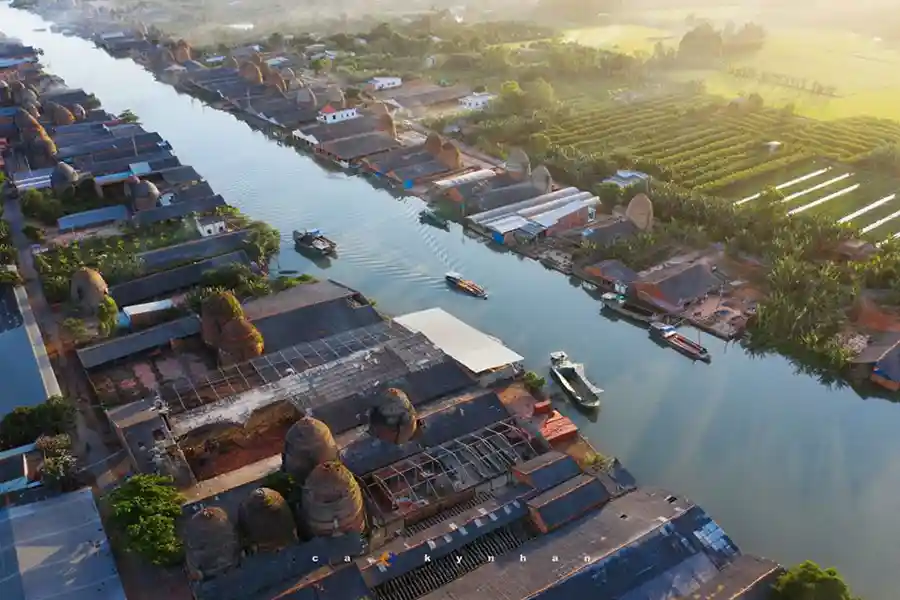
The Mekong Delta is one of Vietnam’s most densely populated and most fascinating regions — and one of the most misunderstood by travellers who visit on a day trip from Ho Chi Minh City. You need to spend at least two nights here, stay with a local family, and take to the waterways early in the morning before the mist has lifted.
The delta covers 40,000 km² of alluvial plains crossed by nine branches of the Mekong — the “Nine Dragons” — where 17 million people have lived in harmony with the water for centuries. Floating gardens, river markets, tropical fruit orchards, stilt villages: each province has its own character.
Can Tho — the heart of the delta
Can Tho is the informal capital of the delta and the ideal starting point. It is home to the region’s largest floating market — Cai Rang. To see it at its most intense, you need to be there before 7 a.m., when boats loaded with fruit and vegetables gather on the river. After 9 a.m., the tourist coaches have already changed the atmosphere. From Can Tho, a cruise through to Cai Be allows you to navigate through shimmering islets and fruit trees while meeting welcoming locals.
How long: 2 days minimum. When to go: December–April.
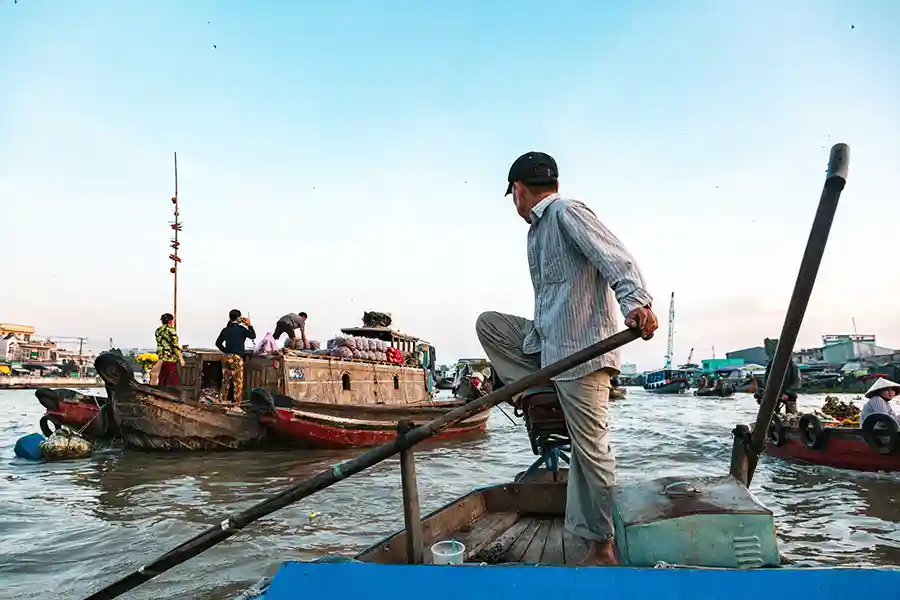
Sampan ride at Can Tho market. Photo: Mathieu Arnaudet
Ben Tre — “the land of coconut palms”
Ben Tre is the province of coconut groves and coconut-based crafts. The branches of the Mekong here are particularly dense, and gliding by sampan through the shaded canals is an experience of absolute calm. This is the destination we recommend for a first authentic encounter with the delta — low-key, unspoiled, genuine. The artisan coconut candy workshops are a local curiosity not to be missed — and a delicious one at that.
How long: 1 to 2 days, in combination with Can Tho. When to go: year-round.
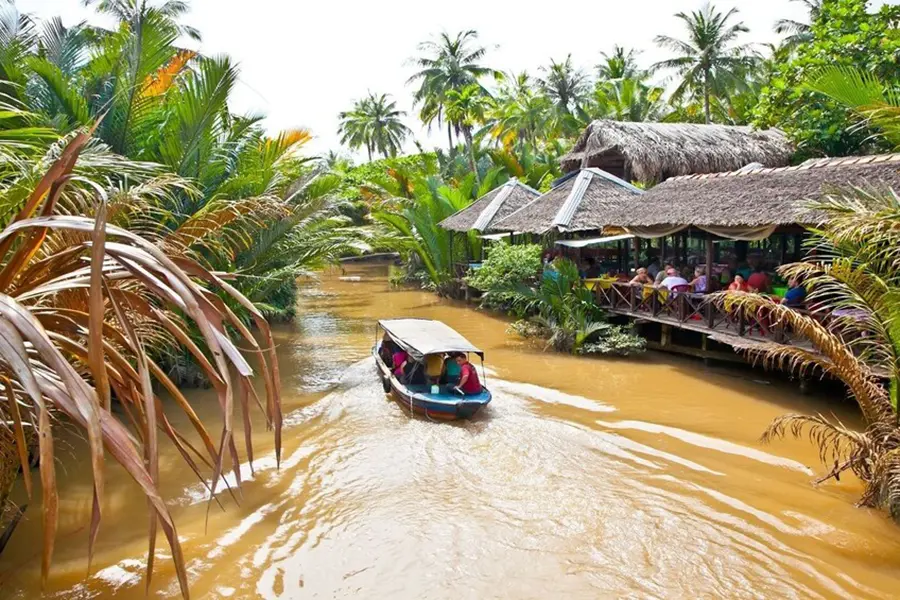
The small canals of Ben Tre, Mekong Delta
Chau Doc — the border town and Khmer-Cham cultures
On the border with Cambodia, Chau Doc is a cultural crossroads where Vietnamese, Khmer, and Cham communities coexist. Its floating market is more authentic than Can Tho’s. Sam Mountain (230 m — the highest point in the delta) offers sweeping views over the rice fields. The Tra Su cajuput forest — a true ornithological reserve crossed by sampan along water-hyacinth-covered pathways — is one of the most beautiful excursions in the delta, in absolute tranquillity.
How long: 1 to 2 days. When to go: December–April for accessible roads; August–November for the delta under water.
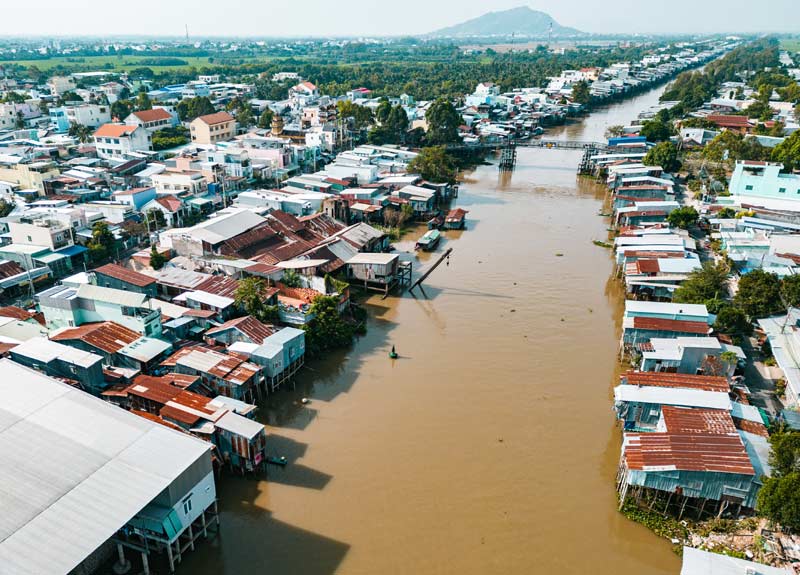
Chau Doc from above. Photo: Mathieu Arnaudet
Vinh Long — preserved authenticity
A rural, lightly-touristed province, Vinh Long is our recommendation for those who want to avoid the mass-market circuits of the delta. The islands of An Binh and Binh Hoa Phuoc are best discovered by sampan along the waterways — fruit gardens, floating vegetable patches, discreet little pagodas. 90% of the arable land consists of rice fields. Delta life at its real pace, without any tourist staging.
How long: 1 to 2 days, in combination with Can Tho. When to go: December–April.
Canals at Vinh Long.
What itinerary should you follow to visit Southern Vietnam?
A 10-day itinerary allows travelers to discover the main facets of Southern Vietnam at a comfortable pace.
10 days in Southern Vietnam
| Days | Stages |
|---|---|
| 1–3 | Ho Chi Minh City + Cu Chi Tunnels |
| 4–6 | Mekong Delta (Ben Tre, Can Tho, Vinh Long) |
| 7–10 | Phu Quoc |
15 days in Southern Vietnam
| Days | Stages |
|---|---|
| 1–3 | Ho Chi Minh City |
| 4–6 | Mekong Delta (Ben Tre, Can Tho) |
| 7–8 | Chau Doc + Cambodian border |
| 9–12 | Phu Quoc |
| 13–15 | Con Dao (flight from Phu Quoc) or Da Lat |
3 weeks in Southern Vietnam
To the 15-day itinerary, add Mui Ne (2 days) and Nha Trang (2 days) for a coastal journey back towards Ho Chi Minh City, or the Buon Ma Thuot highlands (2 days) for an immersion in the ethnic cultures of the south-central region.
When is the best time to visit Southern Vietnam?
The best time to visit Southern Vietnam is the dry season, from December to April, with temperatures of 28-34°C.
The best time to visit Southern Vietnam is the dry season, from December to April. Temperatures range from 28 to 34°C depending on the region, skies are clear, and roads are accessible everywhere.
| Period | Conditions | Our view |
|---|---|---|
| December–February | Dry, 28–30°C, little rain | Ideal for all of the South |
| March–April | Dry, 32–34°C, rising heat | Excellent, except for Da Lat |
| May–June | Monsoon begins, afternoon showers | Acceptable, lower prices |
| July–August | Monsoon, frequent rain | Not recommended for the islands |
| September–October | Monsoon, typhoon risk (coast) | Avoid for Nha Trang, Mui Ne |
| November | Transitional, some rain | Good for HCMC and the delta |
Da Lat is an exception — its altitude gives it a pleasant climate year-round, even during the monsoon season.
Frequently asked questions about Southern Vietnam
How long does it take to visit Southern Vietnam?
10 days allow you to cover Ho Chi Minh City, the delta, and Phu Quoc. 15 days give you time to add Con Dao or Da Lat. 3 weeks allow for a complete circuit including a coastal journey back north.
Can you visit the Mekong Delta in one day from Ho Chi Minh City?
Technically yes — but it is not enough. Day-trip excursions offer only a superficial glimpse of the delta. Allow at least two nights on-site to understand its rhythm.
Is it better to start Vietnam in the North or the South?
Both are possible. Starting in the South offers a climatic advantage between December and April — the South is in its dry season when the North can be cold and misty. The geographical logic (Hanoi → train south → HCMC) has the advantage of narrative continuity throughout the journey.
How do you get around Southern Vietnam?
By plane for long distances (HCMC–Phu Quoc, HCMC–Con Dao, HCMC–Da Lat) — domestic flights between €23 and €70. By limousine bus for the delta, Mui Ne, and Vung Tau. By private car with driver for multi-day tours — the option we recommend for families and groups.
Do you need a visa for Vietnam?
French, Belgian, and Swiss nationals benefit from a visa exemption for 45 days. For longer stays, the 90-day multi-entry e-visa costs USD 25.
To organise your Southern Vietnam circuit with a French-speaking guide and private vehicle, our Parfum d’Automne team based in Hanoi is available to build your bespoke programme.
Discover our Southern Vietnam tours for our recommended itineraries.