












Vietnam and Cambodia share a long common border, both open onto the same Gulf of Thailand, and the Mekong flows through both countries from north to south. What geography draws here is an invitation: these two countries read together naturally, almost inevitably.
And yet many travellers hesitate. Two countries means two visas, two currencies, two languages. Is it worth it? How do you organise it all without ending up with an exhausting schedule? Where do you even start?
This article answers exactly those questions — with the field advice of an agency that has been designing these combined tours from Hanoi for twenty years.
Why do Vietnam and Cambodia combine so well?
The geographical proximity and cultural complementarity between the two countries make a Vietnam–Cambodia combined tour one of the most coherent journeys in Southeast Asia.
The short answer: because each country offers what the other does not.
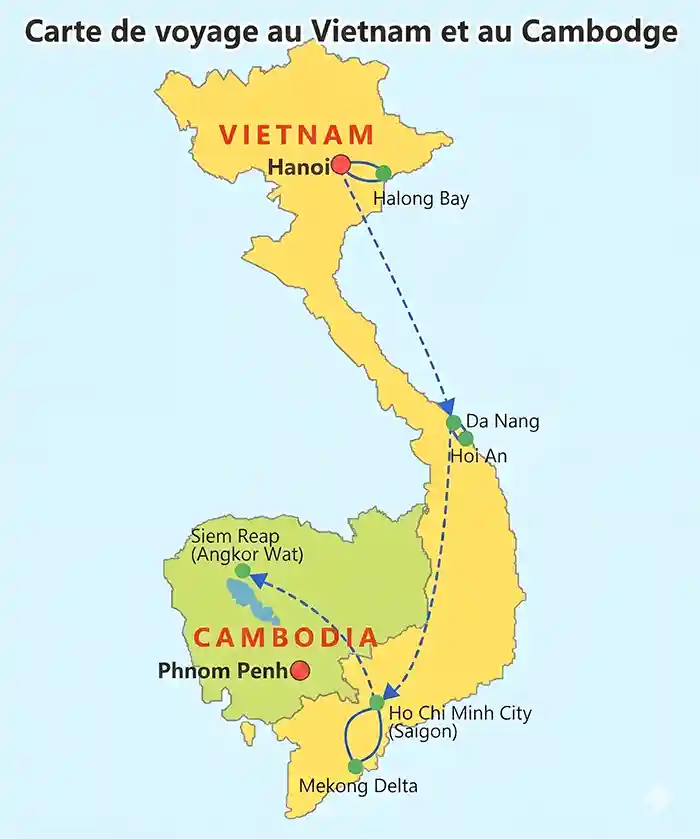
The map speaks for itself
Between Ho Chi Minh City and Phnom Penh, there is less than 230 kilometres as the crow flies. Between Can Tho (in the Mekong Delta) and Siem Reap (gateway to Angkor), the distance is around 5 to 6 hours by road or boat. These are not two distant destinations awkwardly forced into the same trip — they flow into each other naturally, without detour.
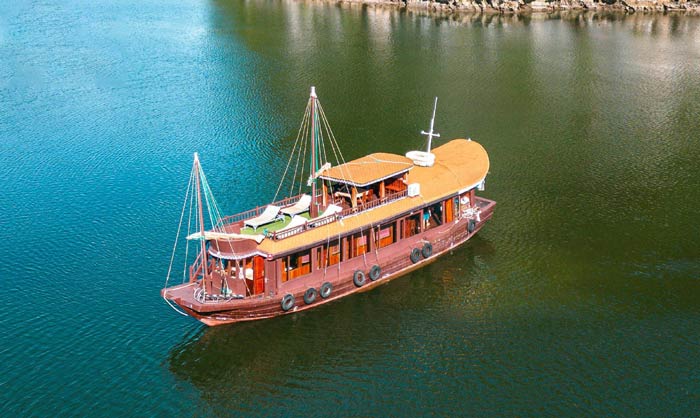
The river crossing between Chau Doc and Phnom Penh along the Mekong is one of our favourite passages — a gentle transition between the two countries, on the water, as the riverbanks gradually change character.
Two complementary countries, not redundant ones
Vietnam is a long, varied, sometimes intense country: landscapes that shift from north to south, lively cities, traffic, a multiplicity of regions. You move from a northern rice field to a central beach, from an imperial citadel to a tropical river delta.
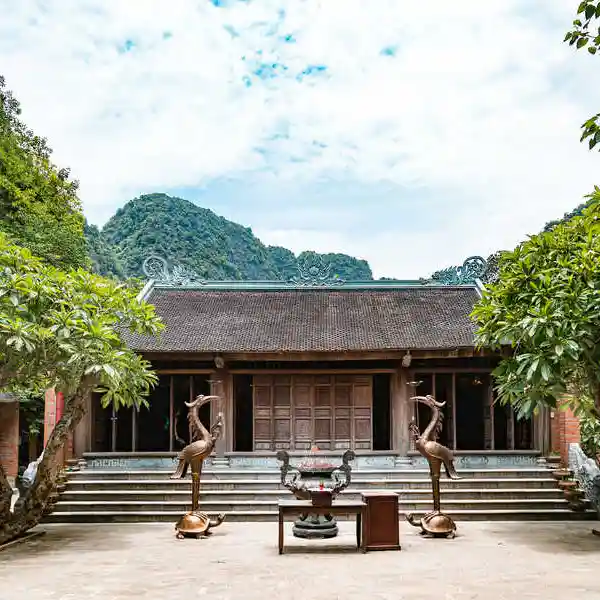
Cambodia is more compact, more contemplative. It concentrates on a handful of places of extraordinary power: the temples of Angkor, the poignant history of Phnom Penh, the vast Tonlé Sap lake. The rhythm is different — slower, more inward-looking.
These two rhythms balance each other perfectly within a single journey: the intensity of Vietnam, the depth of Cambodia.
A naturally logical itinerary
The great majority of our combined circuits follow a simple geographical thread: travel down Vietnam from north to south, then cross into Cambodia via the Mekong Delta or by plane from Ho Chi Minh City. Each stage prepares the next. You are not making a detour — you are following a road.
How many days should you plan for a Vietnam – Cambodia trip?
Allow a minimum of 15 days for a balanced Vietnam–Cambodia combined tour. Three weeks remains the ideal duration for genuinely experiencing both countries rather than just skimming the surface.
It is the most frequent question we receive at the agency — and the honest answer is: more than you think.
| Duration | Ideal profile | What you will see |
|---|---|---|
| 10–12 days | Short trip, first visit | Northern or Southern Vietnam + Angkor extension |
| 15 days | Classic balanced combination | Hanoi, Halong, Hoi An, HCMC, Phnom Penh, Angkor |
| 3 weeks | Ideal for combining properly | Complete Vietnam + Cambodia in depth |
| 1 month | Adventurous traveller | North → Centre → South → Mekong → complete Cambodia |
The classic trap: underestimating travel time. Between two Vietnamese destinations (Hanoi–Hoi An, Hoi An–Ho Chi Minh City), allow 1h30 to 2 hours by plane, or a night on the train. Adding Cambodia without factoring in this time is a guaranteed recipe for exhaustion.
Our field advice: if you have 15 days, choose one region of Vietnam (North or South) and complete the trip with Angkor and Phnom Penh. Better to see less and fully live each stage.
Where to start: Vietnam first or Cambodia first?
Starting in Vietnam and ending in Cambodia is the most natural sequence — it follows the geographical logic and simplifies flight management.
The most natural direction: Vietnam → Cambodia
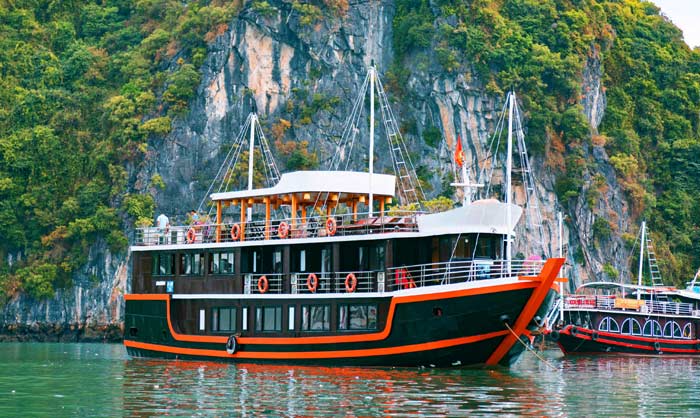
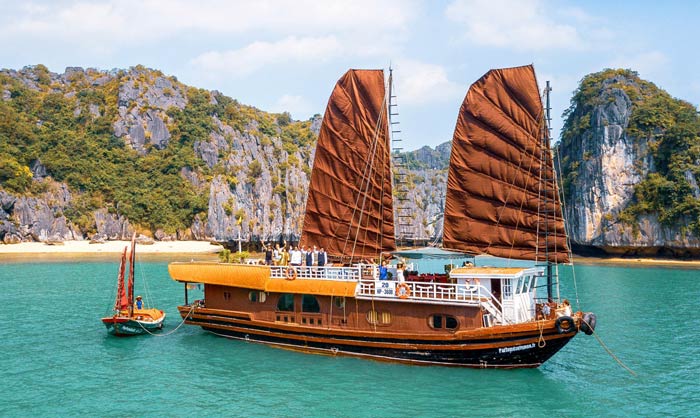
The great majority of our travellers arrive in Hanoi (or Ho Chi Minh City for a South-only circuit) and depart from Phnom Penh or Siem Reap. This direction follows the geographical thread and allows you to finish the trip at the temples of Angkor — often one of the most memorable moments of the journey, alongside Halong Bay in Vietnam.
- Entry point: Hanoi or Ho Chi Minh City
- Exit point: Phnom Penh or Siem Reap
- Border crossing: plane HCMC–Phnom Penh (1 hour) or river boat Chau Doc–Phnom Penh (5–6 hours)
The reverse option: Cambodia → Vietnam
This also works very well, particularly for travellers who want to travel Vietnam from south to north. You begin with Phnom Penh and Angkor, then enter Vietnam via Ho Chi Minh City and head north towards Hanoi.
The Mekong crossing: our recommendation
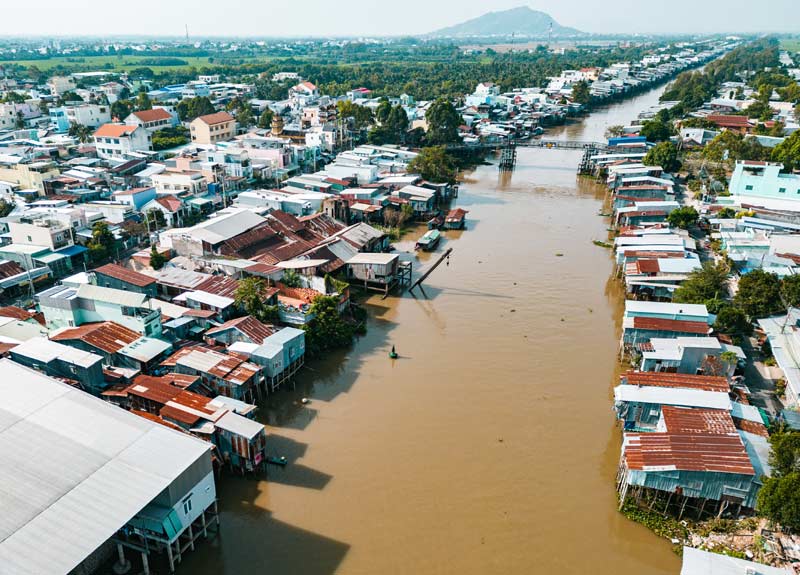
When time allows, we always suggest the river crossing between Chau Doc (Vietnam) and Phnom Penh (Cambodia). A full day on the Mekong, with the riverbanks imperceptibly shifting from one country to the other — it is one of the most gentle and memorable travel transitions we know.
What is the best time of year for a Vietnam–Cambodia trip?
The best period to combine Vietnam and Cambodia runs from November to April, with an optimum between December and March.
The two countries have distinct climates — which complicates the question, but less than you might fear.
| Period | Vietnam (South) | Cambodia | Recommended? |
|---|---|---|---|
| Nov – Feb | ✅ Ideal | ✅ Ideal (dry season) | ⭐⭐⭐ Perfect |
| Mar – Apr | ✅ Very good | ⚠️ Rising heat | ⭐⭐⭐ Excellent |
| May – Oct | ⚠️ Rain in the South | 🌧️ Rainy season | ⭐ Possible, adapt itinerary |
The important nuance: Vietnam is a long country. In November–December, the Centre (Hoi An, Hue) receives heavy rain, while the North and South are pleasant. From January to March, the country is broadly dry throughout.
Our Vietnam–Cambodia itineraries by duration
Whether you have 12 days or 3 weeks, there is a Vietnam–Cambodia itinerary suited to your pace and priorities.
In 10 to 12 days: the essential combination
With less than two weeks, it is better to focus on one region of Vietnam rather than trying to see everything. Two formulas work well:
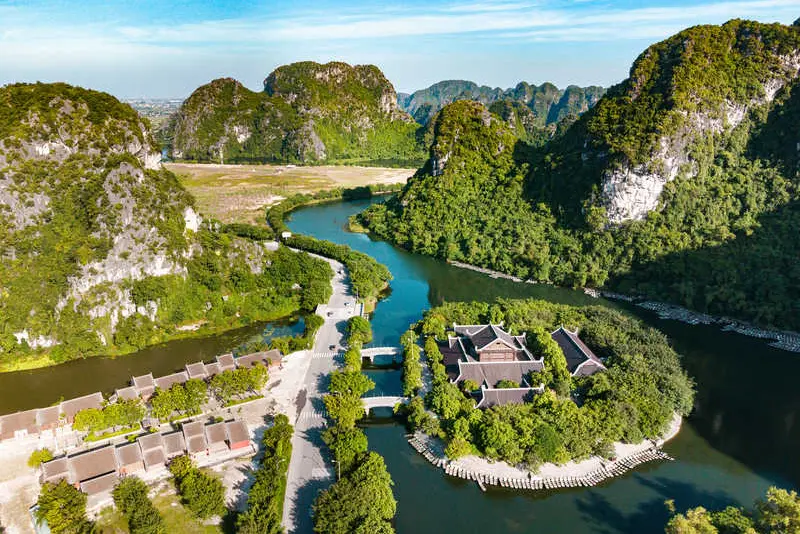
Northern Vietnam + Angkor: Hanoi, Halong (or Lan Ha), Ninh Binh, flight to Siem Reap from Hanoi, Angkor — 10 to 12 rich but well-paced days.
Southern Vietnam + complete Cambodia: Ho Chi Minh City, Mekong Delta, Chau Doc, Phnom Penh, Siem Reap — 12 days including the river crossing on the Mekong.
Browse these circuits on our Vietnam and Cambodia tours page.

In 15 days: the classic balanced itinerary
This is our most requested duration. It allows you to cover Vietnam’s highlights — Hanoi, Halong Bay (or Lan Ha), Hoi An, Ho Chi Minh City — with 4 to 5 days in Cambodia for Phnom Penh and Angkor.
A typical itinerary: Hanoi (2 days) → Halong / Lan Ha Bay (2 days) → Hoi An (2 days) → Ho Chi Minh City (1 day) → Mekong Delta (1 day) → Phnom Penh (2 days) → Siem Reap and Angkor (3 days).
See this itinerary in detail on our Vietnam Cambodia tours page.

In 3 weeks or more: the complete journey
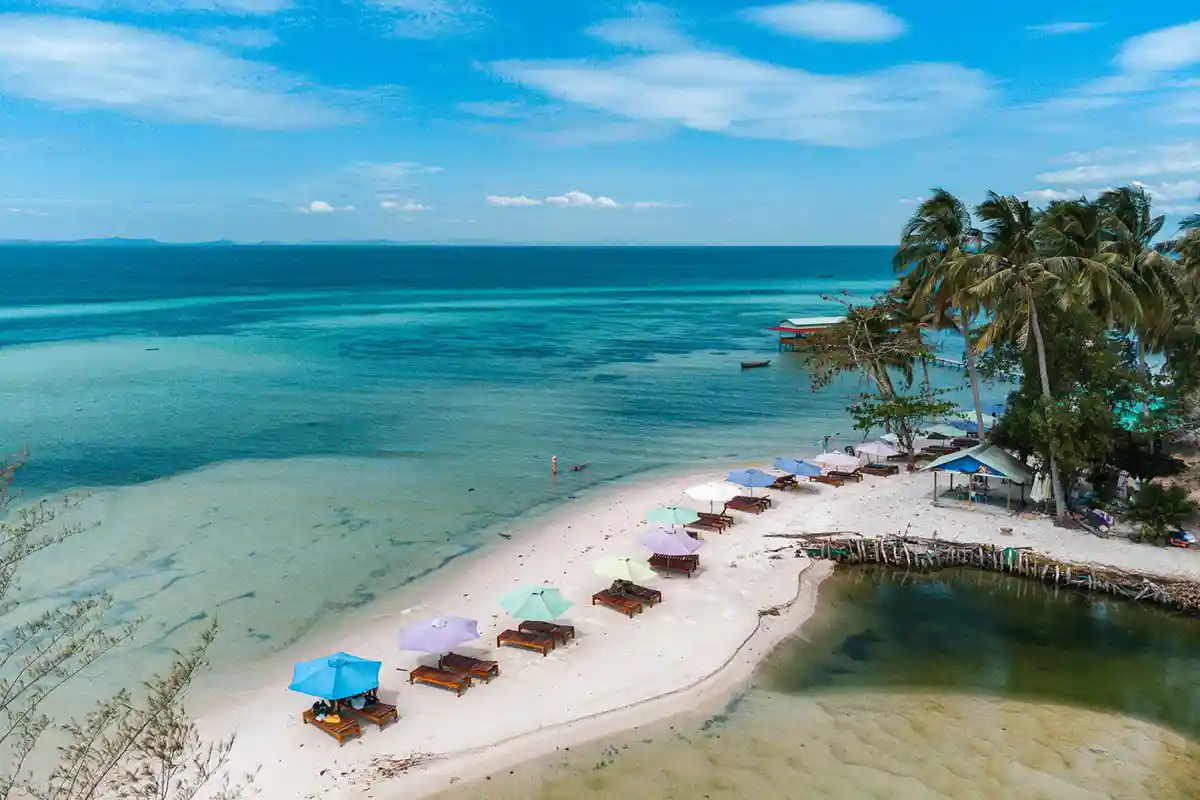
With 3 weeks, you can afford to slow down and explore what the combination has to offer at its best: adding Ha Giang or Pu Luong in the North, taking the time to experience the Mekong properly, spending a few days in Kampot or on Cambodia’s beaches.
Discover all our tailor-made Vietnam and Cambodia tours.
Practical information before you go
Visas, transport and budget: here is the essential information for planning a combined Vietnam–Cambodia trip with peace of mind.
Visas: two simple procedures
Vietnam: e-visa available online, valid for 90 days, multiple entry. Processing time: 3 working days. Cost: USD 25. Note: French, Belgian and Swiss nationals benefit from a 45-day visa exemption.
Cambodia: e-visa available online, valid for 30 days, single entry. Processing time: 3 working days. Cost: USD 36.
Both procedures are simple and entirely online. Apply at least 10 days before departure to avoid any last-minute stress.
How to travel between the two countries
- Plane Ho Chi Minh City → Phnom Penh: 1 hour, frequent departures, from €60–80.
- River boat Chau Doc → Phnom Penh: 5 to 6 hours on the Mekong. A peaceful and memorable crossing.
- Bus Ho Chi Minh City → Phnom Penh: 6 to 7 hours, cheaper but less comfortable.
Budget guide
- Accommodation: €40 to €100 per night depending on category
- Meals: €5 to €20 per person depending on the type of establishment
- Internal transport: allow €150 to €300 for a 15-day circuit
- Angkor pass: USD 37 per day or USD 62 for 3 days
Ready to plan your Vietnam–Cambodia trip?
A Vietnam–Cambodia combined tour is one of the most complete journeys you can take in Asia: two countries, two distinct worlds, and a geographical and cultural continuity that gives the whole stay a genuine coherence.
At Parfum d’Automne, we design every journey individually from Hanoi — with English-speaking guides, an intimate knowledge of the terrain, and close attention to calibrating the pace to your traveller profile. No rushing, no unnecessary stages.
If you are still weighing up the two countries independently, our article Vietnam or Cambodia: our guide to choosing can help you decide.