


















You are torn between Vietnam and Laos for your next trip to Southeast Asia, and that is perfectly natural: the two neighbours have a lot in common, yet they offer very different experiences.
From our agency in Hanoi, we help travellers every year who are asking themselves exactly this question. Here are our practical pointers to help you decide, according to your interests, your budget and your pace, without jargon or vague promises.
Vietnam or Laos: what are the key differences?
Vietnam wins you over with its variety and energy, Laos with its slow pace and unspoilt nature: two complementary trips rather than opposites.
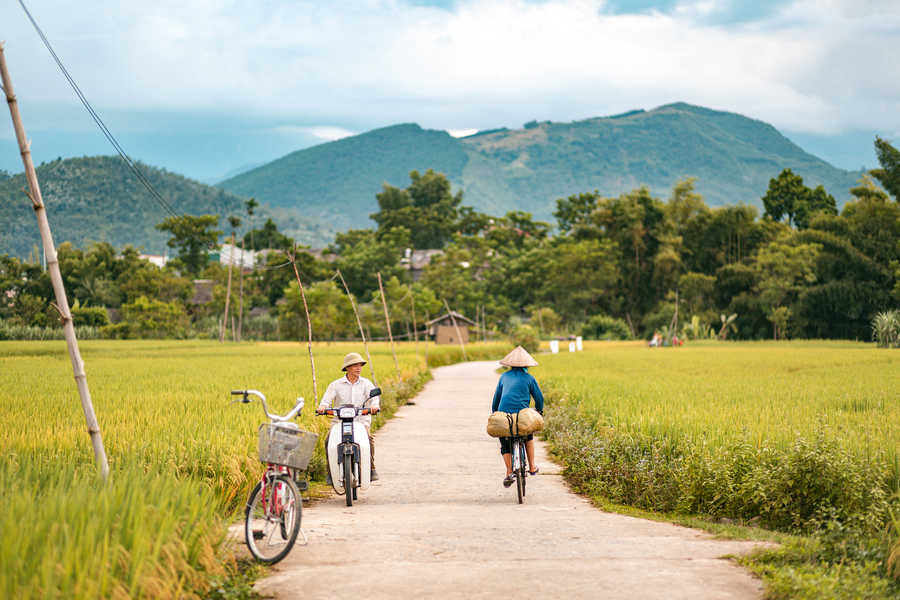
On the ground, the difference is obvious from the start. Vietnam is a country on the move: from Hanoi’s bustling markets to the beaches of the centre, from the rice terraces of the north to the Mekong Delta, the atmospheres and landscapes keep changing. Laos, on the other hand, invites you to slow down. Less populated and more rural, it lives to the rhythm of the river and its temples, in a peaceful atmosphere that many of our travellers describe as restorative.
For a quick overview, here is our summary:
| Criterion | Vietnam | Laos |
|---|---|---|
| Atmosphere | Dynamic, varied, sometimes intense | Peaceful, contemplative, authentic |
| Landscapes | Sea, rice fields, karst, mountains | Mountains, jungle, Mekong, villages |
| Pace | Busy, lots to see | Slow, ideal for switching off |
| On-the-ground budget | Affordable | Slightly higher day to day |
| Transport | Very well developed | Slower, by road and boat |
| Ideal for | A first trip, variety | Nature, calm, off the beaten track |
Neither is “better” in absolute terms: it all depends on the kind of trip you are looking for.
Which country has the most beautiful scenery and the most unspoilt nature?
Vietnam impresses with the variety of its landscapes, while Laos offers wilder, more mountainous and remarkably well-preserved nature.
Vietnam plays the diversity card. In a few days, you go from the karst peaks of Halong Bay to the stepped rice terraces of Sapa or Ha Giang, then on to the beaches of the centre and the canals of the Mekong Delta. This range explains why so many first trips to Asia begin here.

Laos focuses on the intensity of a single register: mountains, forest and river. Around Luang Prabang, the Kuang Si waterfalls and the Pak Ou caves create scenes of great gentleness. Further south, Vang Vieng and its karst peaks, then the Bolaven Plateau and its coffee plantations, offer nature that still sees few visitors. If you dream of a country untouched by mass tourism, Laos will move you.

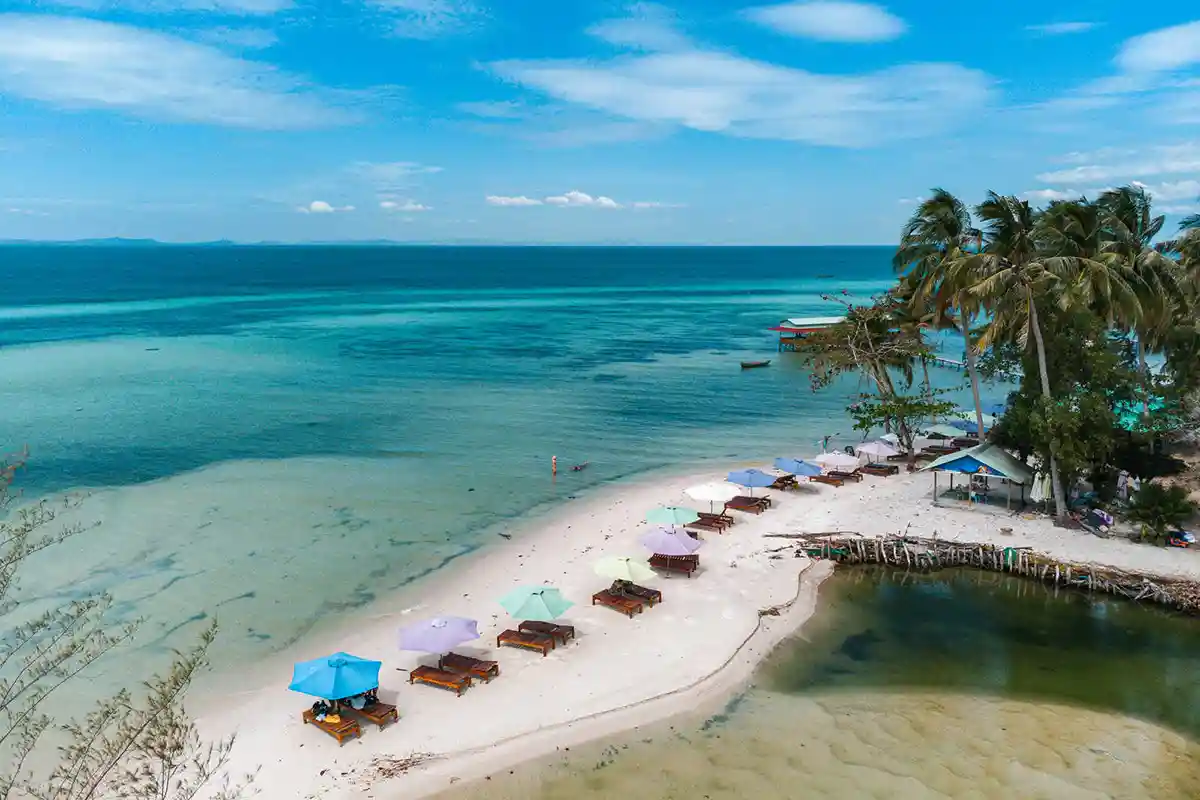
One practical point to remember: Laos is landlocked, with no access to the sea. If beaches are part of your plans, Vietnam and its long coastline have the edge.
Vietnam or Laos: which is better for culture and history?
Vietnam offers a dense history shaped by China, France and its imperial dynasties, while deeply Buddhist Laos shows its spirituality daily.
Both countries are rich, but in different ways. Vietnam carries a dense history, marked by Chinese and French influences, imperial dynasties and decades of war. You can see it everywhere: in the imperial city of Hue, the colonial heritage of Hanoi, the Cu Chi tunnels near Saigon, or the old town of Hoi An, where traditional houses and colonial façades stand side by side.
Laos, deeply Buddhist, has a spirituality that is more visible in everyday life. Luang Prabang, a UNESCO World Heritage Site, is its heart: early in the morning, the monks’ alms round through the silent streets remains one of the most striking scenes of any trip to Southeast Asia. The mysterious Plain of Jars, in Xieng Khouang province, adds a touch of enigma to this heritage.

In short: Vietnam will appeal to history lovers and those who want varied sites, Laos to those drawn by spirituality and serenity.
What budget should you plan for a trip to Vietnam or Laos?
On the ground, Laos is often slightly more expensive than Vietnam, and international flights to Vietnam are more frequent and cheaper.
In both countries, the cost of living remains reasonable for international travellers. The real difference lies in accessibility. Whether you fly from Europe, North America or Australia, there are far more flights to Vietnam, often at lower fares, while Laos is usually reached with a connection via Bangkok or Hanoi. Once there, Vietnam’s denser transport network also makes it easier to optimise journeys, and therefore your budget.
A few useful pointers when planning:
- Vietnam has frequent, inexpensive domestic flights, very handy for covering long distances.
- Laos requires more time on the road, which can lengthen your stay and, indirectly, its cost.
- In both countries, accommodation, meals and English-speaking guides offer excellent value for money.
For a controlled budget and smooth logistics, Vietnam offers more flexibility. Laos lends itself to a slower trip, where the quality of each stop matters more than their number.
When is the best time to visit Vietnam or Laos?
The best time for both northern Vietnam and Laos is from October to April, during the dry season, when the weather is cooler and brighter.
This is a point we often stress: Vietnam stretches about 1,650 kilometres from north to south, and its climate varies greatly from one region to another. Laos, more compact, follows a rhythm close to that of northern Vietnam. This table shows the ideal windows:
| Region | Best time | Period to avoid |
|---|---|---|
| Northern Vietnam | October to April | June to August: heat and rain |
| Central Vietnam | February to August | September to December: typhoons |
| Southern Vietnam | November to April | May to October: monsoon |
| Laos | November to April | June to September: rainy season |
In practice, if you want to combine northern Vietnam and Laos, October to April is ideal for both. From November to February, you will enjoy dry, pleasant weather, with mornings that can be cool at altitude, in Sapa as well as in the Lao highlands.
Is it easy to get around and to cross the border between the two countries?
Vietnam has a highly developed transport network, while Laos relies on slower journeys by road or along the Mekong River.
In Vietnam, everything is designed to cover long distances easily: frequent domestic flights, trains, good roads and ride-hailing apps such as Grab in the big cities. It is one of the most comfortable countries in Southeast Asia for a first trip.
In Laos, the pace is different. Distances are mainly covered by road, sometimes by boat on the Mekong, and you have to accept longer journeys. Far from being a drawback, this slowness is part of the country’s charm and its invitation to slow down.
As for crossing the border between the two countries, one important piece of advice: overland formalities can change and become complicated depending on the checkpoint. For Laos, it is wise today to arrange your visa in advance rather than rely on getting it at a land border. In practice, many of our travellers prefer to fly from Hanoi to Luang Prabang, which is simpler and more comfortable. This is exactly the kind of detail we take care of for you, to avoid any unpleasant surprises on the road.
Do you really have to choose between Vietnam and Laos, or can you combine them?
You do not have to choose: linking northern Vietnam with Luang Prabang in a single trip is easy in about ten days or more.
This is often our recommendation when time allows. The two countries complement each other beautifully: Vietnam’s energy and variety on one side, the serenity of Laos on the other. A logical route starts in northern Vietnam, with Hanoi, Lan Ha Bay or Ninh Binh and the rice fields of Pu Luong, before reaching Luang Prabang, usually on a flight from Hanoi.
Here are the lengths we regularly suggest:
- 10 to 12 days: the highlights of northern Vietnam and time in Luang Prabang, as in our tour Essentials of North Vietnam and Luang Prabang in 10 days.
- 15 days or more: a fuller combination, with Sapa or Ha Giang in Vietnam and a wider discovery of Laos.
- 3 weeks: enough to add central Vietnam, or to continue into Cambodia for a grand tour of former Indochina.
We design this kind of tailor-made route from Hanoi, adapting each stage to your pace and the season. You can find several itinerary ideas on our page dedicated to Vietnam and Laos tours, designed to move from one country to the other seamlessly.
So, Vietnam or Laos: which should you choose for your travel style?
Choose Vietnam for variety and action, Laos for serenity, or combine the two if you have at least two weeks for your trip.
To help you decide at a glance, here are our pointers by type of traveller:
- First trip to Southeast Asia: Vietnam, easier to organise and more varied.
- Looking for unspoilt nature and calm: Laos, without hesitation.
- Beach and city lovers: Vietnam, with its coastline and big cities.
- Seeking spirituality and a slower pace: Laos and its unique atmosphere.
- Optimising budget and logistics: Vietnam, more accessible and better connected.
- Two weeks or more ahead of you: combine both, for the best of each country.
In the end, there is no wrong answer: there is the trip that suits you. If you are still undecided, we will be delighted to talk it through with you from Hanoi and suggest the itinerary that best matches your wishes.
FAQ: Vietnam or Laos
Vietnam or Laos: which is better for a first trip?
Vietnam, more varied and easier to organise, is very well suited to a first trip. Laos will appeal to those looking above all for calm and nature.
Is Laos more expensive than Vietnam?
On the ground, Laos is often slightly more expensive, and international flights there are rarer. Vietnam is generally cheaper overall and better connected.
When is the best time to combine Vietnam and Laos?
From October to April, during the dry season, and ideally from November to February for mild weather in northern Vietnam as well as in Laos.
How do you get from Hanoi to Luang Prabang?
The simplest option is the direct flight, which takes about an hour. The road is possible, but long and tiring, and formalities at land borders can vary.
Do you need a visa for Laos?
Yes, for most travellers. It is wise to apply for the e-visa before departure rather than rely on a visa issued at a land border.
How many days do you need to combine Vietnam and Laos?
Allow 10 to 12 days for northern Vietnam and Luang Prabang, and 15 days or more to add Sapa or Ha Giang and explore more of Laos.