











The Mekong is one of Asia’s great rivers, flowing more than 4,300 kilometres from the Tibetan plateau to the many arms of the Vietnamese delta. For travellers visiting Vietnam and Cambodia, a Mekong cruise is often a lovely way to travel from one country to the other. Markets, pagodas, stilt houses and children playing on the banks drift slowly past, at a pace we have almost forgotten how to travel at.
Here we give you everything you need to make your choice: how long to go for, which type of boat to pick and the best time of year.
What is a Mekong cruise, in practice?
A Mekong cruise is a river journey of several days through the Vietnamese delta and the Cambodian plains, on board a small boat.
It is not an ocean cruise. There is no theatre, no Olympic-size pool and no thousands of passengers. We are talking about river boats that carry a small number of guests, from a private junk to around fifty people, sailing along waterways that are sometimes very narrow, with stops in villages that cannot be reached any other way.
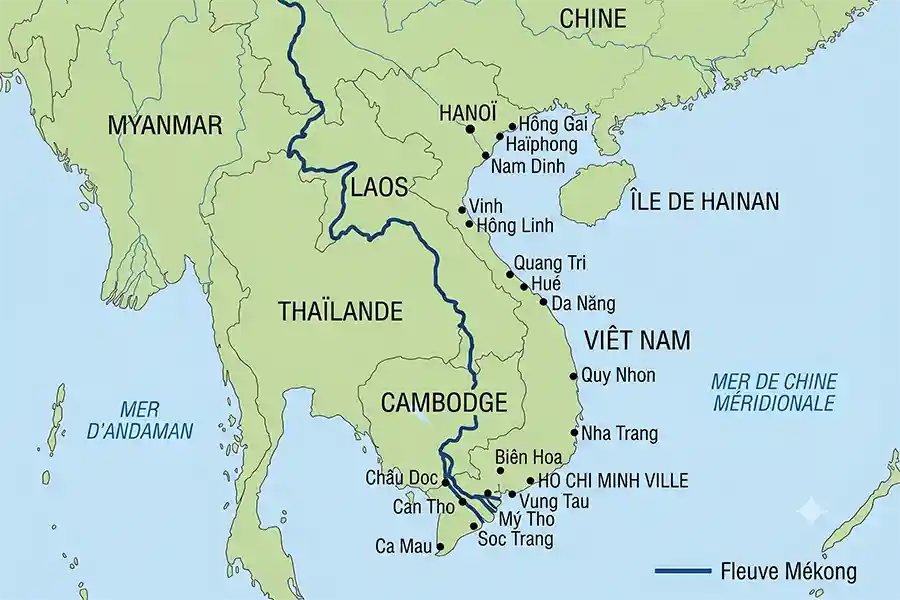
The Mekong flows through six countries, but the cruises we describe here mainly cover two stretches: the Mekong Delta in Vietnam, around Can Tho, Cai Be, Sa Dec and Chau Doc, and the cross-border stretch between Ho Chi Minh City and Siem Reap. The atmosphere is very different on each. The Vietnamese delta is dense, lively and agricultural, while the Cambodian Mekong is wilder and more contemplative, with scenery that changes at every bend.
On board, days follow a simple rhythm: sailing in the morning, a stop by rowing boat in a village or at a floating market, meals shared together, sunrise over the river from the deck. The pace is slow, and that is precisely why people remember it so fondly.
What are the most common Mekong cruise itineraries?
Mekong cruises mainly follow two types of route: the Vietnamese delta on its own, or the long cross-border journey between Vietnam and Cambodia.
A Mekong Delta cruise from Saigon
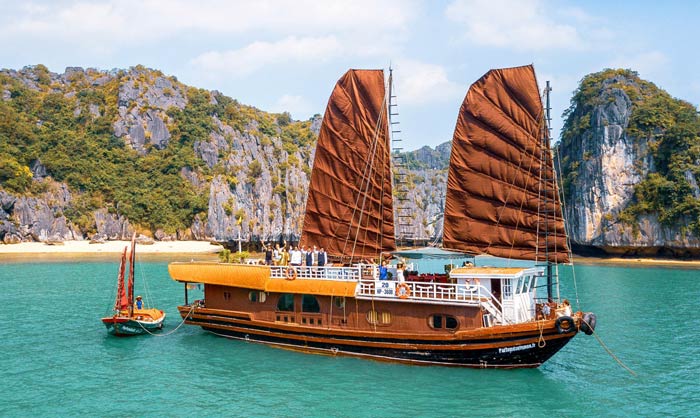
This is the most accessible and flexible option. You leave Ho Chi Minh City and, over two to four days, travel up the arms of the delta to Can Tho, stopping at Cai Be and its floating market, Sa Dec, where the French writer Marguerite Duras grew up, and Vinh Long with its islands covered in orchards. The boats used are often small converted wooden junks, comfortable without being luxurious. It is ideal for travellers exploring Vietnam from north to south who want to end with the delta before flying home from Saigon.
The Vietnam–Cambodia cruise: from Saigon to Siem Reap
This is the grand itinerary. You board in Ho Chi Minh City, or in Chau Doc near the border, and sail upriver to Phnom Penh, then on towards Siem Reap and the temples of Angkor. The journey usually lasts between 7 and 12 days depending on the boat and the stops chosen. You cross the river border between Vietnam and Cambodia near Chau Doc, discover Phnom Penh from an angle that overland tours rarely offer, and Tonle Sap Lake reveals truly striking floating villages. The route also runs in reverse, from Siem Reap to Saigon.
The Laos and Upper Mekong options
Less well known, some cruises sail up the Mekong from Thailand to Luang Prabang in Laos. The river is narrower there, the landscapes more mountainous and the journey more adventurous. Some operators also link Chiang Rai with Luang Prabang. This kind of route is harder to fit into a classic Vietnam tour, but it exists for those looking for something genuinely different.
When is the best time for a Mekong cruise?
The best time for a Mekong cruise is the dry season, from November to April, ideally December to February for the most pleasant temperatures.
The main constraint is not the rain itself, since monsoon showers are short and warm, but the water level. During the high-water season, from August to November, Tonle Sap in Cambodia is navigable and offers spectacular views of the flooded plains. In the dry season the level drops and some channels become impassable for larger boats, but sailing conditions are more stable and excursions by rowing boat are easier.
| Period | Conditions | What to expect |
|---|---|---|
| November – January | Dry season, pleasant temperatures of 25–30°C | Ideal: fine weather, smooth sailing, low humidity |
| February – April | Dry season, rising heat | Very good, especially for Cambodia |
| May – July | Start of the monsoon | Frequent rain, some boats reduce their programmes |
| August – October | High water, monsoon | Extraordinary scenery on Tonle Sap, but some routes are adjusted |
One important point: premium cruise boats generally sail the Vietnam–Cambodia stretch from August to April, and some do not operate at the height of the monsoon. Always check the schedule of the company you choose.
How many days do you need for a Mekong cruise?
A Mekong cruise lasts from 2 to 14 days depending on the route: 2 to 4 days in the Vietnamese delta, 7 to 12 days between Vietnam and Cambodia.
| Format | Length | Ideal for |
|---|---|---|
| Delta mini-cruise | 2 – 4 days | An extension from Ho Chi Minh City, a first taste of the Mekong |
| Cross-border cruise | 7 – 10 days | Combining Vietnam and Cambodia by river |
| Grand Vietnam–Cambodia journey | 12 – 14 days | A complete themed trip, with Angkor as the highlight |
In practice, a two- or three-day mini-cruise in the Mekong Delta is easy to add at the end of your Vietnam tour, at a reasonable cost. Others prefer to make the river the backbone of their trip, combining Vietnam and Cambodia by water. It is a particularly coherent and memorable approach, but a fairly expensive one.
How do you choose a boat for a Mekong cruise?
Your choice of boat depends above all on budget, how many fellow passengers you want and the comfort you expect, from local junks to upscale ships.
Small boats and local junks
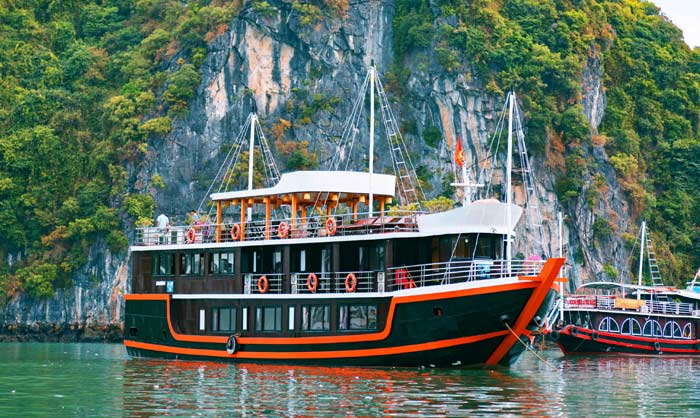
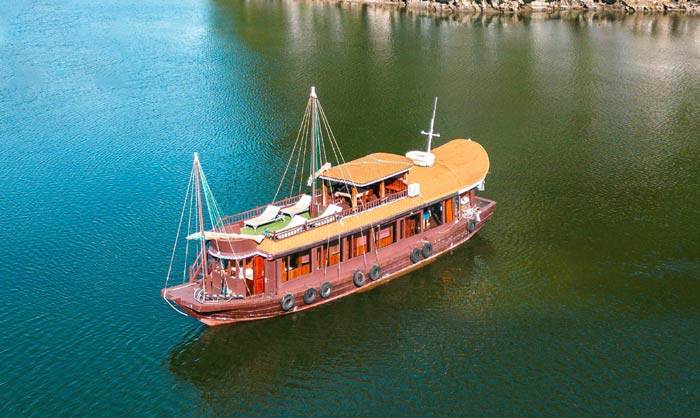
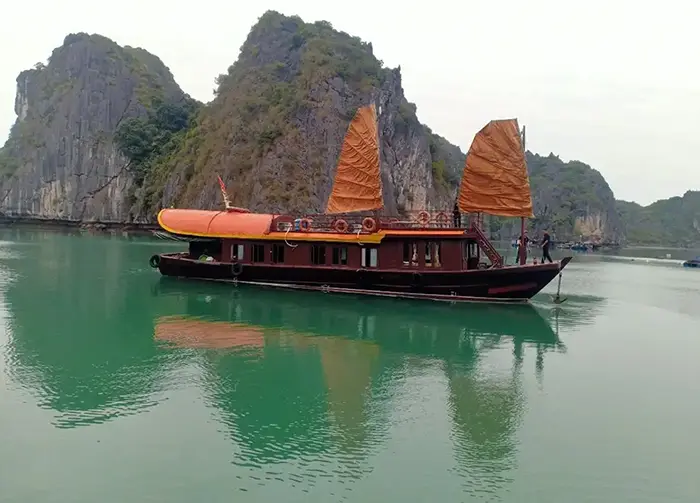
In the Vietnamese delta, several wooden junks offer 2- to 3-day cruises between Cai Be and Can Tho, with 6 to 16 private cabins, a restaurant on board and a sampan tender for trips into the narrow canals. These are the boats that can go where large ships cannot: a rice noodle workshop, a potters’ village, an orchard on an island that only a flat-bottomed boat can reach.
Among the well-established names in the delta:
- Le Bassac: a wooden junk built on the hull of an old rice barge, with 6 cabins and daily departures between Can Tho and Cai Be. It was one of the pioneers of river cruising in the delta and remains a safe choice for a first experience.
- Le Cochinchine: a more comfortable, colonial-style boat with around fifteen cabins. A similar programme on the same stretch, with a slightly higher level of service.
- Song Xanh: a fleet of small private sampans for 2 to 6 people at most, ideal for couples or families who prefer not to share the deck with other passengers.
- Mien Tay and Mekong Eyes: two other well-rated boats, offering slightly different routes depending on the season.
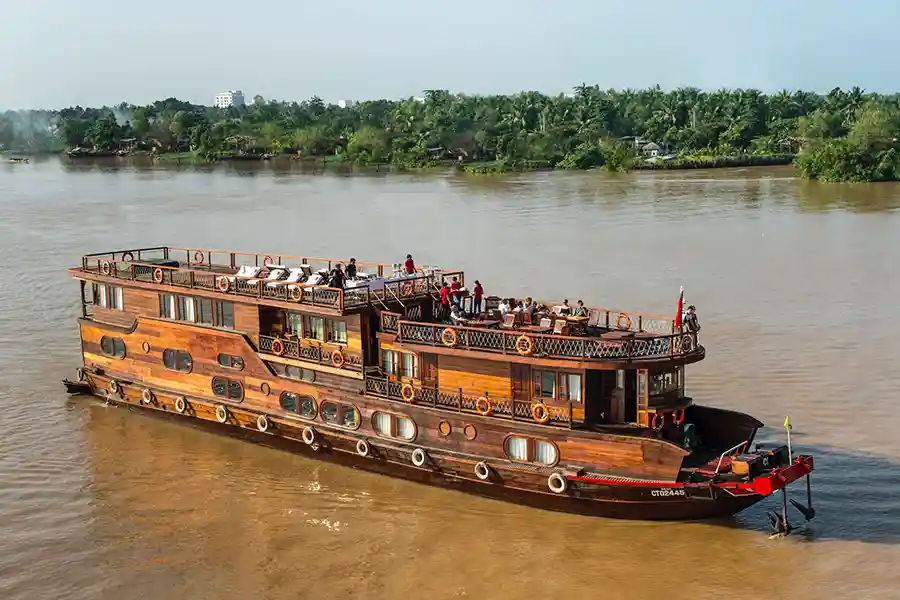
Prices remain reasonable, but allow between 250 and 450 USD per person, about 6.3 to 11.3 million VND, for two nights all inclusive, depending on the boat and the season. The experience is more authentic and less formatted than on large ships. This is what we always recommend to travellers who want to really feel the life of the delta rather than watch it from a panoramic deck.
Premium cruise ships
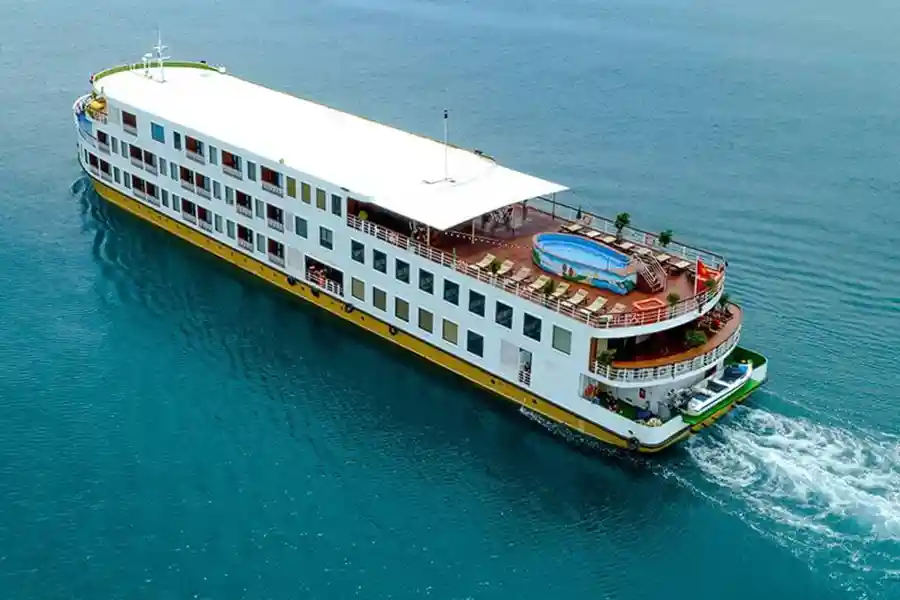
For the Vietnam–Cambodia route, several companies operate ships with 40 to 90 cabins, a panoramic restaurant, a bar, a terrace and sometimes a pool. Well-known names include the RV La Marguerite, with 46 cabins in colonial style, CroisiEurope’s RV Indochine I and II, which sail from August to April, and the Heritage Line Jahan for lovers of luxury. These ships offer structured programmes with guides, talks on board and included excursions. Allow about 1,800 to 4,800 USD per person, roughly 45 to 120 million VND, for 8 to 10 days all inclusive, depending on the season and cabin category.
How can you fit a Mekong cruise into a Vietnam tour?
A Mekong cruise fits naturally at the end of a Vietnam tour, before or after an extension to Cambodia, without breaking the rhythm of the trip.
This is often how we suggest it at Parfum d’Automne: after travelling down Vietnam from north to south, through Hanoi, Lan Ha Bay, Hue, Hoi An and Ho Chi Minh City, the Mekong Delta becomes the natural finale, before flying home from Saigon or continuing to Cambodia.
For travellers who want to combine Vietnam and Cambodia, a river cruise between the two countries is far more rewarding than a flight or a bus: you cross the border by water, you lose no day to transport, and you reach Phnom Penh or Siem Reap having already lived something unique. Our article Vietnam and Cambodia: why and how to combine the two countries also covers the other ways of travelling between them.
All our Vietnam and Cambodia tours can be adapted to include a Mekong cruise, whether a mini-cruise in the delta or a long cross-border journey. We choose the boats according to your preferences, budget, the season and the time you have.
What formalities do you need for a cruise between Vietnam and Cambodia?
A cruise between Vietnam and Cambodia requires a Cambodian visa, which is usually issued on arrival at the Kaam Samnor river border post.
This is the practical point travellers most often overlook. Here is what to remember:
- Vietnam visa: citizens of the United Kingdom and several European countries are exempt for 45 days. Others, including US, Canadian and Australian citizens, apply online for an e-visa valid for up to 90 days. Check the rules when you book, as they can change.
- Cambodian visa: it is compulsory. As the e-visa is generally not accepted at the river crossing, the visa is issued on arrival at Kaam Samnor for about 30 USD, roughly 750,000 VND, plus a passport photo. Check the conditions with your cruise company before departure.
- Travel insurance: essential for this kind of trip. Make sure it covers river activities and every country you pass through.
Cruise companies usually inform their passengers about these formalities, but it is best to deal with them several weeks ahead, especially in high season.
The slow pace of the journey, the stops in villages that mass tourism has not yet reached, the sunsets over the water from the deck: together they create a kind of experience few trips in Vietnam can offer. If you are considering a tour combining both countries, or simply a river interlude at the end of your stay, we will be happy to help you build the itinerary that matches what you are really looking for.
FAQ: Mekong river cruises
How long does a Mekong cruise last?
From 2 to 4 days in the Vietnamese delta, and from 7 to 12 days for the grand route between Ho Chi Minh City, Phnom Penh and Siem Reap.
When is the best time for a Mekong cruise?
The dry season, from November to April, especially December to February for mild temperatures. The large cross-border ships generally sail from August to April.
How much does a Mekong Delta cruise cost?
Allow about 250 to 450 USD per person, roughly 6.3 to 11.3 million VND, for two nights all inclusive on a delta junk. Large Vietnam–Cambodia ships cost about 1,800 to 4,800 USD for 8 to 10 days.
Do you need a visa to enter Cambodia by boat?
Yes. The Cambodian visa is generally issued on arrival at the Kaam Samnor river border post, for about 30 USD. For Vietnam, UK citizens are exempt for 45 days, while US citizens need an e-visa.
Which boat should you choose for the Mekong Delta?
A wooden junk such as Le Bassac or Le Cochinchine for a first experience, or a private Song Xanh sampan to explore the narrow canals as a couple or a family.
Can you add a Mekong cruise to a Vietnam tour?
Yes, ideally at the end of the trip, after travelling from north to south, before flying home from Saigon or continuing to Cambodia by river.