






Packing for Vietnam often catches travellers off guard. On a single trip, you can go from a misty morning below 10°C in the hills of Sapa to a 32°C afternoon in the Mekong Delta.
We have been welcoming travellers in Hanoi since 2005, and we regularly meet people who brought only summer clothes for the north in January, or a heavy jumper that never leaves the bag in Saigon. Here is the list we recommend, region by region and season by season, so you can travel light without forgetting anything important.
What is the weather like in Vietnam by region and season?
Northern Vietnam has a cool winter from November to March, the centre has an autumn rainy season, and the south stays hot all year round.
If your trip covers the whole country, our one-month Vietnam itinerary from north to south shows how these climates follow one another along the way.
Vietnam stretches more than 1,600 kilometres, with mountains in the north and a long coastline in the centre. The table below sums up what we see on the ground; temperatures are indicative and vary from year to year.
| Region | Period | Typical temperatures | What to bring |
|---|---|---|---|
| Hanoi, Ninh Binh, Halong Bay | November to March, cool and often grey | About 12 to 22°C | Jumper, windproof jacket, trousers |
| Hanoi, Ninh Binh, Halong Bay | April to October, hot, humid and stormy | About 28 to 35°C | Light clothes, thin rain jacket |
| Sapa, Ha Giang, Cao Bang | December to February, cold | About 0 to 15°C | Light down jacket, fleece, hat |
| Hue, Hoi An, Da Nang | February to August, dry and hot | About 25 to 35°C | Linen, cotton, sun hat, sunscreen |
| Hue, Hoi An, Da Nang | September to December, rain and possible typhoons | About 20 to 28°C | Rain jacket, quick-drying shoes |
| Saigon, Mekong Delta, Phu Quoc | December to April, dry season | About 25 to 34°C | Light outfits, swimwear |
| Saigon, Mekong Delta, Phu Quoc | May to November, daily showers | About 25 to 32°C | Poncho, sandals |
What clothes should you bring to Vietnam?
Go for light cotton or linen clothes that you can layer, plus one warm layer if you travel through the north between November and March.
Whatever the season, the basics stay the same: breathable fabrics that dry quickly, because humidity is high almost everywhere. For a two- to three-week trip, this wardrobe covers most situations:
- five to seven T-shirts or light shirts, including at least two with long sleeves for sun and mosquitoes;
- two pairs of light trousers and shorts or a skirt that covers the knees;
- a thin waterproof jacket, useful in every season;
- a jumper or fleece, even for the south, because of air-conditioned buses, trains and planes;
- light walking shoes and a pair of sandals;
- swimwear and one slightly smarter outfit for dinner.
There is no need to pack an outfit for every day: most hotels offer a laundry service, and many neighbourhood shops wash clothes by the kilo for a modest price, often within 24 hours.
What should you pack for northern Vietnam and the mountains?
In the north, your packing really depends on the season, with proper warm clothes for winter in the mountains and rain protection in summer.
In winter, from November to March
This is the season that surprises our travellers most. In Hanoi, the sky is often grey and the humidity makes the cold feel sharper, especially as most homes and small hotels are not heated. In the mountains, in Sapa, around Ha Giang, now part of Tuyen Quang province, or near Cao Bang, nights can drop close to 0°C in December and January. Bring:
- a light packable down jacket or a good fleece;
- a hat, a scarf and thin gloves for early starts;
- warm trousers and thick socks for homestay nights;
- closed, ideally waterproof shoes for muddy trails.
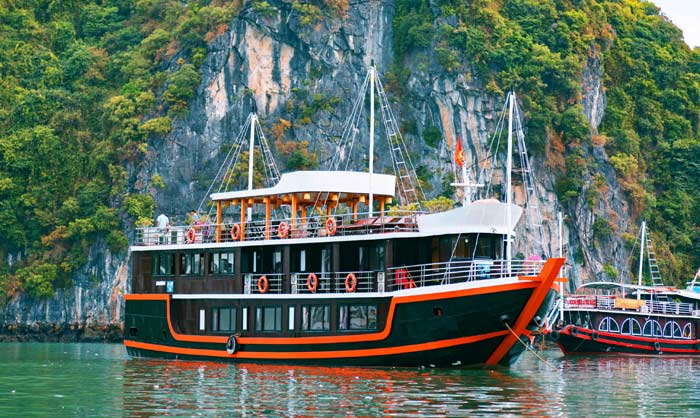
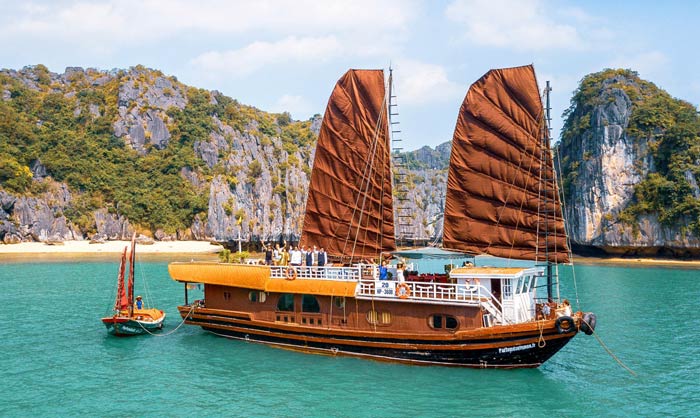
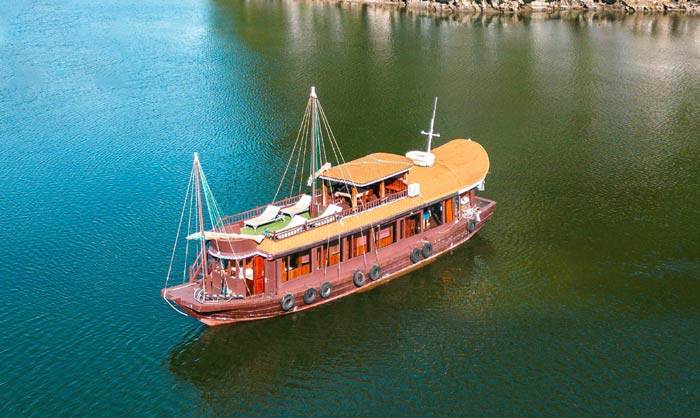
In Halong or Lan Ha Bay, evenings on the junk’s deck are cool and windy in winter, so keep a warm layer in your cabin bag.

In summer, from April to October
The heat in Hanoi is heavy, often above 30°C with high humidity, and storms tend to break in the late afternoon. Pack very light clothes, a water bottle, a cap and a thin rain jacket, which is easier than an umbrella when walking. In the mountains the days are pleasant, but rain makes the trails slippery, so sturdy shoes with a good grip are essential for treks around Sapa.
What should you pack for central and southern Vietnam?
In central and southern Vietnam, summer clothes work most of the year, with a rain jacket in the wet season and a light jumper for air conditioning.
Hue, Hoi An and Da Nang
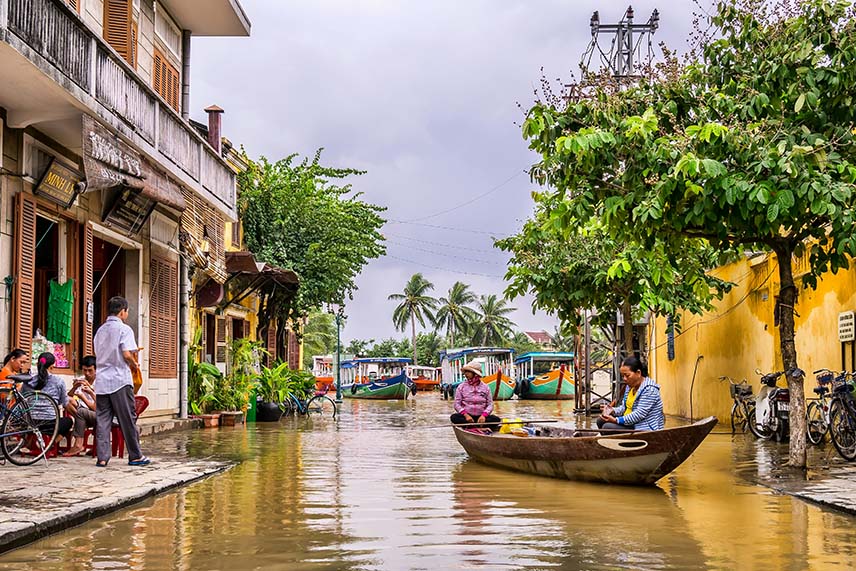
From February to August, the centre is dry and hot; a hat, sunglasses and sunscreen are essential for visiting Hue’s citadel or wandering around Hoi An. From September to December, the rainy season can be intense, with possible typhoons in October and November and occasional flooding in Hoi An’s old town. Bring a proper rain jacket or poncho, sandals that can get wet and a few waterproof pouches for your documents and phone.
Saigon, the Mekong Delta and the islands
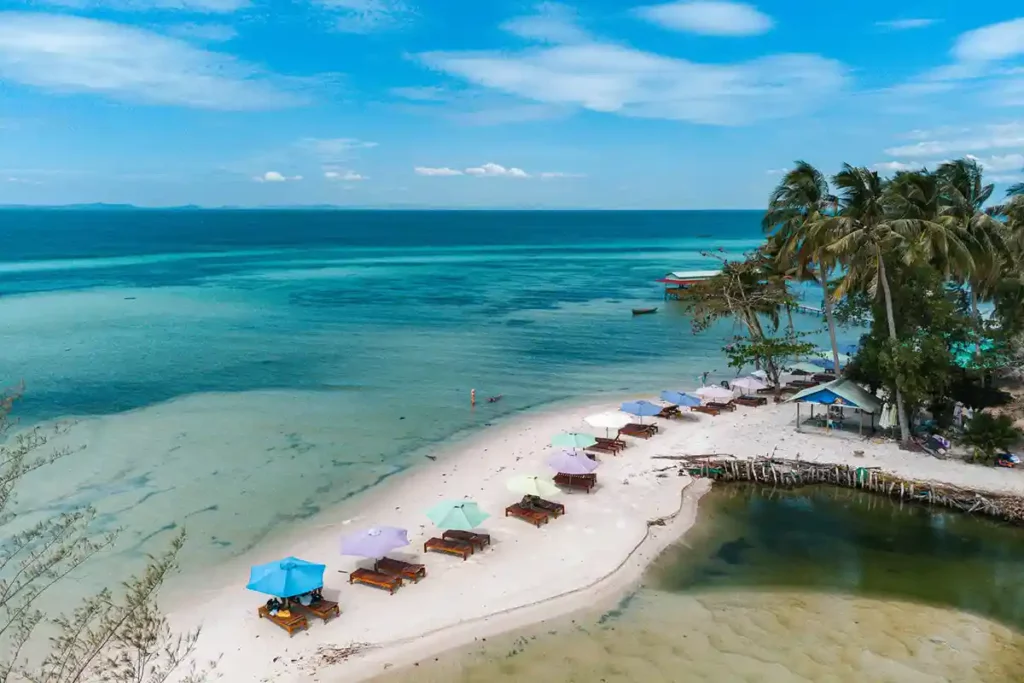
Ho Chi Minh City and the delta are hot all year, at around 30°C. Light clothes, sandals, a poncho and swimwear are enough. For Phu Quoc or Con Dao, add a UV-protective T-shirt if you plan to snorkel: the sun is strong on the water, even on hazy days.
How should you dress to visit temples and pagodas?
To enter a pagoda, a temple or an official site in Vietnam, cover your shoulders and knees and wear shoes that are easy to slip off.
At the Ho Chi Minh Mausoleum in Hanoi, short shorts, tank tops and short skirts are refused at the entrance. Modest clothing is also expected in pagodas and in the places of worship within Hue’s Imperial City. In pagodas, you will often take your shoes off before entering the sanctuary.
Our tip from the field: keep a large scarf or a light sarong in your day bag. It covers your shoulders in seconds, protects you from the sun and doubles as a beach towel.
What should you put in your first-aid kit for Vietnam?
A small kit with painkillers, anti-diarrhoea tablets, insect repellent, sunscreen and your usual medication covers most minor travel issues.
Pharmacies are everywhere in Vietnamese cities, but brands and doses differ from home, and they are harder to find in the mountains. We recommend bringing:
- your usual medication in sufficient quantity, in its original packaging, with the prescription;
- paracetamol and a treatment for traveller’s diarrhoea;
- an insect repellent suitable for tropical areas;
- high-factor sunscreen and after-sun;
- plasters, disinfectant and hand gel;
- motion sickness tablets if you are prone to it, for mountain roads and boats.
For vaccinations and malaria prevention, which only concerns some rural and forest areas, ask your doctor or a travel clinic a few weeks before departure.
Which documents and accessories should you not forget?
A passport valid for six months, travel insurance, a plug adapter and some cash are the essentials to check before you close your bag.
Citizens of France, Belgium and Switzerland can stay in Vietnam visa-free for up to 45 days, and other nationalities have their own rules. For longer stays, or if your country is not exempt, apply for an e-visa valid for up to 90 days, only on the official site evisa.gov.vn: US$25 for a single entry or US$50 for multiple entries. Keep a digital copy of your passport and insurance on your phone.
- a universal adapter: the voltage is 220V and sockets usually take flat-pin type A and round-pin type C plugs;
- a power bank for long days and night trains;
- a head torch, handy in caves, in villages and during power cuts;
- a reusable water bottle, as more and more hotels and boats offer filtered water.
As for money, bring some cash for markets and villages, where cards are rarely accepted; US$1 is worth about 25,000 VND.
What is best left at home?
Leave behind e-cigarettes, which are banned in Vietnam, heavy clothes that are slow to dry and any valuables you can easily do without.
Since 1 January 2025, Vietnam has banned the import, sale and use of e-cigarettes and heated tobacco. Since late 2025, using them can lead to a fine of VND 3 to 5 million, roughly US$115 to US$190, and the device is destroyed. Drones require a permit, so check the rules before packing one.
Also avoid thick jeans, which take ages to dry, valuable jewellery and high heels, which are impractical on Hanoi’s crowded pavements. And leave some room: between silk, coffee, tea and made-to-measure clothes from Hoi An, few travellers go home with a bag as light as when they arrived.
Suitcase or backpack: which is best for a tour of Vietnam?
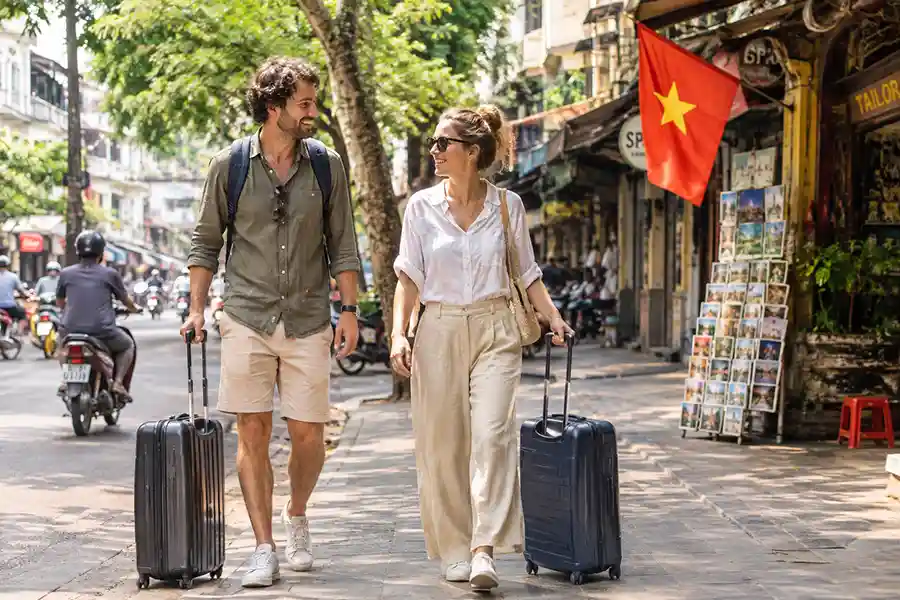
A soft medium-sized suitcase on wheels suits most tours, as long as you also bring a small bag for nights on a junk or a night train.
On a tour with a driver, your suitcase stays in the vehicle and your guide helps carry it to the hotel, so wheels are not a problem. The limits come from tight spaces. Night train cabins to Lao Cai are narrow, junks have limited storage, and some mountain guesthouses can only be reached on foot. In these cases, we often suggest leaving the large suitcase at the hotel or in the vehicle and taking a small bag for one or two nights.
FAQ: your questions about packing for Vietnam
Do you need warm clothes for Vietnam?
Yes, if you visit the north between November and March: Hanoi is cool and damp, and mountain nights can drop close to 0°C. For the centre and south, a light jumper is enough, mainly for air conditioning.
How should you dress to visit pagodas in Vietnam?
Cover your shoulders and knees and wear shoes that are easy to take off. At the Ho Chi Minh Mausoleum, short shorts and tank tops are refused at the entrance.
What plug adapter do you need for Vietnam?
The voltage is 220V and sockets usually take flat-pin type A and round-pin type C plugs. A universal adapter remains the safest option.
Can you bring an e-cigarette to Vietnam?
It is strongly discouraged: Vietnam has banned the import and use of e-cigarettes since 2025, and using one can lead to a fine of VND 3 to 5 million.
Which medicines should you take to Vietnam?
Your usual medication with its prescription, paracetamol, an anti-diarrhoea treatment, insect repellent and sunscreen. For vaccinations, see your doctor a few weeks before departure.
Is a suitcase or a backpack better for Vietnam?
A soft suitcase on wheels suits most tours with a driver. Add a small bag for nights on a junk, on a night train or in a homestay.