













Tea is a popular drink in many Asian countries, particularly in Vietnam. Vietnamese tea is especially known for its rich and complex flavors, as well as its health benefits.
As a cultural product, Vietnamese tea holds significant economic importance today: Vietnam is the fifth-largest tea producer in the world, with an annual production of approximately 200,000 tons. Most of the tea produced in Vietnam is consumed locally, but an increasing amount is exported to international markets such as the United States, Japan, Germany, and France.
Here’s an overview of its varieties, uses, and where to see the most beautiful tea fields.
What are the varieties of vietnamese tea?
There are many varieties of Vietnamese tea, but the most common are green tea and black tea.
Vietnamese green tea is a highly appreciated beverage for its slightly astringent taste and fresh, floral aroma. Black tea, on the other hand, is known for its robust and full-bodied flavor.
Both are cultivated in the northern mountains of the country, where the climate is cool and humid, providing ideal conditions for tea cultivation.
The process of making Vietnamese green and black teas is similar to that of other green teas. Fresh tea leaves are quickly roasted to halt fermentation, giving the tea its mild and slightly grassy flavor. The tea leaves can also be hand-rolled or machine-rolled to achieve a specific shape, such as pearls or twisted leaves.
Both types of tea are rich in antioxidants, which help protect the body against free radicals that can damage cells. They are also high in theanine, an amino acid known to reduce stress and anxiety while enhancing focus and alertness.
These teas are often served hot, but they can also be enjoyed cold. Vietnamese people often like to add fruits such as Asian pear or lemon to balance the tea’s bitterness.
In addition to their health benefits and delicious flavors, Vietnamese green and black teas play an important role in Vietnamese culture. They are often served during religious ceremonies and special occasions, such as weddings and funerals, and are considered a symbol of respect and gratitude toward guests.
There are also other lesser-known Vietnamese tea varieties, such as oolong tea, which is partially fermented, and white tea, which is made from young leaves and unopened buds. Each of these varieties has its own distinct characteristics in terms of taste, aroma, and color.
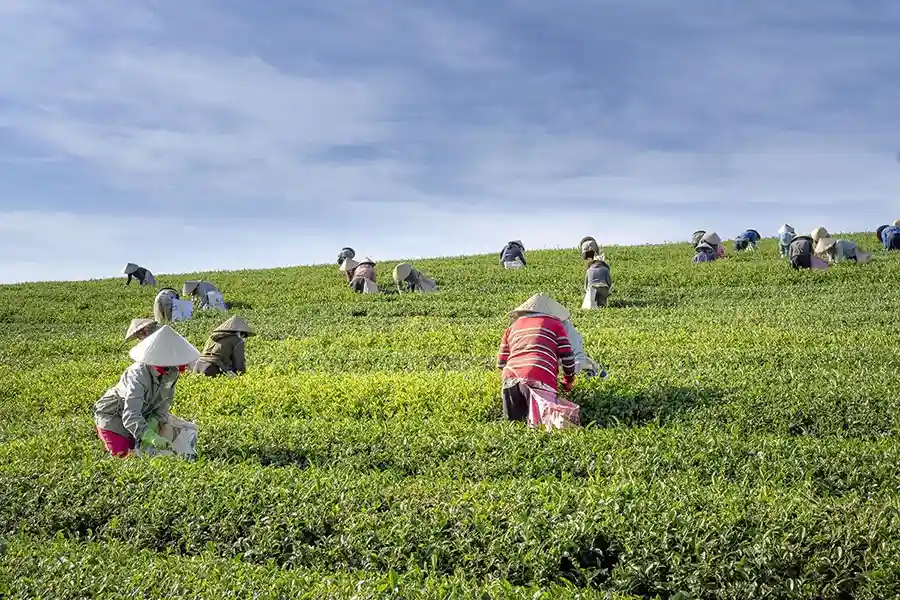
Tea plantation in Son La Province, Vietnam. Photo credit: Pixabay stock.
A diversity of tea plants in Vietnam
Vietnam is known for its wide variety of tea plants, which produce different types of tea depending on their origin, terroir, and processing method. Here are the main types of tea plants cultivated in Vietnam:
Camellia sinensis var. sinensis: This is the Chinese tea plant, also called the Fujian tea plant, often used to produce green and white teas in Vietnam
Camellia sinensis var. assamica: This variety originates from India and is often used to produce black teas and Pu-erh teas in the northern mountainous regions of Vietnam.
Camellia sinensis var. cambodiensis: Originating from Cambodia, this variety is used to produce green and white teas in the southwestern regions of Vietnam.
Camellia sinensis var. pubilimba: Also known as the large-leaf tea plant, this variety is often used to produce black teas and Pu-erh teas in the northern regions of Vietnam.
Camellia sinensis var. subsp. vietnamensis: This variety is specific to Vietnam and is cultivated in the northern mountains to produce green, black, and oolong teas.
In addition to these cultivated varieties, there are also wild tea varieties, such as Shan Tuyet and Ban Lien, which produce high-quality teas and are considered national treasures in Vietnam.
A unique tea plant: Shan Tuyet
Shan Tuyet tea is a rare and precious tea cultivated in the northern mountains of Vietnam, in the provinces of Yen Bai, Ha Giang, and Lao Cai. It is produced from a wild tea plant called Shan Tuyet, which only grows in this isolated region and is considered one of the oldest tea varieties in the world.
Shan Tuyet tea is often regarded as one of the best teas in Vietnam due to its rich and complex flavor. It is hand-harvested by local pickers, who select the youngest and most tender leaves from the Shan Tuyet tea plant to produce the finest tea. The leaves are then processed by hand using traditional tea-making techniques, such as steaming and sun-drying.
Shan Tuyet tea is known for its delicate and subtle flavor, with notes of herbs and fruits. It is also rich in antioxidants and polyphenols, which have health benefits by reducing inflammation, strengthening the immune system, and improving cognitive function
Due to its rarity and superior quality, Shan Tuyet tea is considered a national treasure in Vietnam and is often given as a gift on special occasions. It is also increasingly popular among tea connoisseurs worldwide who seek unique, high-quality teas.
Red Dao women harvesting Shan Tuyet tea leaves. Photo: Mathieu Arnaudet
Where is vietnamese tea cultivated?
As mentioned, tea plantations are mainly located in the mountainous regions of northern and central Vietnam. The provinces of Thai Nguyen, Ha Giang, Cao Bang, Yen Bai, Son La, and Lai Chau are particularly renowned for the quality of their tea. The Moc Chau area in Son La Province is also an important tea-producing region.
Vietnam’s mountainous climate and terrain provide ideal conditions for tea cultivation, with nutrient-rich soils, cool temperatures, and high humidity. Vietnamese tea plantations are often located at altitudes ranging from 500 to 1,500 meters above sea level.
Here are some of the regions most renowned for their beautiful tea plantations:
Thai Nguyen region: located in northeastern Vietnam, Thai Nguyen is considered the birthplace of Vietnamese tea. This mountainous area offers stunning tea plantation landscapes, with varieties such as Shan Tuyet tea and Tan Cuong tea.
Tea plantation in Thai Nguyen, Vietnam. Photo : Mathieu Arnaudet
Moc Chau region: located in Son La Province in northwestern Vietnam, Moc Chau is an important tea-producing area, offering landscapes of rolling hills covered with tea plants as far as the eye can see.
Accommodation in the middle of the tea fields, Moc Chau. Photo: Mathieu Arnaudet
Da Lat region: located in the Central Highlands of Vietnam, Da Lat is known for its production of green tea and coffee. The tea plantations in the area offer picturesque landscapes with lush hills and valleys.
Bao Loc region: located in Lam Dong Province, also in central Vietnam, Bao Loc is renowned for producing high-quality green tea. The tea fields of Bao Loc feature stunning landscapes with lush hills and mountains.
Ha Giang region: located in northern Vietnam, Ha Giang is an emerging tea-producing area, with tea fields situated on steep hills offering spectacular views of the surrounding mountains. Shan Tuyet tea plantations are mainly found in the mountainous districts of Dong Van, Quan Ba, Yen Minh, and Meo Vac.
Shan Tuyet tea leaf, Ha Giang. Photo: Mathieu Arnaudet
Finally, in Phu Tho Province lies the incredible Long Coc site.
The fields are renowned for producing high-quality tea, particularly green tea. The tea plants grow on terraced hills, creating undulating patterns that enhance the region’s natural beauty. Harvests take place in April and May, when the tea leaves are at their best.
It is possible to visit the Long Coc tea fields and explore the local tea culture. Visitors can observe the tea harvesting and processing methods, as well as taste different tea varieties. The surrounding area also offers activities such as hiking and visiting traditional villages.
The Long Coc hills in Vietnam. Photo: Pixabay stock.
The role of tea in traditional vietnamese medicine
In traditional Vietnamese medicine, tea is regarded as a natural remedy for many common ailments.
Green tea is especially valued for its antioxidant, anti-inflammatory, and antibacterial properties. It is often used to treat stomach ailments, sleep disorders, joint pain, and headaches.
Black tea is also used in traditional Vietnamese medicine to treat digestive issues and bacterial infections. It is additionally considered an effective remedy for reducing stress and improving focus.
Shan Tuyet tea, in particular, is regarded as a valuable natural remedy in traditional Vietnamese medicine. It is often used to treat joint pain, menstrual cramps, and headaches.
Its role in vietnamese culture
Tea is often served during important ceremonies, such as weddings, funerals, and traditional festivals, as well as during informal gatherings with friends and family. The tea ceremony is considered a refined art and is often performed with great attention to detail and aesthetics.
Tea is also regarded as a sign of respect and gratitude toward guests and is often offered to those visiting Vietnamese families. The way tea is served and consumed is important in Vietnam, with hosts taking care to present the tea leaves elegantly and prepare the tea thoughtfully.
A small glass of tea by the roadside, Vietnam. Photo: Pixabay
Where to buy and taste tea in Hanoi?
Here are some popular options:
Hien Minh Tea House: Near the Temple of Literature, this is the home of a tea master. The shop and tea house offer a variety of high-quality teas and also provide tea tastings to help customers choose the best tea.
Address : No. 13 P. Ng. Tất Tố, Văn Miếu, Đống Đa.
Tea tasting at Hien Minh Tea House. Credit: Tea House..
Trà Ta : Located in the center of Hanoi, this tea shop offers a variety of high-quality Vietnamese teas, including Shan Tuyet tea. The shop owners are tea experts and can help you choose the best tea according to your taste.
“Drinking tea among Vietnamese people is much more than a habit; it is a long-standing tradition passed down from generation to generation. Based on this observation, we decided to create a place exclusively dedicated to all those who share this love of tea,” explained Lê Ngoc Hùng, director of Trà Ta LLC and owner of the eponymous tea house, to Courrier du Vietnam.
Address : No. 1073, Dê La Thanh
Where to buy and taste tea in Ho Chi Minh City?
Here are the best addresses:
An Yên Teahouse (An Yên Trà Quán) : Here is a tea salon owned by Mr. Pham Hoang Son, opened with the aim of sharing tea culture with the Vietnamese. Located at the end of an alley on Dien Bien Phu Street in Binh Thach District, Ho Chi Minh City, the space is delicately decorated. There are no chairs, only low tables so that guests can sit together and enjoy the tea.
Address: 236/43/15 Dien Bien Phu – Ward 17 – Binh Thanh District – HCMC.
At Mr. Pham Hoang’s tea house
An Vien Tra : This tea salon is designed with a meditation space centered around tea, featuring a series of statues of the patriarch Dat Ma made from incense, sassafras, rosemary, and many other rare woods, creating a pleasant fragrance. The walls are adorned with paintings and meditative calligraphy. Visitors can not only taste tea but also admire the statues and artwork.
Address: 3/12 Thich Quang Duc, Ward 3, Phu Nhuan District, HCM
At An Vien Tra, Ho Chi Minh Ville
Tinh Tam Tra : This is a beautiful place to spend a few quiet hours. The business also has a foundation that helps underprivileged students continue their education.
Address : 16 Le Thuc Hoach, Phu Tho Hoa Ward, Tan Phu District, HCMC
At Tinh Tam Tra, Ho Chi Minh Ville