
















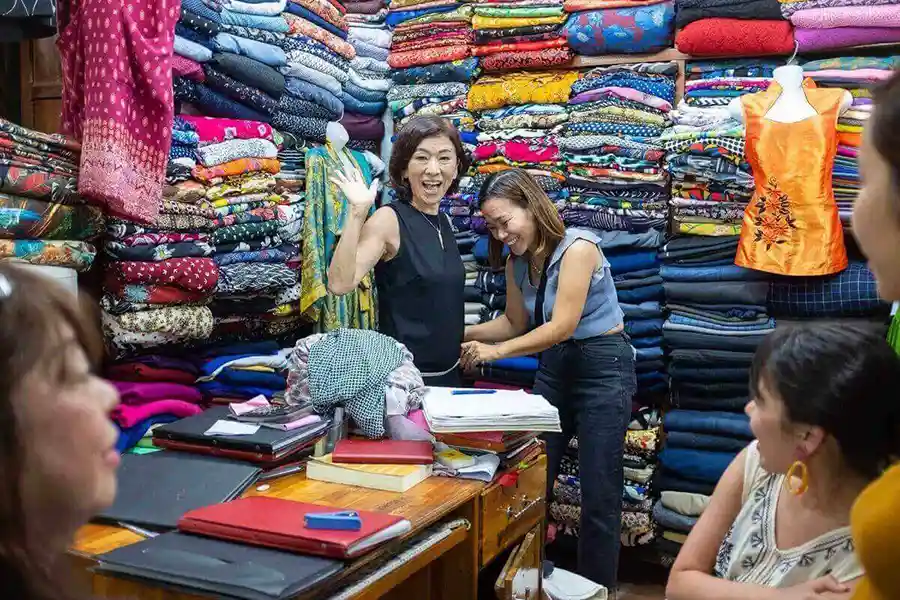
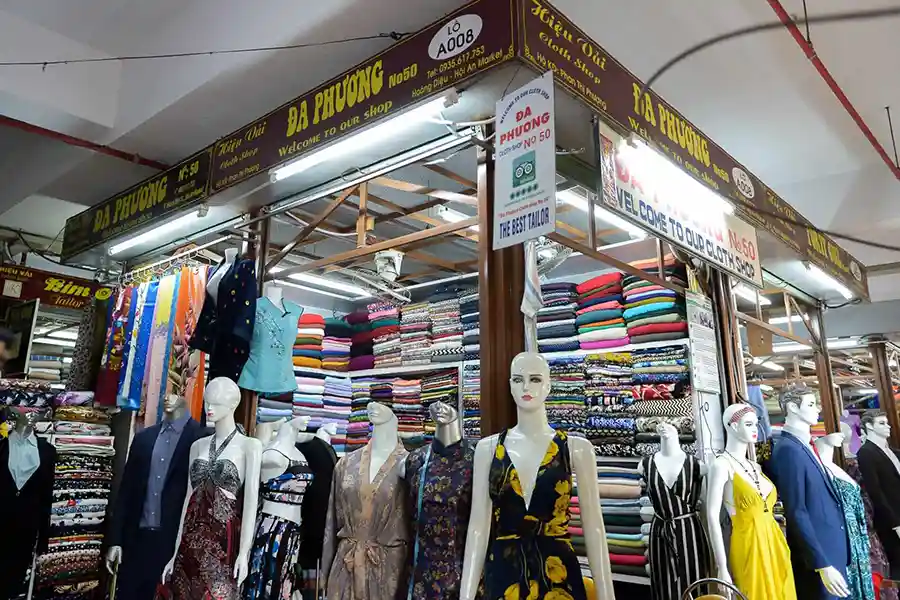
Having a shirt, a dress or a suit made in a few days is one of the experiences many travellers associate with Hoi An. In the old town, which became part of Danang city after Vietnam’s 2025 administrative reform, tailor shops line street after street, their windows filled with rolls of fabric and dressed mannequins.
We have been guiding travellers through Central Vietnam for more than twenty years, and the same questions keep coming back: how much does it cost, how long does it take, how do you avoid disappointment? Here is what we have learned on the ground, so that your visit to the tailor stays a good memory.
Why did Hoi An become the town of made-to-measure clothing?
A former silk trading port, Hoi An now has several hundred tailor shops that can make a made-to-measure garment in one or two days.
In the 16th and 17th centuries, Hoi An, known to European merchants as Faifo, welcomed Chinese, Japanese and Portuguese ships that came to trade silk, porcelain and spices. The textile tradition survived, and the growth of tourism from the 1990s turned this know-how into one of the town’s main activities.
Today, the choice ranges from small family workshops with three seamstresses to large houses employing dozens of people. Most garments are not sewn in the shop itself but in partner workshops, which explains the short lead times. There is nothing wrong with this, but it means the quality depends as much on the workshop as on the salesperson who greets you.
How much does tailor-made clothing cost in Hoi An?
Expect roughly 20 to 40 euros for a shirt, 30 to 70 euros for a dress and 80 to 250 euros for a suit, depending on the fabric and the shop.
Prices vary widely between shops and above all depending on the fabric. The same suit can cost three times as much in fine wool as in an entry-level wool blend. The figures below are indicative ranges noted in 2025 and 2026 and should be confirmed locally: they are mainly useful for spotting a quote that is unusually low or high.
| Garment | Indicative price | Usual lead time |
|---|---|---|
| Shirt | 20 to 40 euros (about 20 to 45 USD) | 24 hours |
| Trousers | 30 to 60 euros | 24 to 48 hours |
| Simple dress | 30 to 70 euros | 24 to 48 hours |
| Ao dai | 30 to 50 euros | 1 to 2 days |
| Coat | 50 to 150 euros | 2 to 3 days |
| Two or three-piece suit | 80 to 250 euros (about 90 to 270 USD) | 2 to 4 days |
Most established shops accept dong, US dollars or bank cards, sometimes with a small card fee of a few percent. As a rule of thumb, 1 USD is worth about 25,000 dong, so a shirt priced at 900,000 dong costs around 36 dollars.
A few specialist workshops also make leather shoes and bags to measure. Their quality is less consistent than that of clothing, so check the stitching and the suppleness of the leather carefully before paying the balance.
How many days should you allow in Hoi An for your clothes?
Allow at least three days in town for a suit or a coat, and one to two days for shirts, dresses or simple trousers made to your measurements.
This is the point most often underestimated. A garment can be ready in twenty-four hours, but it is the fitting that makes the result, and every alteration takes time. If you are thinking of a suit, add one or two nights in Hoi An to your plans: our 4-day Central Vietnam tour from Hue to Hoi An can, for example, be extended so you can order on arrival and fit in the fittings between visits.
- 1 day: shirts, simple trousers and summer dresses, provided you order in the morning;
- 2 days: more elaborate dresses, ao dai, suit trousers;
- 3 days or more: suits, jackets and coats, with at least two fittings.
Hoi An suits this pace well: between fittings you can walk the old town early in the morning, cycle out to the Tra Que vegetable village or spend half a day on An Bang beach. If you are only staying one night, it is better to stick to one or two simple pieces, or plan to have them posted home.
How do you choose a good tailor in Hoi An?
A good tailor measures you carefully, plans at least two fittings and adjusts the garment until it fits perfectly, without pressure to buy more.
Large house or small workshop?
The best-known houses, such as Bebe, Yaly or A Dong Silk, have several addresses in town, extensive catalogues and English-speaking staff. They are more expensive, but they are well organised and often keep your measurements for future orders. Small workshops, particularly around the cloth market near the central market, charge less and can do excellent work, but consistency is less certain.
Shop names and addresses change quickly. Read recent reviews and check the exact address on a map, as some shops borrow the name of a well-known house.
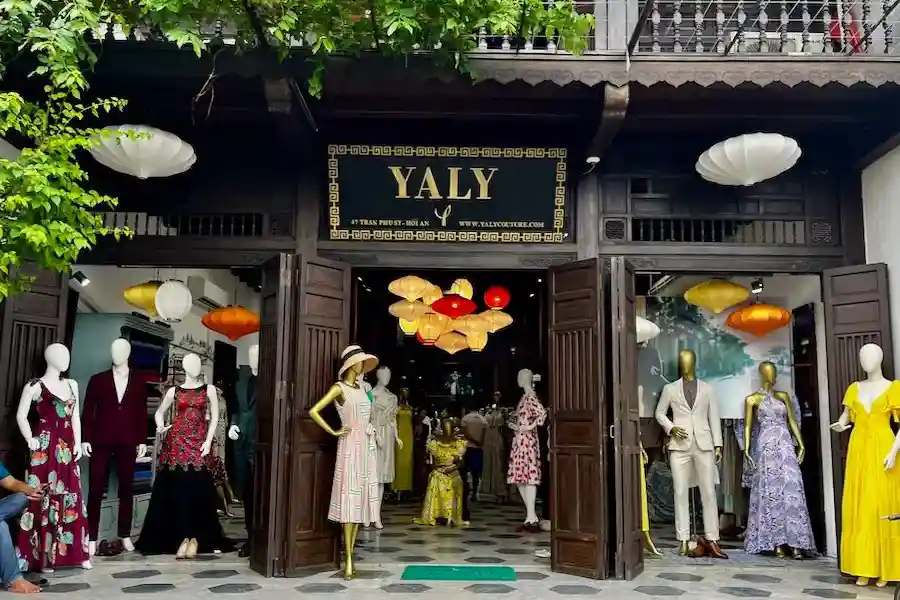
Signs you can trust a tailor
- a written quote, itemised by garment and fabric;
- thorough measurements, at least ten or so, and questions about how you will wear the garment;
- a first fitting planned before the final sewing;
- finished garments on display, with even seams and clean linings;
- no pressure to add more pieces to your order.
How can you check the quality of the fabric?
Touch and crease the fabric and ask for its exact composition in writing, because a wool or silk label does not always guarantee a natural fibre.
Much of the fabric sold in Hoi An is imported, and labels can be generous: a fabric sold as cashmere or pure silk may contain a large share of synthetic fibres. That is fine if the price reflects it, but it is better to know before you order.
- crease a corner of the fabric in your hand: good wool quickly recovers its shape and stays matt, while very shiny or rough fabric is often synthetic;
- ask to see the reverse side and the lining, which often reveal the real quality;
- have the composition written on the quote as percentages;
- for silk, favour houses that show their production chain, with silkworms and looms.
You can also bring your own fabric, bought elsewhere in Vietnam or brought from home: most tailors accept it and then charge only for the work.
How does an order work, step by step?
The process is much the same everywhere. Knowing it in advance helps you stay in control of the result.
- choose the design: bring a photo or, better still, a garment you like wearing that the tailor can copy;
- choose the fabric and agree the quote: set the total price, lead time and number of fittings before paying anything;
- measurements and deposit: it is customary to pay about half the price when ordering;
- first fitting, usually the next day: point out anything that feels wrong, even a small detail;
- second fitting and alterations, then pay the balance only once you are happy.
During the fitting, move as you would in everyday life: sit down, raise your arms, walk around. A good tailor will not mind; on the contrary, it helps them adjust the details.
Can you have an ao dai made to measure in Hoi An?
Yes, most Hoi An workshops make made-to-measure ao dai in one or two days, in silk, cotton or synthetic fabric depending on your budget.
The ao dai, a long split tunic worn over loose trousers, is Vietnam’s traditional dress. It requires a very precise fit at the bust and waist, which makes it a good test of a workshop’s skill. Expect to pay more for natural silk or hand embroidery.
If you plan to wear it for a special occasion, such as a wedding or a family celebration, allow for two fittings and specify the length with the shoes you will wear on the day.
What traps should you avoid, and how do you get your clothes home?
Do not mention your hotel, ignore street touts, pay a reasonable deposit and either ship your clothes home or pack them carefully in your cabin bag.
Touts who approach you in the street or outside the sights earn a commission, which ends up on your bill. Some accommodation also steers guests towards partner shops. That is not necessarily a bad choice, but nothing stops you comparing two or three addresses before deciding.
To get your clothes home, many shops offer international shipping. Ask for the price and lead time in writing before paying, as the cost can exceed the price of a shirt. A carefully folded suit also fits in a cabin bag. Finally, ask the shop to keep your measurements: several workshops then accept orders by email.
FAQ: tailor-made clothes in Hoi An
How much does a tailor-made suit cost in Hoi An?
Expect roughly 80 to 250 euros (about 90 to 270 USD) depending on the fabric and the shop. Fine wool from a large house sits at the top of the range.
How long does it take to have a suit made?
Allow at least three days in town for two fittings and alterations. Shirts and simple dresses can be ready in 24 hours.
Do you have to pay a deposit?
Yes, it is customary to pay about half the price when ordering and the balance after the final fitting, once you are happy with the result.
Can you bring your own fabric?
Yes, most Hoi An tailors accept it and then charge only for the work.
How can you tell if the fabric is really wool or silk?
Touch it, look at the reverse side and have the composition written on the quote as percentages. A very low price for cashmere or pure silk should make you cautious.
Can you ship your clothes home?
Yes, many shops offer international shipping. Ask for the price and lead time in writing before paying.