

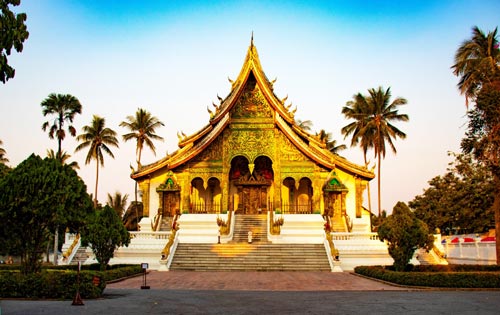


In Vietnam, the dead do not truly leave. They simply change the nature of their presence. In every home, even the most modest, an altar keeps quiet watch — a few sticks of incense, some fruit, a faded photograph. This is not a memorial. It is a permanent invitation.
Ancestor worship is neither a religion nor a superstition. It is the invisible foundation on which all Vietnamese family and social life rests. To understand this practice is to gain an essential key for reading the country in depth — its homes, its markets, its pagodas, its morning silences.
What Is Ancestor Worship in Vietnam?
In Vietnam, ancestor worship is the conviction that the deceased remain present, protect their descendants and maintain a living bond between generations.
This is not a practice confined to any particular religious community. Buddhists, Catholics, Taoists, and even some Communist Party members maintain a home altar and honour their dead on important dates. It predates all the religions that came to Vietnam from outside — it was already deeply rooted long before Buddhism, Confucianism or Catholicism arrived on these shores.
Its foundation is straightforward: the soul survives the death of the body. It can protect the living, bring them good fortune, warn them of danger. In return, the living have a duty to ensure their dead want for nothing. The relationship is reciprocal — almost contractual. It is this reciprocity that makes it something profoundly human, rather than mere fear of the spirit world.
A Vietnamese proverb captures this spirit well: Con người có tổ có tông / Như cây có cội, như sông có nguồn — “People have ancestors, just as trees have roots and rivers have sources.”
The Ancestor Altar (Bàn Thờ): What Role Does It Play in the Vietnamese Home?
The ancestor altar is the spiritual heart of every Vietnamese home — the place where the souls of the deceased return to stay and receive the attention of their loved ones.
Known as the bàn thờ, it always occupies a place of honour — elevated, in a clean spot, often in the main room. It may be simple, a small shelf fixed to a wall in an urban flat, or imposing, an entire room in a large country house. The family’s wealth changes nothing about its meaning.
On the altar, you will invariably find:
- one or more incense burners, the main one dedicated to the Buddha, others to the household spirits and to the ancestors
- two candles or lamps representing the sun and moon, yin-yang balance
- photographs or memorial tablets of the deceased
- fresh fruit, water, flowers — renewed regularly
- on special occasions, the mâm ngũ quả, a tray of five fruits symbolising health, longevity, peace, prosperity and happiness
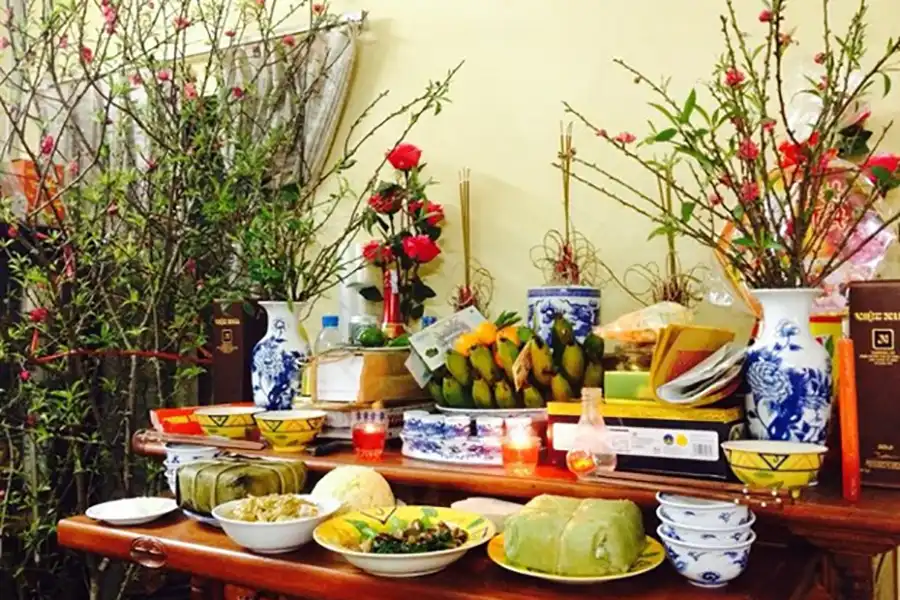
What often strikes foreign visitors is the presence of everyday objects — a cup of tea, a cigarette, a glass of rice wine. Vietnamese people offer their ancestors what those ancestors enjoyed in life. Here, the dead are not abstractions. They have tastes, habits, personalities that continue to be respected.
The care of the altar traditionally falls to the eldest son. A profound dread surrounds those who might die without descendants: with no one to tend their altar, their soul would be condemned to wander — one of the fates Vietnamese people most deeply fear.
How Do the Living Make Contact with Their Ancestors?
The living communicate with their ancestors primarily through offerings, incense and prayer, following a precise lunar calendar that combines everyday rituals with major family occasions.
Everyday Gestures
Incense is the primary medium. The smoke rising upward is the bridge between the two worlds — it carries prayers to the ancestors and signals to the deceased that the living are thinking of them. Lighting three sticks of incense each morning before the altar is as natural a gesture as brewing coffee. You will see it in restaurants, shops, hotels, taxis.
Food offerings are placed on the altar on key dates of the lunar calendar: the 1st and 15th day of each lunar month, death anniversaries (giỗ), Tết (the Lunar New Year) and major family milestones — births, weddings, important examinations. Ancestors are informed of all significant events. Their blessing is sought before a journey, a surgical procedure, a contract.
The Burning of Paper Offerings
A practice that surprises and fascinates travellers: vàng mã, votive objects made of paper. Clothing, banknotes, cars, motorbikes, mobile phones, villas — everything the dead might need in the afterlife is crafted from paper and burned, so that the smoke carries it to the other world.
These objects reflect the contemporary world with sometimes startling precision. We have seen paper iPhones burned, luxury cars, bundles of Hell Bank Notes. The logic is simple: what we need here below, the deceased need over there.
Key Dates in the Family Calendar
| Occasion | Timing | Meaning |
|---|---|---|
| Death anniversary (giỗ) | Anniversary of the death | Family meal, symbolic presence of the deceased |
| 1st and 15th of the lunar month | Twice monthly | Regular offerings, maintaining the bond |
| Tết Nguyên Đán | Lunar New Year | Ancestors are invited to join the family celebrations |
| Vu Lan (7th lunar month) | August–September | Festival of mothers and wandering souls |
Can the Dead Contact the Living?
Yes, according to Vietnamese belief: ancestors communicate through dreams, everyday signs and, in certain rituals, through possession of a medium.
Ordinary Signs
In everyday life, a dream in which a deceased loved one appears is rarely seen as insignificant. It is shared, interpreted. Perhaps the deceased wished to warn of a danger, convey a message, express a need. A troubling coincidence, an unexpected event may also be read as a discreet intervention by the ancestors. This porousness between the two worlds is constant — it is not reserved for moments of grief or grand ceremonies.
Vietnamese people also believe that ancestors can punish the living who neglect their duties toward them. Illness, misfortune, failure may be interpreted as a sign that the altar is poorly tended, that an anniversary has been forgotten, or that a moral failing has wounded the family’s memory.
Mediums and Trance: Hầu Đồng
For those who seek more direct communication, another path exists: spirit mediums (đồng cốt), and more specifically the ceremony known as Hầu Đồng (also called Lên đồng).
Hầu Đồng is the central ritual of Đạo Mẫu, the cult of the Mother Goddesses — a syncretic spiritual tradition unique to Vietnam, blending shamanism, Taoism and Buddhism. During this ceremony, a medium enters a trance and offers their body to various deities or spirits, who then express themselves through them. They change costume with each incarnation to indicate which entity has taken up residence, dance according to codified choreographies, and distribute blessings and gifts to those present.
The ritual music accompanying the ceremony, hát chầu văn, is hypnotic and of great beauty. The atmosphere is at once solemn and festive — vivid, intense, vibrant.
Long prohibited — first by the French colonial administration, then by the socialist regime which saw it as superstition — Hầu Đồng was rehabilitated in the 2000s and recognised as an intangible cultural heritage. In 2016, UNESCO inscribed the worship of the Mother Goddesses (Đạo Mẫu) on the Representative List of Intangible Cultural Heritage of Humanity.
Today, these ceremonies take place in dedicated temples, principally in northern Vietnam. They last between two and seven hours. Travellers may attend as respectful observers — it is one of the most striking experiences Vietnam can offer.

The Month of Wandering Souls: What Happens During the 7th Lunar Month?
Throughout the entire 7th lunar month, Vietnamese people believe the gates of the afterlife open and that souls without family — the cô hồn — return to wander among the living.
A Month Apart
This month, known as Tháng Cô Hồn, is considered inauspicious for major decisions. People avoid getting married, signing important contracts, moving home or starting building work. Some avoid travelling altogether. This is not naive superstition — it is a caution inherited from centuries of engagement with the invisible world, found across East Asia.
Wandering souls (cô hồn) are those who have no family to honour them: the solitary dead, those who died far from home, victims of accidents or violence. With no altar to welcome them, they wander. Without offerings, they suffer. And a suffering soul can turn hostile toward the living.
The Vu Lan Festival and Offerings for Wandering Souls
The 15th day of the 7th lunar month is the great festival of this period, structured around two distinct ceremonies held on the same day.
The first, Vu Lan, is a Buddhist festival of filial devotion — an occasion to pay tribute to one’s parents, living or deceased. In pagodas, worshippers wear a red rose if their parents are still alive, and a white rose if they have been lost. This ritual, initiated by Zen monk Thich Nhat Hanh, is today one of the most moving symbols of this day.
The second ceremony is dedicated to the wandering souls themselves. It takes place outside, in front of the house — never inside, to avoid attracting unwanted spirits under the roof. Simple offerings are laid out — rice, salt, fruit, sweets, incense — before the rice is scattered to the four corners to accompany the departure of the souls. Votive paper objects are burned to appease them.
What a traveller can observe in the streets at this time of year is striking: small offering tables in front of every door, flames rising from pavements in the late afternoon, families gathered in attentive silence. It is one of the most visible and intense expressions of Vietnamese spiritual life.
How Is Ancestor Worship Lived in Vietnam Today?
Ancestor worship remains at the heart of contemporary Vietnamese life, even as its forms evolve across generations, social environments and regions.
A Resilient Practice
What strikes observers is its capacity to survive historical ruptures. Colonisation, wars, the socialist revolution — none of it truly erased this practice. During the years of strictest Marxist ideology, altars were concealed but never abandoned. Today, they stand in the flats of young Hanoi professionals as much as in the homes of Mekong Delta farmers.
Syncretism and Fluidity
Ancestor worship never truly conflicts with other beliefs. A Vietnamese Catholic maintains their altar without seeing any incompatibility with their faith. A Buddhist adds sutras to their prayers before the photographs of their parents. The boundaries between religions and popular practices are porous, fluid, embraced.
City and Countryside, Then and Now
In urban areas, the practice is more condensed: a smaller altar, simpler offerings, shorter ceremonies. In the countryside — particularly in the northern provinces — it remains more elaborate, more closely governed by the lunar calendar, more communal in nature. The ancestral house (nhà thờ họ), a place of worship shared by an entire family lineage, remains a living institution there.
The younger generation, even digitally connected and urbanised, does not break with this practice. It sometimes reinterprets it, modernises its forms, but the bond with the ancestors remains a deep need — a way of situating oneself within a continuity greater than oneself.
What Can a Traveller See and Understand on the Ground?
To understand ancestor worship, there is no need to seek out exceptional ceremonies. Often, it is enough simply to open your eyes to everyday life.
In any street in Hanoi or Ho Chi Minh City, the tendrils of incense rising from a small roadside altar at seven in the morning already tell the whole story. In the markets, the stalls of votive paper — houses, cars, smartphones, bundles of banknotes — bear witness to an entire economy in service of the invisible world.
Some experiences not to miss:
- Observing a death anniversary (giỗ), if you are fortunate enough to be invited into a family home. The meal is prepared for the deceased before being shared among the living.
- Visiting Phủ Giầy Temple, in Nam Định province, one of the great centres of the Mother Goddess cult, where Hầu Đồng ceremonies take place.
- Walking at dusk during the 7th lunar month, when offerings to wandering souls are laid out in every street.
- Stepping inside a votive offering shop and taking time to observe what is sold: it is a fascinating mirror of the Vietnamese relationship to the afterlife.
At Parfum d’Automne, we are happy to weave this spiritual dimension into our tailor-made Vietnam itineraries, according to the dates of your stay and your own sensibilities. A local guide who knows these practices from the inside entirely transforms how one reads them.
Why Does This Relationship with the Ancestors Say Something Essential About Vietnam?
It is no coincidence that ancestor worship has survived everything in Vietnam. It embodies a conception of time and family that is the antithesis of Western modernity: the dead are not behind us, they are with us. Life does not begin at birth and does not end at death — it is a continuous thread running through the generations.
To travel in Vietnam without perceiving this dimension is to remain on the surface of a country whose forms one grazes without grasping its soul. The ancestor altar encountered in every home, the incense burning at all hours, the offerings scattered on pavements at sunset — all of it speaks of a people who have never accepted cutting the thread that connects them to those who came before.
It is also one of the reasons we love accompanying travellers in this country so much. Vietnam reveals itself slowly, in layers. And each layer discloses something deeper, more beautiful, more profoundly human.