











Traveling by train in Vietnam means taking the time to watch, to listen, and to feel. It is about discovering the country at a slower pace, far from mass tourism. Whether you are seeking authenticity, passionate about photography, or simply a curious traveler, the train is undoubtedly one of the most rewarding ways to explore Vietnam.
In this article, we tell you everything you need to know to properly plan your train journey in Vietnam!
And if you would like to include one or several train journeys in your trip to Vietnam, contact our local English-speaking agency: we will help you design a tailor-made itinerary, ensuring your travels are as smooth as they are authentic.
What is the history of train travel in Vietnam?
Vietnam’s railway network dates back to 1881, built during the colonial era before undergoing reunification and modernization.
From colonial origins to the modern era
Vietnam’s railway network dates back to 1881, during the colonial period, with the construction of the 71-kilometer Saigon–Mỹ Tho line. This ambitious project marked the beginning of a major transformation in the country’s transport infrastructure. In 1936, the famous trans-Vietnam railway line linking Hanoi to Saigon was inaugurated—now known as the Reunification Express. Stretching over more than 1,700 kilometers, this iconic route connects north and south, crossing forests, mountains, plains, and coastal landscapes.
Railways in times of war
During the conflicts of the 20th century, particularly the Indochina War and the Vietnam War, trains played a crucial strategic role, transporting troops, military equipment, and supplies. Bombed and rebuilt several times, certain sections of the railway network still bear witness to this turbulent period.
A gradual modernization
Today, the network spans more than 3,000 kilometers and is undergoing ambitious renovation and development projects. In 2024, the Vietnamese government approved a high-speed rail project between Hanoi and Ho Chi Minh City (1,541 km, 350 km/h, an estimated budget of around 67 billion USD). By early 2026, the timeline had become clearer: construction is now targeted to break ground by the end of 2026, with contractors to be selected by November 2026 and full completion expected by 2035. At the same time, modern railcars are being introduced, promising greater comfort for travelers (see below).

Fictional illustration of Vietnam’s high-speed train
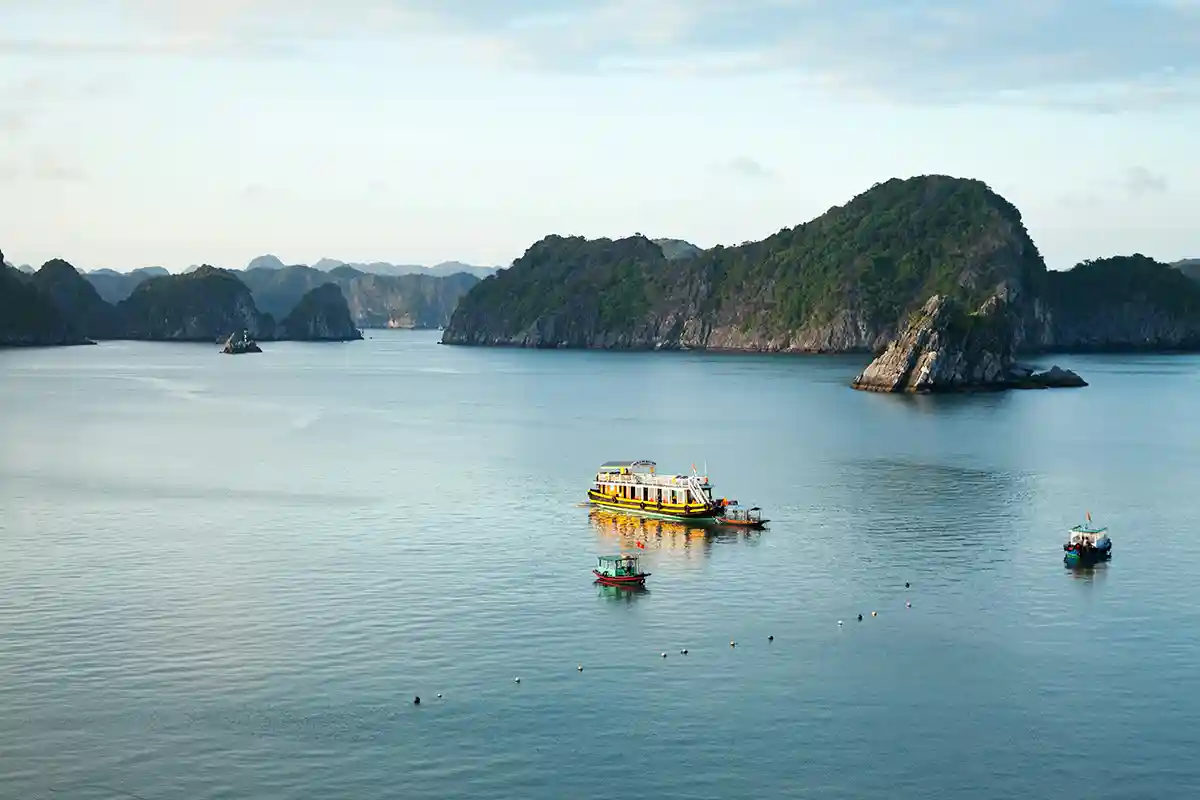
Even more concrete for travelers: the Hanoi – Ha Long (Quang Ninh) high-speed line is already under construction. Works officially broke ground on April 12, 2026. Spanning 120 km, it will connect Co Loa station (Hanoi) to Ha Long station (Tuan Chau) in just 23 minutes, compared to about 2.5 hours by road today. Built by VinSpeed (Vingroup group) with trains and signalling systems supplied by Siemens Mobility, for a budget of around 5.6 billion USD, it is expected by the end of 2028 — making it the country’s very first operational high-speed line, ahead of the Hanoi – Ho Chi Minh City line. This could turn a Halong Bay excursion into a simple day trip from Hanoi!
What types of trains are available in Vietnam?
SE trains, the fastest and most comfortable on the network, connect Hanoi to Ho Chi Minh City with limited stops.
SE Trains (Super Express)
SE trains (SE1 to SE8) are the fastest and most comfortable on the north–south line linking Hanoi to Ho Chi Minh City. They stop only in major cities such as Huế, Da Nang, Nha Trang, or Phan Thiet.
Example: SE3 departs Hanoi in the evening and arrives in Huế the following morning — ideal for a restful night in an air-conditioned sleeper carriage.
SE1 is recommended for traveling all the way to Ho Chi Minh City with a good level of comfort.
👉 Recommended for: long-distance journeys between major cities (Huế, Da Nang, Nha Trang, Saigon), offering excellent value for money.
The official website of Vietnam Railways to book an SE train: https://dsvn.vn/
Super Express train map
Several years ago, the state railway company decided to lease train carriages to private operators. As a result, several carriages on SE night trains operated by the public company Vietnam Railways (VNR) are leased to private companies. These carriages are then refurbished and decorated according to their own standards (greater comfort, wood interiors, bedding, service, etc.).
How does it work?
- The locomotive and the timetable are those of the SE train (e.g. SE3 or SP3), departing from Hanoi to Lào Cai.
- The “Chapa Express” carriage, for example, is attached at the rear of the train.
Inside, you enjoy a level of service far superior to standard carriages:
- 2- or 4-berth wooden sleeper cabins
- Water, tea, snacks
- Soft, ambient lighting
- Sometimes a dedicated waiting lounge at the station
Example:
| Company | Route | Public train used | Special feature |
|---|---|---|---|
| Chapa Express | Hanoi ↔︎ Lào Cai | SE3/SP3 | 3–4-star comfort, wooden interiors and onboard service |
| Fanxipan Express | Hanoi ↔︎ Lào Cai | SE3/SP3 | Slightly older, good level of comfort |
| Victoria Express | Hanoi ↔︎ Lào Cai | SE3/SP3 | Luxury experience, reserved for guests of the Victoria Hotel (except during promotions) |
| Lotus Express | Hanoi ↔︎ Hue / Da Nang | SE1/SE3 | Very good comfort between the North and Central Vietnam |
Please note:
- Private carriages arrive and depart at the same times as the corresponding SE trains.
- This hybrid model (public train + private carriages) is a very practical Vietnamese feature, allowing travelers to upgrade their comfort while taking advantage of the existing rail network.
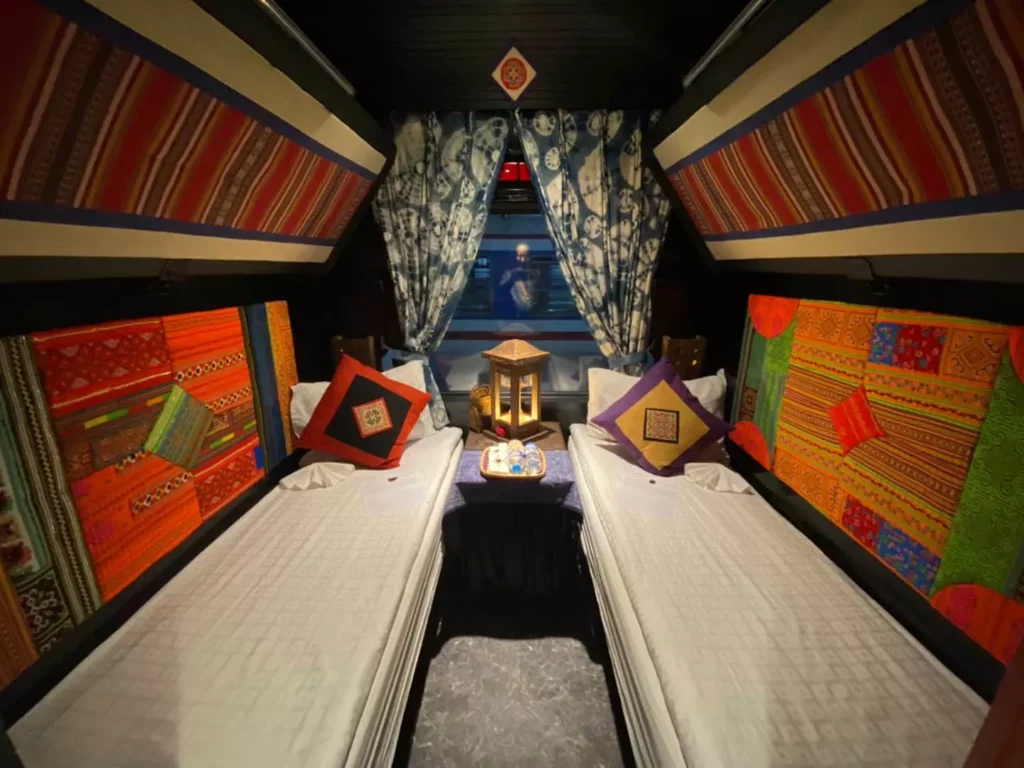
Cabin design of the private Chapa company’s carriages
Classes available on Super Express (SE) trains
If you choose to travel on an SE train, you can then select your preferred class.
Hard seat: economical and suitable for short journeys
Expect to pay around 150,000 to 300,000 VND for a trip of 300 to 700 km.
Soft seat: more comfortable, with reclining seats available
Prices range from approximately 250,000 to 500,000 VND depending on the distance.
Sleeper berths: with or without air conditioning, in compartments of 2, 4, or 6 people. Naturally, these are reserved for night trains.
Expect to pay between 700,000 and 1,500,000 VND or more depending on the route, the compartment (4-berth), and the operator.
For private carriages, a night in a sleeper cabin generally costs between 1,200,000 and 2,000,000 VND or more, depending on the level of comfort.
Local trains
Slower and more basic, these trains serve small regional stations and are mainly used by locals for short-distance travel.
Example :
- VNR train between Vinh and Dong Hoi: not very fast, but practical for a budget-friendly journey.
- Trains between Hanoi and Hai Phong: a good option for a day trip.
👉 Recommended for: budget travelers or those looking to enjoy an authentic local experience.
Tourist trains – Chuyen tau di san (heritage trains)
These trains focus on the overall experience: scenery, comfort, and cultural atmosphere.
Concrete examples:
- Huế – Da Nang: a spectacular route crossing the Hải Vân Pass. A highly popular section offering breathtaking sea views.
👉 We recommend booking seats on the sea-facing side (often carriages A or B depending on the SE trains).
- Da Lat – Trại Mát steam train: a short heritage line, very picturesque, featuring a restored steam locomotive.
Future projects: the Huế – Lăng Cô heritage train, or even a Huế – Quảng Trị tourist line currently under discussion.
👉 Recommended for: travelers who want to combine stunning landscapes with a charming, picturesque experience.
Luxury trains
Designed to offer a high-end experience, these trains feature private cabins, gourmet dining, and personalized services.
Example :
- The Vietage: connects Da Nang to Quy Nhơn in 6 hours. A luxury capsule carriage with spa services, gourmet meals, and panoramic views.
- Chapa Express / Fanxipan Express / Victoria Express: overnight trains linking Hanoi to Lào Cai (Sapa), offering 2- or 4-berth wooden sleeper cabins, attentive service, and a welcome drink.
👉 Recommended for:
- The Vietage: couples and high-end travelers looking to travel between central and southern Vietnam in style.
- Chapa Express: the perfect option for reaching Sapa in optimal comfort.

The design of The Vietage cabins
Our practical recommendations
For traveling to Sapa
Overnight train from Hanoi to Lào Cai, then a car transfer to Sapa (approximately 1 hour and 15 minutes).
Our favorites:
- Chapa Express: comfortable, reliable, and offering excellent value for money
- Fanxipan Express: similar experience, but with a slightly older design
- Victoria Express: the most elegant option, but reserved exclusively for guests of the Victoria Hotel (with a few exceptions)
To travel across the country from North to South
SE trains (SE1 or SE3): comfortable, well air-conditioned, with soft sleeper berths available.
You can break the journey with stops in Huế, Da Nang, or Nha Trang depending on your pace. We particularly recommend the Lotus company here.
For a more exclusive experience on a central section: The Vietage (Da Nang – Quy Nhon).
What are the must-see train routes in Vietnam?
The Hanoi-Ho Chi Minh City route is the most iconic train journey, ideal for discovering the country’s incredible diversity.
- Hanoi – Hô Chi Minh-Ville: the complete journey across the country, ideal for discovering the incredible diversity of Vietnam.
- Hanoi – Haiphong: a new luxury train called Hoa Phượng Đỏ has been linking Hanoi to Hai Phong since May 2025, offering an elegant experience with VIP carriages, Wi-Fi, live music, and a strong emphasis on local cultural identity.
- Hanoi – Sapa : perfect for trekking enthusiasts and mountain lovers.
- Hué – Da Nang: known as the “heritage train,” considered one of the most beautiful rail journeys in Asia, crossing the Hải Vân Pass.
- Nha Trang – Quy Nhon: ideal for travelers seeking beaches and relaxation.
Tourism bonus
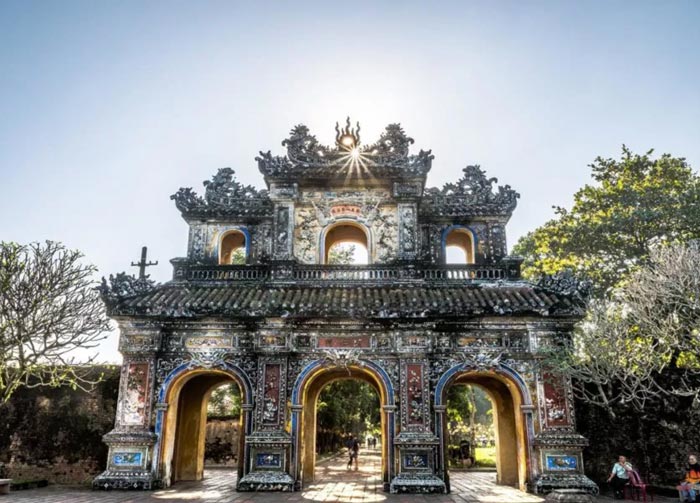
Many major attractions are easily accessible from train stations: the Imperial Citadel of Huế, Ha Long Bay via Hải Phòng, and the ethnic markets of Sapa. It is also easy to combine train travel with other means of transport such as overnight buses, motorbike taxis, or scooter rentals.
What practical tips ensure a successful train journey in Vietnam?
Traveling by train in Vietnam is a unique experience, provided you prepare well before setting off.
Traveling by train in Vietnam is a unique experience—provided you are well prepared. Here are some essential tips to ensure your journey goes as smoothly as possible.
Where to buy your ticket?
- Online: fast and convenient. Websites such as dsvn.vn or local platforms like 12GoAsia allow you to book easily, with payment options by credit card or e-wallet.
- At the station: ideal for travelers who prefer to pay in cash or are traveling at the last minute. Be sure to arrive early, especially on public holidays.
- Through an agency: a recommended option if you want assistance in English or are booking for a group. Parfum d’Automne often includes train journeys in its itineraries — contact us to organize your tailor-made trip!
Tip: keep both a printed and a digital version of your ticket. Some stations still require a paper ticket to access the platform.
Food and drinks
- Vendors regularly walk through the carriages offering snacks, drinks, and typical hot dishes: rice, noodles, grilled corn, hard-boiled eggs, and more.
- You can also bring your own meal or buy takeaway food before boarding.
Smart tip: bring a reusable water bottle. Some stations have fountains or drinking water points.
Choosing your seat: comfort and experience
- Lower berth: more convenient for lying down and getting in and out easily.
- East-facing window (right-hand side when traveling south): ideal for sea views between Huế and Đà Nẵng.
- For a quieter ride: avoid carriages close to toilets or entrances.
You now have everything you need to plan your Vietnam itinerary and include one or more train journeys!
Adventure awaits!
FAQ: Train Travel in Vietnam
How do you book a train ticket in Vietnam?
Train tickets can be booked on the official website dsvn.vn, through online agencies like Baolau or 12go.asia, or directly at the station. For popular routes (Hanoi-Hue, Da Nang-Ho Chi Minh City), book at least 2 weeks in advance during high season.
What is the best train journey in Vietnam?
The Hanoi-Hue or Da Nang-Hue journey on the Reunification Express is one of the most scenic in the world: the line hugs the sea between Hue and Da Nang, offering spectacular views over the Hai Van Pass. Allow 13-15 hours from Hanoi to Hue on the fast train.
Are trains comfortable in Vietnam?
SE (Super Express) trains are comfortable with air-conditioned 4 or 6 berth cabins. Luxury trains like Chapa Express or Victoria Express offer hotel-like standards. Local trains are more basic but provide authentic immersion.
Can you travel around Vietnam entirely by train?
Yes, the railway network connects major cities from Hanoi to Ho Chi Minh City. For destinations off the main axes (Sapa, Ha Giang, Mekong), combine train with bus or private vehicle. Parfum d’Automne can organize circuits combining train and private transport.