







Vietnam is full of destinations, each more beautiful and interesting than the last. Some are absolute must-sees, while others remain relatively unknown despite their undeniable appeal.
In this article, we will introduce the tourist sites that we recommend visiting during your trip to Vietnam. A tourist site differs from a destination or place in that it is specifically developed to welcome visitors. A site may have natural, cultural, or recreational value.
Let’s set off to discover our must-visit tourist sites in Vietnam.
Feel free to contact us to help plan the stages of your trip.
Halong bay
If there were only one place to see in Vietnam, it would undoubtedly be Ha Long Bay!
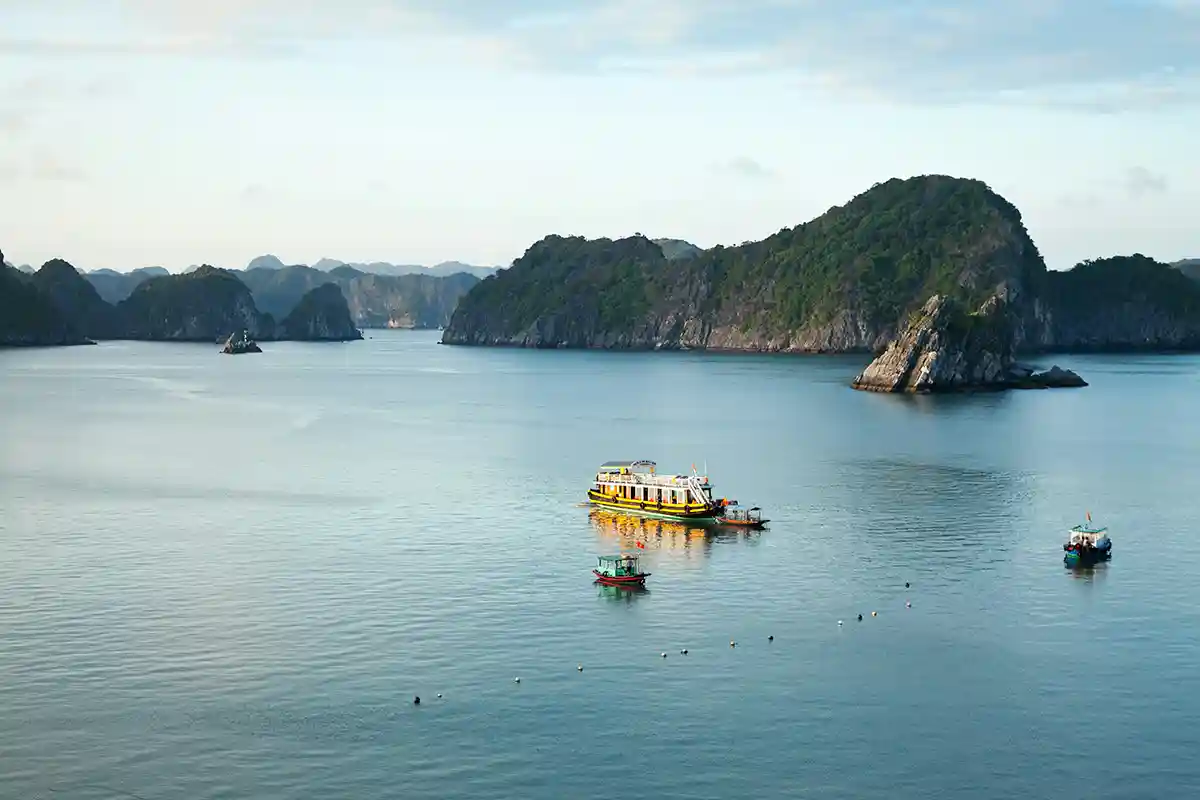
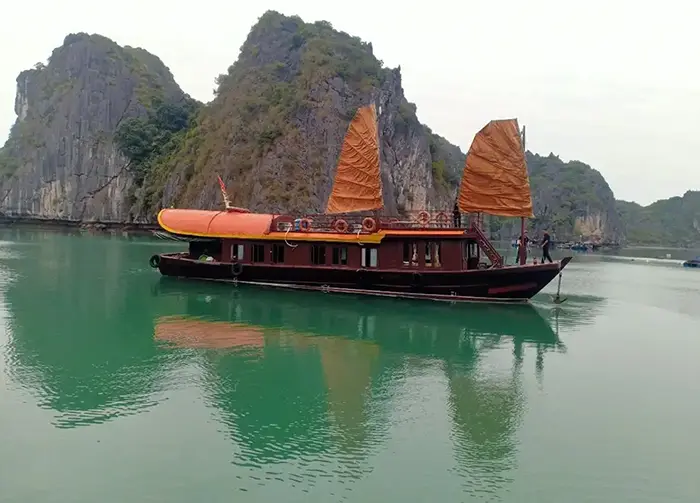
Located in the Gulf of Tonkin, 170 kilometers from Hanoi, the bay offers a breathtaking natural landscape. What makes it unique? The countless rocky karsts—1,600 of them—rising majestically from the water. Over time, many of these formations have eroded to create caves, some of which reveal stunning hidden lagoons. Ha Long Bay is, of course, the most famous Vietnamese site listed as a UNESCO World Heritage Site.
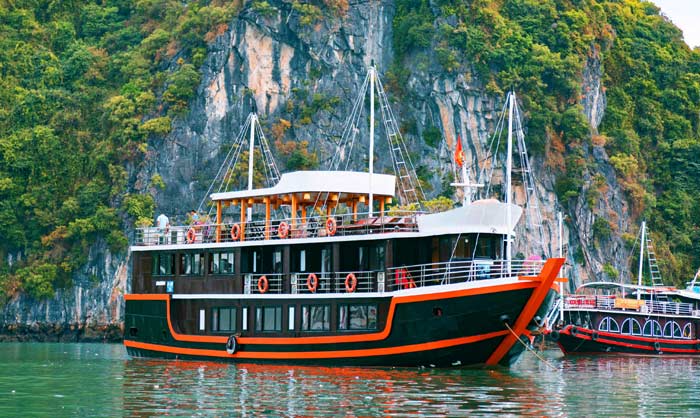
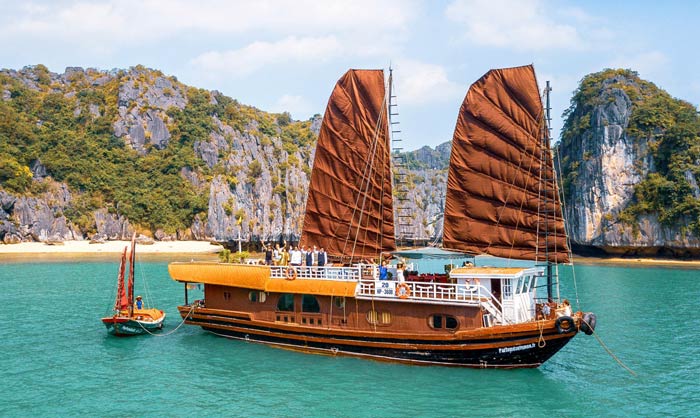
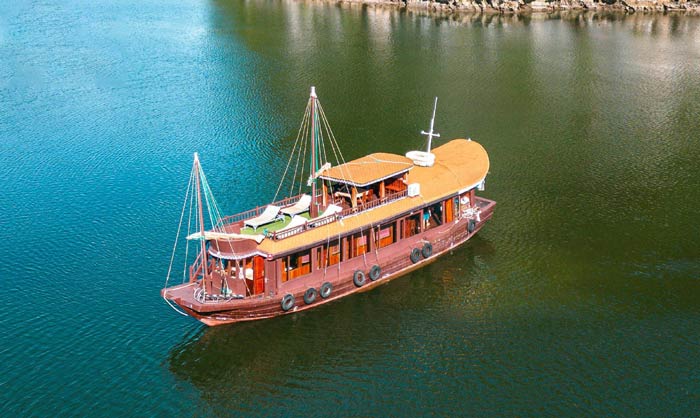
To enjoy this experience in the best possible way, we recommend taking a cruise aboard one of our traditional junks in Lan Ha Bay. This area of Ha Long Bay is much quieter than the main bay, which today receives far too many boats. In one of our articles, we also help you choose the best boat according to your budget.
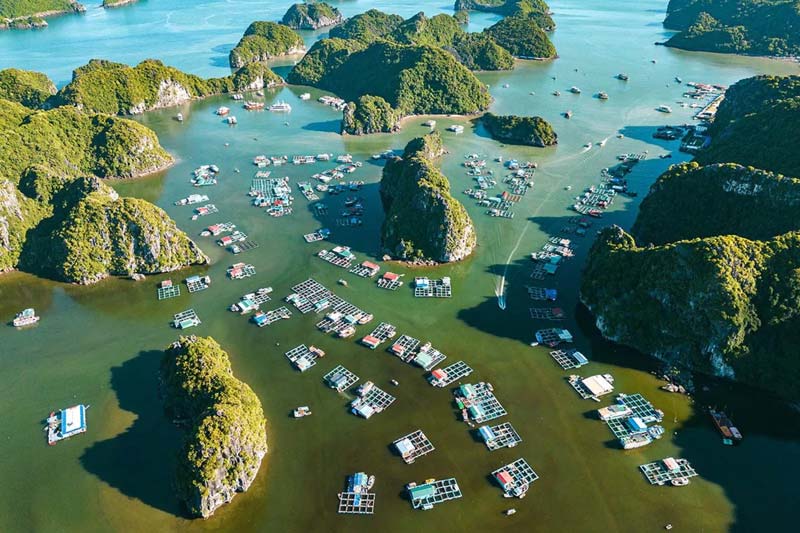
Lan Ha Bay seen from above. Photo credit: Parfum d’Automne
Tam Coc in Ninh Binh Province
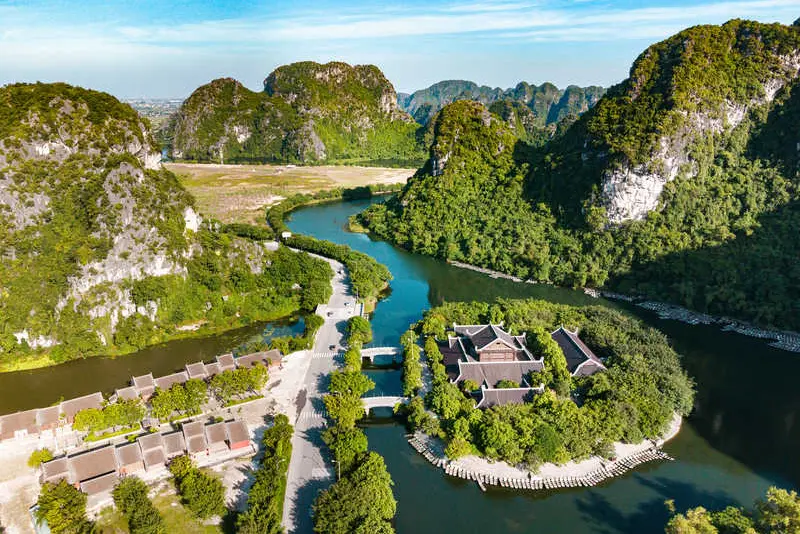
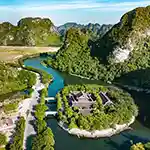
Tam Coc is a village located in Ninh Binh Province. Nicknamed the “Halong Bay on land”, the site of Tam Coc features landscapes as fascinating as those of Ha Long Bay.
From a small village, Tam Coc has developed into a tourist site that welcomes most of the travelers visiting the province.
This is where you will likely stay, dine, and shop for souvenirs. It is also where you can discover the landscapes of the “Halong Bay on land” during a small boat ride along the Ngo Dong River.
During your excursion, you will pass through three natural caves — Hang Ca, Hang Hai, and Hang Ba. On both sides of the river, you will see rice fields that turn yellow just before the harvest in May.
The site is stunning, and we highly encourage you to take the 2.5-hour boat trip, which costs 120,000 VND per person (about €4.50). Children under 10 receive a half-price ticket.
This boat route was the first to open, and its organization remains quite traditional… so do not be surprised if the rowers are a little pushy about tipping. You may also encounter women taking pictures of you during the ride in hopes of selling them afterward… Don’t worry, it won’t spoil the beauty of the scenery!
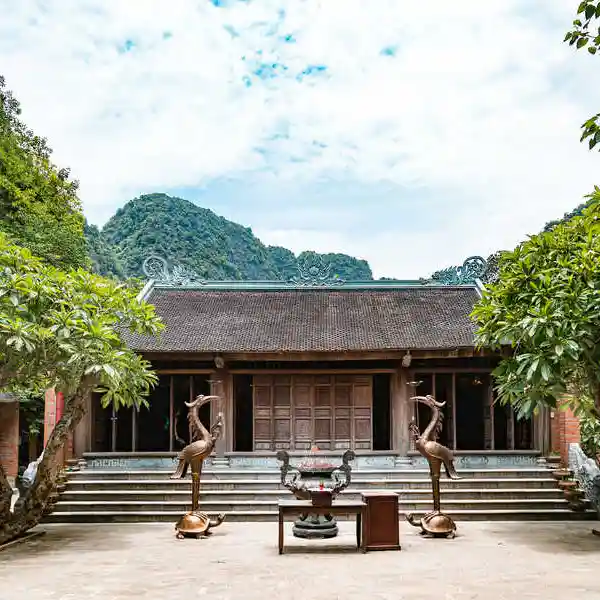
After the boat ride, you can walk to the “Bich Dong” pagoda (“Jade Pagoda”). You will appreciate this pagoda built in 1428 and rediscovered at the end of the 18th century by Lord Trinh Sam, who gave it its current name. You will not visit just one but three pagodas, each located at a different level of the mountain. The highest one is actually built into the side of the cliff and features five rooms made from limestone and iron.
>> Our complete article on Ninh Binh.
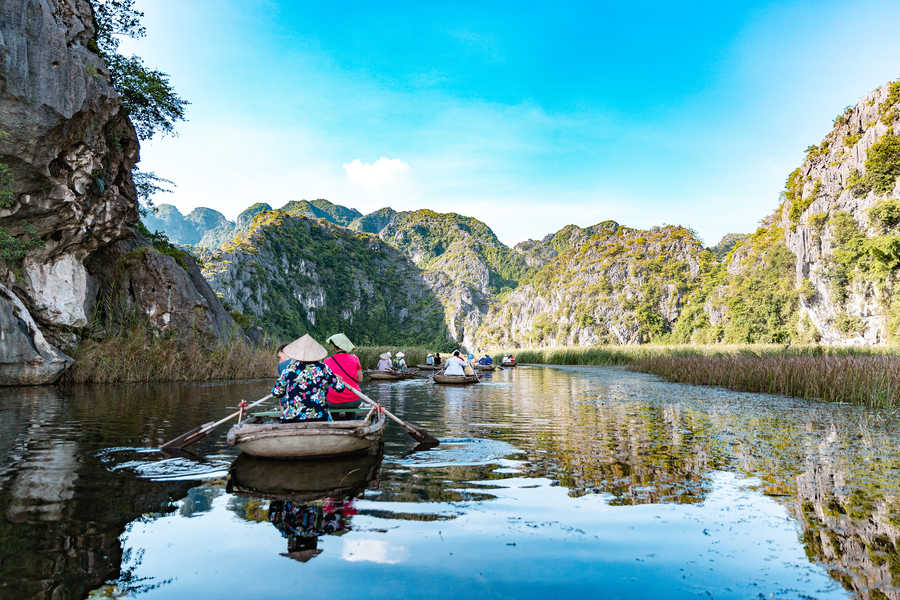
Boat ride at the Tam Coc site. Photo credit: Mathieu Arnaudet / Parfum d’Automne
The villages around Sapa
Sapa is a town located in Lao Cai Province, on the Chinese border in Northern Vietnam. It was first developed by the French colonial authorities at the beginning of the 20th century so that French officials posted in Vietnam could escape the intense heat of the tropical summer. Home to the mountain ethnic groups—especially the Hmong people—the town gradually welcomed more and more Vietnamese (Kinh) inhabitants.
Lao Cai Province is where you’ll find the highest peaks in Vietnam, including Mount Fansipan, which rises to 3,143 meters. Traveling to Sapa and hiking in the surrounding areas means meeting local ethnic communities, particularly the Hmong who have lived here for centuries. It also means being amazed by the beauty of the landscapes, especially the terraced rice fields, shaped over generations by the men and women of the mountains.
The town of Sapa itself has little charm today, increasingly disfigured by uncontrolled construction. However, the surrounding landscapes and local life still make the trip worthwhile. On foot, for example, you can explore the villages of Lao Chai, Ta Van, and Giang Ta Chai. If you rent a car or motorbike, we also recommend heading toward Y Ty, a small village near the Chinese border. The scenery along the road is stunning, and you’ll encounter very few tourists.
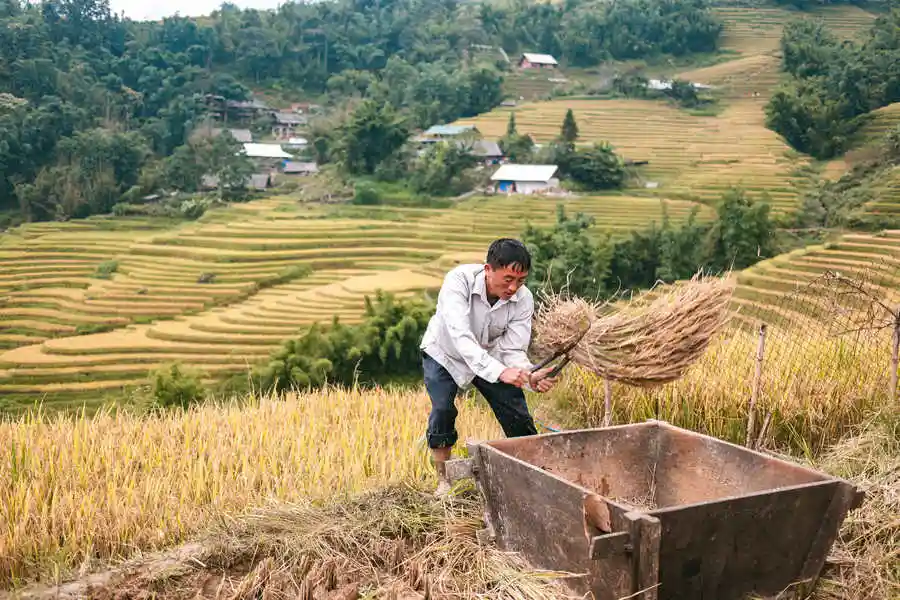
Rice harvesting done without machinery, Sapa. Photo credit: Mathieu Arnaudet
Ban Gioc Waterfall
Ban Gioc is a spectacular waterfall that forms the natural border between China and Vietnam. This exceptional natural site is located on the Vietnamese side, in Cao Bang Province, at the far northeast of the country. It is the widest waterfall in Vietnam, stretching over no less than 300 meters! The water of the Quay Son River suddenly drops more than 30 meters, creating one of the most impressive natural tourist sites in Vietnam. Once there, you can take a small bamboo boat (50,000 VND) that brings you right up close to the falls—expect to get wet!
The waterfall is not the only point of interest. A few kilometers before reaching it, you will find the Nguom Ngao caves, which are both impressive and well developed for visitors. Entrance fees:
- Waterfall site: 45,000 VND per person
- Caves: 40,000 VND per person
Tip for visiting: Choose the end of the rainy season—September and October are ideal. Try to avoid weekends and holidays!
Because of its distance from Hanoi (360 km) and the relatively limited infrastructure in Cao Bang Province, the falls remain less visited by international travelers. Our itinerary for exploring Northeast Vietnam includes a visit to these stunning waterfalls.
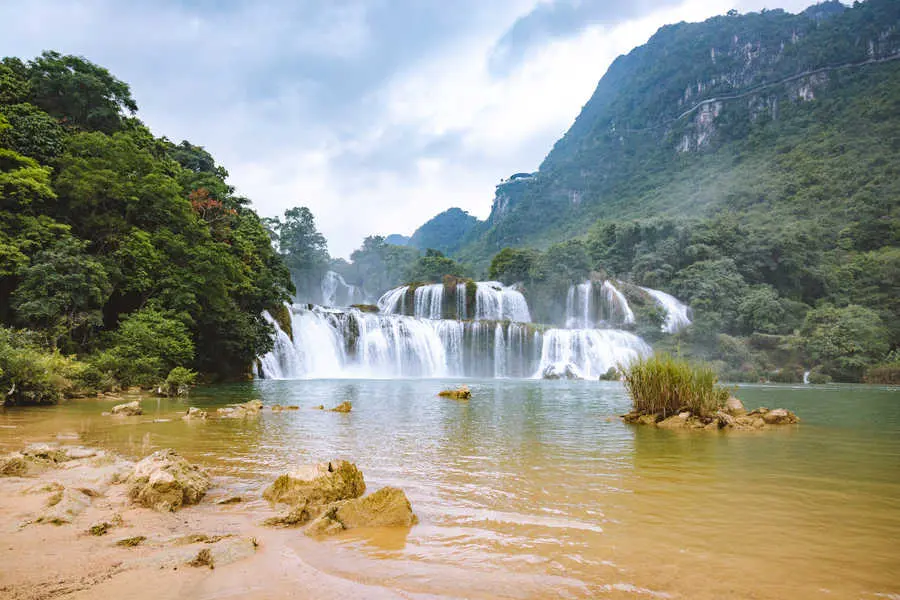
Ban Gioc Waterfalls. Photo: Mathieu Arnaudet
The Phong Nha – Ke Bang caves
The Phong Nha – Ke Bang National Park is still not included in most classic travel itineraries and yet… it is home to some of the most beautiful and largest caves in the world! The park is now very well developed, and local authorities aim to turn it into a major adventure tourism destination in Asia.
There are two ways to visit the national park:
# The classic way: You can stay in a hotel inside the national park and visit the most accessible caves, such as Paradise Cave and Phong Nha Cave, which is reached by a small boat. Accessible does not mean uninteresting! For example, you will be amazed by the natural beauty and history of Paradise Cave.
# The adventurous way: You can choose from several excursions combining trekking, caving, and canyoning inside the caves. If you are in good physical condition and want to combine visiting, exploring, and sports, this option is perfect for you!
Finally, if your budget allows it, you may want to visit Son Doong Cave, considered the largest cave in the world. An 8 km river runs through it! However, be prepared to spend several thousand euros for this once-in-a-lifetime experience.

Paradise Cave, Phong Nha – Ke Bang National Park. Photo credit: Mathieu Arnaudet / Parfum d’Automne
The Imperial City of Hue
Hue is the main city of Thừa Thiên–Huế Province, located in central Vietnam. It is in Hue that the Nguyen Dynasty built its Imperial City in the 19th century. The city flourished, gaining a strong artistic and intellectual reputation, until the arrival of French troops in the 1880s. The Imperial City was largely destroyed, and many valuable items—such as furniture and manuscripts—were stolen or burned. Later, the wars of independence, both against the French and the Americans, further devastated Hue’s cultural and historical heritage…
Fortunately, in recent years, major restoration efforts have been carried out, and today it is once again possible to stroll through an Imperial City that has regained much of its former glory!
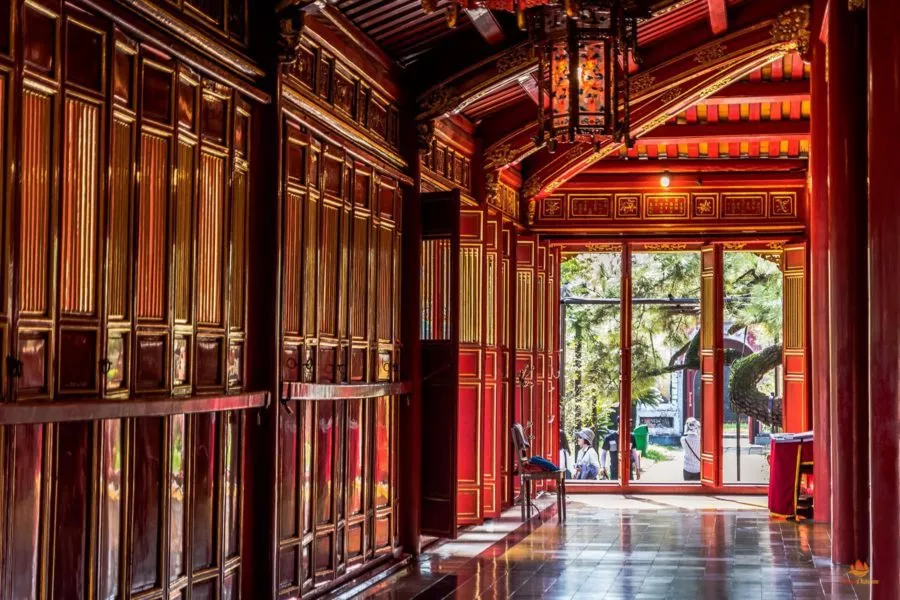
The Citadel of Hue, Vietnam. Photo credit: Prépare ta Valise / Parfum d’Automne
The Golden Bridge in Ba Na Hills
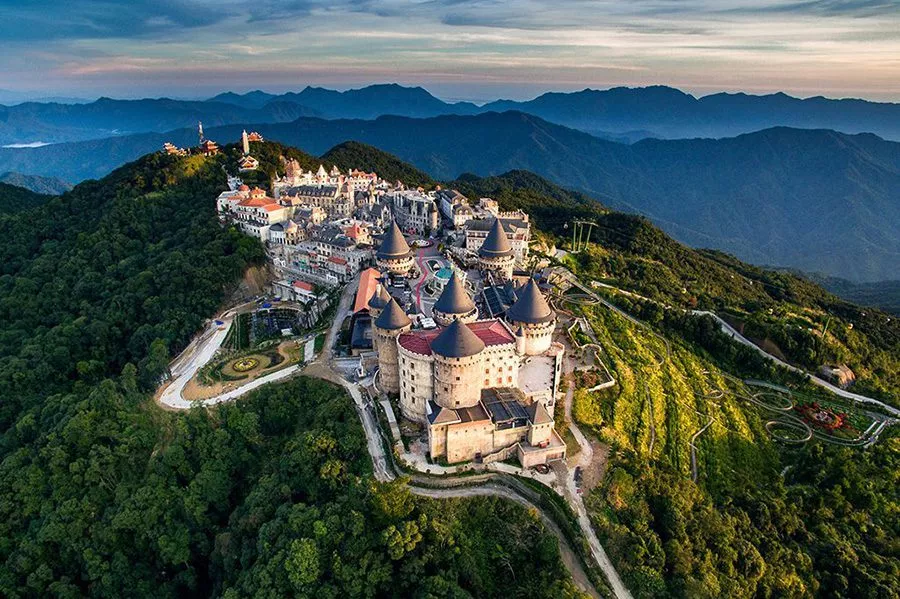
This bridge has enjoyed tremendous popularity since its opening in June 2018.
It is part of the Ba Na Hills tourist complex, located atop the Truong Son mountain near Danang. French colonial troops, seeking cooler temperatures during the summer heat, created a mountain resort here starting in 1919.
The company Sun Group, specializing in the creation of amusement parks, decided in the early 2010s to develop a site featuring several attractions. The first was the Ba Na Cable Car (2013), which remains to this day the longest non-stop cable car in the world (5,801 meters long). The Golden Bridge is the most recent attraction. It connects the cable car arrival station to various gardens. But it is above all its architecture that earned it worldwide fame — drone photos of the site spread across the globe. The chief architect, Mr. Vu Viet Anh, designed two giant hands positioned in such a way that they appear to be holding up the bridge.
An architectural feat and an unparalleled publicity spotlight for Vietnam!
>> Our full article on Ba Na Hills and the Golden Bridge.
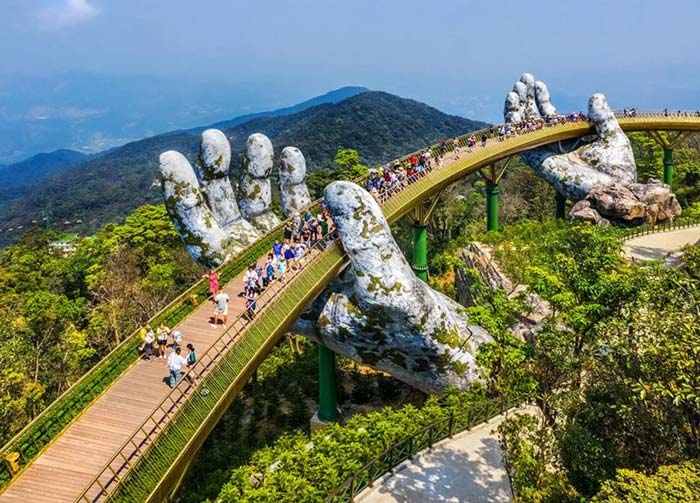
The Golden Bridge at the Ba Na Hills site. Photo credit: Parfum d’Automne
The Ancient Town of Hoi An
Hoi An is a small city located in Quang Nam Province, about 30 kilometers from Da Nang.
A former fishing port well known to silk merchants from the 15th century onwards, Hoi An experienced numerous cultural influences that can still be seen in the architecture of its Old Town. Listed as a UNESCO World Heritage Site since 1999, it includes no fewer than 844 noteworthy buildings. You likely won’t have the time — or the patience — to visit them all! Nevertheless, several of them are must-sees: the Japanese Covered Bridge, built in 1593 to connect the city’s Japanese and Chinese quarters; Tan Ky House, the oldest house in Hoi An and the first to be classified as a Historic Monument in 1985; and the Phuc Kien Pagoda, which once served as a gathering place for the community from Fujian Province.
Beyond these monuments, a stroll through the Old Town — during the day to admire the colorful façades, and again at night to enjoy the glowing lanterns — is an experience not to be missed!
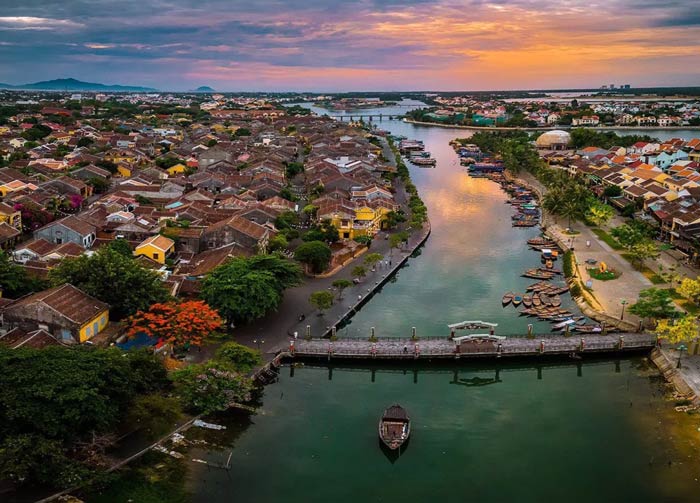
Aerial view of Hoi An, Vietnam.
The My Son Sanctuary
Located 30 km west of the small town of Hoi An in central Vietnam, the My Son Sanctuary is the main archaeological site of the Cham civilization, which flourished from the 4th to the 13th century.
With cultural and spiritual origins rooted in the Indian subcontinent and Hinduism, the Cham built numerous temples dedicated to Hindu deities such as Krishna, Vishnu, and especially Shiva. My Son was the religious heart of this civilization.
By visiting this sanctuary, you will discover 10 centuries of history that once unfolded along the Vietnamese coast. The site was inscribed as a UNESCO World Heritage Site in 1999.
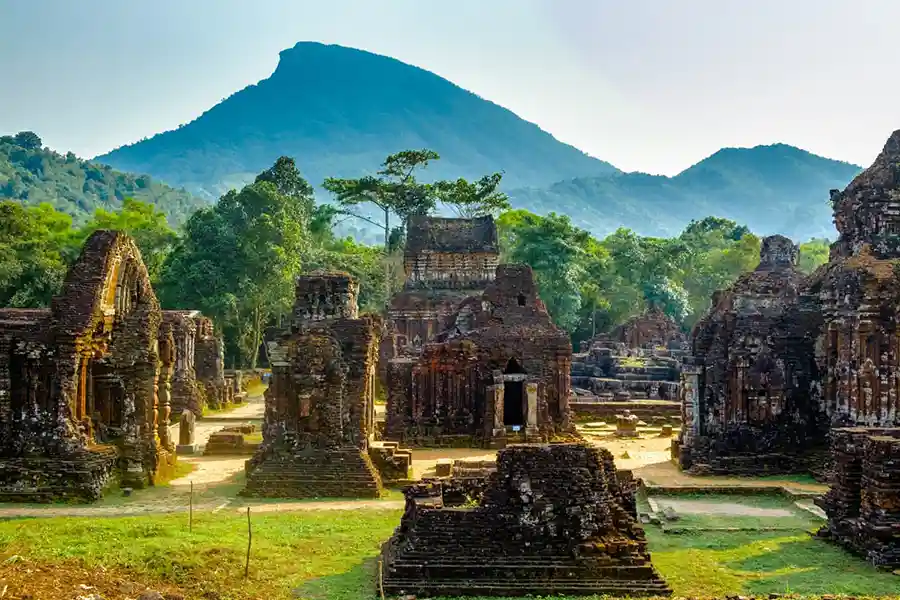
The My Son Sanctuary near Hoi An
The Cu Chi tunnels
Cu Chi is a district located outside Ho Chi Minh City and is home to the tunnels used by Viet Minh soldiers during the war against the Americans.
These tunnels allowed Vietnamese resistance fighters to hide from American attacks and prepare their offensives. Several times, the American army bombed the Cu Chi area and sent men on the ground—“tunnel rats”—to try to gather information. They succeeded in 1967 when they discovered the Viet Minh headquarters in Cu Chi. More than 500,000 documents were found there! But this was not enough, and the Cu Chi Tunnels still strongly symbolize the ingenuity and sacrifice of Vietnamese soldiers in their struggle against the “invader.”
At the end of the war, the Vietnamese Communist Party decided to preserve and develop two tunnel complexes, stretching over more than 120 km. Some sections of the tunnels have been rebuilt and adapted to welcome tourists.
As with most tourist sites in this list, we recommend visiting Cu Chi with a guide to obtain all the information you need to understand the Vietnamese resistance.
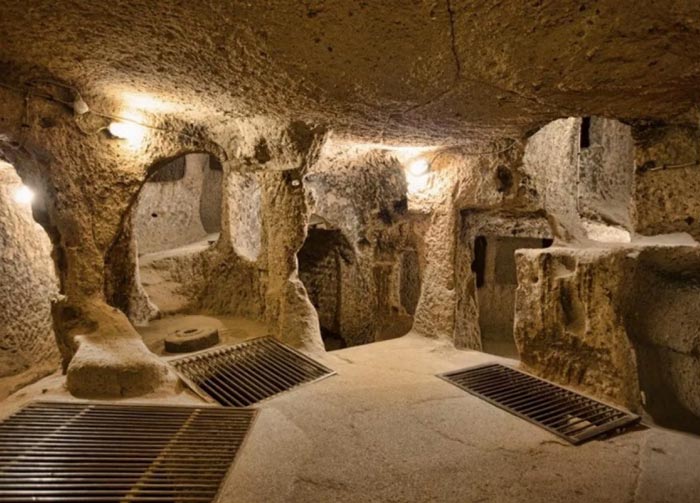
Entrance to a tunnel in Cu Chi, Vietnam.
You now know the must-see sites to visit in Vietnam!