


















Dive into the captivating history of the Vietnamese flag, and discover the profound meaning behind it. This simple yet elegant flag is far more than a national symbol. With its bold color and iconic star, it tells a rich story of struggle and resilience.
In this article, we’ll take a detailed look at the history, meaning and symbols of the Vietnamese flag. Get ready to dive into the past and discover the many facets of this iconic national symbol.
What does the Vietnamese flag look like?
The Vietnamese flag is a solid red rectangle, with a large yellow five-pointed star centered in the middle, one point facing upward.
It’s a deliberately minimalist design: just two colors, and a single symbol. The flag follows an official ratio of 2:3 (height to width), and the star sits exactly at the center of the rectangle. This simple, instantly recognizable design is often nicknamed “Cờ đỏ sao vàng,” literally “the red flag with the yellow star.”
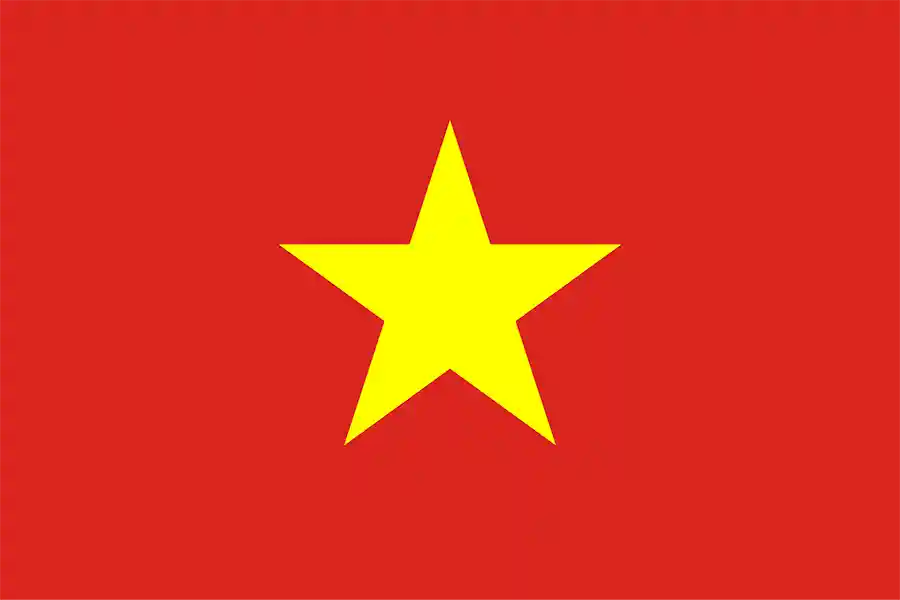
Illustration of the Vietnamese flag – AI-generated artwork
What is the history of the Vietnamese flag?
The red flag with the yellow star first appeared in 1940, during an uprising against French colonial rule, before becoming the official flag of the reunified country in 1976.
The very first known appearance of this flag dates back to November 23, 1940, during the Nam Kỳ (Cochinchina) uprising, a revolutionary movement against French colonial power in the south of the country. The design was later adopted in 1941 by the Việt Minh, the nationalist movement led by Hồ Chí Minh, which fought against both Japanese occupation and French colonial rule.
At the end of World War II, Hồ Chí Minh declared Vietnam’s independence on September 2, 1945. A few days later, on September 5, 1945, a government decree officially adopted the red flag with the yellow star as the national flag of the Democratic Republic of Vietnam (the North). In 1955, the star’s design was slightly adjusted: its points, previously somewhat rounded, became straighter, and its size was reduced a little — this is the version still used today.
During the Vietnam War, the North kept this red flag with a yellow star, while the South (Republic of Vietnam, 1955–1975) flew a very different flag: a yellow field with three horizontal red stripes. The South’s flag disappeared when the country was reunified on July 2, 1976, the date on which the North’s red flag with the yellow star became the official flag of the whole of Vietnam, as we know it today.
What do the colors of the Vietnamese flag mean?
Red on the Vietnamese flag symbolizes bloodshed and the courage of fighters throughout the country’s history, while the yellow of the star represents the Vietnamese people themselves.
The red background represents revolution, bloodshed, and the struggle for independence led by the Vietnamese people. It is also the color of the determination and resilience claimed by all social classes across the country.
The yellow star, for its part, symbolizes both the Vietnamese people and the unity of the nation. Its five points traditionally represent the five major classes that make up society: intellectuals, farmers, workers, entrepreneurs and soldiers, all united under a single banner.
What does the star on the Vietnamese flag represent?
The five-pointed star, placed at the exact center of the flag, symbolizes unity and harmony among the country’s different social classes.
The star is a constant reminder of the country’s history and values: it represents the struggle for independence and freedom, as well as the unity and solidarity of the Vietnamese people. It is also a powerful symbol of the Vietnamese communist revolution.
The flag is a powerful means of communication, allowing the Vietnamese people to show their pride and support for their country. It is used on many official occasions and ceremonies, as well as by ordinary citizens to express their attachment to their homeland.
What role did the flag play during Vietnam’s war of independence?
During the war of independence, the Vietnamese flag was a crucial symbol of the fight for freedom and sovereignty.
During Vietnam’s war of independence, the flag played a crucial role as a symbol of the fight for freedom and independence. It was proudly flown by Vietnamese fighters and became a symbol of resistance against colonial forces.
The Vietnamese flag was often raised at protests and political rallies to show the unity and determination of the Vietnamese people. It was a symbol of hope and pride for those fighting for their freedom, and it inspired numerous liberation movements around the world.
What are the official uses of the Vietnamese flag?
The flag of Vietnam is raised during national holidays, political events and important celebrations across the country.
The flag of Vietnam is used on many official occasions and ceremonies. It is raised during national holidays, political events and important celebrations. It is also displayed on government buildings, schools and embassies, and flown at half-mast, with a black ribbon attached, during periods of national mourning.
The flag is also used during military ceremonies and the funerals of soldiers and Vietnamese leaders. It stands as a symbol of respect and recognition for those who sacrificed their lives for the nation.
What etiquette should be followed for the Vietnamese flag?
Use of the Vietnamese flag is governed by strict protocols that must be respected to honor this important national symbol.
When the flag is raised, it must be treated with respect and dignity. It should be raised slowly and completely, and lowered in the same manner. It should never touch the ground or be used disrespectfully.
When used at ceremonies or official events, the flag must be placed at the center, in a position of honor. It should be carefully folded and stored when not in use, and must never be used for inappropriate purposes.
Are there flags similar to Vietnam’s in other countries?
Although unique, the Vietnamese flag shares some similarities with other national flags, notably those of China and Morocco.
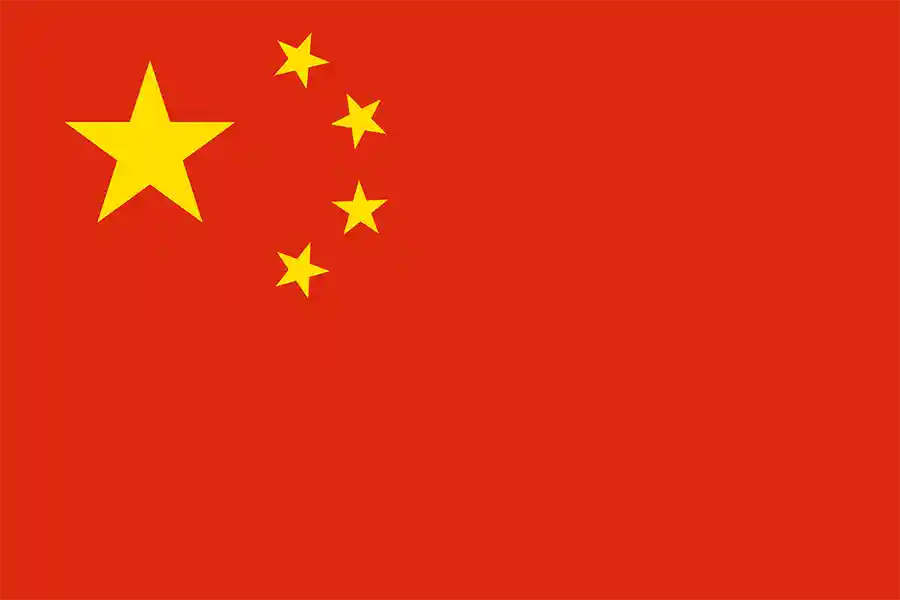
The flag of the People’s Republic of China also has a red field with yellow stars, but it features five stars (one large and four small) rather than a single one, positioned in the upper left corner rather than at the center. Both flags share a common ideological heritage, having emerged from 20th-century communist revolutionary movements.
The flag of Morocco also offers an interesting comparison: a red field with a centered star, but green rather than yellow. These similarities reflect both crossing historical influences and the unique differences that make each flag a distinctive symbol of its country.
The Vietnamese flag is therefore much more than a simple national symbol. It embodies the history, values and independence struggle of the Vietnamese people. Its minimalist design — a red field and a single star — tells a rich story of courage, sacrifice and resilience, from 1940 to today.
By understanding the history, meaning and symbols of the Vietnamese flag, one can better appreciate the importance of this national symbol and its role in Vietnamese identity — a constant reminder, proudly carried, of the country’s values and journey.