
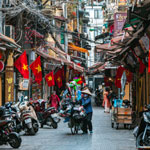


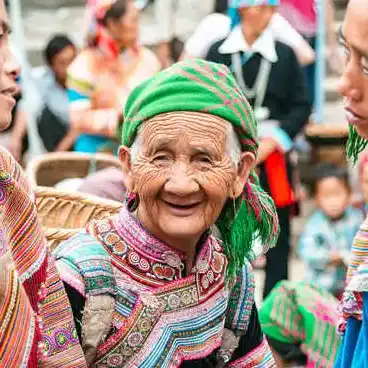
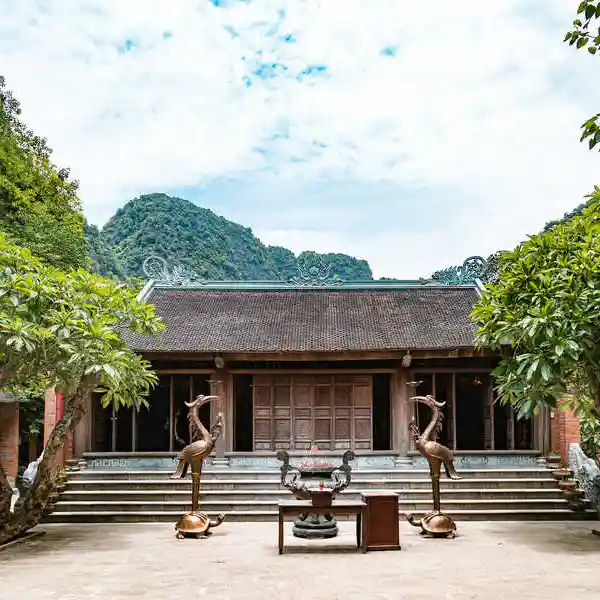


Religion in Vietnam is a fascinating and complex subject. Unlike many countries where a single religion dominates, Vietnamese spirituality rests on a unique syncretism, the legacy of centuries of crisscrossing influences. Understanding religion in Vietnam means diving into the soul of a people shaped by history, philosophy and resilience.
Vietnamese people are traditionally raised according to what is known as the “Tam Giáo” — the Three Teachings: Buddhism, Confucianism and Taoism. Together, these three pillars form a philosophical foundation that still shapes views on life, death and social relationships in Vietnam today.
Since the economic opening of Doi Moi (1986), spiritual practice has seen a genuine revival. The Vietnamese state itself has encouraged this movement, going so far as to turn Ho Chi Minh into a near-mystical figure. Today, religious practices hold a central place in the daily lives of Vietnamese people.
Buddhism in Vietnam
Buddhism is arguably the most visible religion in Vietnam. Present across the country from north to south, it permeates architecture, festivals, the calendar and the daily practices of a large share of the population.
Origins and establishment
Originating in India, Buddhist philosophy first spread to China before establishing a lasting presence in Vietnam from the early centuries of the Christian era. It reached its peak under the Ly dynasty (1010–1225), a period during which it was elevated to the status of state religion. Buddhist monks served as advisers to the king at the time.
Core teachings
At the heart of Vietnamese Buddhism lie several essential concepts: karma (present actions determine future lives), the notion of a cycle of rebirth (time is circular, with neither beginning nor end), and precepts of virtuous conduct — right thought, right speech, right action, right meditation.
Buddhism as practiced in Vietnam is predominantly of the Mahayana tradition (Great Vehicle), influenced by China, although Theravada communities also exist, particularly in the southern provinces near Cambodia.
Buddhism in contemporary Vietnamese society
After a period of being sidelined under Communist Party policy, Buddhism was officially rehabilitated as a spiritual force of the nation. A “Vietnam Buddhist Sangha” was created and regularly holds national congresses.
It is estimated today that 45 to 50% of Vietnamese people identify as Buddhist, although syncretism makes this figure difficult to measure precisely: many people practice several beliefs simultaneously.
Where to observe Buddhism in Vietnam?
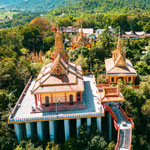
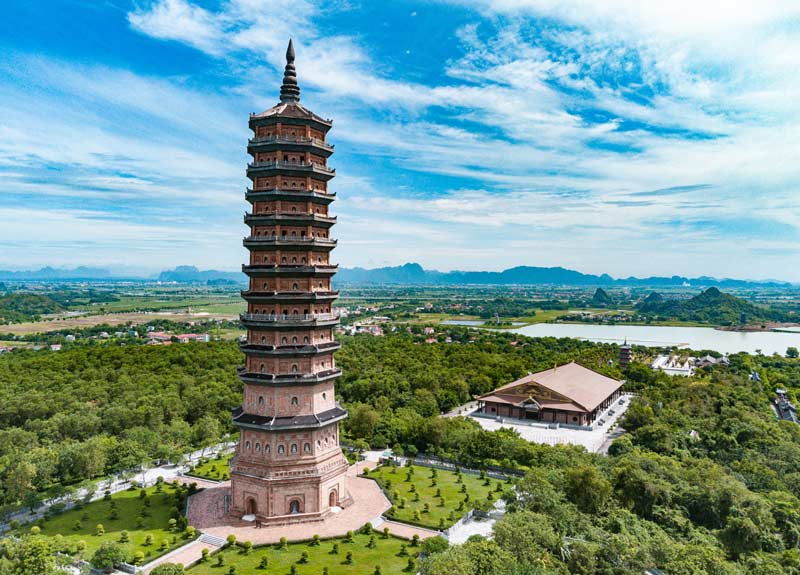
Throughout a journey from north to south, Buddhist pagodas and temples dot the landscape. Tran Quoc Pagoda in Hanoi, the oldest in the capital (6th century AD), is a must-see. Perfume Pagoda (Chùa Hương), a major pilgrimage site in spring, draws hundreds of thousands of worshippers every year.
Confucianism in Vietnam
Confucianism is not a religion in the traditional sense of the term: it has no sacred book, no clergy, no dedicated place of worship. It is above all a moral and social system of thought whose influence on Vietnamese society has been — and remains — considerable.
The cardinal values of Confucianism
Confucius (551–479 BCE) developed an ethical code meant for all people, from the ordinary citizen to the ruler. Five fundamental virtues structure this teaching:
- Benevolence (Rén): humanism, love for others
- Righteousness (Yì): acting according to justice, not self-interest
- Propriety (Lǐ): respect for rites and social conventions
- Wisdom (Zhì): discerning right from wrong through reason
- Sincerity (Xìn): being trustworthy in all circumstances
Confucianism also defines precise social hierarchies: the subject obeys the king, the son the father, the younger sibling the elder, the wife the husband. These relationships of obedience have profoundly shaped Vietnamese family and social structure.
Confucianism in Vietnam: a long history
Introduced to Vietnam as early as the 1st century under Chinese rule, Confucianism gradually structured the country’s administration and education. It was in the 11th century that the Temple of Literature (Văn Miếu) was founded in Hanoi, meant to train the “sons of the nation” (Quốc Tử Giám) according to Confucian precepts. This education system lasted until 1915.
Confucianism and modernity
Following the post-1986 revival, Confucianism reappeared in public discourse, but it is now viewed with some ambivalence. For older generations, it represents the traditional values of respect and harmony. For Vietnam’s youth, more mobile and future-oriented, it can feel synonymous with rigid hierarchy and restrictive tradition.
This tension between Confucian heritage and modern aspirations is one of the most important cultural dynamics in contemporary Vietnam.

Taoism in Vietnam
Born in China at roughly the same time as Confucianism, Taoism brings the mystical and metaphysical dimension to the Vietnamese Tam Giáo. Where Confucianism governs social life, Taoism explores humanity’s relationship to the cosmos and to unseen forces.
The Tao: the path to immortality
Taoism is founded on the notion of the Tao (道), “the Way” — a universal force underlying all things. From its relatively abstract origins (attributed to Laozi, author of the Tao Te Ching), it gradually developed into a fully organized religion, with a pantheon of deities, rituals and meditation practices.
The supreme deity of Vietnamese Taoism is Ngọc Hoàng, the Jade Emperor, who reigns over the Heavens and governs a vast pantheon of gods and spirits. Prayers are addressed to him for protection, health, prosperity — or in hopes of attaining immortality.
Influence on popular beliefs
Taoism has deeply influenced Vietnamese popular culture. Geomancy (phong thủy), astrology, fortune-telling and belief in spirits all largely stem from it. In many Vietnamese families, people still consult feng shui masters today before building a house or setting a wedding date.
Where to visit: the Jade Emperor Pagoda (Chùa Ngọc Hoàng) in Ho Chi Minh City, built in the early 20th century by the Chinese community of old Saigon, is one of the country’s most remarkable Taoist places of worship.
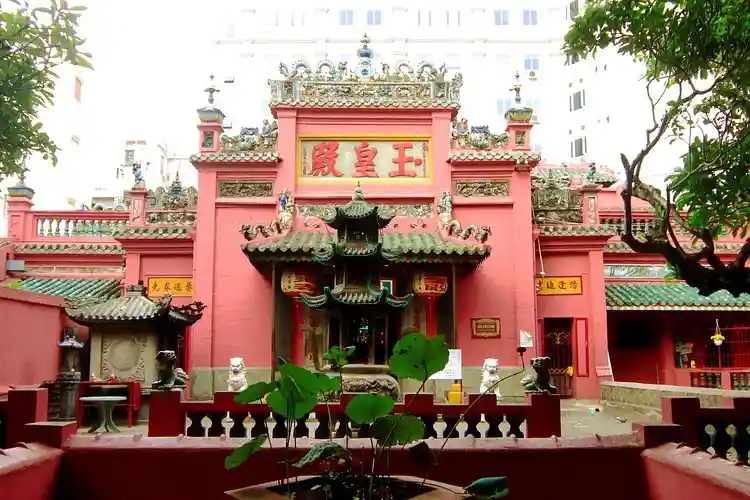
Ancestor worship and popular beliefs
If a single spiritual practice had to define religion in Vietnam, it would undoubtedly be ancestor worship. Present in nearly every Vietnamese home, this practice transcends official religious affiliations.
The ancestor altar: a link between the living and the dead
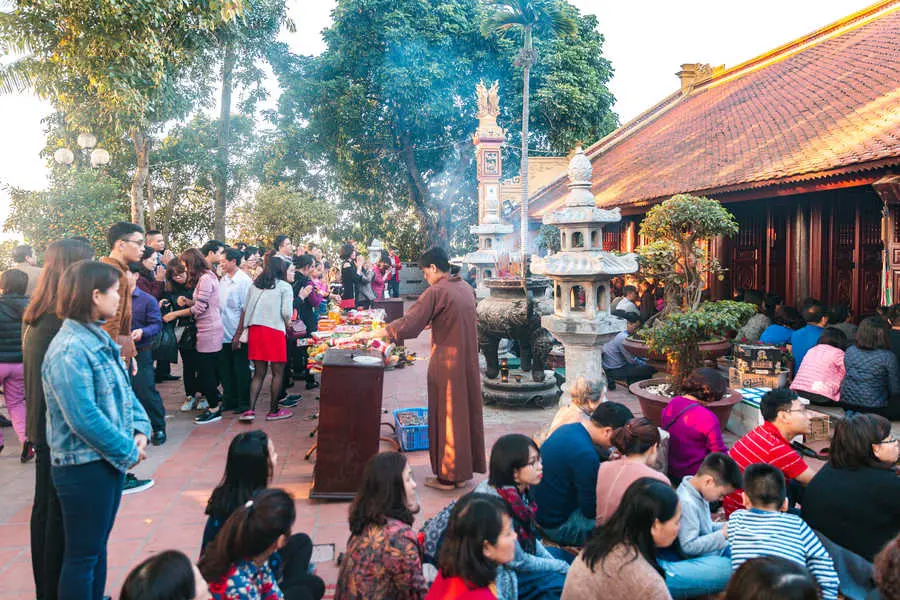
In every Vietnamese household, an altar (bàn thờ) is set up in honor of deceased ancestors. Offerings, incense, flowers, fruit and candles are placed there. Ancestors are seen as active protectors of the family: they are consulted for major decisions, informed of marriages and births, and asked for their blessing.
This practice is rooted in the belief that the souls of the deceased continue to exist and intervene in the lives of the living — a belief nourished both by Taoism and by pre-Buddhist local traditions.
Spirits, ghosts and popular festivals
“Ghosts” (ma) hold an important place in Vietnamese spirituality. Ghost Month (tháng cô hồn), the 7th month of the lunar calendar, is a period when wandering souls are believed to return among the living. Many families make offerings in the street to appease these spirits.
Tết Nguyên Đán (Lunar New Year) and the many temple festivals that follow it are prime occasions to honor ancestors and local deities. Nearly every province, every village has its own tutelary spirit (thành hoàng), to whom a temple and an annual festival are dedicated.
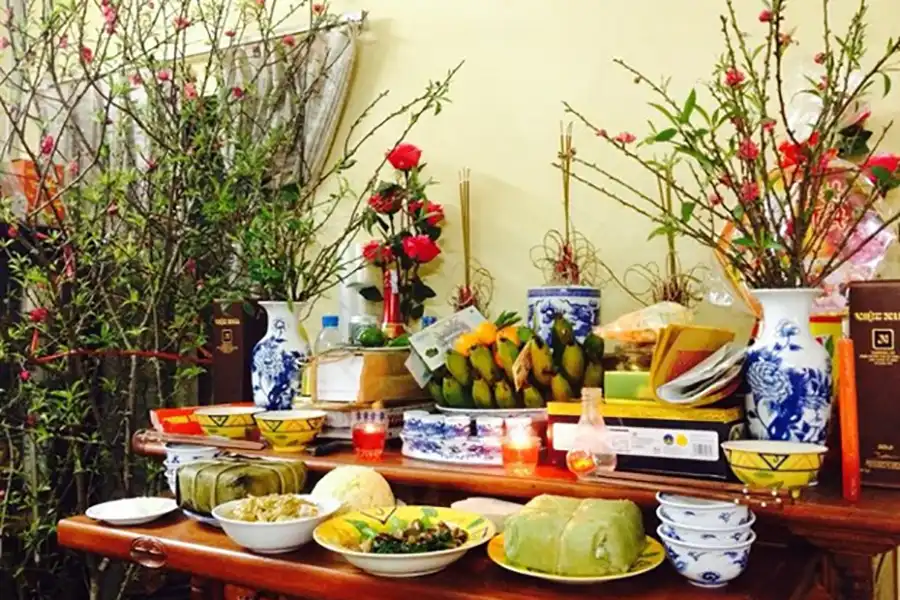
Caodaism: a religion born in Vietnam
Caodaism is one of the most fascinating spiritual curiosities of Southeast Asia. A syncretic religion born on Vietnamese soil in the early 20th century, it attempts to synthesize the major religious currents of East and West into a single, universal faith.
Origins: a spiritual revelation
The Caodaist religion was officially born in 1926, when Ngô Văn Chiêu, a colonial civil servant, claimed to have received a divine revelation during a séance. Cao Đài Tiên Ông (the “Supreme Being”) allegedly appeared to him and entrusted him with the mission of founding a new religion. The movement, also known as “renewed Buddhism,” quickly spread across southern Vietnam.
A universal syncretism
Caodaism blends elements of Buddhism, Confucianism, Taoism, Christianity and Islam. Its pantheon reflects this universality: alongside the Buddha, Jesus Christ, Muhammad and Moses stand more unexpected figures such as Joan of Arc… and Victor Hugo, who practiced spiritism during his exile on Jersey.
Followers honor two principal deities: “Diêu Trì Kim Mẫu” (the feminine principle) and “Ngọc Hoàng Thượng Đế” (the masculine principle), celebrated notably in the lunar month of January.
The Tay Ninh Holy See
The spiritual center of Caodaism is located in Tay Ninh, about 100 km from Ho Chi Minh City. The Great Temple (Tòa Thánh) is an extraordinary building, brightly colored with a syncretic architecture blending an Asian pagoda and a cathedral. Ceremonies are held four times a day, with a procession of worshippers dressed in white, blue or red according to rank.
Caodaism is estimated to have between 3 and 5 million followers in Vietnam today, mostly in the southern provinces.
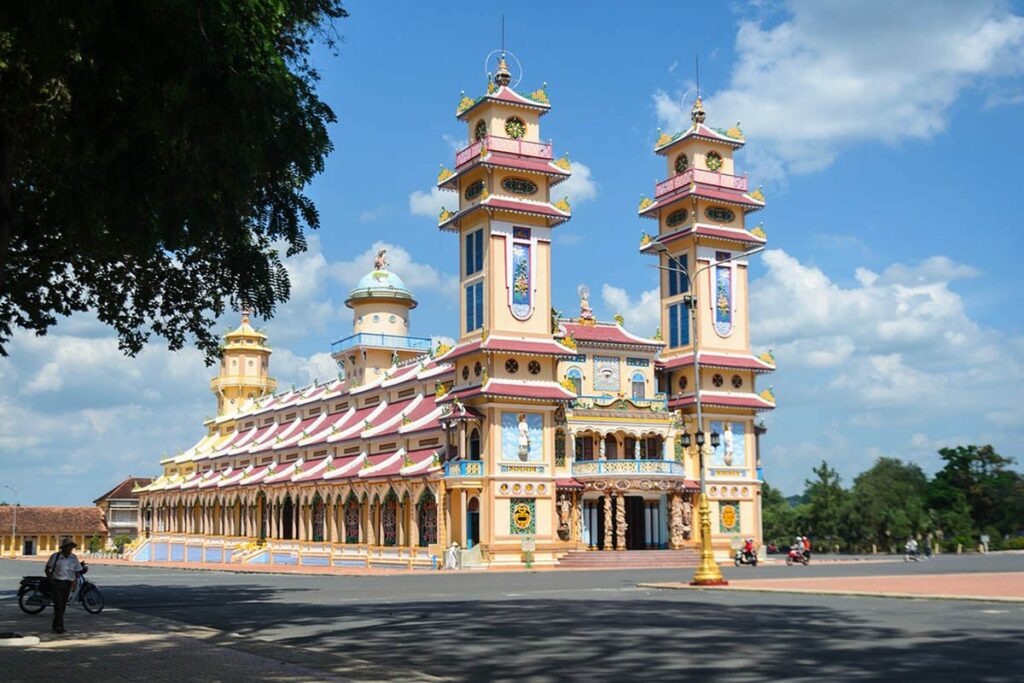
Christianity in Vietnam
Christianity is the third-largest religion in Vietnam, with a significant Catholic and Protestant presence.
Catholicism: a long history
Catholicism took root in Vietnam from the mid-17th century onward, notably thanks to the Jesuit Alexandre de Rhodes, who evangelized the country and helped codify the romanized Vietnamese script (quốc ngữ), still used today.
The Paris Foreign Missions Society, Spanish Dominicans and other congregations followed one another, despite periods of severe persecution. In the 20th century, the number of Catholics grew considerably, buoyed in particular by the French colonial presence.
After reunification in 1975, many Catholics fled the country (the “boat people”) rather than submit to communist rule. All seminaries were closed until 1986, the year of Doi Moi.
Today, Catholicism is claimed by 6 to 7% of Vietnam’s population, making Vietnam the 2nd-largest Catholic community in Southeast Asia, behind the Philippines. With a population of around 97 million, this represents nearly 7 million believers.

Protestantism
Protestantism arrived later, mainly through English-speaking influence. The Christian and Missionary Alliance (CMA), an American evangelical mission, settled in Da Nang in 1911. The French authorities of the time gradually allowed their activities to expand.
Like Catholics, Protestants faced persecution after 1975. Since Doi Moi, evangelical and Protestant communities have grown rapidly, particularly among ethnic minorities in the Central Highlands. Their numbers are estimated at around 2 million, a large majority of whom are Evangelical.
Frequently asked questions about religion in Vietnam
What is the official religion of Vietnam?
Vietnam is officially a secular state: there is no state religion. The Constitution guarantees freedom of religion, although all religious organizations must be registered with the authorities. In practice, Buddhism is the most widely practiced religion, followed by Catholicism and popular beliefs.
Are Vietnamese people religious?
Yes, very much so. Even those who do not identify as religious often take part in ancestor worship rituals, make offerings during lunar festivals, or consult a feng shui master. Spirituality in Vietnam is often lived in a practical, everyday way rather than as strict doctrine.
Can tourists visit pagodas and temples?
Absolutely. Pagodas and temples are generally open to the public. However, visitors are expected to dress modestly (shoulders and knees covered), behave respectfully, and remove their shoes before entering. Photos are often allowed, but it’s best to ask first.
What is Tam Giáo?
Tam Giáo (三教, “the three teachings”) refers to the synthesis of Buddhism, Confucianism and Taoism that has shaped the Vietnamese worldview for centuries. These three philosophies blended with local beliefs to form a unique syncretism specific to Vietnamese culture.
Religion in Vietnam is a kaleidoscope of beliefs, practices and age-old influences. It cannot be confined to a single definition: it is at once philosophy (Confucianism), spiritual quest (Buddhism), mysticism (Taoism), popular devotion (ancestor worship) and organized faith (Christianity, Caodaism).
What strikes the traveler is the omnipresence of the sacred in daily life: the family altar, pagodas open from dawn to dusk, incense burning in front of a neighborhood temple, Tết offerings. Religion in Vietnam is not separate from life — it is the very fabric of it. To learn more about how these beliefs took shape over time, see our article on contemporary Vietnamese history.
Bibliography
Buddhism
Nguyễn Thế Anh, “Le bouddhisme dans la pensée politique du Việt-Nam traditionnel”, Bulletin de l’École française d’Extrême-Orient, vol. 89, 2002, p. 127–143.
Thích Nhất Hạnh, Vietnam: Lotus in a Sea of Fire, Hill and Wang, 1967.
Confucianism
Confucius, The Analects (Lunyu), trans. Anne Cheng, Seuil, 1981 (reissued 2014).
Woodside, Alexander, Vietnam and the Chinese Model, Harvard University Press, 1971.
Taoism and popular beliefs
Laozi, Tao Te Ching, trans. S. Julien, Hachette, 1842 (numerous modern reissues available).
Endres, Kirsten W., Performing the Divine: Mediums, Markets and Modernity in Urban Vietnam, NIAS Press, 2011.
Caodaism
Jammes, Jérémy, Les oracles du Cao Daï, École française d’Extrême-Orient, 2014.
Christianity in Vietnam
Gheddo, Piero, Catholicism and Vietnamese Catholicism, Maryknoll, 1970.
Willaime, Jean-Paul, “Le Vietnam au défi de la diversité protestante”, Social Compass, 57(3), 2010, p. 313–331.