









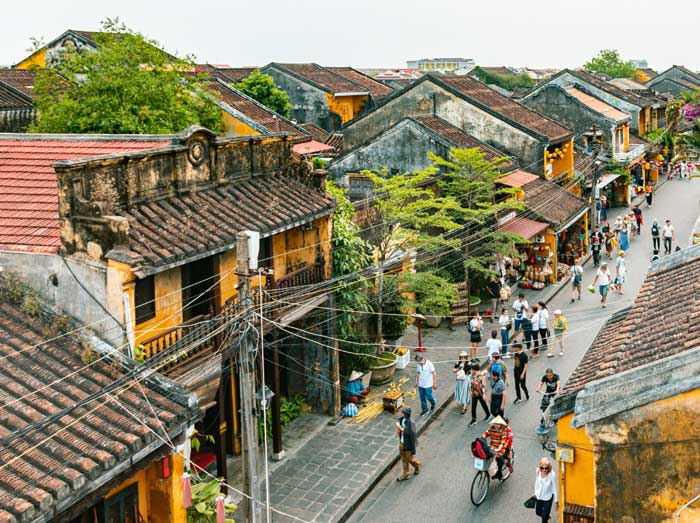
Worried about skimming over the local culture by trying to see too much in just two weeks? We have designed a 15-day Vietnam itinerary to give you the perfect balance between the major sites from north to south and moments of authentic immersion.
Benefit from the on-the-ground expertise of our agency based in Hanoi to follow an optimized route, guaranteeing deep discoveries far from the usual rush of classic tours.
When should you go to make the most of it?
With its S-shaped silhouette stretching over 1,600 km, Vietnam defies the usual climate generalizations. Yet if you travel the country from north to south, a weather window clearly stands out to avoid disappointment and guarantee the best overall period.
Aim for the window that runs from November to April. This is when the stars align: the weather is dry across most of the country and temperatures remain mild. It is, without hesitation, the period we recommend for a first successful discovery without dealing with the monsoons.
To fine-tune your choice by region, here is the reality on the ground:
- The North (Hanoi, Halong Bay): Favor September to November or March to May, as winter can be gray and chilly.
- The Center (Hue, Hoi An): The ideal window runs from February to August, sparing you the heavy rains of late year.
- The South (Ho Chi Minh City, Mekong Delta): It is warm year-round, but the dry season from December to April is far more comfortable.
Entry formalities: the lowdown on visas
Forget the endless paperwork that often dampens the excitement of departure. For French, Belgian or Swiss travelers, organizing a two-week trip has become child play. You benefit from a total and automatic visa exemption, as no visa is required for stays under 45 days.
In practice, your only obligation is to present a valid passport that remains valid for at least six months after your planned departure date. That is one less hassle, letting you focus on the essentials: preparing your itinerary.
If you are considering extending the adventure beyond this duration, the e-visa is fairly easy to obtain.

Currency and budget: our tips for managing your money
Here, you will be a millionaire from the moment you arrive at the airport. The national currency is the Vietnamese dong (VND). For a simple reference point, expect around 30,300 VND per euro (August 2026 rate), an exchange rate that takes a bit of getting used to for mental conversions.
A classic mistake is relying entirely on your bank card. While it works in luxury hotels, cash remains the absolute norm everywhere else, especially at street food stalls. To enjoy a real local meal or buy fruit at the market, always keep some cash on you.
As for your wallet, it is hard to give an exact figure since preferences vary so much. However, for a comfortable organized 15-day tour, budget between 1,200 euros (clean, unpretentious hotels) and over 2,000 euros if you are considering more luxurious accommodations.

Health and safety: travel with peace of mind
We see it every day on the ground: Vietnam is a very safe destination. The crime rate is remarkably low and travelers, including families and solo women, quickly feel at ease. The welcome from Vietnamese people is sincere and warm.
Medically speaking, do not panic: no vaccine is mandatory to enter the country. Just make sure your routine boosters are up to date and consult your doctor for personalized advice.
Our only real word of caution concerns tap water and raw vegetables: avoid them to spare your stomach. As for food, trust your instincts: if it does not feel right, do not try it!
Which itinerary should you choose to visit Vietnam in 15 days?
To visit Vietnam in 15 days, the best itinerary connects Hanoi, Hue, Hoi An and Ho Chi Minh City at a balanced pace.
Now that the basics are covered, let us get into the heart of the matter: what could your trip look like? Here is the itinerary we have designed, the fruit of our 20 years of experience on the ground.
The philosophy of our tour: balance and experiences
Fifteen days is the right amount of time for a first discovery of Vietnam without running out of steam. Our approach is clear: we refuse to rush through everything, choosing instead to prioritize the quality of what you see. We have designed this balanced pace so you can truly soak in the atmosphere of each stop.
The focus is on immersion and the search for authenticity. This itinerary was designed to intelligently mix must-see sites with off-the-beaten-path experiences, conducive to meaningful encounters.
Finally, know that this route is perfectly suited to family travel. We have optimized travel times to preserve the enjoyment of both young and old.
Overview of your 15-day journey
The table below summarizes your day-by-day route. Think of it as the backbone of your trip, a clear and realistic action plan that structures your adventure.
It gives you a global view of the stops, the key activities and the necessary logistics. It is a valuable tool to help you visualize the trip and gauge the feasibility of your journey.
For variations on this trip, feel free to check out our 15-day Vietnam tours. We adapt routes according to your preferences and budget.
Why this north-to-south route?
Why this direction of travel? Starting in the north, Vietnam cultural cradle, allows for a gentle immersion into our traditions. Hanoi and the surrounding countryside lay the essential groundwork for understanding the country.
Continuing to the center is literally traveling back in time. You will navigate between the imperial history of Hue and the preserved charm of Hoi An streets.
Ending in the dynamic south offers a striking contrast. The energy of Ho Chi Minh City and the water-based life of the Mekong Delta bring the journey to a close on a high note.
Major transfers: how to travel between regions
Logistics are a key factor for a successful trip. For a 15-day journey, domestic flights are essential to connect the three regions without wasting time. The Hanoi-Hue and Danang-HCMC connections are quick and frequent.
For medium distances, such as between stops in the North, a private vehicle with driver offers unmatched flexibility and comfort. It is the ideal solution, especially for families.
The overnight train can be an option to connect Hue from Hanoi or Ninh Binh. Light sleepers might not enjoy the experience though, as local guides like to joke that Vietnam trains are more like a shake, rattle and roll than a bullet train.
How does this 15-day Vietnam itinerary unfold, day by day?
Our 15-day itinerary follows three main phases in Vietnam: eight days in the North, three in the Center, four in the South.
Immersion in the authentic North, from Hanoi to the mountains
To start this 15-day Vietnam itinerary, we favor a gentle transition to avoid fatigue. The North opens its doors, oscillating between the historic elegance of the capital and the absolute serenity of the surrounding countryside.
Days 1-2: first steps in Hanoi, the beating heart of Vietnam
Once settled in, we suggest a gentle first immersion to overcome jet lag. A walk around Hoan Kiem Lake and a stroll through the 36 streets of the Old Quarter are perfect for getting a feel for the city.

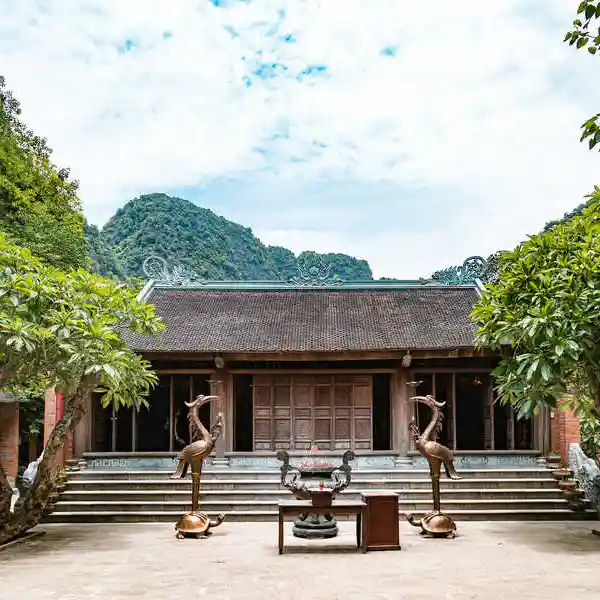
On the second day, it is time for culture and history. Visiting the Temple of Literature, Vietnam first university, is an absolute must. It is a surprisingly peaceful haven.
For a fun touch, especially for families, the water puppet show is a unique experience. This traditional art form tells local legends with plenty of poetry and humor.
Days 3-5: at the heart of the rice terraces and ethnic villages
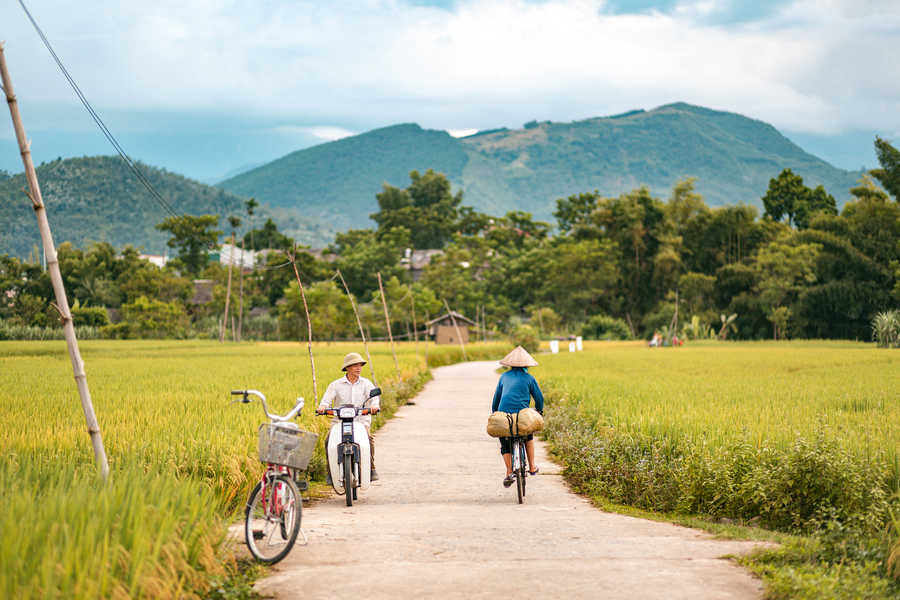
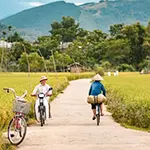
Days are punctuated by bike rides along flat paths, amid rice fields and villages. It is accessible to all and lets you greet the locals.
For the more active, easy hikes let you gain elevation and admire panoramic views of the valley. You will encounter buffalo and locals working in the fields.
On the fifth day, after one last morning enjoying the calm, it is time to hit the road again. The return to Hanoi happens gently, setting the stage for the rest of the journey.
The alternative to Sapa: Mu Cang Chai and Pu Luong
Let us address the choice of mountain destination. While Sapa is stunning, getting there involves long travel times that make the pace of the trip less comfortable, especially for a 15-day tour. That is why we favor more accessible alternatives.
The choice also depends on the season and the rice terrace cycle.
- From June to September, when the rice fields are lush green then golden, we recommend Nghia Lo and Mu Cang Chai, whose landscapes rank among the most beautiful in the North.
- The rest of the year, when the terraces are at rest, we prefer directing our travelers to Hua Tat and Pu Luong, where the valleys stay lush green all year round and offer a wonderful immersion.
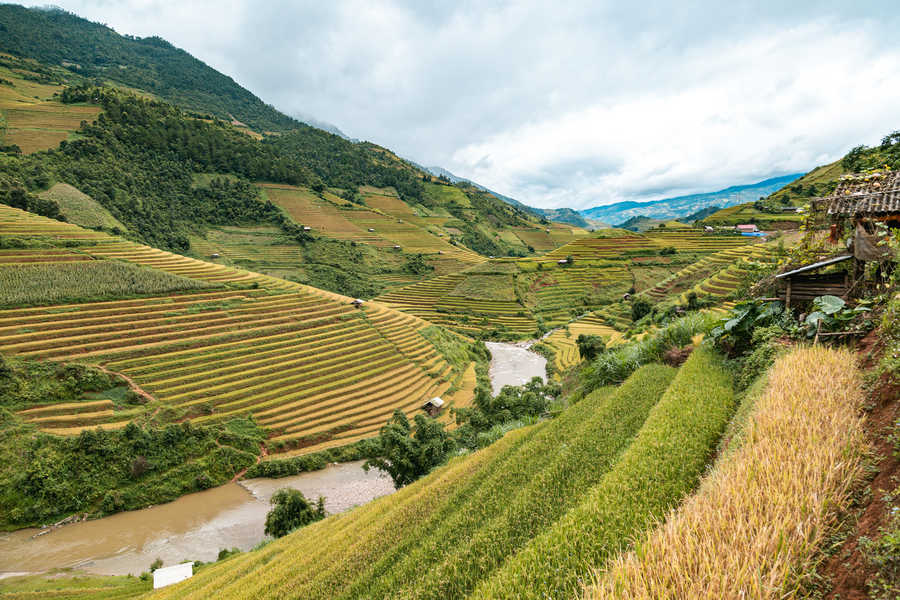
These regions, just a few hours from Hanoi, offer authenticity, mountain scenery and the warm welcome of ethnic minorities, without the crowds of Sapa.
It is the smart choice for discovering the diversity of Northern Vietnam while keeping a pace the whole family can enjoy.
A night with a local family: an unforgettable sharing experience
The experience of spending a night in a traditional stilt house leaves a lasting impression. It is not just accommodation, it is a doorway into local culture.
The highlight is undoubtedly dinner. You share a friendly meal, prepared with fresh garden produce. It is a chance to chat simply and discover a different way of life.
The comfort is simple, sure, but the human experience is incomparably rich. It is often a standout memory of the trip.

Days 6 to 8: exceptional landscapes, from Halong Bay on land to Lan Ha Bay
We leave the gentle mountains for two of Vietnam most beautiful natural gems. Get ready for landscapes that seem straight out of a painting.
Day 6: Ninh Binh, the famous Halong Bay on land
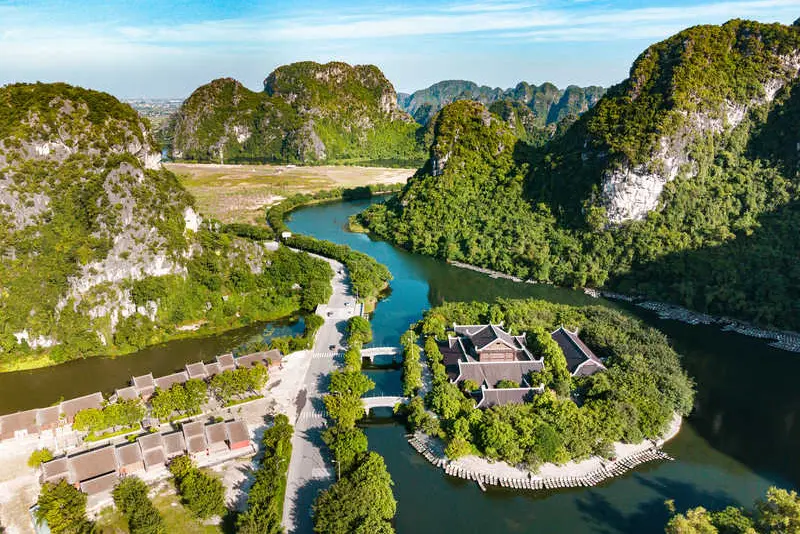
Here in Ninh Binh, the UNESCO-listed site of Trang An unfolds its fascinating maze of karst peaks. The scenery is starkly, strikingly beautiful, and frankly better preserved than the very touristy Tam Coc. It is a complete immersion in nature.
The highlight remains, without question, the rowing boat ride. Gliding silently over the water, ducking under low caves, it is a moment of pure contemplation, far from the noise of engines.
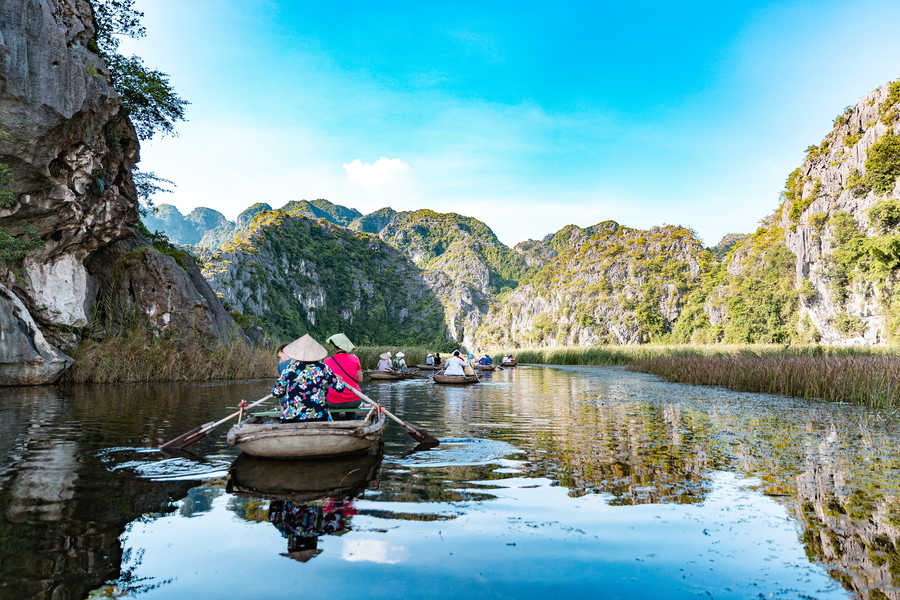
It is a stop families particularly appreciate for its supreme calm and instant magic.
Day 7: why we prefer Lan Ha Bay to Halong Bay
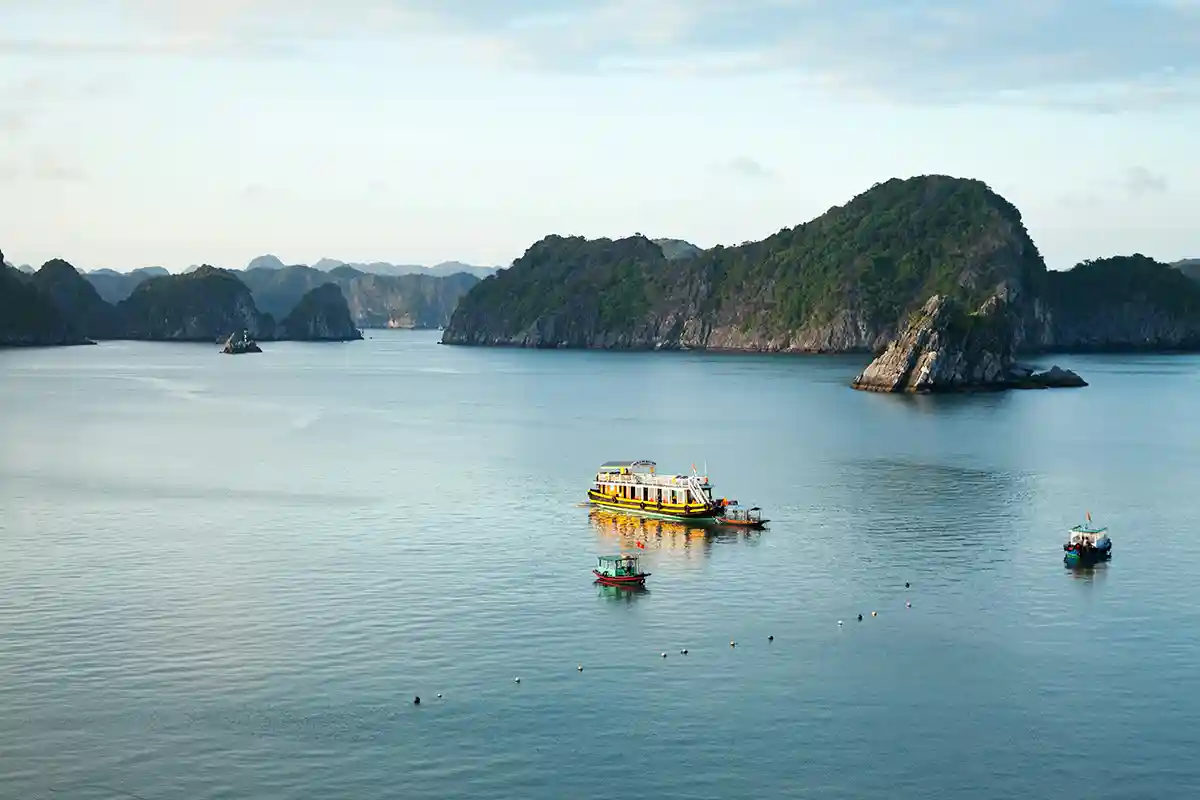
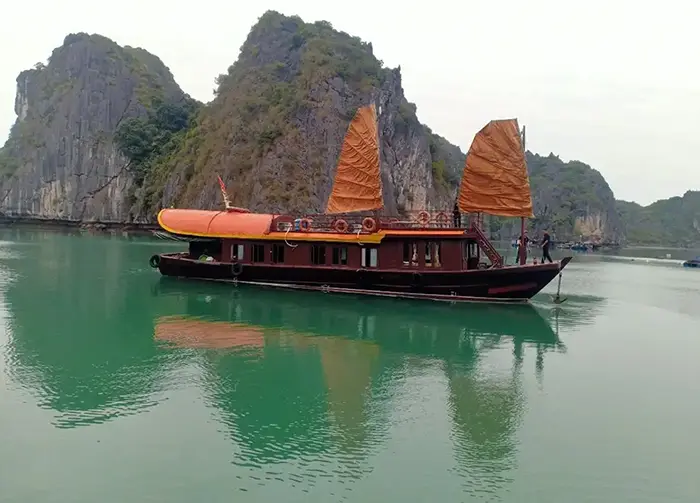
Let us be direct: Halong Bay is magnificent but a victim of its own huge success. For your trip, we prefer its neighbor, Lan Ha Bay, for a much more high-quality, peaceful experience. This way you avoid the crowds of hundreds of boats.
The scenery is virtually identical: thousands of limestone karsts rising from emerald water. But Lan Ha Bay is far less crowded. Junks are rare there, which radically changes the atmosphere of your discovery.
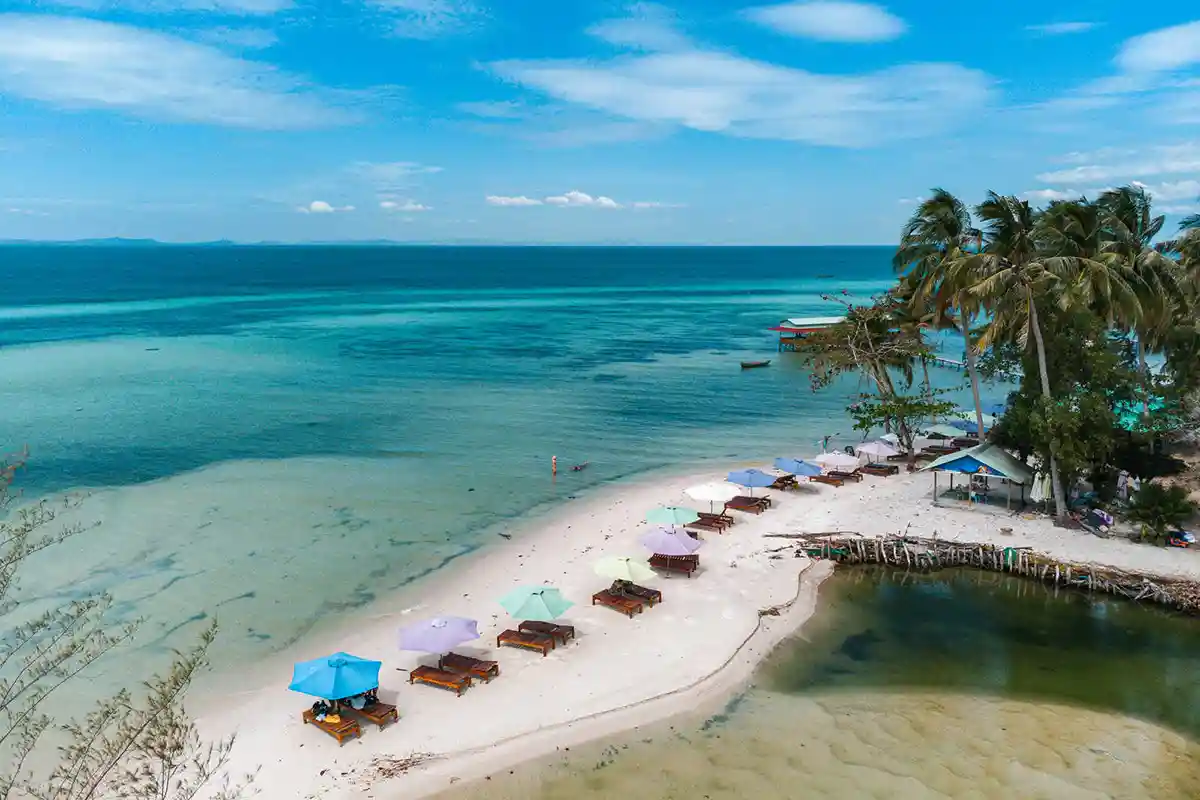
It also offers more beautiful wild beaches and much cleaner swimming areas for your children.

A night on a junk: how to choose the right one
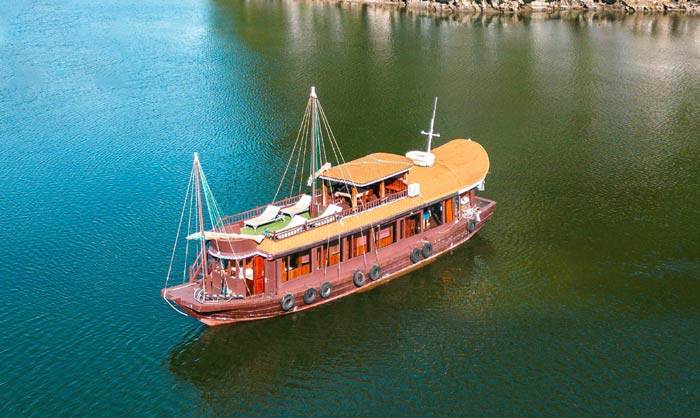
The experience of a night on the bay is an absolute must for a successful 15-day Vietnam itinerary. Choosing the right junk is therefore key.
You have several options:
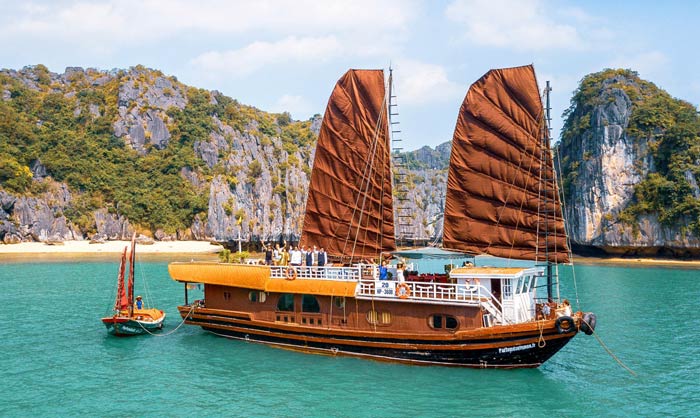
- A private cruise on a junk like the Romance, with 2 cabins;
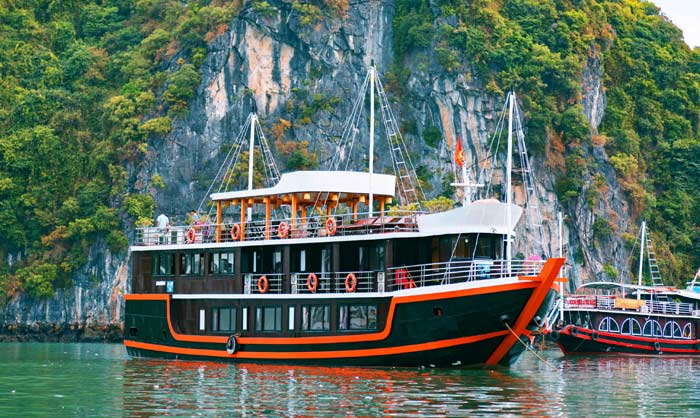
- A traditional junk cruise like the Four Seasons, with 4 cabins;
- More comfort with a junk like the Parfum d Automne, with 7 cabins, which has an English-speaking guide on board.
Either way, you will follow the same itinerary and admire this bay superb scenery, as well as life on the water, since Lan Ha Bay still hosts fishing villages, unlike the main Halong Bay.
Day 8: waking up on the bay and transition to the Center
Waking up in the middle of this scenery is a suspended, almost unreal moment. A brunch will be served as the junk sails gently toward the pier, closing this enchanted parenthesis.
The logistics for this day matter for what follows. A private vehicle will be waiting to take you directly to Hanoi airport (HAN). This drive is timed to catch a late-afternoon flight to the Center.
You will arrive in Hue in the early evening, for a new stage of your 15-day itinerary.
Days 9 to 11: the historical and poetic heart of the Center, from Hue to Hoi An
Here you are in central Vietnam, a region that carries the country soul and history. Between the imperial grandeur of Hue and the timeless charm of Hoi An, time seems to stand still.
Day 9: Hue, the former imperial city
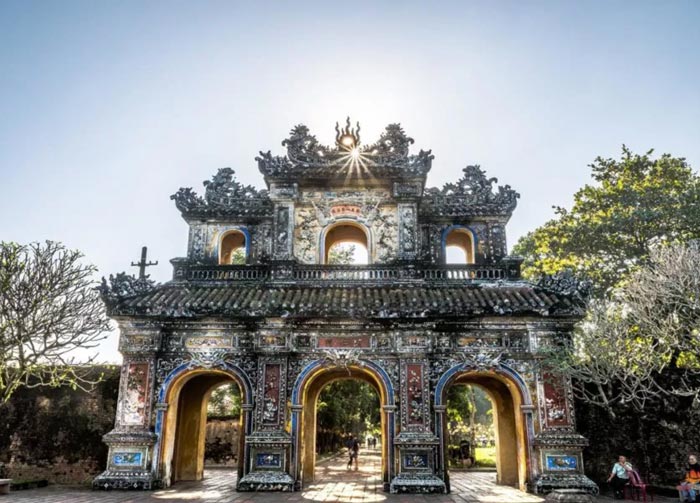
Hue is not just visited, it is felt. Former capital under the Nguyen dynasty, the Imperial Citadel remains the silent witness of a bygone era. Walking through its UNESCO-listed palaces and gardens, you touch the complexity of our history.
The classic mistake is wanting to see everything at all costs. We recommend focusing on a single imperial tomb, such as Tu Duc or Minh Mang, which blend beautifully into nature.

To close out this busy day, nothing beats a dragon boat ride on the Perfume River at dusk.
The Hai Van Pass road: a spectacular transition
Forget the quick tunnel, because the road to Hoi An via the Hai Van Pass is an attraction in its own right. This ribbon of asphalt offers raw views over the East Sea that few travelers take the time to admire.
It is not just a simple transfer. We always make strategic stops, notably to take in the Lang Co peninsula below. It is often there, between sea and mountain, that our travelers realize the geographic beauty of Vietnam.
Days 10-11: Hoi An, a favorite for many travelers
Hoi An charms instantly. Its pedestrian historic center is a living museum, untouched by modernity, where weathered yellow houses stand alongside the famous Japanese bridge.
But it is in the evening that the town turns magical. Electric lights fade to make way for thousands of colorful lanterns, creating an intimate atmosphere that leaves a lasting impression.

Here, the plan is simple: wander. Get lost in the alleys without a fixed goal, it is the best way to appreciate the place.
Hoi An with kids: our best activity ideas
If you are building a 15-day Vietnam itinerary with children, Hoi An will be one of your favorite stops. It is a cultural playground where boredom has no place, given how varied the options are.
Rather than temple-hopping, we prioritize action and sharing. Here are the experiences we often include to connect families to local reality in a fun way.
- A cooking class: Learn to prepare local specialties after a visit to the market. Kids love getting hands-on.
- A lantern-making workshop: Take home your own lantern as a souvenir, a fun and creative craft.
- A bike ride: Explore the surrounding countryside, rice fields and the Tra Que vegetable village.
- A day at the beach: Relax on An Bang or Cua Dai beaches, just a few kilometers from the center.
Days 12 to 15: the energy of the South, between Ho Chi Minh City and the Mekong Delta
The journey continues south, for an ending full of contrasts. Discover the bustle of the economic capital and the gentle way of life in the Mekong Delta.
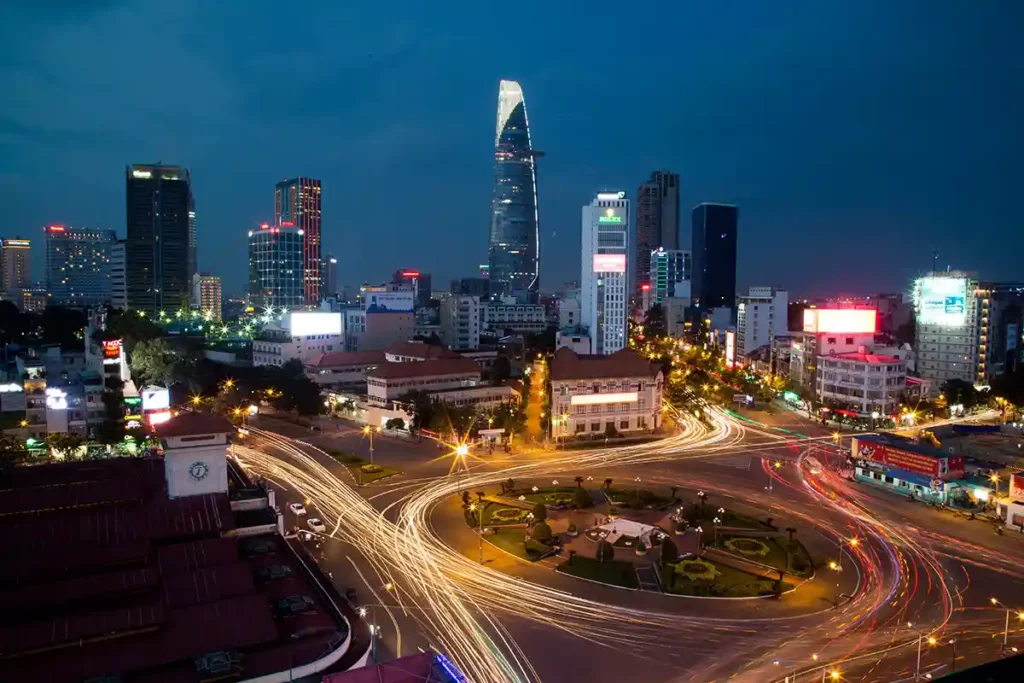
Day 12: Ho Chi Minh City, the vibrant metropolis of the South
After a free morning in Hoi An, we organize your flight to Ho Chi Minh City (SGN), formerly Saigon. The change of atmosphere is radical at this key stage of your 15-day Vietnam itinerary. Here, urban energy replaces the calm of the Center.
This megacity is a constant whirlwind. You will see remnants of colonial architecture, like the Central Post Office with its Eiffel-workshop metal frame, standing alongside futuristic skyscrapers. It is this mix that gives the city its energy.
For us, a street food tour by scooter remains the best way to understand the soul of Saigon.
Days 13-14: immersion in the Mekong Delta
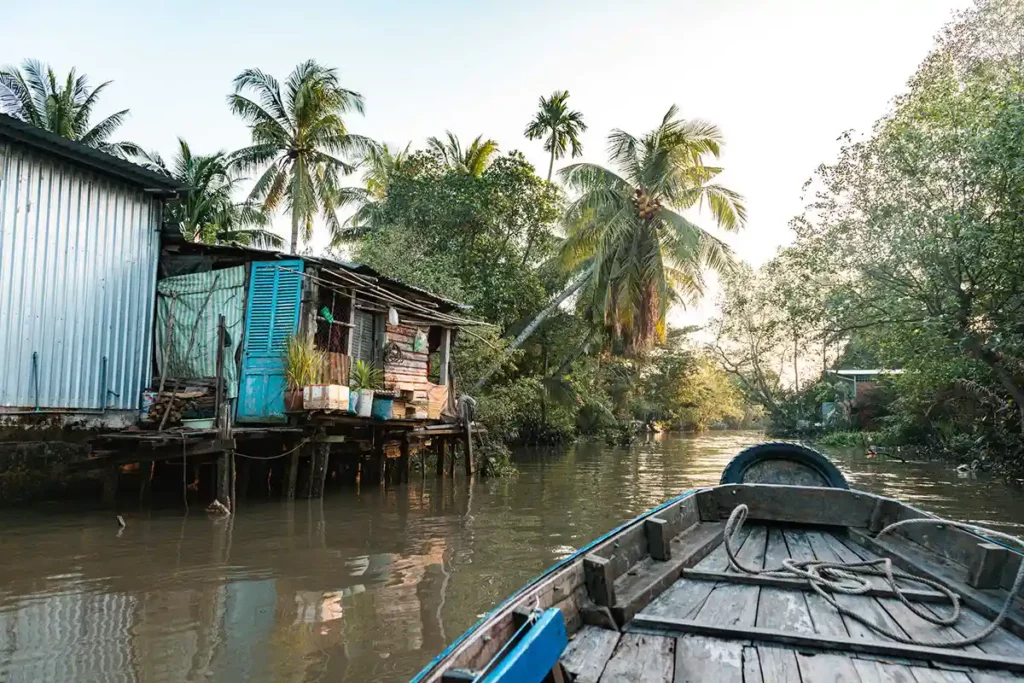
A few hours drive from HCMC, the Mekong Delta stands out as Vietnam true rice granary. It is a world apart, entirely built around waterways, where water dictates the residents pace of life.
We avoid overly touristy areas to take you to small, peaceful canals. You will visit tropical orchards to taste fresh fruit and discover family workshops making coconut candy or rice cakes. These encounters often stay etched in memory.
Spending a night at a lodge on the water lets you truly soak in the delta atmosphere.
The Cai Rang floating market: myth and reality
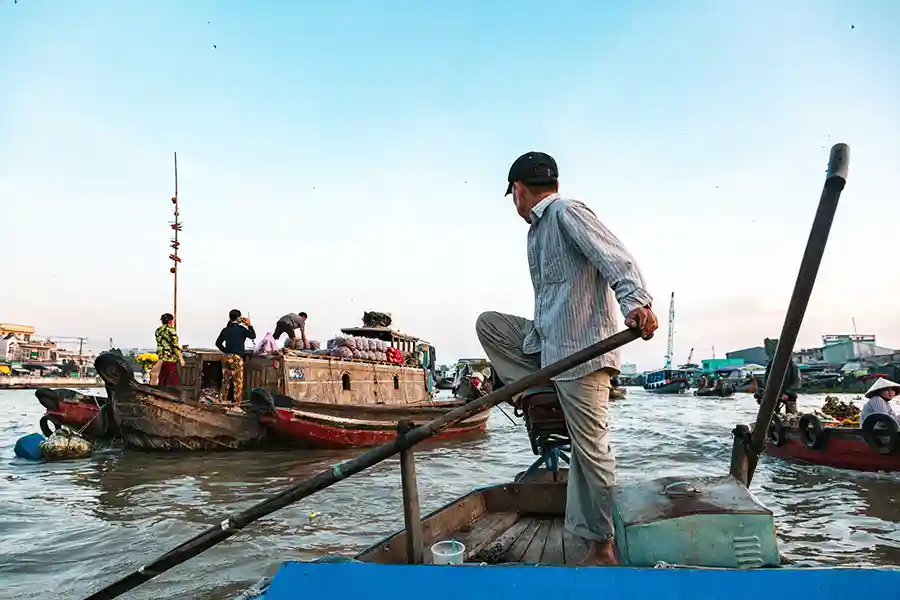
The Cai Rang floating market, near Can Tho, is often romanticized on postcards. As local experts, we have to be honest: road development has reduced its activity. Do not expect hundreds of boats.
Still, the experience remains worthwhile for watching wholesalers trade fruit and vegetables boat to boat. The rule is simple: go very early in the morning.
It is a still-authentic spectacle if you know what to expect and accept its current reality.
Day 15: last discoveries and departure
Back in Ho Chi Minh City, we adapt this final day to your return flight schedule. The War Remnants Museum is a moving, sometimes difficult, but necessary visit to grasp our recent history.
For a lighter mood before departure, a stop at Ben Thanh Market lets you pick up your last souvenirs.
How can you travel to Vietnam with family and adapt the pace and activities?
Traveling to Vietnam as a family works best when you slow down the pace and choose stops well suited to children.
A trip to Vietnam is a wonderful adventure to experience as a family. But for both kids and adults to fully enjoy it, a few adjustments are needed. Here are our tips as parents and experts.
Slowing down: the secret to a successful trip with children
The main enemy of a 15-day Vietnam itinerary with family is rushing. It is unrealistic to expect to keep the same pace as a couple of adults. The key is to plan less, but better.
We recommend limiting long drives and planning at least two or three nights per stop so everyone can settle in. It is the only way to avoid cumulative fatigue.
Building in downtime, pool afternoons or play moments is essential. This lets children recharge.
Which stops to prioritize (and which to adjust) with family?
Some stops are better suited to children. Hoi An is a must: pedestrian-friendly, full of fun activities and close to the beach. Lan Ha Bay and Ninh Binh are also guaranteed hits with younger travelers.
Conversely, a long trek to Sapa can be tiring for younger kids because of the drive. That is why we offer Pu Luong or Mai Chau as gentler alternatives. In Hue, you can focus on the Imperial Citadel and skip the tombs.
The idea is to build a tailor-made family trip that fits your pace.
Family accommodation: our recommendations
Choosing accommodation matters a lot. We favor small, human-scale boutique hotels, though it all depends on your preferences and budget. Many properties offer family or connecting rooms.
Well-chosen homestays can also be an excellent option. Some local families are delighted to welcome children, and it creates beautiful moments of connection.
We always make sure accommodations are suitable and safe for younger travelers.
Vietnamese food and children: a challenge?
This is a common concern among parents, but Vietnamese cuisine is actually very approachable. Unlike Thai cuisine, it is rarely very spicy. The flavors are fresh and fragrant.
Many dishes are great for kids: plain rice (com), noodle soups (pho), spring rolls, or grilled meat skewers.
And of course, tropical fruit (mango, pineapple, dragon fruit) is a treat for everyone.
What to pack and how to get around Vietnam?
A light suitcase with modest clothing and the Grab app for getting around town will guarantee a smooth trip.
To wrap up, here are a few practical tips that make all the difference on the ground. Packing well and mastering local transport tricks will guarantee a smooth trip, with no unnecessary stress.
What to pack for 15 days in Vietnam?
Our motto is simple: travel light. You will find local laundry services everywhere to wash your clothes cheaply. Always favor natural, breathable fabrics like cotton or linen.
Since you will cross different climates from North to South, the layering technique (several thin layers) is the only thing that really works. It is the secret to adapting to changing weather. Here is our essential checklist.
No need to overpack, you will regret the weight of your luggage by day two. The essentials fit in very little. Save room for souvenirs instead. Here is what to absolutely bring.
- Light, modest clothing: To protect from the sun and for temple/pagoda visits.
- Rain gear: A raincoat or poncho, always useful.
- A light fleece or sweater: For cool evenings in the North or air-conditioned places.
- A swimsuit.
- Good walking shoes and a pair of sandals.
- Basic first-aid kit, sunscreen and mosquito repellent.
Getting around town: Grab, taxis and cyclos
For short trips around town, the Grab app is our number one recommendation (it is Southeast Asia Uber). It is convenient, safe, and the price is set in advance. No more endless haggling on the sidewalk.
Traditional taxis remain a reliable option if your phone battery is low. Favor reputable companies like Mai Linh (green) or Vinasun (white) and always firmly insist on the meter before setting off.
Cyclos are a fun tourist experience for a short, nostalgic ride. Just remember to negotiate the price before getting in.
Local SIM card and wifi: stay connected easily
To have internet access everywhere (and order your Grab rides), we recommend buying a local SIM card as soon as you arrive at the airport. It is very affordable and staff will set it up for you in a minute.
This 15-day journey is just a sketch of what Vietnam has to offer. Because every traveler is unique, we are here to tailor this itinerary to your wishes and your pace. Contact us to co-build your custom adventure. See you soon!
FAQ
What is the ideal time to do this 15-day tour from North to South?
To make the most of this itinerary crossing Vietnam three regions, we recommend traveling between November and April. This is when the weather is mildest across the whole country: the North is cool and dry, the South is sunny, and you avoid the rainy season in the Center. It is the perfect balance for a first trip without any weather-related surprises.
Do French nationals need a visa for a two-week stay?
Good news for planning your trip: if you are a French, Belgian, Swiss citizen or from several other European countries, you are exempt from a visa for any stay under 45 days. You just need to present a passport valid for at least 6 months after your departure date. It is one less formality that makes your arrival much easier.
Why do we favor Pu Luong or Mu Cang Chai over Sapa in this itinerary?
This choice is guided by our on-the-ground experience and our goal of optimizing your time. While Sapa is beautiful, getting there takes a lot of travel time, which can be tiring on a 15-day trip. We prefer taking you to Pu Luong or Mai Chau: these regions offer equally spectacular rice terrace scenery and preserved authenticity, while being much more accessible from Hanoi.
What budget should you plan for a comfortable 15-day trip to Vietnam?
Vietnam remains a very affordable destination, but the budget depends on your comfort level. For a tailor-made organized tour with guide and private drivers, expect around 1,300 euros per person (excluding international flights). On the ground, life is inexpensive: an excellent street meal costs just a few euros. Always keep dong (VND) cash on you, as it is the preferred payment method outside major hotels.
Is Vietnam a suitable and safe destination for children?
Absolutely, Vietnam is a very safe destination and Vietnamese people show a natural kindness toward families. From a health standpoint, no vaccine is mandatory, but we advise staying cautious with water (only drink bottled water) and raw food. By adjusting the pace and including stops like Ninh Binh or Hoi An, your children will experience an unforgettable adventure in complete safety.