





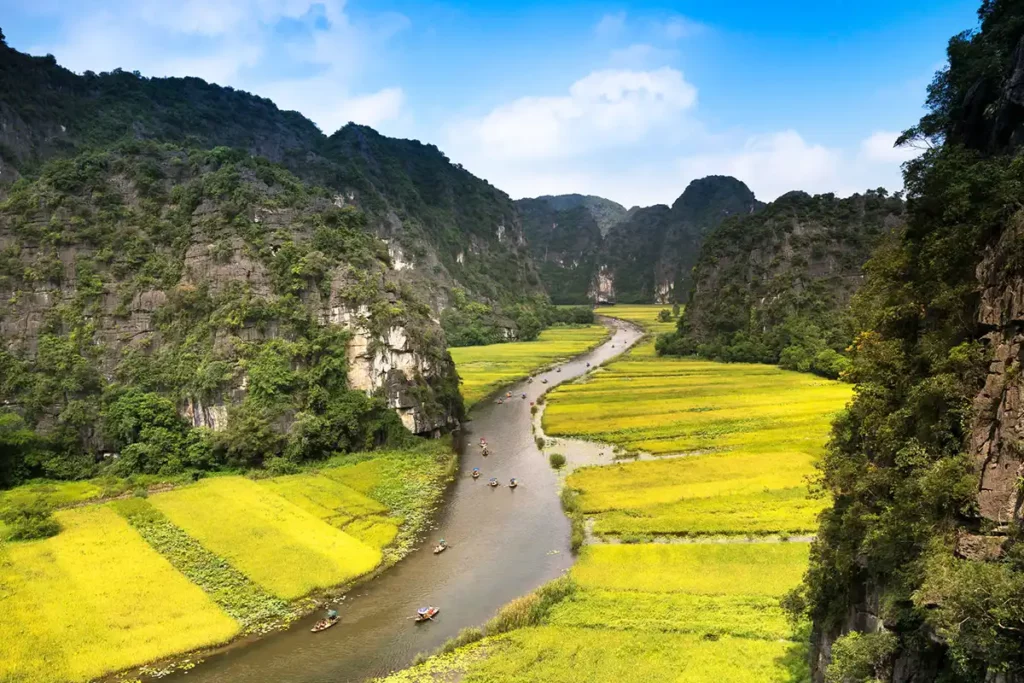
You are about to travel to Vietnam and have a few questions about the preparations? You’re in the right place! Here, we share all our best tips to help you properly prepare for your trip to Vietnam.
You will find practical information about travel preparations and the key questions you may have once you are there.
Trust our experience and feel free to contact us to organize a cruise in Halong Bay or a tailor-made, personalized itinerary.
You are probably wondering: what questions should you ask yourself when preparing a trip to Vietnam? You’ll find them below — along with, of course, the answers!
Administrative and health matters before departure
Do you need a visa for Vietnam? If so, how can you obtain one?
Normally, a visa is required to enter Vietnam. It is valid for 90 days and is obtained online only. Here is the official website of the Vietnamese government to apply for your visa. The visa costs 25 USD and is usually issued within 3 working days. Be careful to enter your names exactly in the same order as shown on your passport. You will also need to upload a good-quality 6×4 photo. If the photo is blurry or if the information provided does not match your passport, you will be asked to make corrections.
For French citizens and several other nationalities, there is a 45-day visa exemption. French travelers therefore do not need a visa to enter Vietnam. However, make sure that your passport is valid for at least 6 months after your entry date. You will also need to show proof of onward travel within 45 days, such as a flight ticket or a bus ticket to a neighboring country.
For more details and a step-by-step explanation of the e-visa process, you can consult our guide to the Vietnam visa in 2025.
Do you need to get vaccinated? If so, which vaccines are recommended?
For a short stay in Vietnam—such as a tourist trip—no mandatory vaccinations are required to enter the country. However, it is strongly recommended to ensure that your routine vaccinations are up to date, including diphtheria, tetanus, polio, whooping cough (pertussis), and measles.
For travelers planning to stay longer in Vietnam, it is advisable to be vaccinated against typhoid fever, hepatitis A and B, and Japanese encephalitis, to ensure better protection during your stay.
In all cases, we recommend that travelers consult their general practitioner or a travel health specialist. A medical professional who knows your health history will be best placed to advise whether vaccination is necessary before departure.
For more detailed information on recommended vaccinations, you can consult our complete guide to vaccines for Vietnam.
Do you need to take malaria medication?
We do not recommend preventive malaria treatment for a standard tourist trip to Vietnam. However, if you are staying for a longer period in remote areas such as the Central Highlands (Đắk Lắk, Đắk Nông, Gia Lai, and Kon Tum), where transmission is possible year-round (source: Institut Pasteur), preventive treatment is strongly recommended.
For travelers visiting during the rainy season (from June to the end of September in northern Vietnam, for example), we advise bringing an effective mosquito repellent and applying it regularly. Also make sure that your accommodation provides mosquito nets, which will protect you during the night.
Do you need to take out travel insurance?
Yes, we strongly recommend that our travelers take out travel insurance when visiting Vietnam. Your bank card may already include travel insurance coverage. This type of insurance usually covers trips of up to 90 days and offers a medical expenses ceiling abroad of around €10,000 to €12,000, depending on the bank. Be sure to check the deductible, meaning the amount that will not be reimbursed for each claim—this can be €50 or €75. In other words, if the medical bill is lower than the deductible, it will not be reimbursed. In most cases, bank card insurance does not include civil liability coverage (for example, if you damage property or injure someone).
If you pay for your flight ticket (through an agency or online) with your bank card, you may also benefit from trip cancellation insurance.
In any case, we advise you to speak with your bank advisor to get full details of what is included in your card’s insurance. This will help you decide whether it is better to take out additional travel insurance. It is easy to subscribe online to providers such as Chapka or AVI International—so you can travel with complete peace of mind.
When is the best time to visit Vietnam?
Is there an ideal period to travel to Vietnam?
Vietnam stretches over more than 2,000 kilometers, and its climate varies significantly from one region to another. April is generally a dry month throughout the country, making it an excellent choice if you plan to travel from north to south. However, as you might expect, April is also peak tourist season, so it is essential to plan well in advance (at least 6 months ahead) to book flights—which tend to be more expensive—and to secure services such as hotels and French-speaking guides.
During the rest of the year, you will either need to skip certain regions or take the risk of encountering rain.
Which seasons should be avoided?
In Northern Vietnam, winter, from January to the end of March, is rather cold and gloomy, with little sunshine. As in Europe, spring in April feels like a true rebirth.
In Central Vietnam, we strongly advise against traveling in October and November, as these months bring very heavy rainfall. Cities such as Hoi An are often flooded during this period. While it can be impressive to see, it may also somewhat spoil your holiday.
In Southern Vietnam, the rainy season runs from May to October, but rainfall is generally lighter, and it is still quite possible to travel without major difficulties.
Which regions should you visit depending on the season?
If you travel in winter (January to late March): We recommend visiting the whole country, but especially the central and southern regions, where you will enjoy good weather without excessive heat. In the north, focus on the must-see highlights such as Hanoi, Halong Bay, and Ninh Binh. Of course, you can still head to the mountains, but expect cold, rainy conditions and very limited visibility.
If you travel in spring (April–May): You will likely be able to visit almost the entire country in mostly dry conditions. Only the south may experience a few showers (the very beginning of the rainy season), but these will remain minimal. Temperatures will be very pleasant in the north, but very hot in the central and southern regions. If you are sensitive to heat, we recommend spending more time in the north, for example with an 8-day immersive itinerary through Hua Tat and Pu Luong.
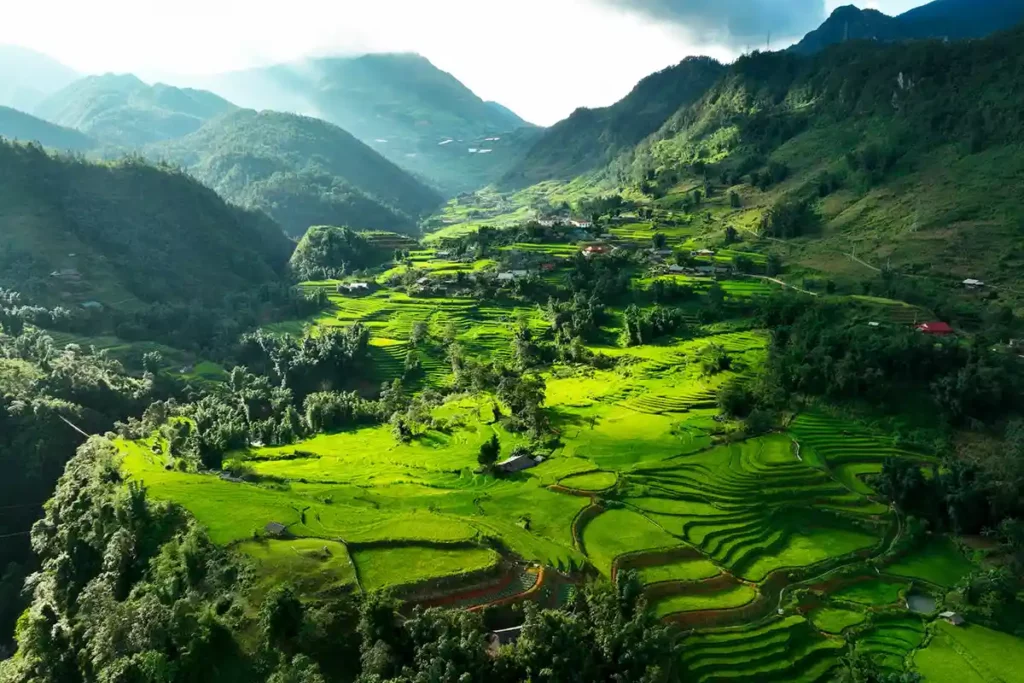
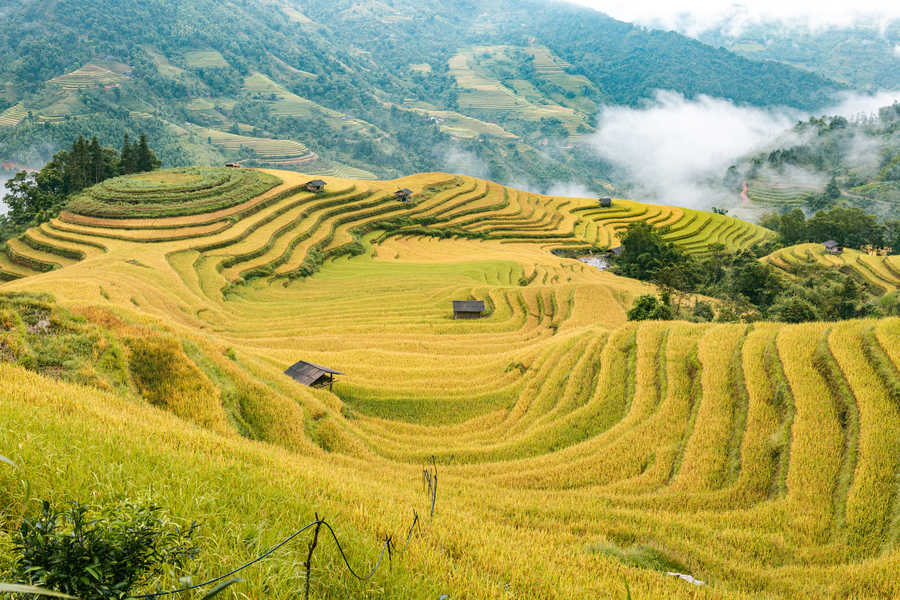
If you travel in summer (June–September): This is the rainy season in both the north and the south. However, it is also the best time to discover the terraced rice fields in the northern mountains, as rice planting takes place at the end of May. You can travel throughout the country during this season, but expect hot and humid conditions in the north, with occasional heavy downpours. The center and south will be very hot.
If you travel in autumn (October–December): We strongly recommend avoiding the central region, which experiences very heavy rainfall and often typhoons. Instead, focus on the north, which enjoys its most beautiful season, with clear skies and mild temperatures. In early October, you can organize a trek in Hoang Su Phi during the rice harvest—an unforgettable and authentic experience. You can then fly south, for example to enjoy a beach stay in Phu Quoc and explore the Mekong Delta.
What clothes should you pack depending on the season?
If you are traveling during winter (January to the end of March) in Northern Vietnam, you will need to dress warmly: bring sweaters and even fleece jackets. Temperatures in cities can drop to around 5°C, but the high humidity makes it feel even colder. In the mountains, temperatures can fall below 0°C, and since traditional houses are poorly insulated—or not insulated at all—you will really need to bundle up. And don’t count on rice wine to keep you warm!
Once you reach the central and southern regions of the country, you can dress much lighter. It can even get very hot in spring and summer—don’t forget to stay well hydrated and consider buying a portable mist spray if needed.
Flights to Vietnam
Which airline should you choose for a direct flight?
We recommend the Vietnamese national airline, Vietnam Airlines, for a direct flight from Paris. The airline is partnered with Air France and offers very good onboard service. If your travel dates are flexible, we advise checking direct flight prices well in advance, as they can vary significantly from one day to the next. At present, you should expect to pay at least €1,000 per person for a direct flight from Paris to Hanoi. If you book late, the price can rise to €1,400 or more.
Direct flights are expensive—are there other options?
Direct flight prices have indeed increased significantly since COVID and may seem prohibitive for many travelers. Fortunately, there are alternatives with stopovers. Qatar Airways offers flights that are slightly cheaper than direct flights, with a stopover of just over 3.5 hours in Doha, which is quite reasonable.
If you are looking for the cheapest option, you can consider flights with Chinese airlines, particularly Air China, which has a English-language website. Prices are around €800 per person, with connections of about 3 hours 15 minutes on the outbound journey and 7 hours 45 minutes on the return.
What is the maximum baggage allowance?
In economy class, all airlines generally allow 23 kg in one checked bag. In business class, it is usually possible to check two bags of 32 kg each.
For those traveling with Vietnam Airlines, you can read our article on how to best prepare for your flight with Vietnam Airlines.
How to travel once in Vietnam?
Is it possible to travel on our own?
It is of course possible to travel independently in the country, but with one important condition: that you speak English. Unfortunately, French speakers are becoming increasingly rare; however, young people speak English more and more, and you will of course be able to get all the information you need from your hotels. That said, if you plan to venture into the mountains, we strongly recommend organizing a tour with a French-speaking guide, who will provide explanations and act as your translator with local communities that do not speak English at all (and sometimes, among ethnic minorities, do not even speak Vietnamese).
Is it possible to have one or more English-speaking guides on site
If you book a tour with a local agency like ours, we will provide you with several French-speaking guides. Generally, a French-speaking guide specializes in a major region—north, center, or south. You will therefore have a specialist guide for each region if you choose a tour that runs from north to south of the country (or vice versa).
Practical questions during your trip to Vietnam
Let’s now move on to the questions you may ask yourself once you arrive in Vietnam.
Money in Vietnam
Is it better to bring euros or dollars with us and exchange them?
You can indeed bring cash with you if you wish. Airlines allow you to carry up to €10,000 per person without having to declare it. You can exchange this money at the airport upon arrival or in jewelry shops in Hanoi, which is a Vietnamese specialty!
However, for peace of mind, we do not necessarily recommend bringing large amounts of cash with you.
Is it easy to withdraw money? Are the fees high?
Yes, ATMs are everywhere in major cities (Hanoi, Ho Chi Minh City, Da Nang) and in tourist areas. There is therefore no problem withdrawing cash. Before leaving, make sure to check your bank’s fees for international withdrawals. On site, we recommend using VP Bank, which does not charge withdrawal fees and allows you to withdraw up to 15,000,000 VND in a single transaction (just under €600).
Can prices be negotiated? Is it considered appropriate?
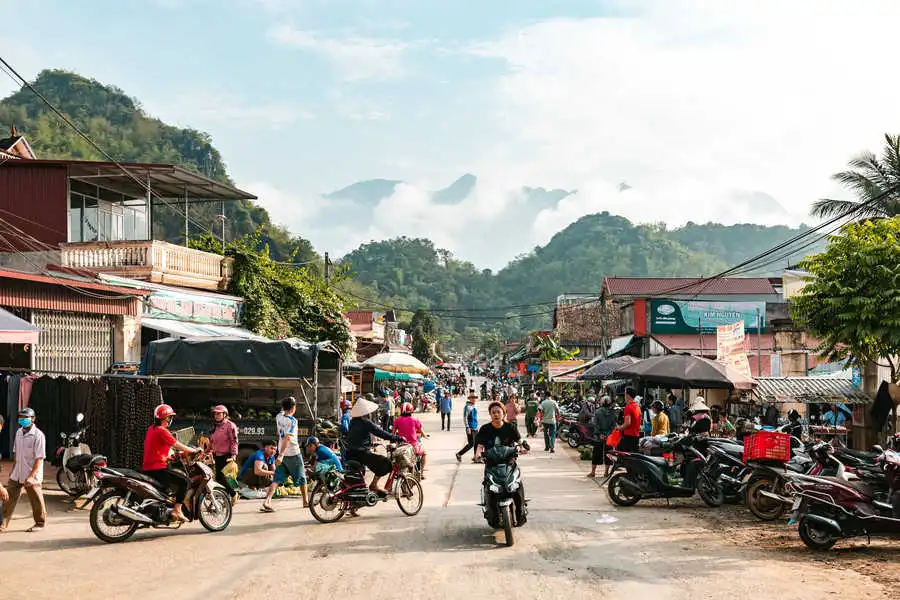
Asia, and Vietnam in particular, is known as a land of bargaining. You should negotiate in markets and with all street vendors. Don’t be afraid to start by dividing the initial price by two—this is how the bargaining game begins! In shops where prices are displayed and fixed, negotiation will be difficult or even impossible. We therefore recommend experiencing a local market at least once, both to immerse yourself in a typical atmosphere and to try your hand at negotiating.
Should you give tips? To whom? How much?
If you book a tour with guides and drivers, you should indeed plan a small budget for tips.
Attentive drivers, who do not count their hours, who stop spontaneously upon request for a photo or any other reason, and who are considerate, will probably leave a strong impression on you. Beyond driving you safely and following the guides’ instructions, they are also responsible for your personal belongings left in the vehicle while you are visiting sites. A real relationship of trust is therefore established.
As for the guides, the relationship is different again. They are much closer to the clients, as they communicate with them throughout the day. Their patience, kindness, skills, and the relationship they build with you will all play an important role.
Tip guidelines (depending on your satisfaction):
# Group of 2 to 4 people:
- Driver: €2 to €5 per traveler per day
- Guide: €4 to €10 per traveler per day
# Group of 5 to 10 people:
- Driver: €2 to €3 per traveler per day
- Guide: €3 to €8 per traveler per day
In addition to guides and drivers, you may also give a tip to the crew of a traditional junk boat or to the rowers in Ninh Binh: €2–3 per person, similar to the driver’s tip. For a 15-day trip, you should plan on roughly €100 per person in tips.
Safety in Vietnam
Is the country safe? What are the common scams?
Vietnam is generally considered a safe country for travelers. However, as in any tourist destination, there are risks related to theft. Popular tourist areas such as Hanoi, Ho Chi Minh City, and coastal cities may experience pickpocketing and bag snatching. Travelers should therefore remain vigilant, keep their valuables secure, and avoid openly displaying signs of wealth.
Tourist scams can be an issue in certain parts of Vietnam, especially in areas with a high concentration of visitors. Travelers may encounter scam attempts such as excessively high prices for goods or services, dishonest taxi drivers, or misleading offers. To avoid these situations, it is advisable to be cautious, research local prices in advance, and use services recommended by reliable sources.
Our simple tips: keep in mind the exchange rate between your currency and the Vietnamese dong (1 US dollar = 23,000 VND; 1 euro = 25,000 VND); use Grab or G7 taxis; do a quick online search to check the usual price of a service and compare it with the offer you are given; divide the price by two in markets and then agree to negotiate.
Transportation in Vietnam
How do you get around in cities?
For short distances (less than 1 km), you can absolutely walk, even though Vietnamese cities are not very pedestrian-friendly—Hanoi being the prime example. You need to be very careful when crossing the street and, above all, avoid hesitating. Hesitation creates uncertainty and can confuse drivers (cars, motorbikes, etc.). In Vietnam, you don’t give way—you take it!
For longer trips (for example, when going directly to a specific destination), we recommend booking a motorbike or a taxi via the Grab app. The price is fixed in advance. Drivers rarely speak English, but they will already have the address.
For those booking a tour, private transportation is usually included: a car for couples, a minivan for families, or even a coach for groups of friends.
Which apps can we use?
Besides Grab, there are two other very popular apps: Bee and Xanh SM. The latter was created by Vingroup and operates exclusively with VinFast electric vehicles (cars and motorbikes).
We are traveling with children—what transportation do you recommend?
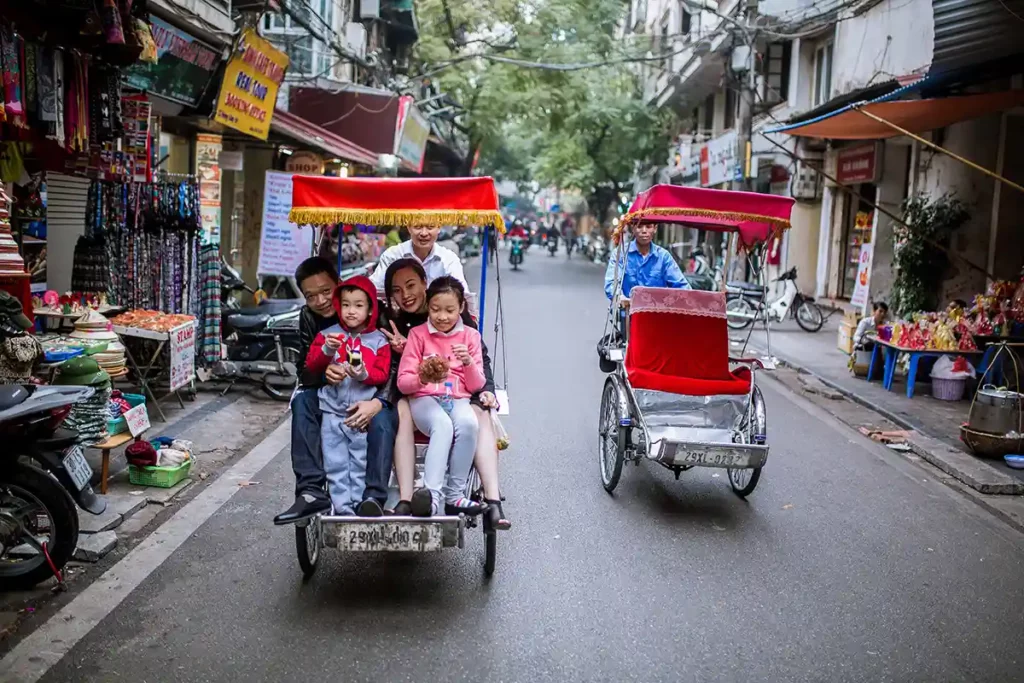
Traffic in Vietnam’s major cities (Hanoi and Ho Chi Minh City) can indeed be intimidating, especially when traveling with young children. We therefore recommend using available means of transport such as cyclos, electric cars, and taxis to get around safely.
For families, we strongly suggest booking a private, tailor-made tour, which makes traveling much easier, with a French-speaking guide and private transportation. Everything will be arranged in advance with your travel consultant, so once on site you won’t have to worry about your children.
I see a lot of people riding motorbikes in Vietnam. Is it possible? Is it dangerous?
Indeed, many young people try riding motorbikes in Vietnam today, sometimes unfortunately with serious consequences. This is why Vietnamese authorities have stepped up inspections. It is now mandatory to hold an international driving permit in order to rent a motorbike in Vietnam. As a travel agency concerned about the safety of our travelers, we do not recommend renting motorbikes. If you do choose to do so, we advise opting for destinations with lighter traffic, such as Cat Ba Island.
Is the train a good option?
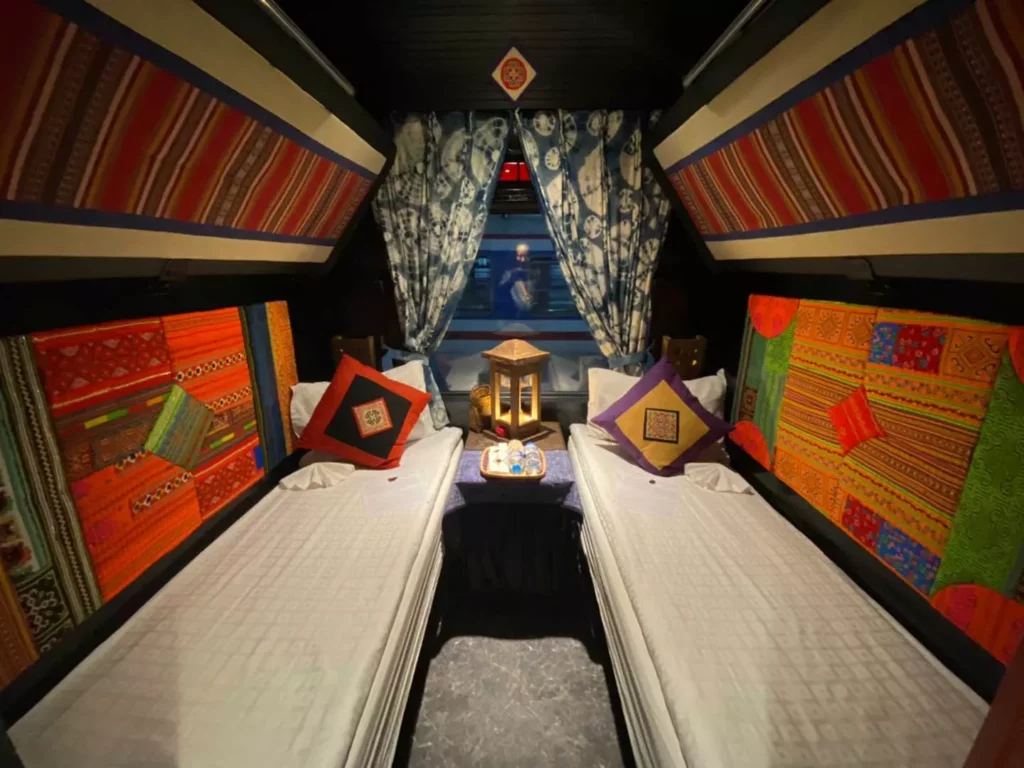
The train is an excellent means of transport—authentic and low-emission. There is a railway line running from Hanoi to Ho Chi Minh City, making it possible to travel from north to south (or vice versa) using only this mode of transport. Public carriages are rather uncomfortable and are therefore recommended only for travelers on a tight budget. In recent years, private companies have refurbished train cars and now offer them to tourists. One example is the Lotus company, with which we primarily work.
For your information, Vietnam will begin construction of a high-speed railway line starting in 2027, with the goal of making it operational by 2035.
Phone and Internet in Vietnam
Do we need a SIM card? Is it easy to get one?
In Vietnam, Wi-Fi is available almost everywhere: in hotels, restaurants, cafés, and now often even on buses. If you are traveling on a guided tour with French-speaking guides, you will probably not need internet during the day. However, if you are traveling independently, you may need internet access, especially for transportation apps.
For those who want one, we recommend buying a SIM card upon arrival at the airport. The vendors there can install the SIM card for you. Be careful when choosing the type of SIM card: some offer data only, others calls only, and some include both data and calls.
If you do not buy one at the airport, you can find SIM cards almost everywhere in small street shops. However, it is not guaranteed that they will install it for you.
Are all websites accessible in Vietnam?
Yes, Vietnam allows access to the vast majority of websites, and it is possible to use Google, Facebook, Instagram, and all major American websites, platforms, and apps without any problem. To our knowledge, among major media outlets, only the BBC website is inaccessible in Vietnam.
Food in Vietnam
Can you eat everything in Vietnam? Should street food be avoided?
Vietnamese food is known for being balanced and healthy, and this reputation is well deserved. The ingredients used in Vietnamese cuisine cover all the body’s nutritional needs, and their diversity ensures excellent overall nutrition. Fresh vegetables are included in almost every dish, sauces are used sparingly, and chili is relatively rare.
Vietnamese cuisine is a popular, everyday cuisine, and it is often in small street food stalls that you will find the best meals.
That said, do not force yourself to eat anything you do not feel comfortable with—choose what appeals to you most. When traveling, the psychological aspect is important, and you should never try dishes reluctantly.
Which dishes do you absolutely recommend trying?
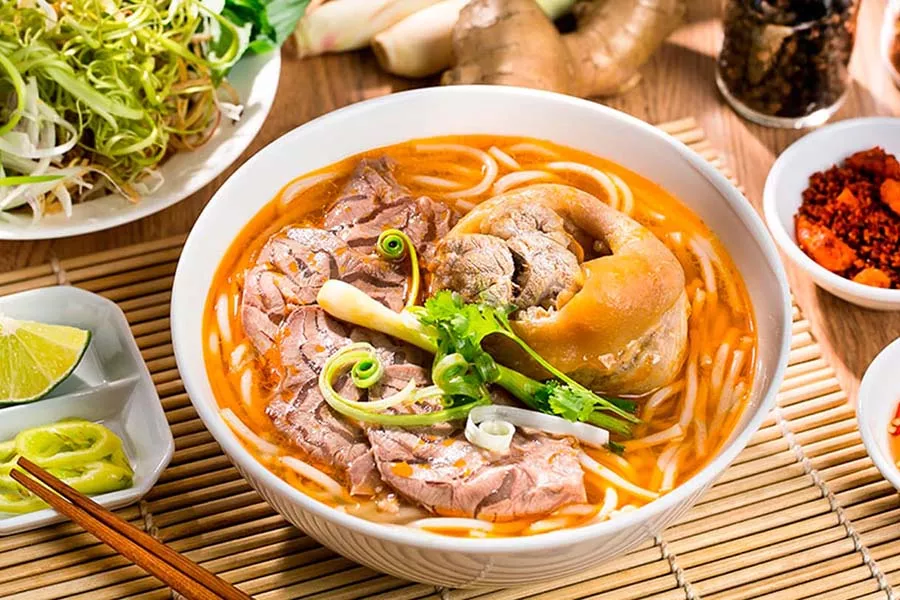
There are hundreds of typical Vietnamese dishes, so you will be spoiled for choice. For a more concise selection, you can read our article on the 20 must-try Vietnamese dishes. It features iconic specialties from the north, central, and southern regions of the country.
In the north, we highly recommend trying cha ca, grilled fish served on a bed of dill, as well as pho, the famous rice noodle soup, and nem ran, which are fried spring rolls. If you are traveling during the Lunar New Year period (late January–early February), you will most likely taste banh chung, the traditional square rice cake.
In central Vietnam, small dishes such as banh beo or banh ram it, made with shrimp, are sure to delight you.
In the south, do not miss banh xeo, the savory Vietnamese pancake, and che, a dessert made from a wide variety of ingredients such as white beans, corn, or even sweet potatoes, topped with coconut milk.
Cha Ca, fish dish from Hanoi, Vietnam
Do you have any good restaurant recommendations in Hanoi?
Here are a few suggestions:
For a lively atmosphere: try Ta Hien Street, the heart of the Old Quarter! It’s full of restaurants and bars. Just sit down and order something from the menu.
For a very good and affordable Vietnamese meal: MẸT Vietnamese Restaurant (110 Hàng Gai Street, Hàng Gai).
For a Vietnamese meal with a view over Hoan Kiem Lake: Cau Go (73 Cau Go Street, Hoan Kiem)
For a Western meal with a Japanese twist: Pizza 4Ps. This very popular chain has opened many restaurants across Vietnam. The pizzas are excellent, made with local ingredients (even the cheese). Children usually love it.
For a vegetarian meal: Uu Dam Chay (34 Hang Bai Street, Hoan Kiem). Probably one of the most beautiful restaurants in Hanoi!
For the last three restaurants, it is advisable to book in advance during the day.
Can you drink tap water? If not, what do you recommend?
We strongly advise everyone not to drink tap water. Vietnamese people do not drink it either. You should drink bottled water instead. Bring a reusable water bottle with you, which you can usually refill at your hotel in the morning before heading out for the day.
I am vegetarian — is it easy to find food?
Although Buddhist spirituality strongly influences Vietnamese society, Vietnamese people are still big meat eaters. However, since many people (and increasingly so) eat vegetarian food on the 1st and 15th days of the lunar month (to at least partially follow Buddhist principles), vegetarian restaurants are becoming more common.
For those interested, we have written a dedicated article: Where to eat vegetarian in Hanoi? The best restaurants.
A dining room of the Uu Dam Chay restaurant in Hanoi
If I get food poisoning, which hospital do you recommend?
For an emergency consultation in an international hospital, you can go to one of the following two facilities:
- Hôpital Français de Hanoi: 1, Phương Mai, Đống Đa, Hà Nội. Tel.: +84 (0) 243 5771 100
- Hôpital franco-vietnamien (FVH) in Saigon (Ho Chi Minh city), 6 Nguyen Luong Bang, Quan 7, Ho Chi Minh city. Standard : (84-28) 3411 33 33 – Urgent 24/24 : Tel : (84-28) 3411 35 00
French Hospital in Hanoi
I don’t know how to eat with chopsticks — is that a problem
It can be a problem, indeed 🙂 Don’t worry though: most restaurants provide forks and knives. If you don’t want to be caught off guard, we recommend buying a small travel cutlery set that includes a fork, knife, and spoon.
Hotels in Vietnam
Are hotels of good quality? What type of hotel do you recommend?
As everywhere, there are several categories of hotels in Vietnam:
- Budget hotels for young travelers: $10–15 per night;
- 3-star hotels: $20–40;
- Boutique hotels (single property, nice design): around $50–60;
- 4-star hotels: $80–150;
- 5-star hotels: over $150
3-star hotels are generally of good quality. However, because population density is high in Vietnamese cities, some rooms may not have windows, or only very limited natural light. Don’t hesitate to request a room with a window and good brightness.
Is it possible to stay with a local family during your trip? How can you book it?
It is absolutely possible to stay with local families, and we even strongly recommend it, especially if you are traveling in the mountainous regions of northern Vietnam. It is best to book a circuit through an agency like ours, which already has trusted contacts with host families. Doing this independently is quite difficult, as there is not yet a comprehensive platform listing homestays.
Booking excursions in Vietnam
What are the best options for booking excursions once you’re there?
If you are traveling independently, it is possible to book excursions through your hotels. However, keep in mind that these are most often group tours that can be booked at the last minute. If you are looking for more personalized itineraries, with a French-speaking guide and private transportation, you will need to go through an agency like ours. Depending on the season of your trip, these excursions should be planned more or less in advance. For the months of March, April, October, and November, the earlier the better—ideally up to 6 months in advance—in order to secure the best possible services (especially guides).
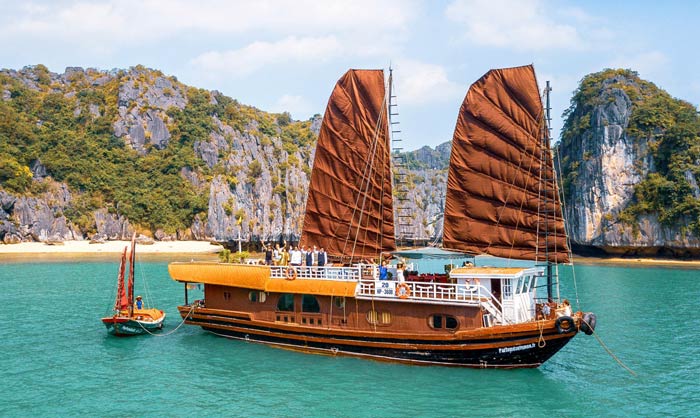
There are so many boat options in Halong Bay—what advice would you give?
Halong Bay is divided into three main areas:
- Halong Bay proper, where the largest boats operate;
- Bai Tu Long Bay, to the east, much less crowded and ideal for more peaceful cruises;
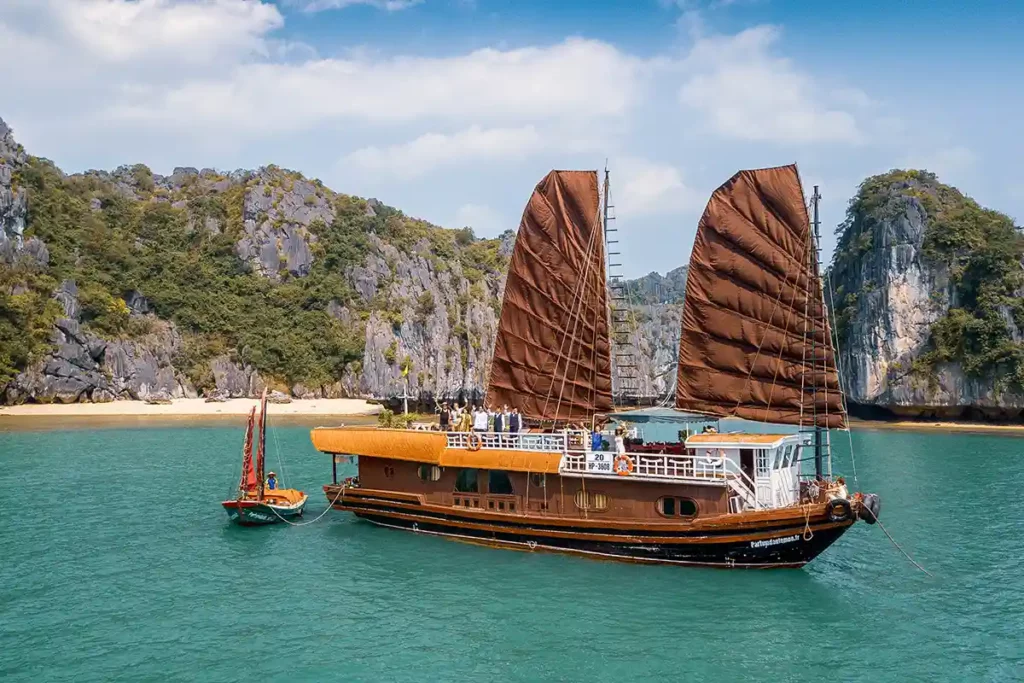
- Lan Ha Bay, around Cat Ba Island, where fishing villages can still be found.
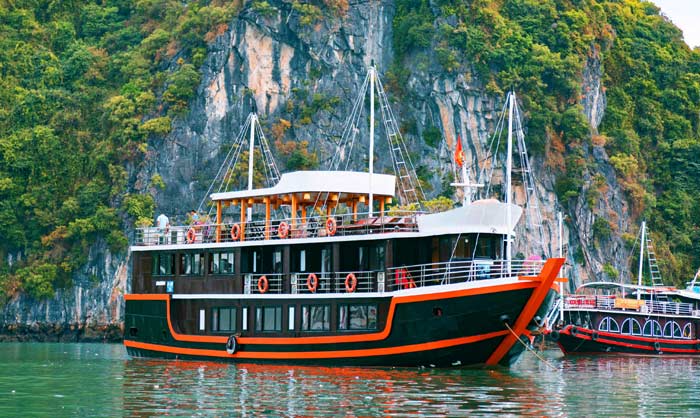
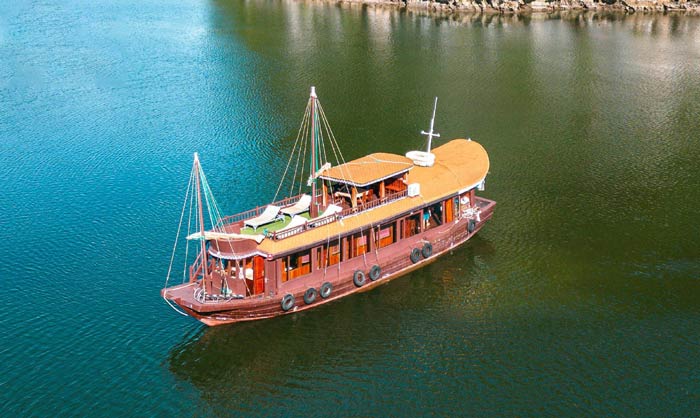
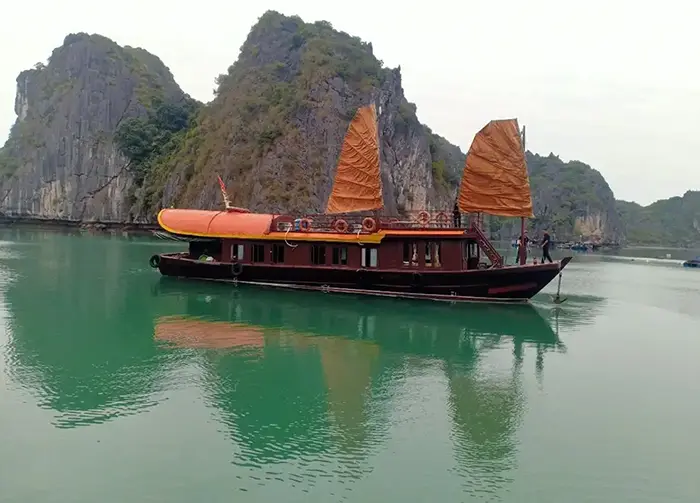
In Halong Bay proper, you’ll find all the luxury cruises. If you’re looking to treat yourself to a 5-star cruise, this is where to book. For travelers seeking a quieter experience, Bai Tu Long Bay is an excellent option, with more human-sized boats. Finally, Lan Ha Bay is home to the last traditional wooden junks, such as our Quatre Saisons boat or the Romance.
For a broader overview of the available boats, you can consult our page: Our selection of cruises in Halong Bay.
Other frequently asked questions about traveling in Vietnam
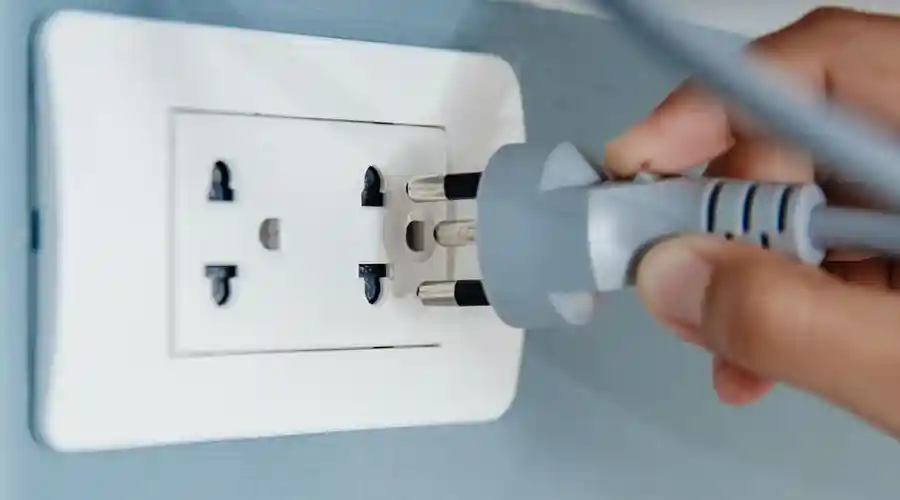
Are electrical outlets different in Vietnam?
Electrical outlets in Vietnam are European-style, with two standard round pins, and are compatible with most electrical devices used in Europe. This means that if you are coming from a European country, you do not need an adapter to plug in your devices, which makes traveling much easier.
In addition, Vietnam uses a voltage of 220 volts and a frequency of 50 Hz, the same as in many European countries. As a result, not only is an adapter unnecessary, but a voltage converter is also not required—unless you are traveling with specific devices designed for a different voltage, such as 110 volts, which is used in the United States or Japan.
For a hassle-free experience, simply make sure your devices are compatible with a 220-volt power supply. If you plan to charge several devices at the same time (phone, tablet, camera, etc.), consider bringing a compact power strip or a USB charging hub to make the most of a single outlet.
What should you absolutely not do in Vietnam from a cultural point of view?
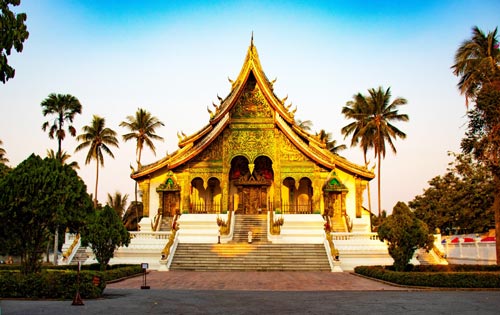
There are basic rules of decency to follow, such as not dressing too revealingly in public (gentlemen, do not walk around shirtless in the city). This advice is even more important when visiting pagodas and temples: your body should be fully covered (trousers are preferable to shorts, even if shorts may sometimes be tolerated in very touristy places).
Also avoid overly visible displays of affection in public, such as kissing or hugging, as these are generally frowned upon. It is best to behave with modesty and restraint in public spaces.
What souvenirs can I bring back from Vietnam?
The choice is vast, and it can quickly become a challenge! Here are a few ideas by major region of Vietnam.
Northern Vietnam
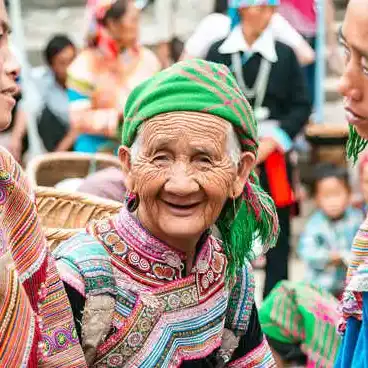
Ethnic brocade: Handwoven fabrics made by ethnic minorities (Hmong, Dao, etc.) from Sapa or Ha Giang. Perfect for clothing, bags, or home decoration.
Vietnamese tea: We recommend Shan Tuyết tea, grown in the northern mountains (Hà Giang, Suối Giàng in Yên Bái province), often harvested from century-old or even thousand-year-old tea trees.
Bat Trang ceramics: Produced in the Bat Trang village near Hanoi, these handmade ceramics include bowls, vases, and plates.
Central Vietnam
Hoi An silk: Renowned for its exceptional quality, ideal for clothing or as a refined souvenir.
Hoi An lanterns: These colorful lanterns are foldable and easy to transport, bringing a warm atmosphere to your home.
Nuoc Mam from Phan Thiet: Vietnamese fish sauce is a must for food lovers. Choose sealed bottles for easier transport.
Southern Vietnam
Vietnamese coffee: Vietnam is the world’s second-largest coffee exporter. Buy quality robusta coffee, often sold with a traditional filter (phin).
Mother-of-pearl items: The south is famous for its decorative objects and jewelry inlaid with mother-of-pearl, crafted with great care.
Ben Tre coconut candies: These sweets, typical of the Mekong Delta, are handmade and make perfect gourmet gifts.
Phu Quoc pearls: High-quality pearls that have gained value in recent years. If you are looking for a luxurious gift for a loved one or a friend, this is an excellent choice.
Of course, we cannot forget chopsticks or the iconic conical hats (Nón Lá), which are both practical and symbolic.
Can I bring French products as gifts?
If you are traveling on a guided tour, it is always appreciated to bring a small gift from your home country. The Vietnamese will show you their country—why not share a piece of yours in return?
If you visit remote areas, it is also possible to make a small donation, for example to a local school. This should be discussed with your guide beforehand so that a visit can be organized. However, such visits may not always be possible due to authorization issues. In that case, you can give the items to your guide, who will take care of the process on your behalf.
You now have all the information you need to properly prepare your trip to Vietnam! Feel free to contact us to organize your tailor-made private tour or any other excursion you may wish to enjoy.