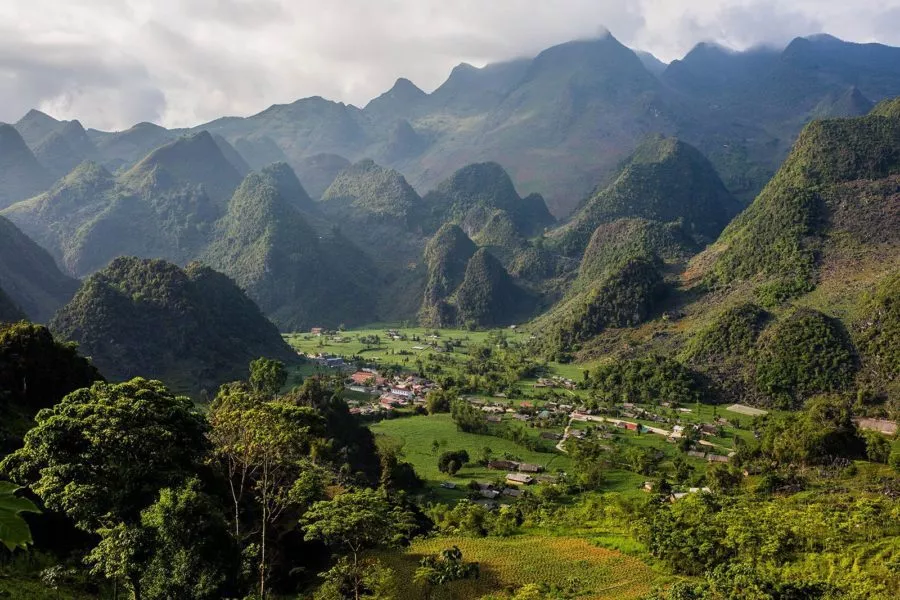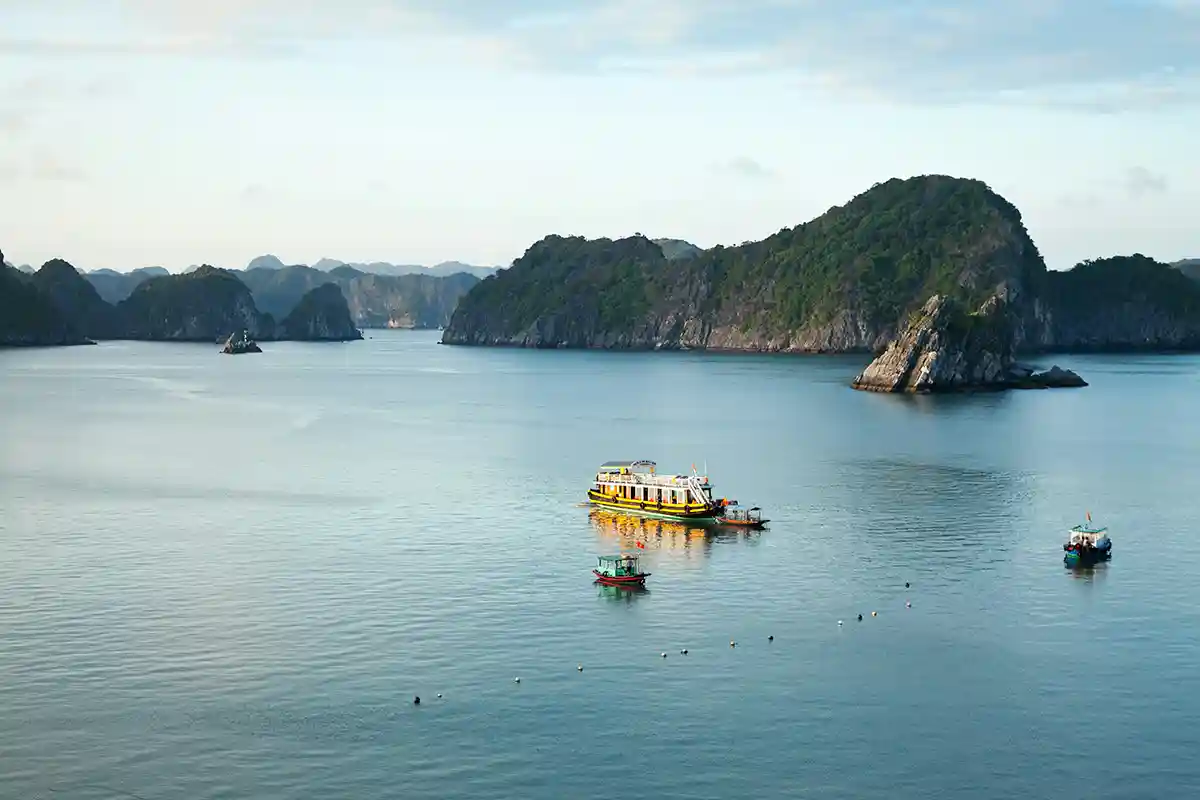










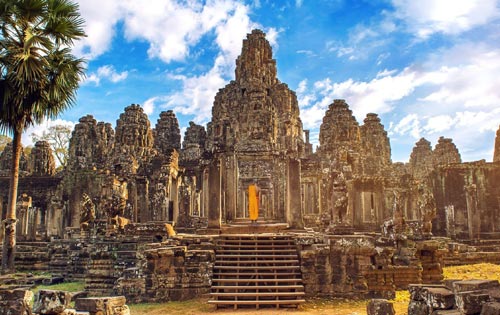
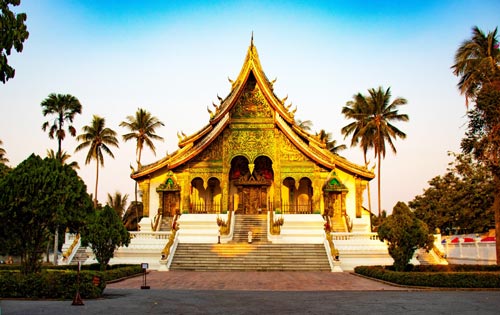

Ninh Binh, better known to travelers as the Halong Bay on land, is an essential stop during your stay in Vietnam.
In this article, we tell you everything you need to know about this unmissable destination: how to get there, the best time to visit, and above all: which sites you absolutely shouldn’t miss. Here are all our tips to help you plan your trip.
For those wishing to combine Ninh Binh with a cruise in Halong Bay or Lan Ha Bay, we also offer a dedicated tour: The Two Bays: Lan Ha bay and Ninh Binh
Ninh Binh, a province in the Red River Delta
Contrary to what its nickname (“Halong Bay on land”) might suggest, Ninh Binh is not located near Halong Bay. It actually takes about 3 hours by road to travel from Halong City to Ninh Binh, and a recently built highway has significantly improved the connection.
Ninh Binh—which is both the name of the province and its main city (as is often the case in Vietnam)—is located in the Red River Delta, which includes nine provinces. This region, considered the cradle of Vietnamese civilization, is densely populated due to the presence of two major cities: Hanoi and Haiphong. The surrounding countryside is also heavily populated, as communities are settled near the river that sustains their livelihoods. Water is present everywhere—both in the landscapes and in the daily economic activities of the region’s inhabitants.
Thus, Ninh Binh and Halong Bay are linked not by geographic proximity, but by the striking similarity of their landscapes.
How to get to Ninh Binh?
The first questions you will probably ask yourself are:
- Where should you travel from to reach Ninh Binh?
- How do you get to Ninh Binh?
Vietnam can be explored either from North to South or… from South to North!
If you plan to travel southwards, we recommend heading to Ninh Binh from Hanoi or from Halong Bay / Cat Ba Island.
Getting to Ninh Binh from Hanoi
You have several options:
# Take the bus: we recommend the Daiichi company, the one we use for arranging transfers in this region. The journey takes about 3 hours on an air-conditioned bus equipped with Wi-Fi.
# Take the train: the national railway line runs through the country and passes through Ninh Binh city. You can go to Hanoi Railway Station and purchase your ticket for Ninh Binh. The fare is around 6 euros, and the trip takes 2 hours 30 minutes. There are currently five departures per day (6:00, 9:00, 14:35, 19:30, and 20:10). Once you arrive at Ninh Binh station, you will likely need to take a taxi to reach the Tam Coc area.
#Rent a private car: if you book a private tour, we will arrange a comfortable transfer for you in a private car (which can be a 4-, 7-, or 16-seat vehicle depending on your group size). You can also simply rent a car with a driver (we strongly advise against trying to drive a car yourself!).
Getting to Ninh Binh from Cat Ba Island or Halong
You will have fewer options for this route: the bus, or a private car if you are traveling with us on a private tour.
The bus company Daiichi recently opened a Cat Ba Island – Ninh Binh line, which will likely be very convenient for you! The company has an office on Cat Ba Island at 19 Nui Ngoc Street. The bus must take the ferry to reach the mainland, so there may be a wait. You should therefore plan at least 4 hours of travel to reach Ninh Binh from Cat Ba Island.
The last bus leaves at 4:00 p.m. We recommend taking the 1:00 p.m. bus so you arrive in Tam Coc village by late afternoon. The bus will drop you off in the city center, likely close to your accommodation.
For the more adventurous travelers who are taking a cruise in Halong Bay and disembarking at Tuan Chau or Hon Gai, you will need to take a taxi to Bai Chay bus station (about 10 km). The first bus leaves at 7:00 a.m., and there are six departures each day in total. As with the train, you will arrive in Ninh Binh city at the bus station located at 207 Le Dai Hanh Street.
If you wish to book a taxi or a private car, we recommend contacting our agency.
Getting to Ninh Binh from Phong Nha Ke Bang or Hue
Some of you will be arriving in Ninh Binh from the south. You may be coming from Phong Nha Ke Bang National Park or from Hue. In both cases, we recommend choosing the night train over the night bus, which can be dangerous (bus driving in Vietnam is not always the safest). From Phong Nha Ke Bang National Park, you will need to reach Dong Hoi Railway Station, located about 30 minutes by taxi from the park entrance.
The train ride from Dong Hoi takes about 8 hours, and from Hue, around 12 hours! This is why we strongly recommend spending the night on the train.
Which period is best for visiting Ninh Binh?
Ninh Binh Province can be visited all year round. It is not located at high altitude, and its climate is temperate. However, if we were to give you our advice, you should prioritize:
# March and April: this is spring in Northern Vietnam, and the weather is perfect for discovering the most beautiful destinations in the region.
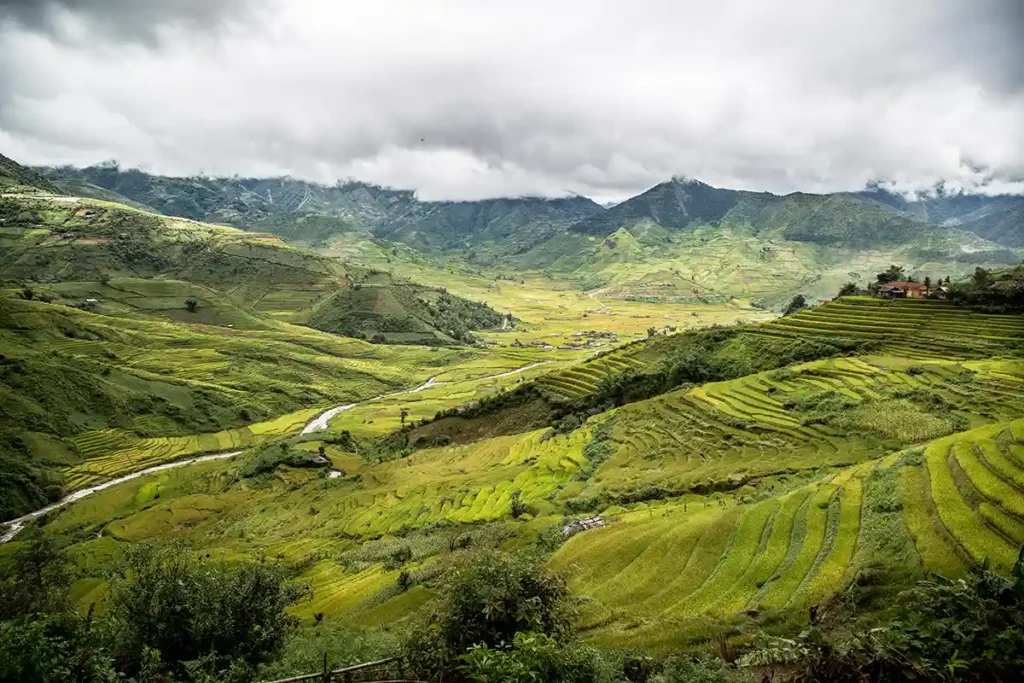
# From May to July: irrigated rice farming is a thousand-year-old practice in Vietnam, and it is still alive in the village of Tam Coc. If you visit during this period, we recommend a boat trip on the Ngo Dong River at the Tam Coc site. Beyond the limestone karsts rising from the ground, you will witness the landscape during the rice harvest. The colors of the rice fields will be magnificent.
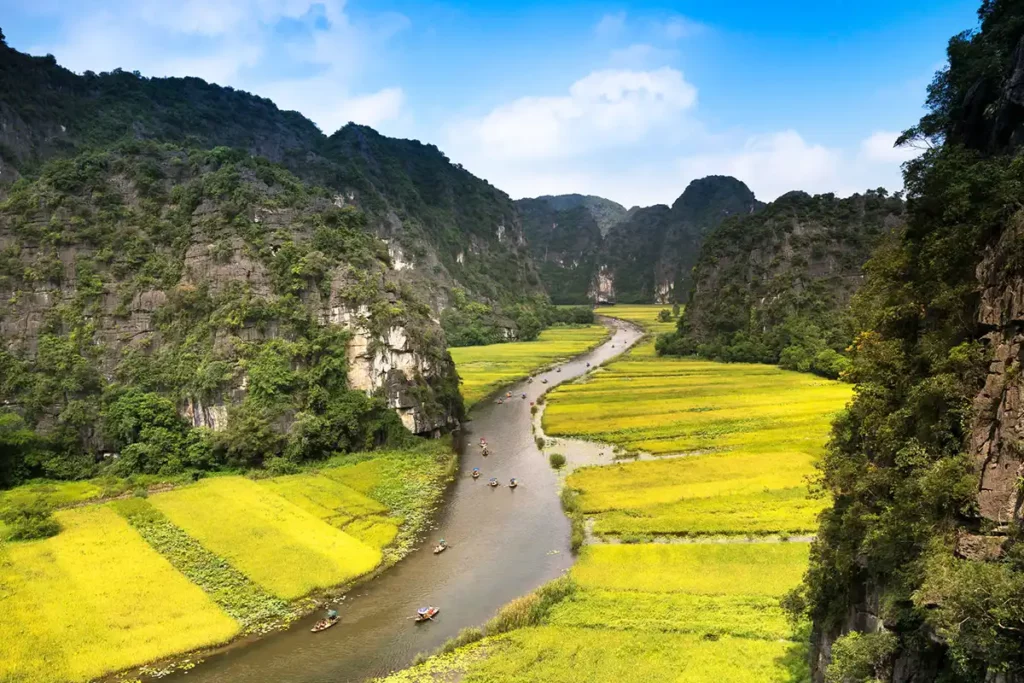
Tam Coc landscape before the rice harvest, Ninh Binh, Vietnam. Photo credit: Chienba (Pixabay)
# September, October, and November: this is autumn, and both the temperatures and the climate are at their most pleasant.
Humidity is very high from December to March, and heavy rains fall in July and August. While these two periods are not to be avoided completely, you should be aware of the conditions! Bring a rain jacket and warm clothes in winter, and a rain jacket and umbrella during the rainy season.
Where to stay in Ninh Binh?
Let’s be frank: Ninh Binh city itself lacks charm. However, there is one luxurious hotel at an unbeatable price: The Reed Hotel. Enjoy the rooftop pool and very spacious rooms there.
Otherwise, we recommend staying in the Tam Coc or Trang An areas.
It is around Tam Coc village, at the foot of the famous limestone karsts, that you will find the greatest number of hotels and a tourist-friendly town center.
For high budgets:
- Tam Coc Garden: arguably the most beautiful eco-lodge in the region, offering a natural and authentic environment for a relaxing stay.
- Aravinda Resort: small luxury bungalows set in a beautiful natural setting.
- Emeralda Resort : an off-the-beaten-path resort near the Van Long Nature Reserve north of Tam Coc. A truly stunning location.
For mid-range budgets:
There are many small lodges offering nights in bungalows. Here are a few:
- Trang An Retreat: located along the Sao Khe River near Trang An, this is a very pleasant spot to relax away from the hustle and bustle.
- Tam Coc Banana Bungalow : a new establishment slightly outside the main tourist area of Tam Coc, featuring bungalows arranged around a swimming pool.
- Chez Loan: lthe owner, Mrs. Loan, speaks French and will warmly welcome you to her home. You can choose between rooms or bungalows.
For low budgets:
For travelers on a tighter budget, there are also plenty of options! You can find bungalow accommodations at affordable prices (around 20 euros) at Tam Coc Palm House or Tam Coc Lake View Homestay.
What to see in Ninh Binh?
Now that you know how to get to Ninh Binh and where to stay, we’ll help you choose the sites to visit.
Must-see sites
Several sites are absolute must-sees that you will likely include in your itinerary.
Tam Coc Village and the Ngo Dong River boat ride
You cannot miss Tam Coc, the small tourist village of Ninh Binh Province. This is likely where you will stay, dine, and shop for souvenirs. But it is also the place to discover the landscapes of the “Terrestrial Halong Bay” on a small boat ride along the Ngo Dong River.
During your ride, you will pass through three natural caves – Hang Ca, Hang Hai, and Hang Ba. On both sides of the river, you will see rice fields turning golden just before the harvest in May.
The site is stunning, and we strongly encourage you to take the 2.5-hour boat ride, which costs 120,000 VND per person (about 4.5 euros). Children under 10 get a half-price ticket.
This boat tour was the first to open, and its organization has remained quite traditional… so don’t be surprised if the boatwomen are a bit assertive when it comes to tips. You may also encounter women taking your photo during the ride, hoping, of course, to sell it to you afterward. Don’t worry—none of this detracts from the beauty of the landscapes!
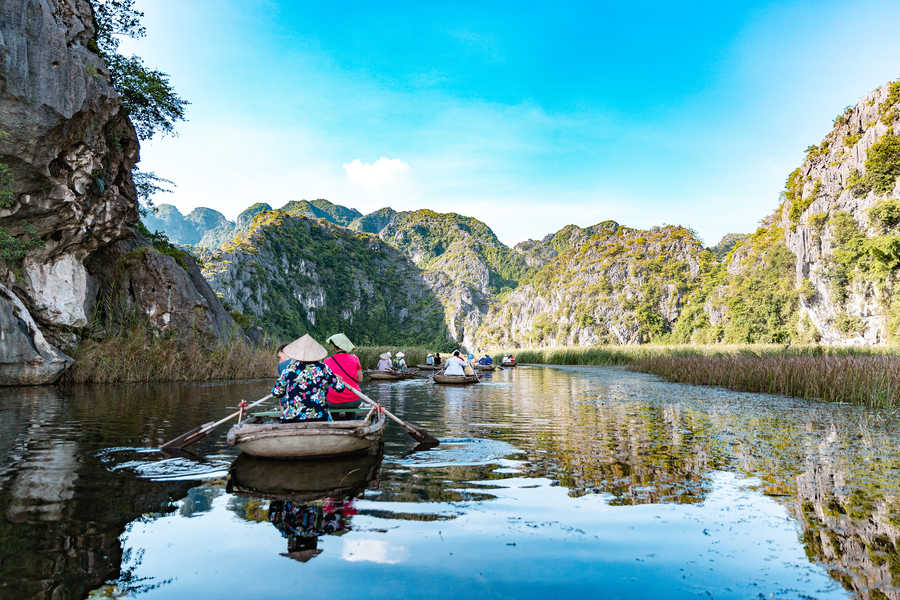
Boat ride on the Ngo Dong River. Photo credit: Mathieu Arnaudet
Bich Dong Pagoda
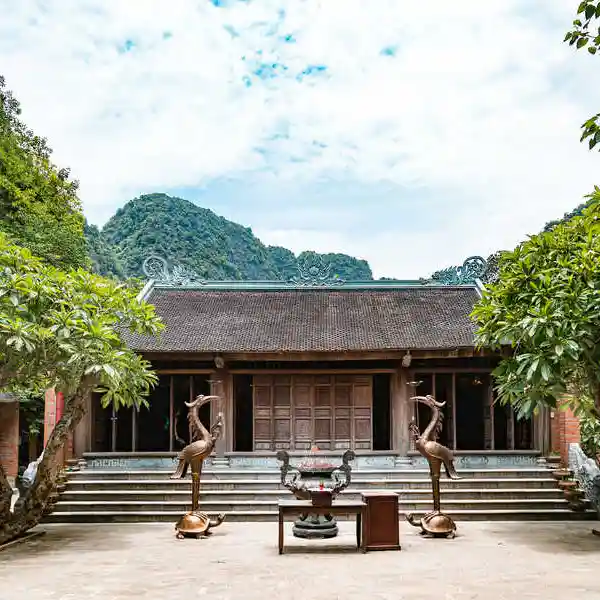
The Jade Pagoda (“Bich Dong”) is located just a few meters from the start of the boat tour. You can easily walk there if your hotel is in Tam Coc village. You will enjoy this pagoda, built in 1428 and rediscovered at the end of the 18th century by Lord Trinh Sam, who gave it its current name. You won’t visit just one, but three pagodas, each located at a different level of the mountain. The highest is literally embedded in the mountainside and features five rooms carved from limestone and iron.
Don’t hesitate to visit—it’s a truly charming place. We recommend doing the tour with a English-speaking guide, who can explain the history of the site and the meanings of its symbols.
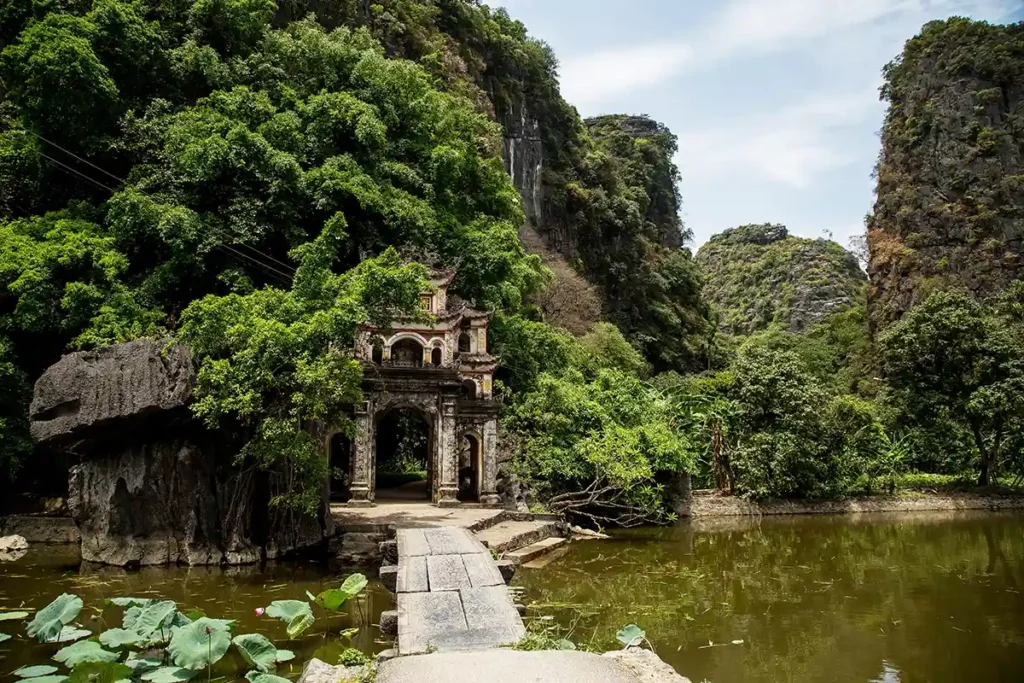
Entrance to the Jade Pagoda in Tam Coc. Photo credit: Mathieu Arnaudet
Hang Mua Mountain
About 10 kilometers from Tam Coc – Bich Dong lies Hang Mua Mountain. Until a few years ago, this site was unknown to travelers—but Instagram changed everything! Selfies taken at the top of the mountain are now among the most popular Vietnam photos on the platform. As a result, depending on the time and season, it can get crowded!
Nonetheless, the view from the summit is remarkable, especially during the period just before the rice harvest. You will enjoy an impressive panorama of the Ngo Dong River and the rice fields on both sides.
To reach the viewpoint, however, you will need to climb the approximately 500 steps to the top. We recommend taking your time and stopping along the way to admire the scenery.
Entrance to the site costs 100,000 VND. After entering, you might be surprised to pass through a rather kitsch park. This park was built by the hotel located at the foot of the mountain, the Mua Cave Ecolodge. While we used to recommend it, the park’s kitschiness and the crowds passing right in front of the bungalows now make it hard to praise.
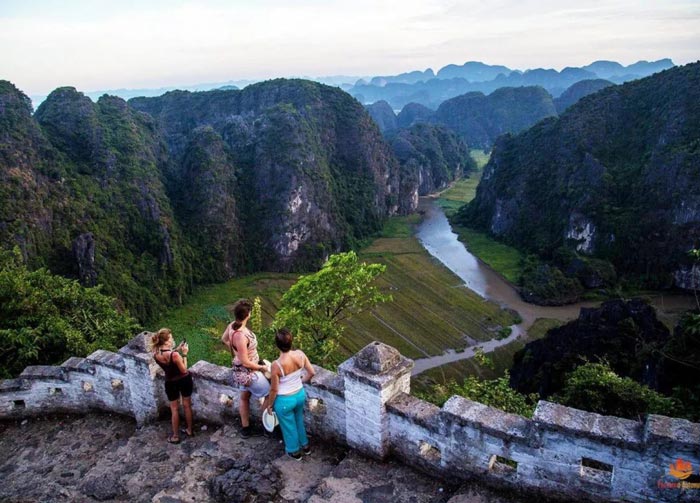
View from the top of Hang Mua Mountain in Tam Coc. Photo credit: Mathieu Arnaudet
The Trang An eco-tourism complex
A little north of Tam Coc lies the Trang An Scenic Complex. This site is both historically and naturally significant: archaeological remains dating back 30,000 years have been found here, and the area is home to a large number of animal species. For these reasons, it was inscribed on the UNESCO World Heritage List in 2014.
Thanks to its UNESCO status, the site has been very carefully developed (much more so than Tam Coc!). However, it is now somewhat a victim of its own success.
The organization and signage follow a more Western style, and you can choose between three boat routes. Each route lasts about 3 hours (slightly longer than Tam Coc) and costs 200,000 VND per person (more expensive than Tam Coc). The routes mainly differ in the number of caves explored. Until recently, one route featured a recreation of the village from the movie King Kong, with locals employed to dress up in costumes… This spectacle lasted two years and was thankfully removed in the summer of 2019!
The boatwomen are much better organized, and each is employed by the managing company—they do not rely solely on tips, unlike in Tam Coc.
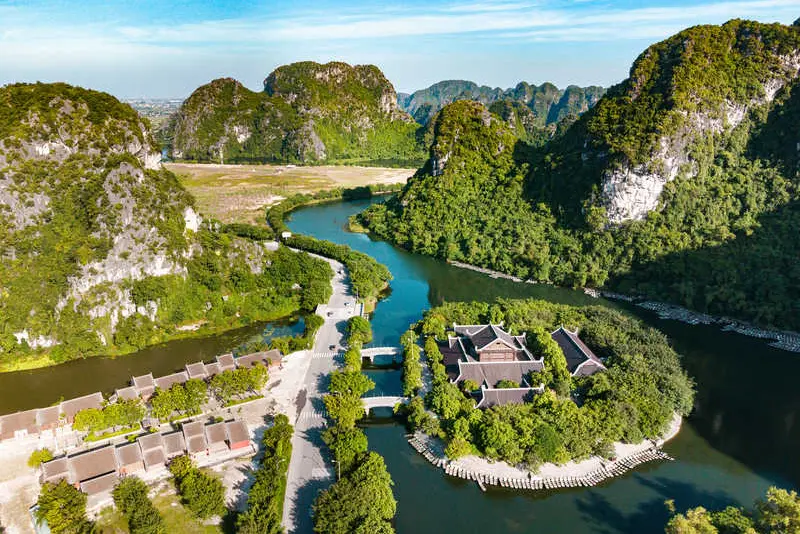
Trang An landscape, Ninh Binh, Vietnam. Photo credit: Mathieu Arnaudet
Hoa Lu ancient capital
The Hoa Lu site is part of the Trang An Scenic Complex and is therefore also listed as a UNESCO World Heritage Site.
Hoa Lu was the first capital of Dai Co Viet, the unified Vietnam, between 968 and 1010 AD. It was Emperor Dinh Tien Hoang who chose this location as the main city of his empire. Two other emperors, Tien Le and Ly, succeeded him before King Ly Thai To decided to move the imperial city (Thang Long) to Hanoi. He did not forget to erect a large number of temples in honor of his predecessors in Hoa Lu. These are the temples you can visit today when exploring the ancient capital.
Entrance to the site costs only 40,000 VND. To fully understand the ancient history of Vietnam, we recommend hiring a guide.
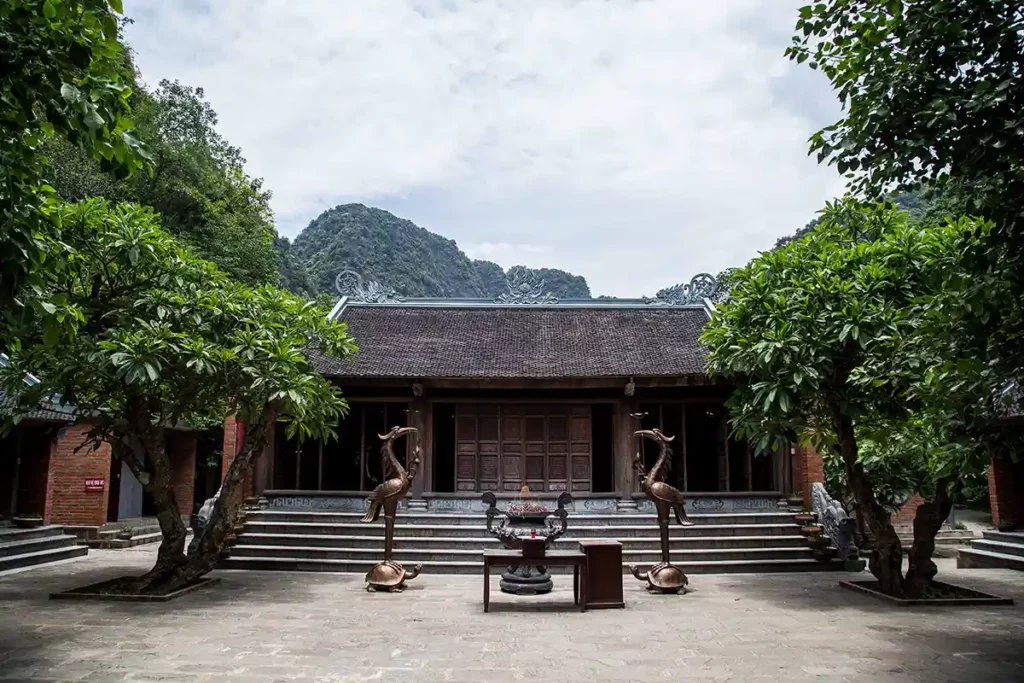
One of the Hoa Lu temples, Ninh Binh, Vietnam. Photo credit: Mathieu Arnaudet
The Bai Dinh Buddhist Complex
Located 5 km north of Hoa Lu, the new Bai Dinh Buddhist Center now spans nearly 100 hectares. It began opening to the public in 2003 and has continued to expand since. At Bai Dinh, you will witness a kind of race for records and grandeur, which unfortunately has little to do with traditional Buddhist beliefs.
This center was built near the original pagoda, which dates back to 1136 under the Ly Dynasty (1009–1225). This historic pagoda is situated on Mount Dinh, and you will need to climb 300 steps to reach it.
We recommend visiting the historic pagoda first. The new center is also worth exploring to admire the craftsmanship of local artisans, who created the many enormous statues on the site. For example, you can see a 10-meter-tall bronze Buddha weighing 100 tons in the Phap Chu Pagoda. From there, you will also enjoy a stunning view of the entire Ninh Binh area.
Additional recommendations
In addition to the must-see sites we’ve just described, there are other experiences you can include in your Ninh Binh itinerary:
A bicycle ride through the countryside
The areas around Tam Coc are perfect for a bicycle ride. We recommend exploring the various sites around Tam Coc by bike. You can also take side paths to discover the surrounding countryside.
Boat tour in the Van Long Reserve
If you prefer a quieter visit to Ninh Binh, we suggest exploring the Van Long Reserve instead of Tam Coc and Trang An. Located even further north than Trang An, this reserve is off the main tourist track, so you’ll find far fewer people on the boats. The tour is shorter, and the limestone karsts are less dramatic, but the surrounding nature is wilder and more pristine.
Visiting Thung Nham park
Thung Nham Park is located just 4 km west of Tam Coc – Bich Dong, yet few people venture there! This park is known for the diverse bird species that inhabit it. Entrance costs 100,000 VND (50,000 VND for children). Inside, you can explore the park on foot, take a boat tour, and visit two caves: the Buddha Cave and the Vai Gioi Cave.
Visiting the Phat Diem Notre Dame Cathedral
It’s important to remember that the Red River Delta has been heavily influenced by Catholicism. Many churches were built in the region, particularly in Nam Dinh and Ninh Binh provinces. The most impressive building is the Phat Diem Cathedral, located 30 km from Ninh Binh city. It was overseen by Father Tran Van Luc, also known as “Father Six”, and is a vast complex featuring three artificial caves and five chapels.
The Bear Sanctuary
Nestled in the spectacular landscapes of Ninh Binh, the Ninh Binh Bear Sanctuary is a center dedicated to the rehabilitation and protection of Asian bears, primarily Asiatic black bears (Ursus thibetanus), also known as moon bears. Managed by the organization Four Paws, this refuge was created to give a new life to bears rescued from the illegal bile trade—a cruel practice unfortunately still present in some Asian countries.
Spanning 12 hectares, the sanctuary provides the bears with a natural environment where they can readapt to a life closer to nature after spending years confined in tiny cages. Visitors not only witness the conservation efforts to protect these animals but also gain an understanding of the importance of raising awareness for animal welfare in Vietnam.
A visit to the sanctuary allows you to observe the bears in their new habitat, learn about their rehabilitation, and support an initiative crucial for wildlife preservation. Easily accessible from Hanoi, this site is a must-visit for animal lovers and anyone wishing to give their trip to Vietnam an ethical dimension.
Cúc Phương National Park
Located just a few kilometers from Ninh Binh, Cúc Phương National Park is Vietnam’s oldest national park, founded in 1962. A true biodiversity sanctuary, it spans over 22,000 hectares and is home to exceptional flora and fauna, making it a must-visit destination for nature lovers.
Cúc Phương is renowned for its primary tropical forests, which feature century-old trees, rare orchids, and an incredible diversity of animal species, including endangered primates, pangolins, and over 300 bird species. The park also plays a key role in wildlife protection, notably through its Endangered Primate Rescue Center and Turtle Conservation Center, where visitors can learn about ongoing conservation efforts.
Beyond its ecological significance, Cúc Phương offers numerous exploration opportunities, including jungle hikes, ancient cave discoveries, and bicycle excursions through lush valleys. During butterfly season, between April and May, the park transforms into a magical spectacle with thousands of butterflies fluttering through the air.
As you can see, the Ninh Binh region is rich in sites to explore!
You certainly won’t be able to see everything.
That’s why we suggest a possible two-day itinerary. Follow the guide!
Our two-day itinerary
Your guide and driver will pick you up from your hotel in Hanoi around 7:30 a.m. You will then depart for Ninh Binh Province. The program for the first day includes a visit to the Bai Dinh Buddhist Complex followed by a boat ride at the Trang An Eco-Tourism Site. You will then rest at one of the accommodations we recommend.
The next morning, you will rise early to climb the 450 steps to the top of Hang Mua Mountain. Arriving early will help you avoid the crowds. You will return to your hotel for breakfast, then head to Bich Dong Pagoda and Thung Nham Park.
You will begin the return journey to Hanoi in the mid-afternoon.
Want an unforgettable stay in Ninh Binh? Contact us!