



Would you like to discover the spiritual life of Ho Chi Minh City? Or simply take a quiet moment of reflection in this city that never seems to stop?
In this article, we’ll introduce you to 10 spiritual places to visit in and around Ho Chi Minh City.
The Vietnamese people are deeply spiritual, and the sites we describe are actively used by locals for prayer rituals, seeking blessings, and invoking good luck and fortune. Some temples were founded by early Chinese migrants, showcasing their rich heritage, while others represent unique religions and even played vital roles during the Vietnam War.
Each temple has its own captivating story, inviting you to learn and appreciate the city’s cultural diversity.
If you would like to discover these temples with an English-speaking guide, you can book our Ho Chi Minh City day tour.
What role does spirituality play in Ho Chi Minh City?
In Ho Chi Minh City, ancestor worship, Buddhism, Taoism and Christianity shape the daily life of most families.
Difference Between a Pagoda and a Temple
A pagoda typically refers to a specific type of religious building associated with Buddhism. Pagodas are usually multi-tiered towers with curved roofs and serve as places of worship, meditation, and education for Buddhists. They often house relics, statues, and scriptures.
A temple, on the other hand, is a broader term encompassing religious structures dedicated to various belief systems, including Buddhism, Taoism, Confucianism, and Hinduism. Temples can have different architectural styles and layouts, depending on the specific religious tradition they represent.
To learn more, check out our dedicated article on the topic.
Local beliefs
Beliefs in southern Vietnam are diverse. Officially, the 2019 census counts only about 14% of declared believers, mostly Catholics and Buddhists. This figure is misleading, however: the vast majority of families practice the worship of ancestors and guardian spirits without considering themselves religious.
Buddhism nevertheless remains the most visible tradition in the country, with its thousands of pagodas. Yet Vietnamese people only call themselves Buddhists if they strictly follow the Buddha’s teachings and regularly attend retreats at pagodas, which is not the case for most people.
Nevertheless, pagodas are widespread throughout Ho Chi Minh City and serve as centers for Buddhist teachings, meditation, and community activities.
After folk religion and Buddhism, Christianity holds a significant presence as the third major religion in the city. Although Christians are fewer in number, there are several churches in Ho Chi Minh City, many dating back to the colonial era.
Hinduism is rare, practiced mainly by the Cham ethnic group, one of Vietnam’s indigenous Hindu communities. However, you’ll still find a few Hindu structures in Ho Chi Minh City (see below).
What are the most beautiful temples and pagodas in Ho Chi Minh City?
The must-sees are the Jade Emperor Pagoda, Thien Hau in Cholon, Giac Lam, Vinh Nghiem, Xa Loi and the Cao Dai Temple in Tay Ninh.
During special occasions like Lunar New Year (Tết) and other important dates on the lunar calendar, temples become lively centers of activity, filled with devotees offering prayers, burning incense, and making offerings to ensure good fortune for the year ahead.
You’ll find strong Chinese influences, especially in the bustling Chinatown district, home to temples dedicated to various deities and ancestor worship.
Here’s our list of favorite temples in Ho Chi Minh City:
| Place | Area | Don’t miss | Visit time |
|---|---|---|---|
| Jade Emperor Pagoda | Former District 1 | Taoist statues, turtle pond | 45 min |
| Thien Hau Pagoda | Cholon | Hanging incense coils | 30 min |
| Nhi Phu Temple | Cholon | Fujian community decor | 30 min |
| Giac Lam Pagoda | Former Tan Binh District | 32 m stupa | 45 min |
| Buu Long Pagoda | Former Thu Duc City | Thai-style golden stupa | 1 hr |
| Vinh Nghiem Pagoda | Former District 3 | Seven-story tower | 45 min |
| Xa Loi Pagoda | Former District 3 | 1963 memorial site | 30 min |
| Mariamman Temple | Former District 1 | Tamil Hindu temple | 30 min |
| Phu Chau Floating Temple | Former Thu Duc City | Temple on the water, reached by boat | 1 hr |
| Cao Dai Temple | Tay Ninh, about 90 km | Noon prayer | A full day with travel |
Jade Emperor Pagoda
The Jade Emperor Pagoda is one of the most popular temples in Ho Chi Minh City, located in former District 1. Built in 1909 by the Cantonese community, this beautiful pagoda is renowned for its ornate architecture and peaceful atmosphere. It gained international attention when it welcomed a special guest, President Barack Obama, during his visit to Vietnam in 2016.
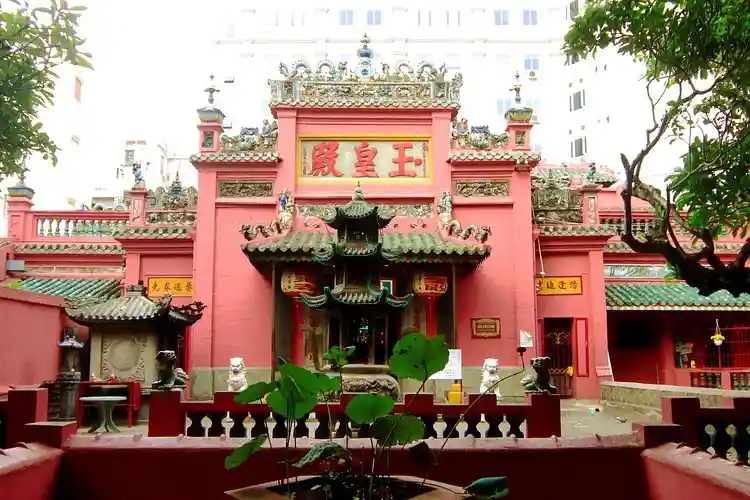
Jade Emperor Pagoda, Ho Chi Minh city
Thien Hau Pagoda
Located in Chinatown, the Thien Hau Temple is an important religious site dating back to 1760. It serves as a spiritual center for Saigon’s Chinese community and features impressive architectural details. Inside the temple, you can admire the intricate incense coils hanging from the ceiling.
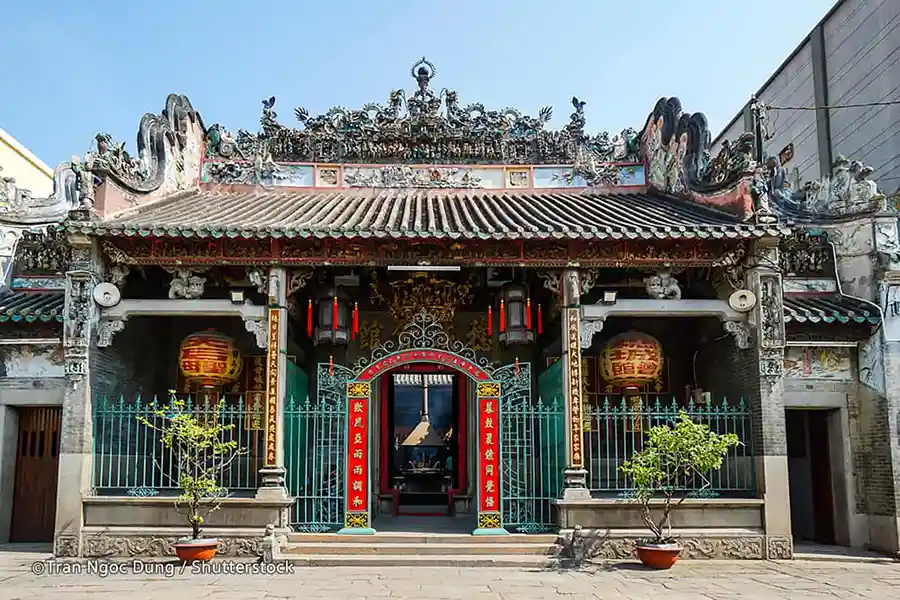
Incense coils hanging at Thien Hau Pagoda
Nhi Phu Temple
Also located in Chinatown, the Nhi Phu Temple, also known as the Ong Bon Temple, was built in the early 18th century by immigrants from Fujian. It is an important religious site for the Chinese community, especially during the Ong Bon Festival. You can admire its detailed architecture and immerse yourself in the rich cultural traditions celebrated here.
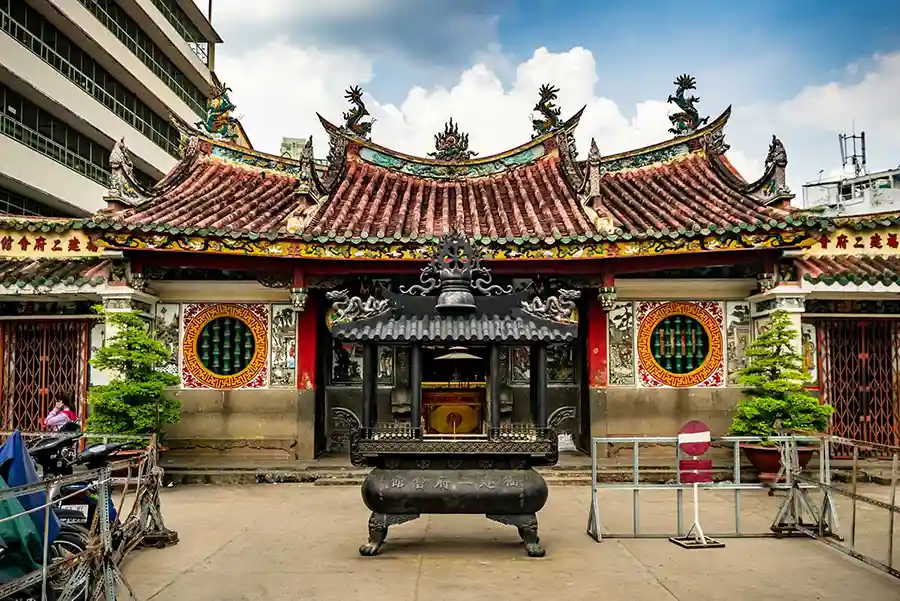
Entrance of Nhi Phu Temple in Ho Chi Minh City
Giac Lam Pagoda
With a history of nearly 300 years, Giac Lam Pagoda holds great cultural and architectural significance. Founded in 1744 by a notable of Chinese descent, it combines Vietnamese and Chinese architectural styles. Its most remarkable feature is the 32-meter multi-tiered stupa, adorned with intricate carvings and symbolizing enlightenment.
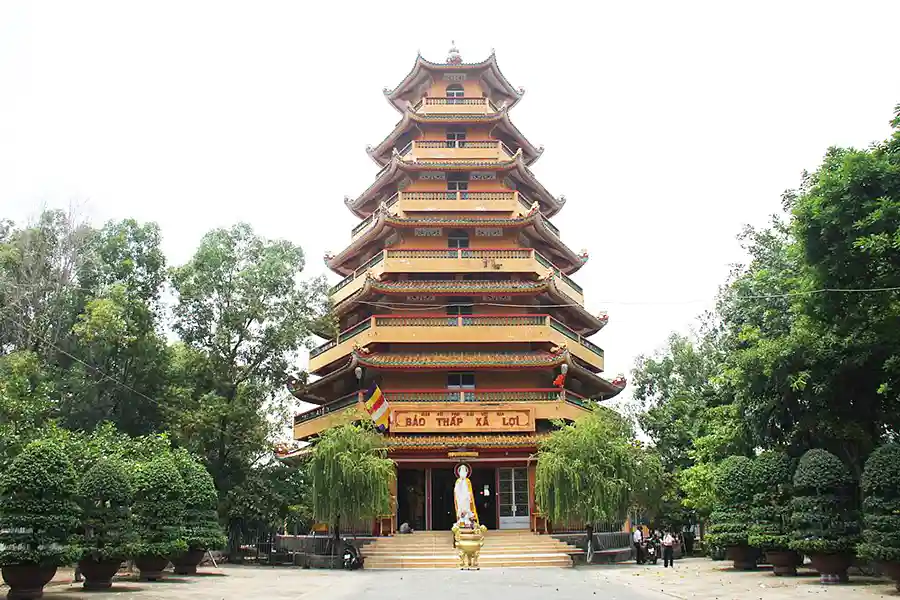
Stupa of Giac Lam Pagoda, Ho Chi Minh City
Buu Long Pagoda
Located about 20 km from the center, in the former Thu Duc City, Buu Long Pagoda stands out because it resembles the temples you might find in Thailand. Nestled amid lush greenery, it offers a serene and picturesque setting. The stunning 56-meter golden stupa and the pond reflecting the temple and clouds make it a favorite spot for photographers.
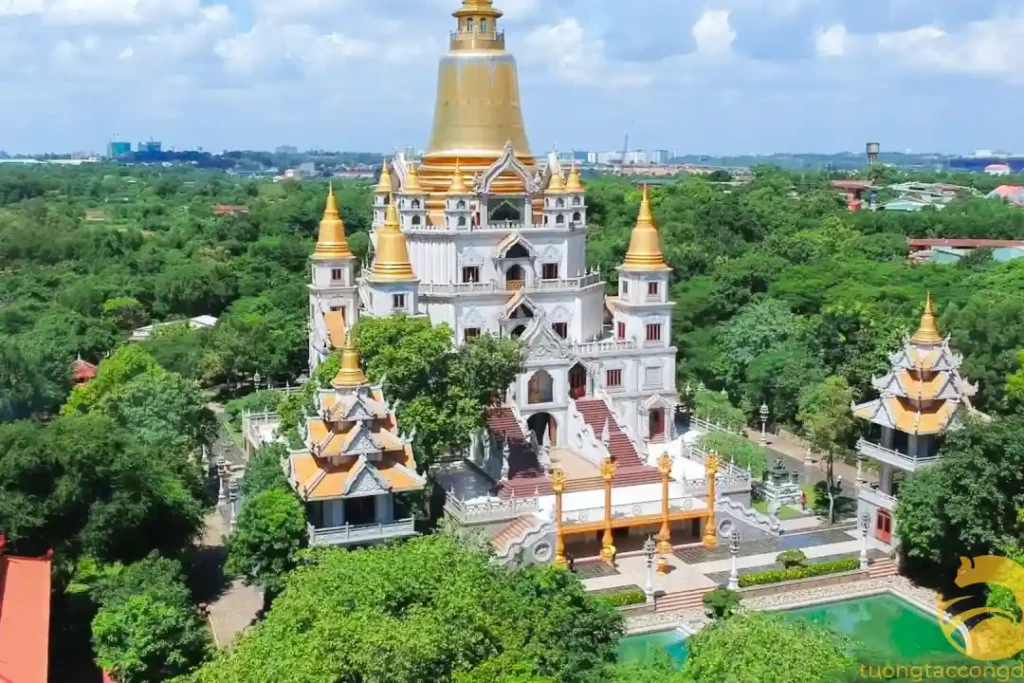
View of Buu Long Pagoda, Ho Chi Minh City
Vinh Nghiem Pagoda
Built between 1964 and 1971 and considered one of the largest and most important pagodas in the region, Vinh Nghiem Pagoda is both a religious and cultural landmark. It showcases exquisite Vietnamese Buddhist architecture, with its seven-story tower, intricate wood carvings and beautiful gardens. Visitors can explore the vast grounds and experience the tranquility of Buddhist rituals.
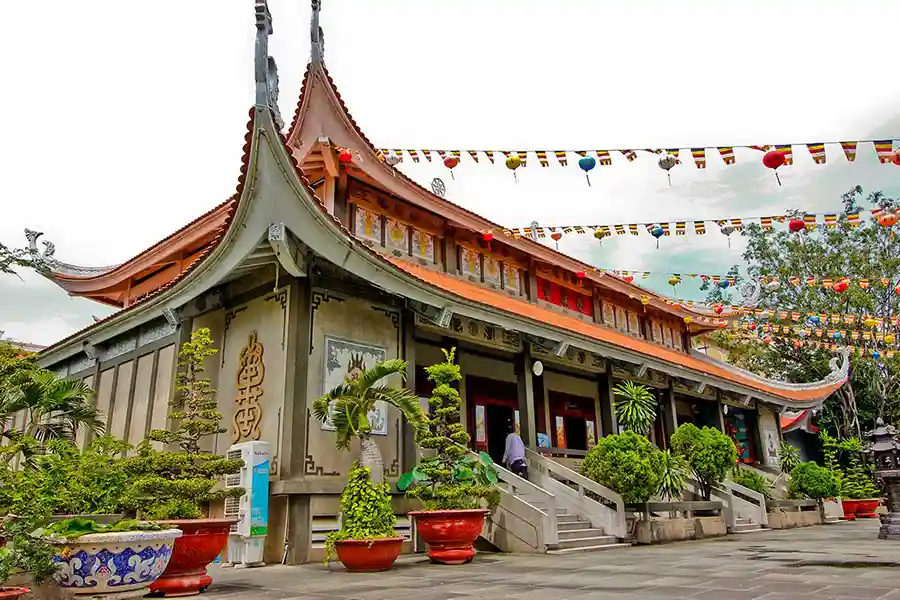
In front of Vinh Nghiem Pagoda
Xa Loi Pagoda
Xa Loi Pagoda holds a special place in recent history: it was the heart of the Buddhist protests against Ngo Dinh Diem’s regime in South Vietnam. In June 1963, the monk Thich Quang Duc self-immolated at a nearby intersection to denounce religious discrimination, an act that shocked the world. In August of the same year, the pagoda was raided by the regime’s special forces. Today, it stands as a symbol of resilience and spiritual resistance.
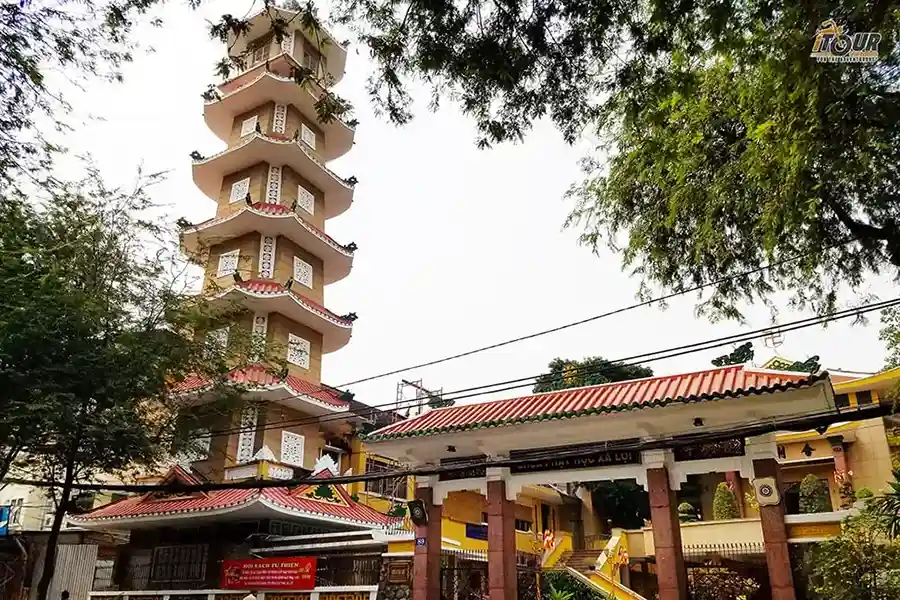
Xa Loi pagoda in Ho Chi Minh city
Mariamman Hindu Temple
The Mariamman Hindu Temple is one of the few Hindu temples in Ho Chi Minh City, built in the late 19th century by Saigon’s Tamil community. The temple is known for its colorful and lively decorations depicting various Hindu deities. It offers visitors a glimpse into Hindu culture and traditions within the city.
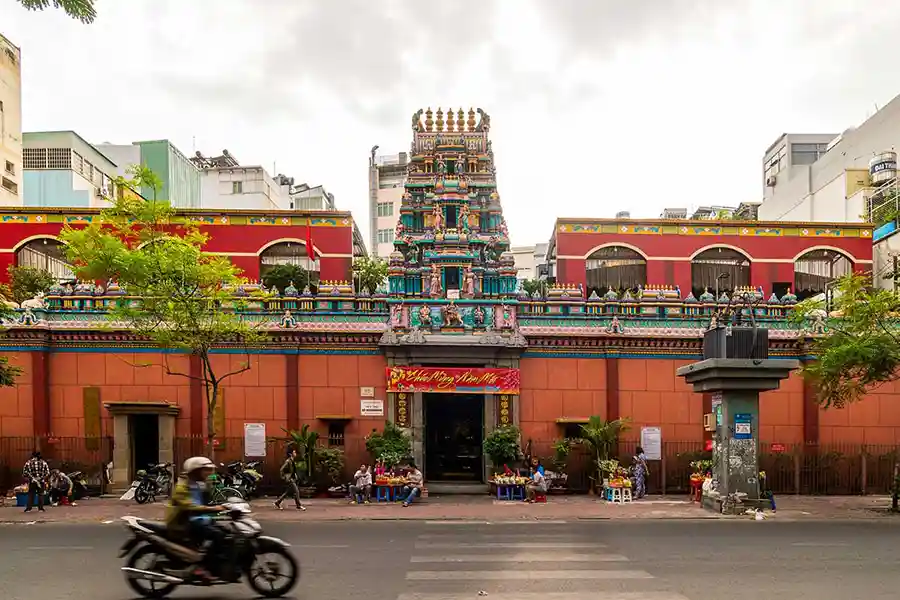
Mariamman Hindu Temple
Phu Chau Floating Temple
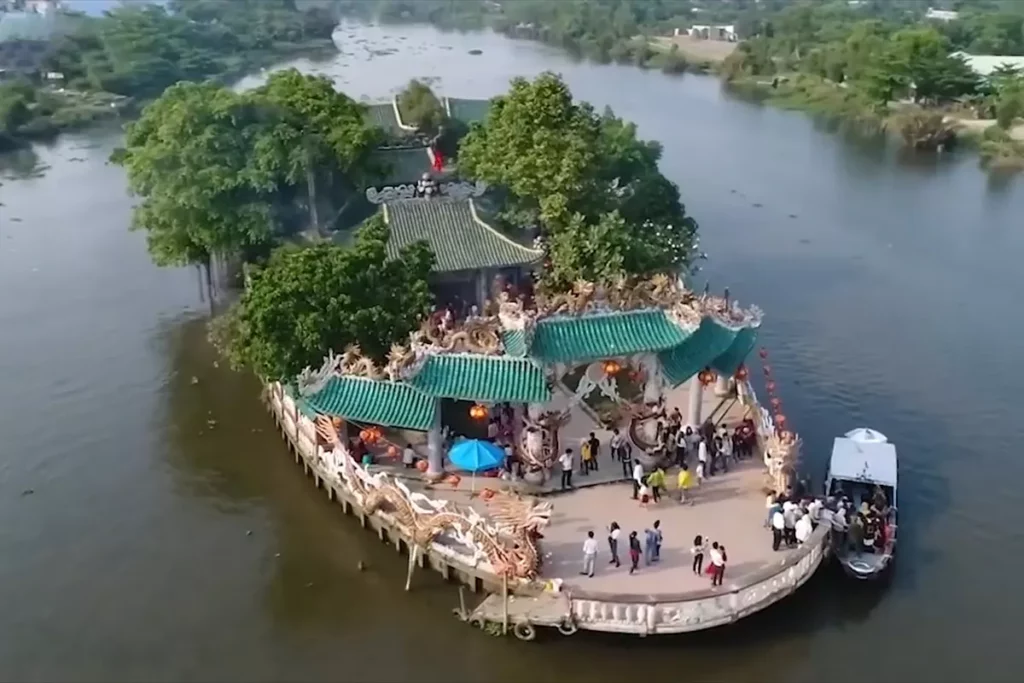
Located on an island in the Vam Thuat River, the Phu Chau Floating Temple is truly unique. Accessible only by boat, it allows visitors to admire its impressive dragon statues, explore the compact temple complex, and enjoy the peaceful atmosphere surrounded by water and nature.
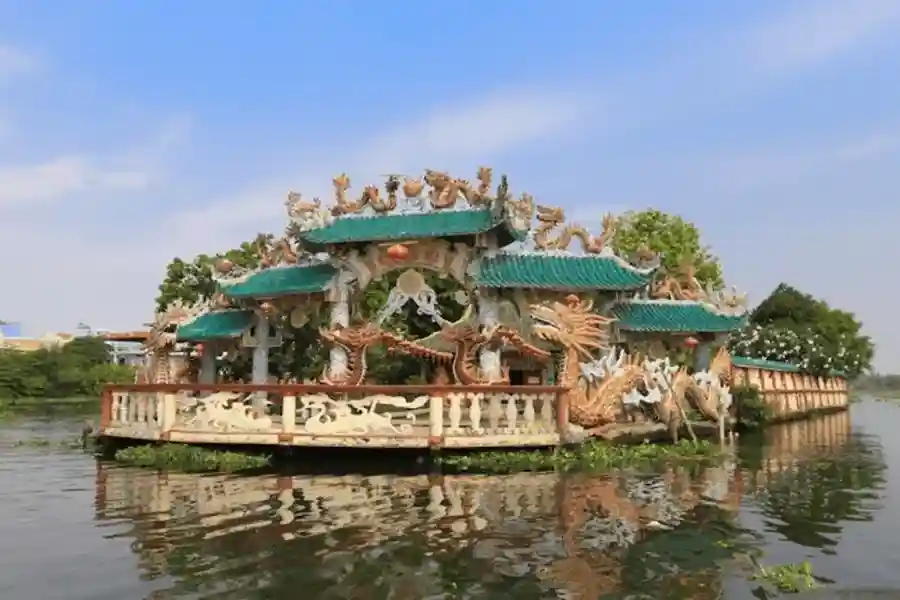
Phu Chau Floating Temple
Cao Dai Temple
Located about 90 kilometers from Ho Chi Minh City, in Tay Ninh province, enlarged in 2025 by its merger with Long An, the Cao Dai Holy See is the center of this religion founded in 1926. Its colorful facade reflects the many influences of this syncretic faith, which blends Buddhism, Taoism, Confucianism and Christianity. Four prayers take place every day, at 6 a.m., noon, 6 p.m. and midnight: the noon prayer is the easiest for visitors to attend, watching from the gallery.
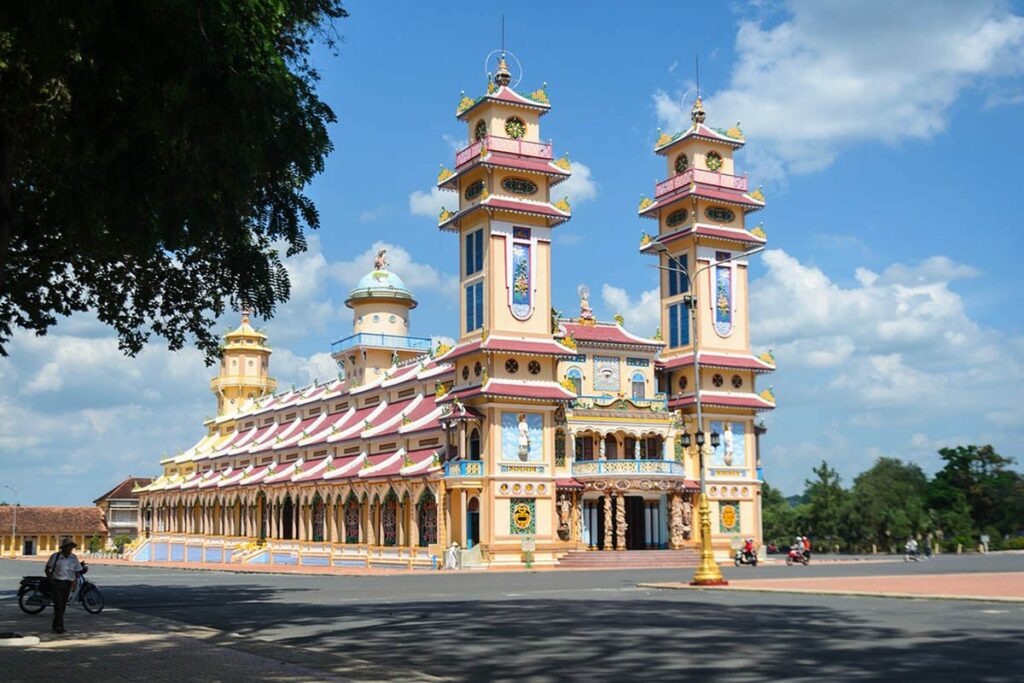
Cao Dai Temple in Tay Ninh
These ten sites are easy to explore in one or two days, combining the center, Cholon and an excursion to Tay Ninh. We will gladly include them in your tailor-made Vietnam tour, with an English-speaking guide to tell you their stories.
FAQ: temples in Ho Chi Minh City
What are the most beautiful temples in Ho Chi Minh City?
The Jade Emperor Pagoda, Thien Hau Pagoda in Cholon, Giac Lam, Vinh Nghiem and Xa Loi, not forgetting the Cao Dai Temple in Tay Ninh, about 90 km away.
Is the Jade Emperor Pagoda free to visit?
Yes, entry is free and the pagoda is open every day. Allow 30 to 45 minutes for the visit, and leave a small offering if you wish.
How should you dress to visit a pagoda in Vietnam?
Cover your shoulders and knees, remove your shoes when asked and speak quietly. Ask before photographing worshippers.
Is the Cholon district worth visiting?
Yes: Ho Chi Minh City’s Chinese quarter is home to several magnificent temples, including Thien Hau and Nhi Phu, as well as the large Binh Tay Market.
Can you visit the Cao Dai Temple from Ho Chi Minh City?
Yes, as a day trip: allow about 2.5 hours of driving. It is often combined with the Cu Chi Tunnels, arriving in time for the noon prayer.
Do you need a guide to visit Ho Chi Minh City’s temples?
It is not essential, but an English-speaking guide explains the deities, rituals and history of each site, which makes all the difference.