

















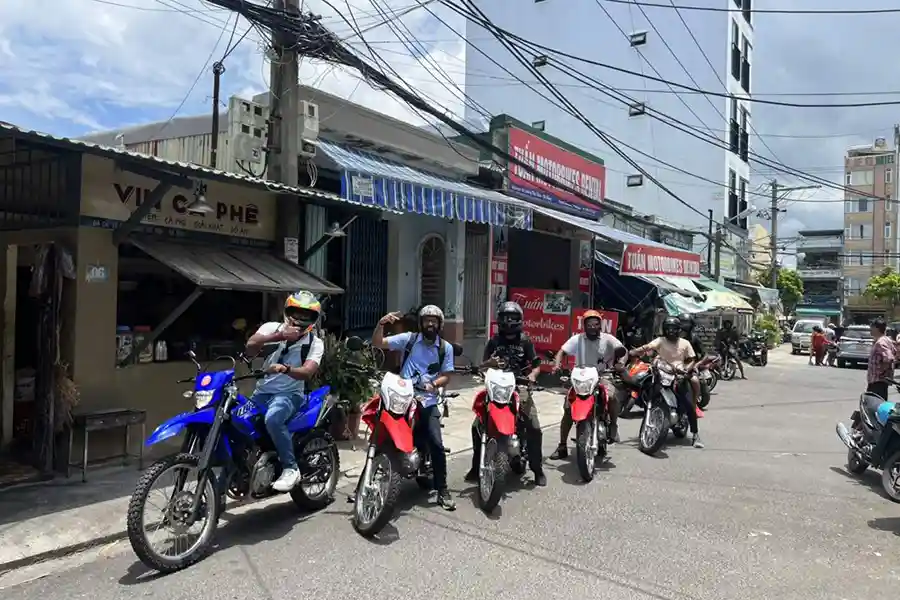
In Vietnam, two-wheelers are everywhere: in the lanes of Hanoi’s Old Quarter, on the small roads between the rice fields of Ninh Binh and along the hairpin bends of the far north. Many travellers are tempted to rent a scooter for a little more freedom, and rental shops often ask for nothing more than a copy of your passport. Yet the licence question is more serious than it looks: it affects your safety, what happens at a police checkpoint and, above all, whether your insurance will pay out after an accident.
We have been based in Hanoi since 2005, and every year we meet travellers who thought they were riding legally and were not. Here is what you need to know before getting on a bike, what a rental costs, and how to enjoy the road without riding yourself.
What licence do you need to ride a scooter in Vietnam?
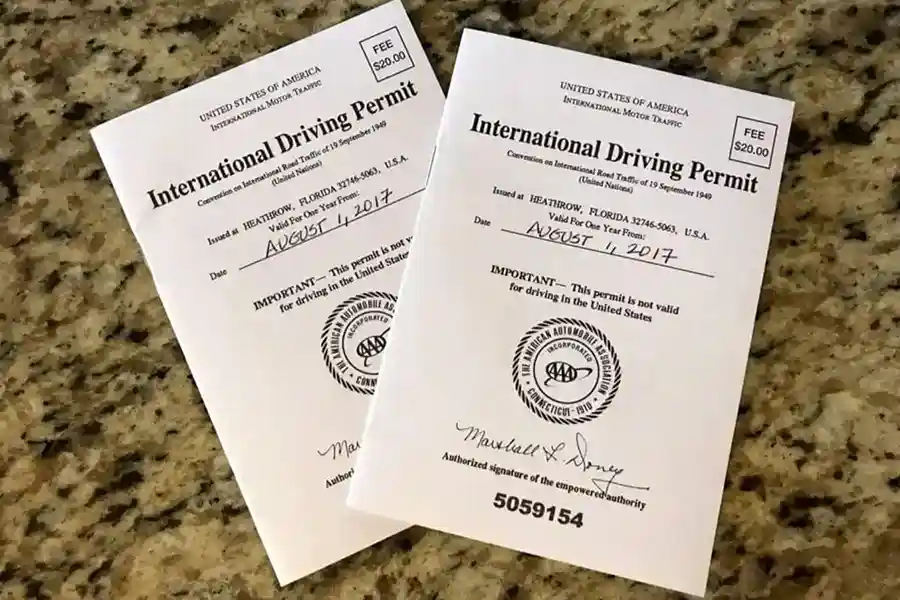
You need an international driving permit issued under the 1968 Vienna Convention, showing the motorcycle category, plus your national licence.
Vietnam recognises international driving permits issued under the 1968 Vienna Convention on Road Traffic. The United Kingdom, France, Belgium, Switzerland and most European countries have signed it, so the permit you obtain at home before leaving is valid in Vietnam, as long as you carry your national licence too and the permit shows the category for the vehicle you ride. Apply well ahead of your departure, as processing can take several weeks in some countries.
Permits issued under the older 1949 Geneva Convention, which is the format used in the United States and Canada among others, are not recognised. A national licence on its own, even with a translation, is not enough for a tourist stay either.
Since the new Law on Road Traffic Order and Safety came into force on 1 January 2025, category A1 covers motorbikes up to 125cc and category A covers anything larger. Most rental scooters, such as the Honda Vision or Honda Wave, fall under category A1.
Is a car licence enough to ride a scooter?
As a rule, no. An international permit based on a car-only licence shows only the car category, and the category written on the permit is what counts at a checkpoint. Some countries let car drivers ride a 125cc after a short training course, but this does not appear as a motorcycle category on the international permit, and there is no guarantee it will be accepted in Vietnam. We suggest you do not rely on it and ask your insurer in writing.
What about a 50cc moped or an electric scooter?
Vietnamese rules treat mopeds under 50cc and small electric two-wheelers separately, and young Vietnamese can ride them from the age of 16. Information on whether foreign tourists can ride them without a motorcycle category is contradictory, and these models are rare at rental shops anyway. If in doubt, assume you still need an international permit with the motorcycle category, and check what your insurance policy says.
Can you get a Vietnamese licence on the spot?
Converting a foreign licence into a Vietnamese one is possible, but it is designed for residents with a residence card or a long-stay visa. For a two- or three-week holiday on a visa exemption or an e-visa, it is not a realistic option.
What are the risks of riding without a valid licence?
Riding without a valid licence exposes you to a fine, the impounding of the scooter and, above all, a refusal of cover from your insurer.
Traffic fines were raised sharply by Decree 168/2024, in force since 1 January 2025. Checkpoints are more frequent on some mountain roads, especially around the Ha Giang Loop, now part of Tuyen Quang province, and in the Sapa area. The amounts below are indicative: a revision of the decree has been drafted and the figures may change.
| Situation | Indicative fine | Approximate equivalent |
|---|---|---|
| Riding a two-wheeler up to 125cc without a valid licence | 2 to 4 million dong | 80 to 160 USD |
| Same offence above 125cc | about 6 to 8 million dong | 240 to 320 USD |
| No helmet, rider or passenger | 400,000 to 600,000 dong | 16 to 24 USD |
| Riding after drinking, even a single glass | 2 to 10 million dong depending on the level | 80 to 400 USD |
| Rental shop handing a bike to an unlicensed rider | 8 to 10 million dong | 320 to 400 USD |
On top of the fine, the vehicle can be impounded for several days, and the rental shop will pass the costs on to you. Vietnam has a zero-tolerance policy on alcohol: one beer at lunch is enough to be fined.
The real risk, though, is not the fine. After an accident, your licence situation decides who pays for medical care, for repairing the scooter and for any damage to a third party.
Does your travel insurance cover you on a scooter?
Most travel insurance policies refuse to cover a motorbike accident if you were riding without a licence that is valid in the country visited.
It is the exclusion we come across most often in policies, including those attached to premium credit cards. In practice, if you are injured while riding without an international permit showing the motorcycle category, the bill for an international clinic in Hanoi or Danang, followed by a possible medical repatriation, may be yours to pay. These costs quickly run into thousands, or even tens of thousands, of dollars.
Before you leave, check three points in your policy wording:
- are motorised two-wheelers covered, and up to what engine size?
- do you need to wear a helmet and hold a licence valid in Vietnam?
- are you covered as a passenger, for instance behind an easy rider or on a motorbike taxi?
As for third-party liability, every two-wheeler in Vietnam must carry compulsory insurance, but the limits are modest. Ask the rental shop for the registration card and the insurance certificate, and keep a photo of both on your phone.
How much does it cost to rent a scooter in Vietnam?
Expect to pay roughly 120,000 to 300,000 dong a day for a rental scooter, about 4 to 10 euros, depending on the model, the city and the season.
Prices drop for weekly rentals and rise in beach resorts during the high season. Here are the price ranges we usually see:
| Type of bike | Examples | Best for | Indicative price per day |
|---|---|---|---|
| Automatic scooter | Honda Vision, Yamaha Janus | Cities, beaches, short trips | 120,000 to 250,000 dong (5 to 10 USD) |
| Semi-automatic | Honda Wave, Honda Blade | Countryside, mountain roads | 150,000 to 350,000 dong (6 to 14 USD) |
| Off-road motorbike | Honda XR150 | Tracks and passes of the far north | about 20 to 50 USD |
The deposit is the other thing to agree on. Many shops ask you to leave your passport: we advise against it, because you need it every time you check into a hotel and at any checkpoint. Offer a cash deposit instead, with a copy of your passport and your entry stamp or e-visa.
Before setting off, take a few minutes to inspect the bike with the owner:
- brakes, tyres, lights, indicators, horn and mirrors;
- photos or a video of existing scratches, to avoid any argument when you return it;
- a helmet with a visor, in your size and properly fastened, for you and your passenger;
- the owner’s phone number in case of a breakdown, and the fuel level at the start.
Is it sensible to ride yourself in Vietnam?
Riding yourself in Vietnam takes real two-wheeler experience, because dense traffic and mountain roads leave very little room for mistakes.
In Hanoi and Ho Chi Minh City, the stream of scooters follows unwritten rules: you merge gently, you use your horn to signal your presence and, in practice, right of way often goes to the biggest vehicle. In the mountains, the roads of the far north combine tight hairpins, trucks, loose gravel and landslides in the rainy season, from June to September. Fog can also settle very quickly on the passes in winter.
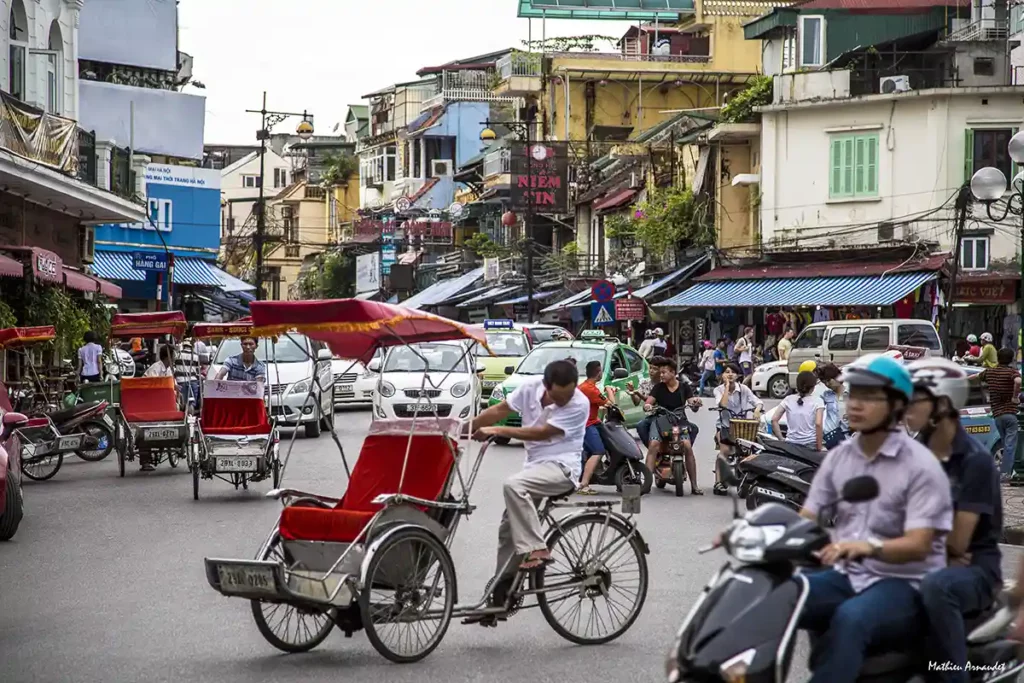
Our view, after twenty years on these roads: if you have never ridden a motorbike at home, Vietnam is not the place to learn. An experienced rider with the right licence and proper insurance, on the other hand, can have wonderful days on quieter roads around Ninh Binh, Hoi An or along the Quy Nhon coast.
What are the alternatives to riding yourself?
An easy rider, a local driver who takes you on the back of his motorbike, gives you the thrill of the road with no legal risk and no fatigue.
To explore the far north without riding, you can also choose our five-day Ha Giang Loop tour, which we adapt to your pace and to the way you prefer to travel.
The easy rider concept was born in the Central Highlands around Dalat before spreading across the country. Your driver knows the road, the photo stops, the villages and the best places for lunch; all you have to do is look at the scenery. On the Ha Giang Loop, a three- to four-day trip with an easy rider, accommodation and meals usually costs between 180 and 400 USD, depending on comfort and the organiser.
Depending on your itinerary, other options are even simpler:
- app-based motorbike taxis such as Grab, Be or Xanh SM for short city rides, helmet included;
- cycling in Hoi An, around Tam Coc in Ninh Binh or in the countryside near Hue, where the land is flat;
- a private car with driver, the most comfortable choice for families and travellers who prefer a gentle pace;
- the train or a limousine bus for long distances, for example between Hanoi and Sapa;
- the Hai Van Pass between Hue and Hoi An, a classic half-day ride on the back of an easy rider’s bike.
What precautions should you take if you rent a scooter?
If you hold the right licence and are used to riding, a few simple habits remove most of the risk:
- always carry your national licence, your international permit, a copy of your passport and the bike’s papers;
- wear a fastened helmet, closed shoes and covering clothes, even in the heat;
- avoid riding at night or in heavy rain, when visibility drops;
- do not drink a drop of alcohol before riding;
- download offline maps and get a local SIM card or eSIM;
- remember the emergency numbers: 113 for the police, 114 for the fire service, 115 for medical emergencies.
And if there is the slightest doubt about your licence or your insurance, the most relaxed solution is to leave the handlebars to someone who knows the road.
FAQ: renting a motorbike in Vietnam
Do you need an international driving permit to rent a scooter in Vietnam?
The rental shop may not ask for it, but you need one to ride legally. It must be issued under the 1968 Vienna Convention, show the motorcycle category and be carried with your national licence.
Can I ride a scooter in Vietnam with a car licence?
As a rule, no. What counts is the category shown on your international permit, and a car licence covers cars only. Short 125cc training courses offered in some countries give no guarantee in Vietnam.
How much does it cost to rent a scooter in Vietnam?
Expect around 120,000 to 300,000 dong a day, about 5 to 12 USD, for an automatic or semi-automatic scooter. An off-road motorbike costs more like 20 to 50 USD a day.
What is the fine for riding without a licence in Vietnam?
Under Decree 168/2024, the fine is about 2 to 4 million dong, roughly 80 to 160 USD, for a bike up to 125cc, and higher above that. The bike can also be impounded.
Does travel insurance cover a scooter accident in Vietnam?
Only if you were riding with a licence valid in Vietnam and within the conditions of your policy. Without an international permit showing the motorcycle category, most insurers refuse to pay.
What is an easy rider and how much does it cost?
An easy rider is a local driver who takes you on the back of his motorbike. On the Ha Giang Loop, expect to pay around 180 to 400 USD for three to four days, including accommodation and meals.