










Twelve days in Vietnam is a very sensible amount of time to build a coherent, well-paced and memorable journey. Enough to connect Hanoi to Ho Chi Minh City while touching on the essentials: the mountainous North with its traditional local life, the central coast with its UNESCO-listed heritage, and the vibrant South with its river delta.
We have been designing tours in Vietnam for over twenty years. What works is an itinerary that does not rush, that leaves breathing space at each stop, and that adapts to your wishes rather than locking you into a fixed programme. Here is what we have learned from thousands of travellers accompanied along the way.
Why choose 12 days to visit Vietnam?
Twelve days is the ideal duration to travel from northern to southern Vietnam, taking in the major sites without ever feeling pressed for time.
Vietnam stretches 1,650 km from north to south — roughly the distance from Paris to Marrakech. In fewer than ten days, you skim the surface. In more than fifteen, you can genuinely slow down. Twelve days strikes the right balance for most travellers: enough time to soak up Hanoi, cruise Halong Bay, wander the lanes of Hoi An, and discover the energy of Saigon.
With two domestic flights (Hanoi → Da Nang, then Da Nang → Ho Chi Minh City), the pace stays fluid and transfers never dominate the trip. The overnight train between Hanoi and Da Nang is also a compelling option for those who enjoy travelling differently: you wake up in the mountains, watch the sun rise over the coast, and arrive at your next destination without losing a day.

What is the best 12-day Vietnam itinerary?
The most effective itinerary connects Hanoi, Halong Bay, Hoi An and Hue, then Ho Chi Minh City — using domestic flights to save time between regions.
There is no single correct 12-day Vietnam itinerary, but several strong variants depending on your priorities. Here are the three configurations we recommend most often.
Option 1 — The Classic North–Centre–South
This is the circuit we suggest most often to first-time visitors to Vietnam. It covers three major regions, two UNESCO World Heritage sites (Hoi An and the Hue Citadel), and delivers a remarkable diversity of landscapes and experiences.
| Days | Stage | Highlights |
|---|---|---|
| D1–D2 | Hanoi | Old Quarter, Hoan Kiem Lake, morning phở, Museum of Ethnology, street beer at sunset |
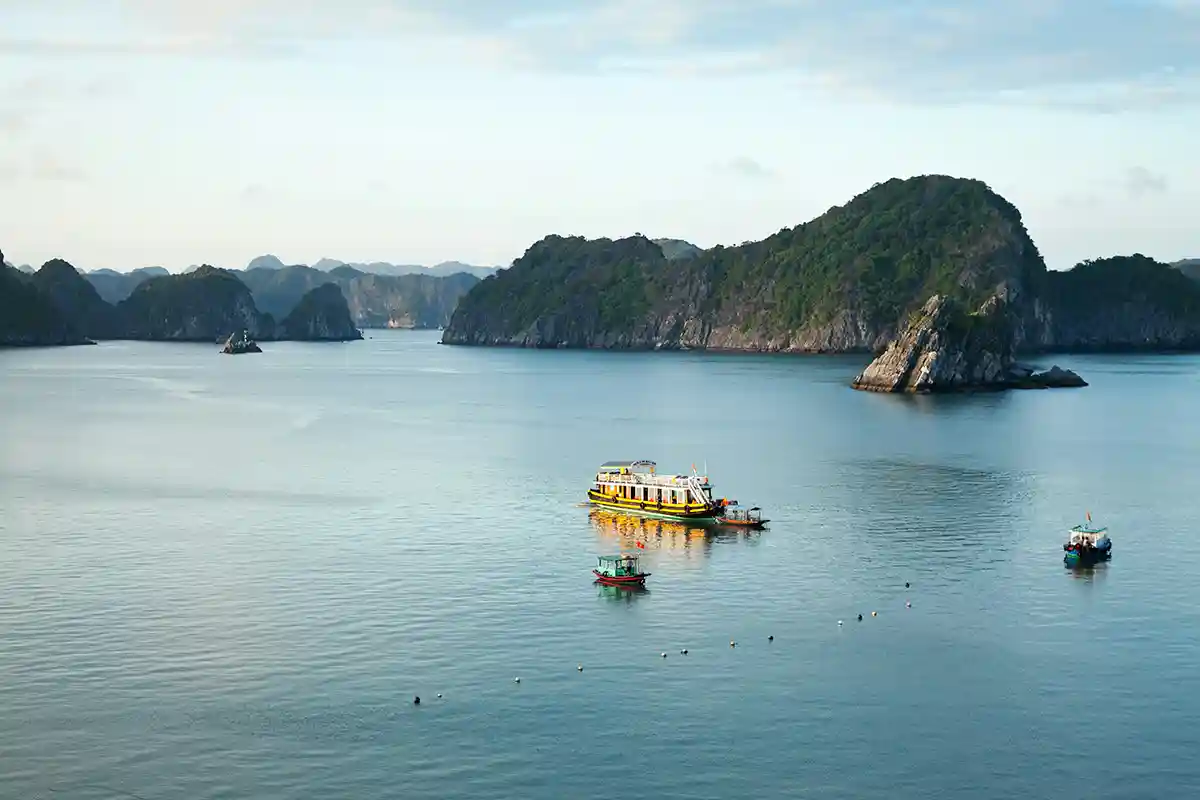
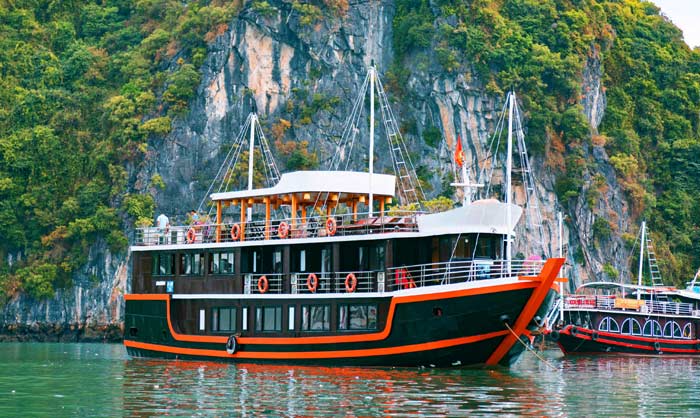
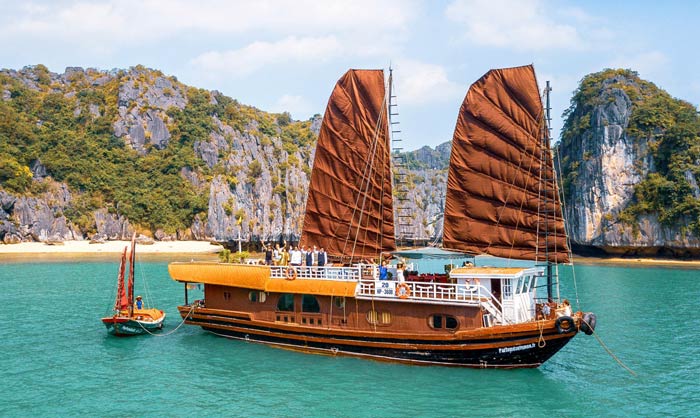
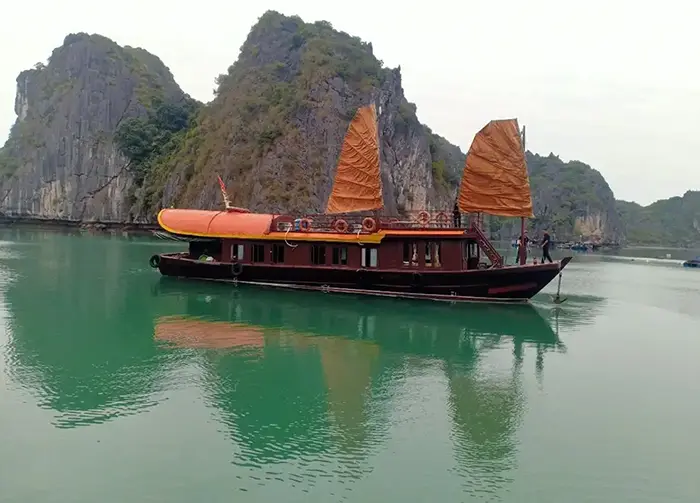
| D3–D4 | Halong Bay cruise | Karst peaks, kayaking into sea caves, night on board, sunrise over the water |
| D5 | Hanoi → flight to Da Nang | Transfer, arrival on the central coast, first swim possible |
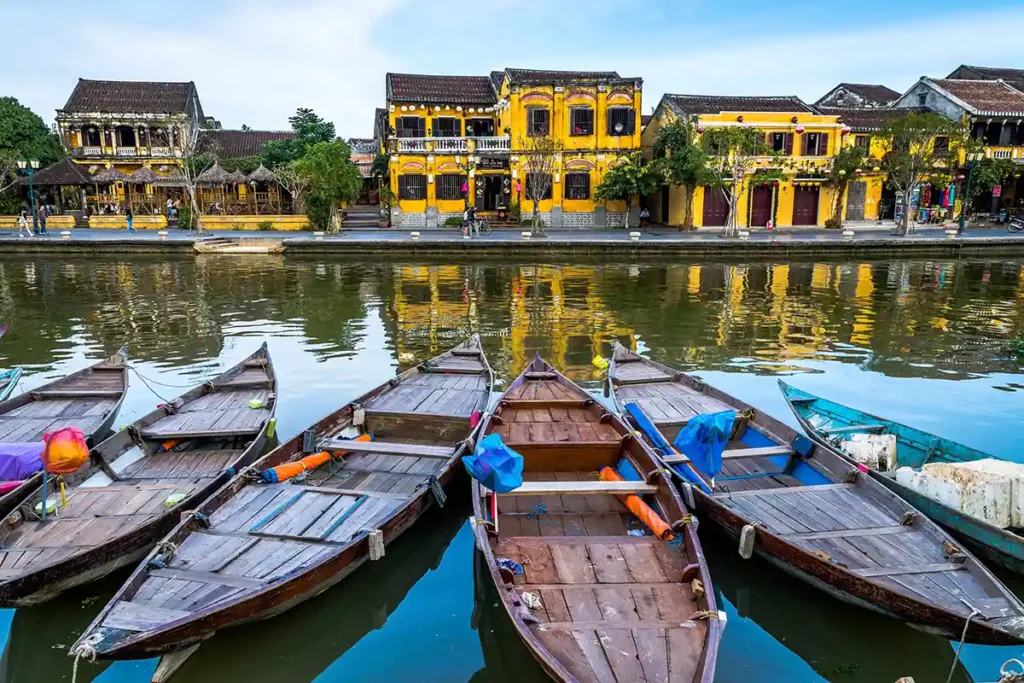
| D6–D7 | Hoi An | Illuminated old town, tailor-made clothes in 24h, cooking class, An Bang beach by bicycle |
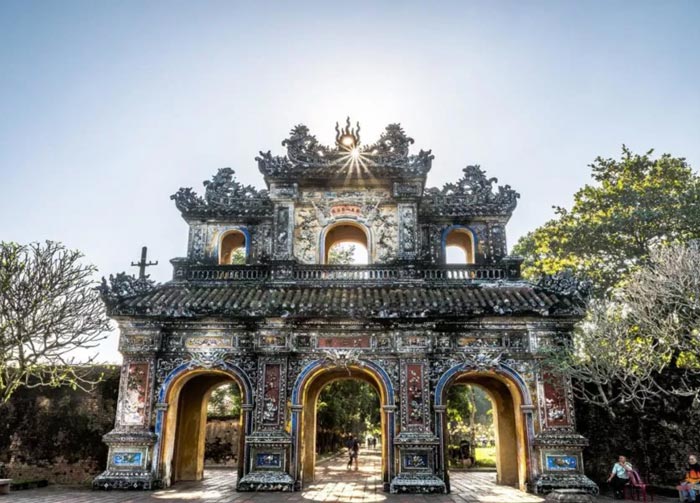
| D8 | Hue | Imperial Citadel, royal tombs, bún bò huế, incense smoke drifting through pagodas |
| D9 | Hai Van Pass → flight to HCMC | Panoramic coastal road, arrive in Saigon in the evening |
| D10–D11 | Ho Chi Minh City | War Remnants Museum, Ben Thanh Market, Binh Tay, Bui Vien Street nightlife |
| D12 | Mekong Delta or Cu Chi | Boat excursion on the river or underground tunnels, evening departure |
What makes this itinerary work is its natural progression from north to south. Each stage has its own personality, its own rhythm, its own cuisine.
Option 2 — Deep North + Centre
For those who prefer wild, mountainous, and culturally rich Vietnam, this version dedicates most of the stay to the North. It suits travellers who plan to return, or who have already visited Ho Chi Minh City.
- D1–D2 — Hanoi: immersion in the capital, street markets, Old Quarter, local gastronomy
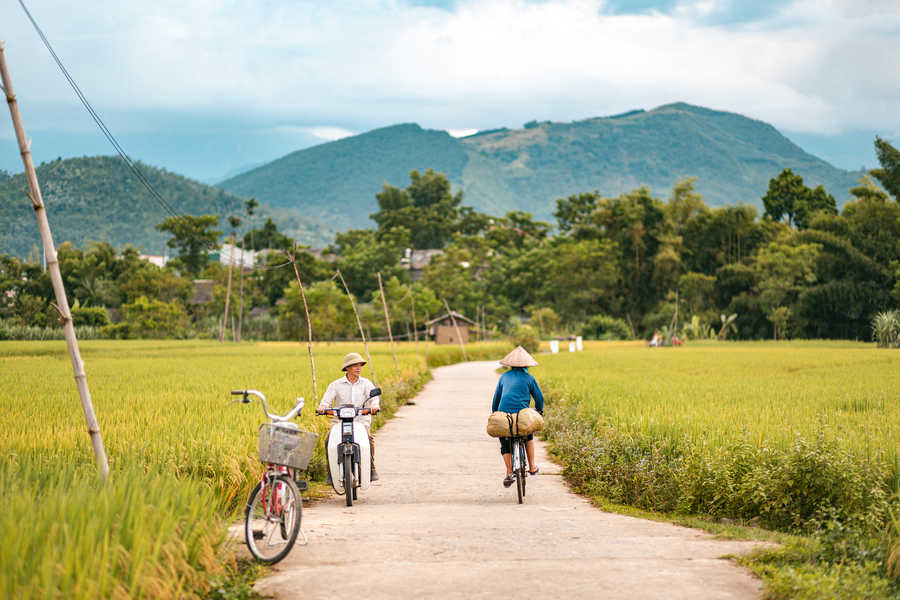
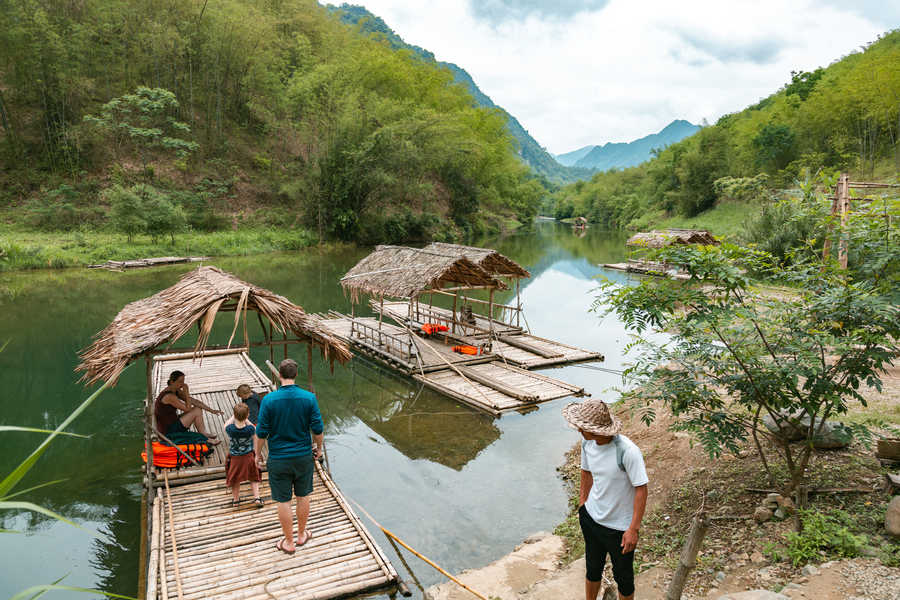
- D3–D5 — Mai Chau and Pu Luong: lush green valleys, rice fields, ethnic minority villages — all within a reasonable drive from Hanoi
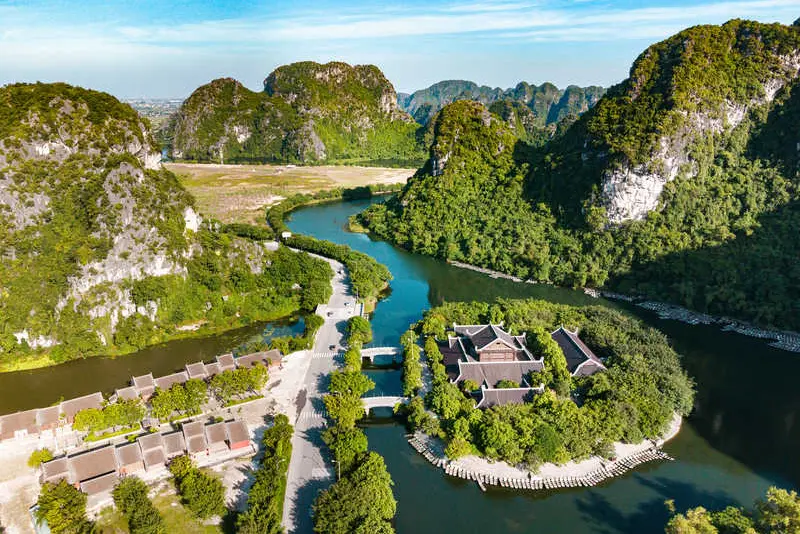
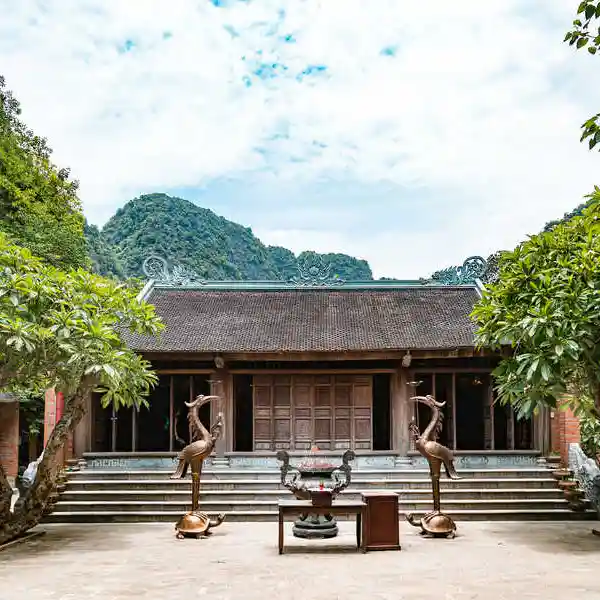
- D6–D7 — Ninh Binh: the inland Halong Bay, sampan ride at Tam Coc, Bich Dong Pagoda carved into the cliff face
- D8 — Flight Hanoi → Da Nang or Hue
- D9–D10 — Hoi An: old town, craft workshops, beach, lanterns in the evening
- D11–D12 — Hue: Imperial Citadel, royal tombs, return via Da Nang
Option 3 — Full Northern Immersion
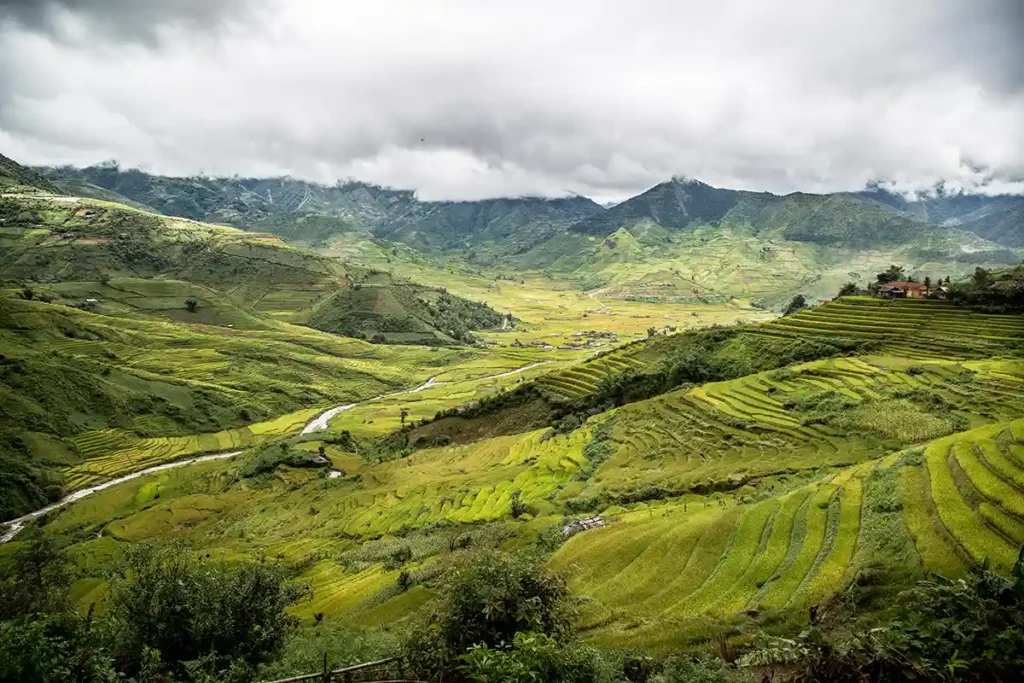
For travellers who want to take their time and discover what the North truly has to offer, we propose several itineraries depending on the season.
In summer (May to October), we recommend the terraced rice field route:
- D1–D2: Hanoi
- D3–D9: Hanoi → Nghia Lo → Mu Cang Chai → Sapa → Hoang Su Phi
- D10–D12: Lan Ha Bay and Ninh Binh
In spring (February to May), we suggest incorporating Moc Chau, Mai Chau and Pu Luong instead, where the landscapes are greener and the roads less demanding.
Browse our 12-day Vietnam tours to see full day-by-day programmes for each of these options.
When is the best time for a 12-day Vietnam trip?
March–April and October–November offer the best weather conditions for travelling from northern to southern Vietnam in 12 days.
Because Vietnam is so long, seasons vary considerably by region. A north-to-south itinerary works best during transition periods, when neither the North nor the Centre is experiencing its climatic extremes.
| Period | Hanoi / Halong | Hoi An / Hue | Saigon / South | Our verdict |
|---|---|---|---|---|
| February–April | ✅ Mild, sunny | ✅ Dry, warm | ✅ Ideal | Excellent period |
| May–June | ⚠️ Hot, humid | ✅ Dry | ⚠️ Rain starting | Acceptable |
| July–August | ⚠️ Frequent rain | ❌ Typhoons possible | ⚠️ Rainy | Avoid if possible |
| September | ⚠️ Still wet | ❌ Rainy season | ⚠️ Rainy | Not recommended for the Centre |
| October–November | ✅ Cool and dry | ⚠️ Central coast rains | ✅ Dry | Good — avoid mid-October |
| December–January | ⚠️ Cool, misty | ✅ Mild | ✅ Ideal | Very good for the South |
Our advice: for a classic 12-day north-to-south circuit, January through April are our preferred months — though the North can be overcast and cool. If you are focusing solely on northern Vietnam, the second half of the year works well, even if temperatures are higher.
How much does a 12-day Vietnam trip cost?
A 12-day Vietnam circuit with a local agency ranges from around €1,000 per person upwards, depending on your comfort level and the size of your group. Travelling as a group of four to six people is the best way to share costs while keeping the experience fully private.
These prices include hotels, domestic flights, private vehicle transfers, local French- or English-speaking guides, and all listed visits. They do not include your international flight from Europe.
These prices include hotels, domestic flights, private vehicle transfers, local English-speaking guides and all listed visits. They do not include your international flight from Europe (for airline recommendations, see our practical travel guide for Vietnam).
| Level | Hotels | Halong Junk | Estimated cost per person |
|---|---|---|---|
| Superior | Selected 3-star, well-located | Verified quality standard junk | €1,200 – €1,600 |
| Deluxe | 4-star, boutique hotels | Premium or boutique junk | €1,600 – €2,500 |
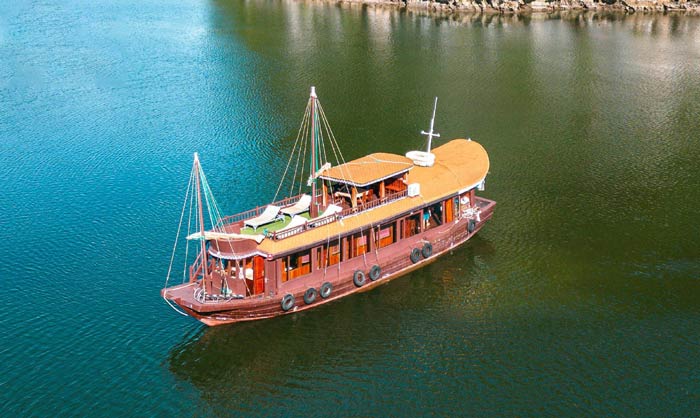
| Luxury | 5-star, charming resorts | 5-star junk, cabin with private balcony | €3,000 – €4,000 |
On the ground, the cost of living remains very affordable: budget €15 to €20 per day for your own meals, drinks and small purchases. Souvenirs, massages, cooking classes and tips represent an additional amount to factor in. A street meal costs between €1.50 and €3. A good local restaurant, between €5 and €10.
To explore detailed day-by-day programmes, visit our 12-day Vietnam tours page or contact us for a personalised quote.
Should you use an agency for a 12-day Vietnam trip?
Using a local agency is recommended for a 12-day Vietnam circuit: it optimises logistics, guarantees the quality of service providers, and ensures real on-the-ground support when you need it.
Travelling independently in Vietnam is entirely possible, and we respect that choice. But the logistics of a 12-day circuit are not trivial: one or two domestic flights to coordinate, a junk cruise to book several months in advance during high season, hotels to secure, and guides to select from hundreds of online options with highly variable quality. The risk of ending up on a disappointing junk, with a guide who recites a script without life, or in a hotel that bears no resemblance to its photos — that risk is real and common.
What we bring at Parfum d’Automne is on-the-ground knowledge built since 2005: the guides we genuinely trust, those who really speak the language and open doors, the junks that are worth their price, the hotels that deliver on their promise. And if something changes along the way — weather, a cancelled flight, a health issue — we are here, on the ground in Hanoi, reachable and able to act quickly to find a solution.

What documents do you need to enter Vietnam?
French nationals benefit from a 45-day visa exemption for Vietnam, provided their passport is valid for at least six months beyond the planned entry date.
Since 2023, France is among the countries whose nationals need no visa for a tourist stay of fewer than 45 days. A 12-day circuit falls comfortably within this framework. You simply need a valid passport and a return ticket. Also remember to:
- Check that your passport is not too damaged or annotated — some immigration officers refuse entry if visible damage is present
- Take out travel insurance covering medical expenses, cancellation and repatriation — in our view, essential for any trip to Asia
- Download VNeID or register for e-gate authorisation if you want to speed up immigration at Hanoi or Saigon airports
- Keep a digital copy of your passport on your phone, accessible offline
What are the must-see highlights of a 12-day Vietnam trip?
Halong Bay, Hoi An on lantern night, the royal tombs of Hue and the Mekong Delta are the experiences our travellers most often cite as the highlights of a 12-day circuit.
Halong Bay or Bai Tu Long Bay — a minimum of one night aboard a junk to see the limestone peaks at dawn. We often steer our travellers towards Bai Tu Long Bay: less frequented than the main Halong Bay and just as spectacular — sometimes more so.
Hoi An on a full moon evening — when the lanterns light up over the Thu Bon River and cars are banned from the old town, the streets take on a magical, timeless atmosphere that is unlike anywhere else.
The Imperial Citadel of Hue — often underrated compared to Hoi An, it offers a depth of historical and cultural interest that is unique in Vietnam. The royal tombs, particularly that of Tu Duc nestled among pines and lotus ponds, are among the most beautiful monuments in the country.
A morning in Hanoi’s Old Quarter before 8am — the city still belongs to its residents, vendors are setting up their stalls, the smell of phở rises from the small shops, and you feel part of daily life rather than a tourist passing through.
The Mekong Delta by boat — half a day on the water, between floating markets, traditional sweet-making workshops and tropical fruit gardens. A world apart from the bustle of Saigon, where the river still sets the pace of life.
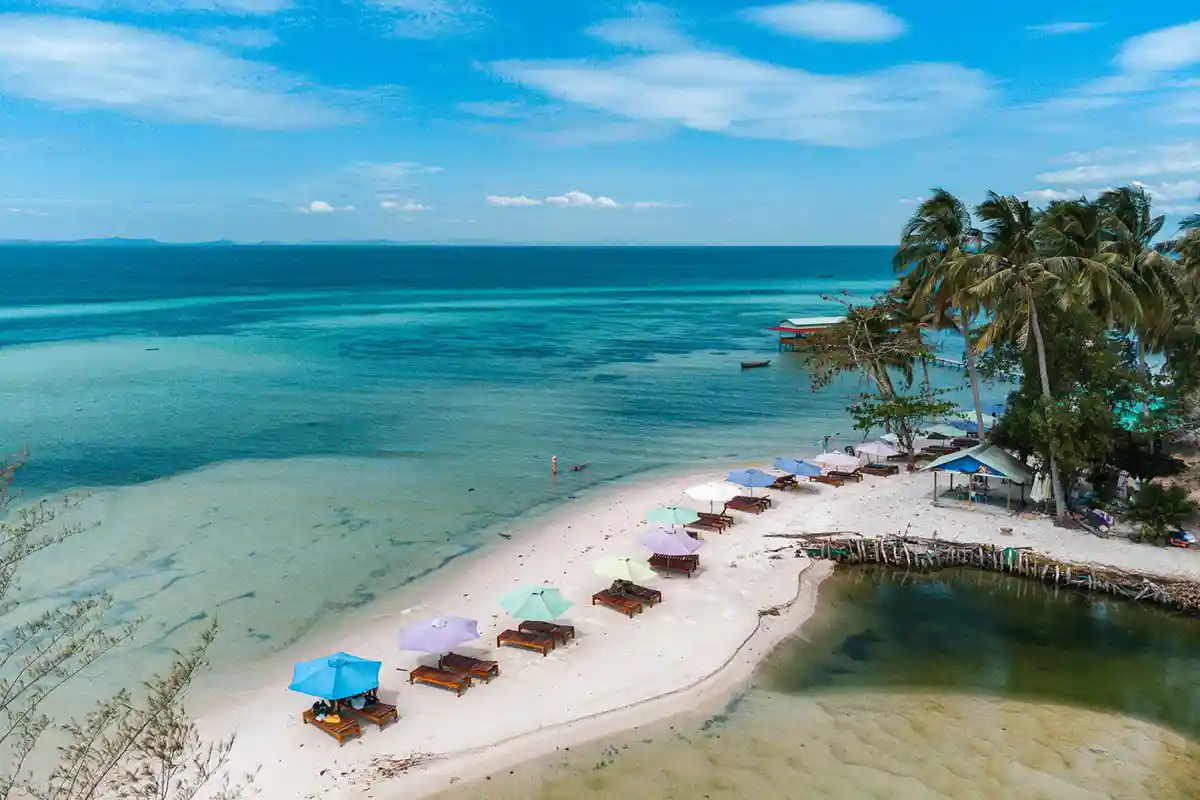
Every journey is different and every traveller has their own priorities. If you are travelling with children, if you want to add a beach extension in Phu Quoc or Da Nang, or if you have a particular interest in gastronomy, photography or textiles — we adapt the itinerary accordingly. Write to us and we will build your tailor-made Vietnam circuit together.
If 12 days feels slightly short for what you have in mind, our 15-day tours add enough time to slow down at each stage and include a beach extension in the South.