







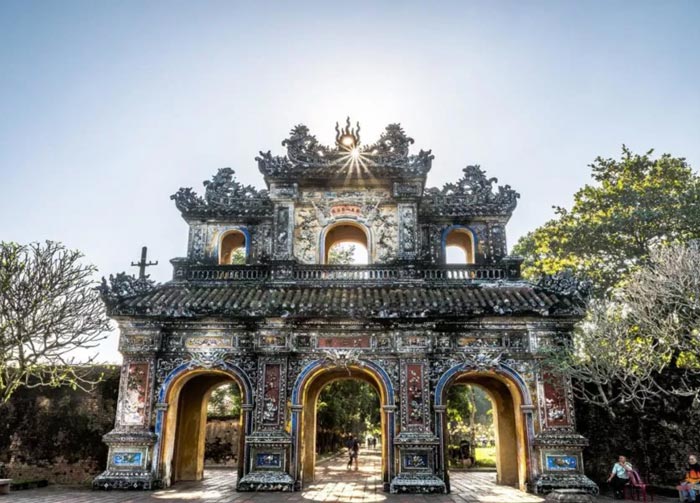
Hue, located in the heart of Vietnam, is far more than just a city; it is a true historical treasure embodying the country soul and cultural heritage. The former imperial capital of the Nguyen dynasty, Hue was the center of political, religious and cultural power in Vietnam for more than 140 years. Stretched along the picturesque Perfume River, the city is renowned for its exceptional architectural heritage, recognized as a UNESCO World Heritage Site.
Through its historical monuments, Hue tells the fascinating story of the Nguyen emperors and their court, reflecting the grandeur and refinement of this golden era. From the majestic Imperial Citadel to the finely carved royal tombs, ancient pagodas and temples dedicated to deities and ancestors, every corner of the city offers a dive into a past rich in tradition and spirituality.
And if you would like to discover Hue as part of a complete itinerary, you can check out our Central Vietnam tours to build a well-balanced trip through the region.
What are the main sites to visit in Hue?
The must-sees of Hue are the Imperial Citadel, the royal tombs, Thien Mu and Tu Hieu pagodas, and Trang Tien bridge.
The Imperial Citadel of Hue
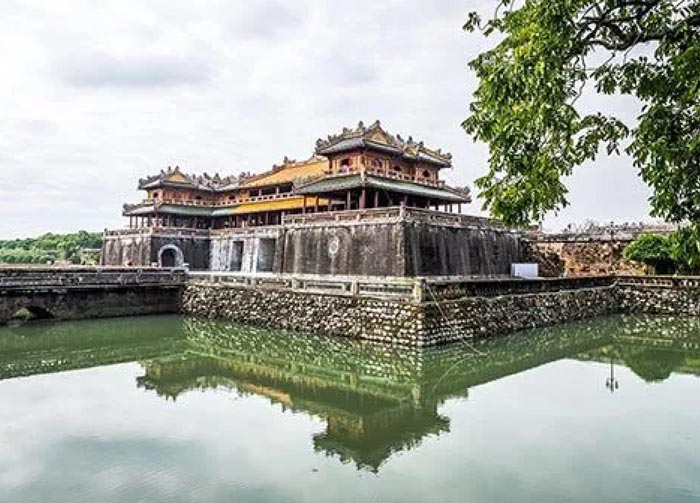
The Noon Gate (Ngo Mon)
The Noon Gate is far more than a simple entrance to the Imperial Citadel; it is the very symbol of Vietnamese imperial power. Built in 1833 under Emperor Minh Mang, this monumental three-tiered structure features five passages, the central one reserved exclusively for the emperor. From the upper terrace, once reserved for the emperor and his dignitaries, visitors can today admire a panoramic view of the Imperial Citadel.
The Palace of Supreme Harmony (Thai Hoa)
The nerve center of the Imperial Citadel, built in 1805 when Hue was founded as the imperial capital, this palace hosted the most important state ceremonies such as coronations and diplomatic receptions. The yellow-tiled roof, red lacquered wooden columns inlaid with gold, and the throne room adorned with frescoes reflect the grandeur of the Nguyen court.
The Temple of Literature (Van Mieu)
Dedicated to Confucius, this temple was both a place of worship and a center of learning where mandarins, future high officials of the empire, received their education. Visitors can admire stone steles engraved with the names of imperial exam laureates, amid shaded courtyards and lotus ponds.
The Palace of Longevity (Dien Tho)
Dedicated to the Queen Mother, this palace was designed to offer comfort and tranquility, surrounded by lush gardens and peaceful ponds symbolizing longevity and wisdom. Its interior is richly but subtly decorated, reflecting a quieter, more intimate atmosphere than the citadel grand ceremonial buildings.
The Royal Tombs
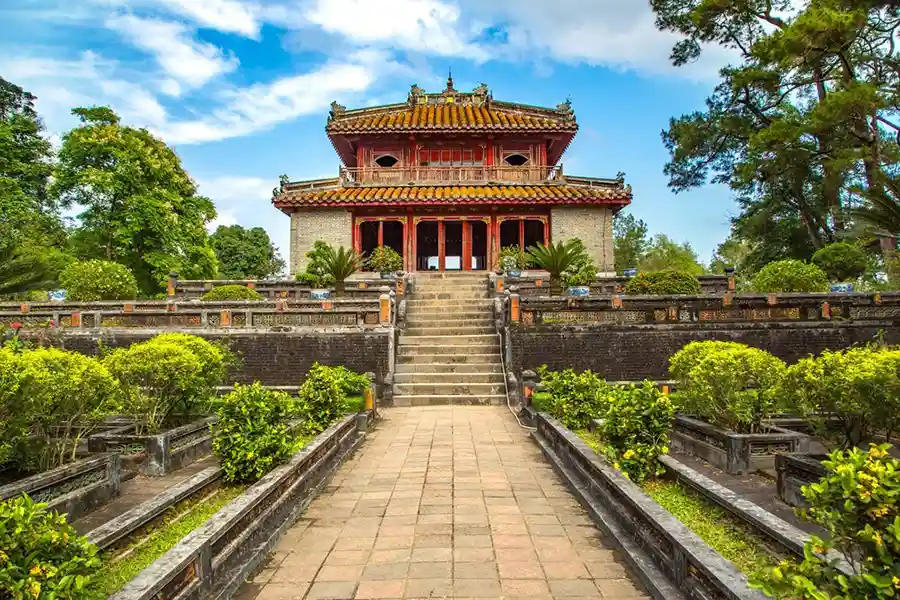
The Tomb of Minh Mang
Located about 12 km from Hue on the west bank of the Perfume River, built between 1840 and 1843, this tomb is famous for its perfect harmony with nature, designed according to feng shui principles. The site comprises 40 structures including pavilions, temples, gardens and ponds. The main Trung Dao bridge crosses a crescent-shaped lake leading to the Minh Lau pavilion, offering a panoramic view of the complex.
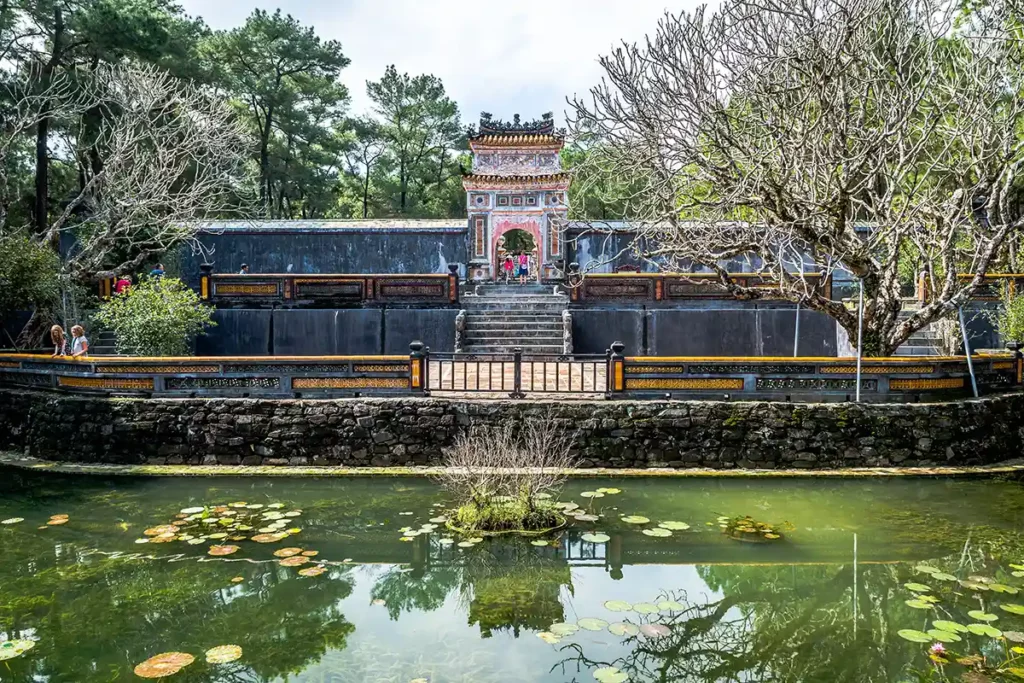
The Tomb of Tu Duc
Considered one of the most sumptuous and elaborate among the royal tombs of the Nguyen dynasty, built between 1864 and 1867, this complex was not only a burial site but also a royal retreat where the emperor spent time during his lifetime. Surrounded by thick walls protecting lush gardens, elegant pavilions and the artificial Luu Khiem lake, the tomb itself is relatively modest, perhaps reflecting the melancholy of Emperor Tu Duc life.
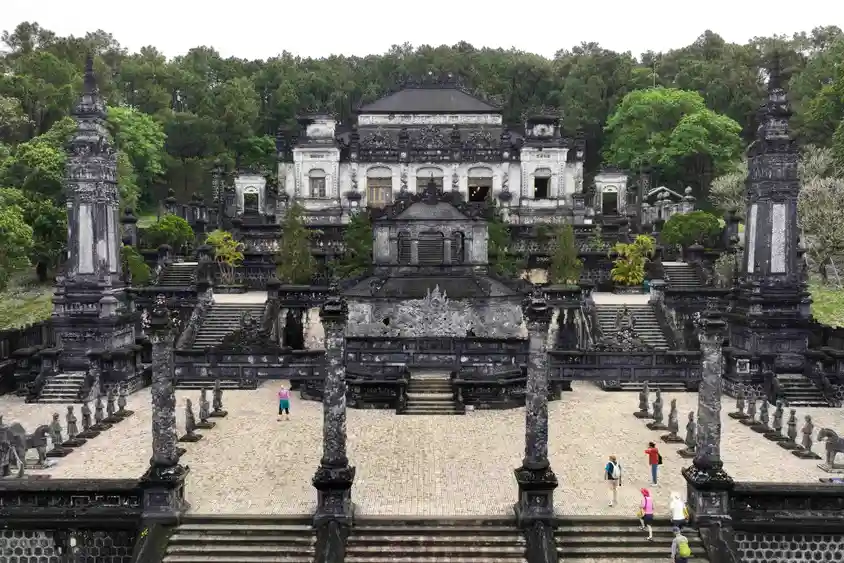
The Tomb of Khai Dinh
Located on the slopes of Chau Chu mountain, built between 1920 and 1931, this tomb stands out for its eclectic style, blending European gothic elements with traditional Vietnamese architecture. Though smaller than its predecessors, it boasts incomparable ornamental richness, with ceramic and glass mosaics throughout. The throne room features a bronze statue of Emperor Khai Dinh surrounded by intricate murals.
Pagodas and Temples
Thien Mu Pagoda
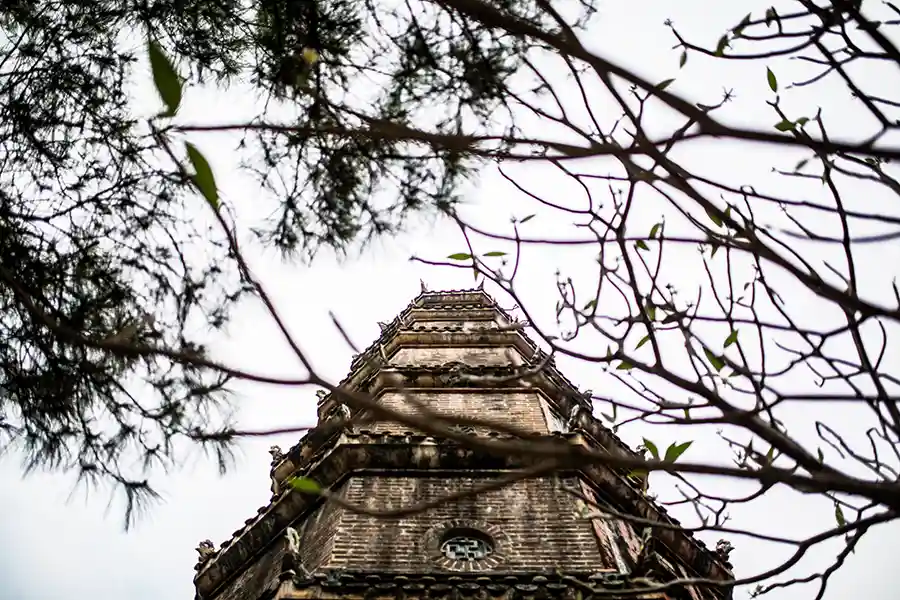
Perched on a hill overlooking the Perfume River, Thien Mu Pagoda is a true symbol of Hue and one of the most visited sites in Vietnam. Founded in 1601 by Lord Nguyen Hoang, its name means “Celestial Lady,” referencing an old prophecy of a divine woman who appeared on the hill.
The pagoda highlight is its seven-story octagonal tower, Phuoc Duyen, built in 1844, the tallest of its kind in Vietnam. The complex houses religious artifacts including a 2-ton bronze bell cast in 1710, and the Austin car used by monk Thich Quang Duc for his 1963 journey to Saigon, where he self-immolated in protest of the persecution of Buddhists, a poignant reminder of the pagoda role in modern Vietnamese history.
Tu Hieu Pagoda
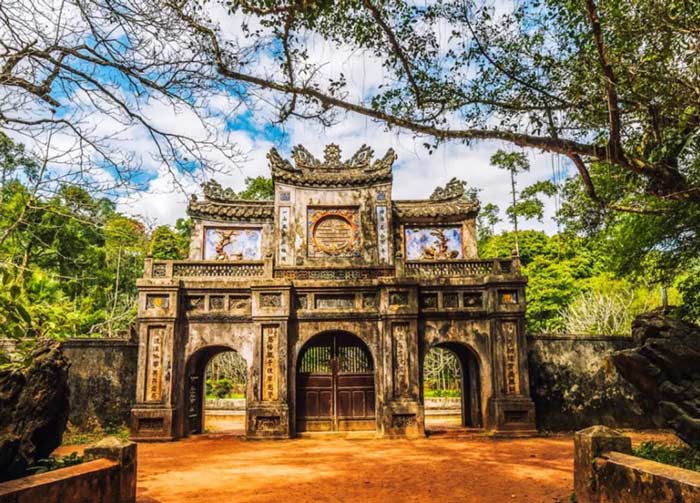
A haven of peace nestled among wooded hills, founded in the mid-19th century by Zen monk Thich Nhat Dinh, whose devotion to his aging mother inspired other monks to help build this temple, whose name translates to “Filial Respect.” The pagoda is also known as the resting place of many royal court eunuchs of the Nguyen dynasty, whose tombs are scattered throughout the gardens. It remains today an active monastic center and an important pilgrimage site for Buddhists.
Bridges and Markets
Trang Tien Bridge
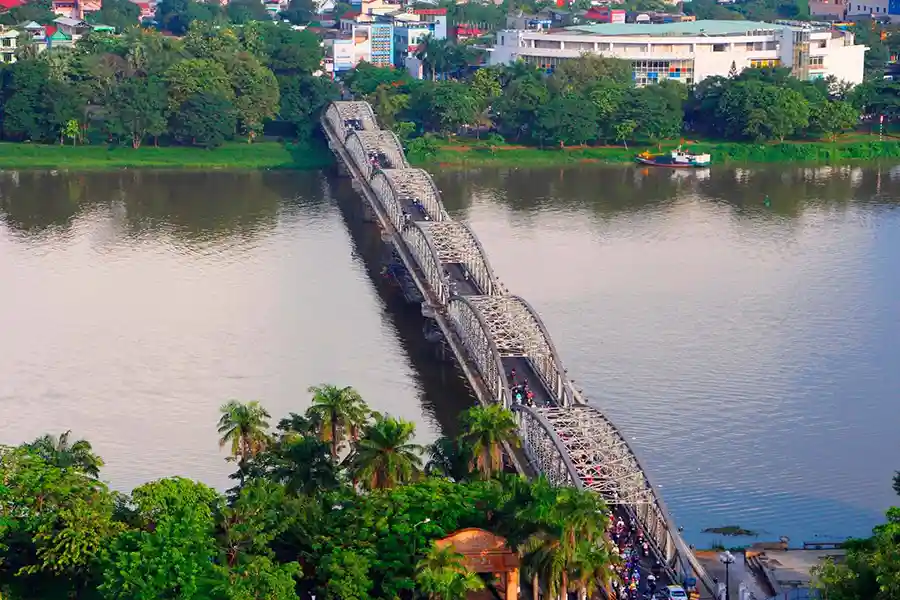
One of Hue most iconic symbols, this 402-meter metal bridge was built in 1899 and designed by French engineer Gustave Eiffel, famous for the Eiffel Tower in Paris. Connecting the two banks of the Perfume River with six steel arches, the bridge comes alive at night with colorful lights reflecting on the calm waters. It has witnessed numerous historical events, having been damaged and rebuilt several times through the French colonial period and the Vietnam War.
Dong Ba Market
Founded in 1887, Dong Ba is the largest and oldest market in Hue, stretching along the Perfume River. A maze of narrow alleys lined with stalls selling fresh produce, spices, and local specialties like bun bo Hue and banh khoai. The market is also known for traditional crafts: hand-sewn ao dai, conical hats, bamboo objects and pottery. Its lively, colorful atmosphere offers a true immersion into everyday local life.
Museums and Traditional Houses
The Royal Fine Arts Museum of Hue
Housed in a former imperial palace within the Citadel grounds, this museum holds an exceptional collection telling the story of the Nguyen dynasty: sumptuous royal costumes embroidered with gold and silver thread, fine porcelains commissioned for the imperial court, traditional paintings, lacquered wood sculptures, and calligraphy and poems written by the emperors themselves.
An Hien Garden House
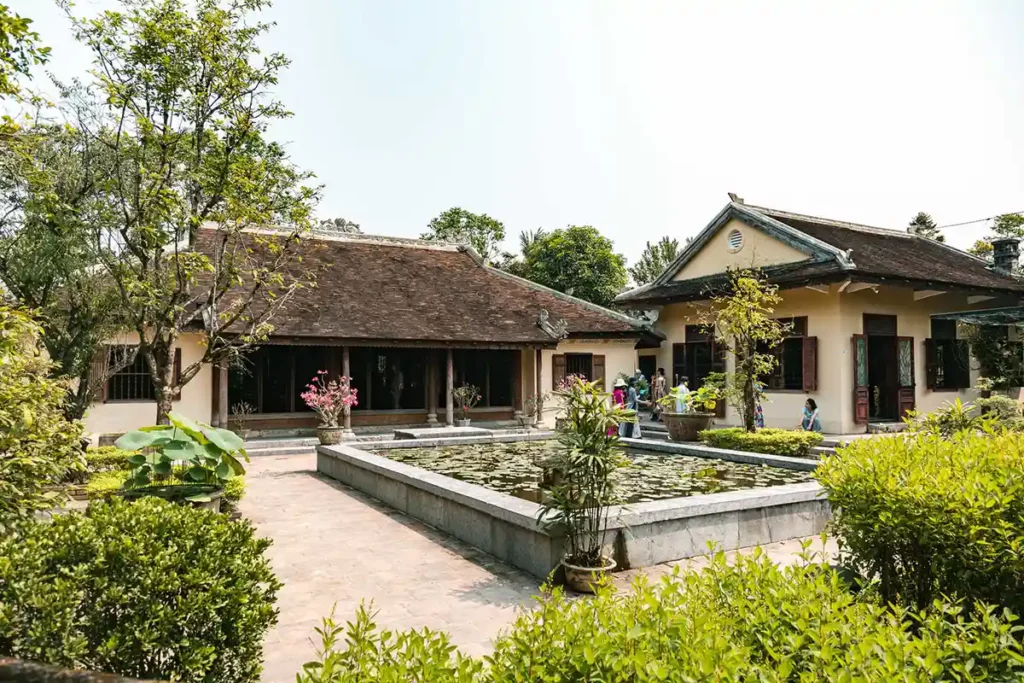
Nestled in a peaceful garden a few kilometers from central Hue, built in the late 19th century, this was once the residence of an imperial court mandarin. Designed according to feng shui principles, the house features curved tile roofs, finely carved wooden columns, and antique lacquered furniture. Its surrounding garden, with lotus ponds and fruit trees, offers a peaceful glimpse into the aristocratic lifestyle of old Vietnam.
Now that you know all there is to see in Hue itself, you might also want to explore the surrounding area if you plan to stay a few days. There is plenty to discover!
What are the best sites to visit around Hue?
Around Hue, you can discover ancient bridges, Thuan An beach, Bach Ma National Park, and lesser-known unusual sites.
Cultural and Historical Visits
Thanh Toan Covered Bridge
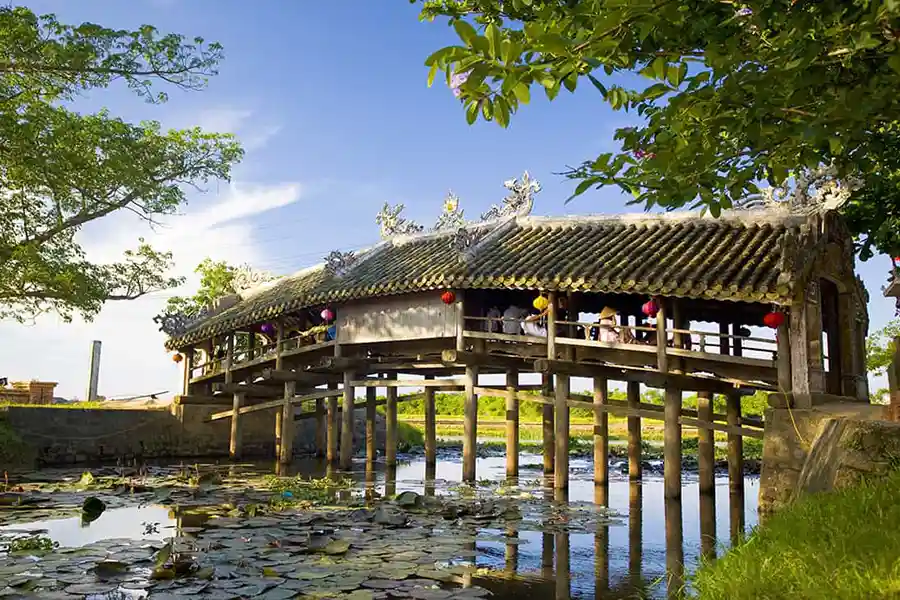
About 8 km east of Hue, built in the 18th century under the Nguyen dynasty, this wooden bridge is one of the rare surviving examples of Vietnamese covered bridges. Now classified as a national historical monument, it sits in a picturesque rural setting surrounded by rice fields, canals and small typical villages, ideal for a peaceful afternoon stroll.
Thuy Bieu Village
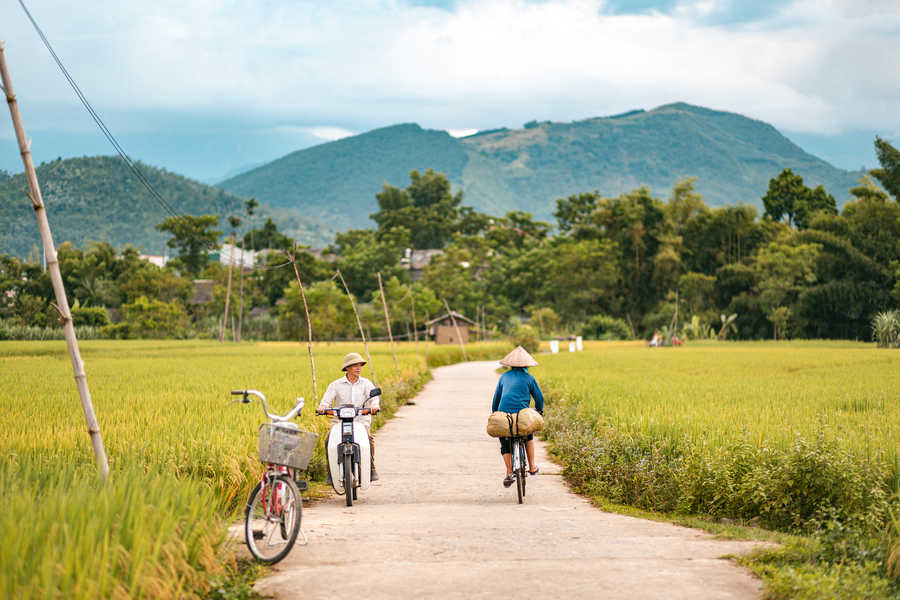
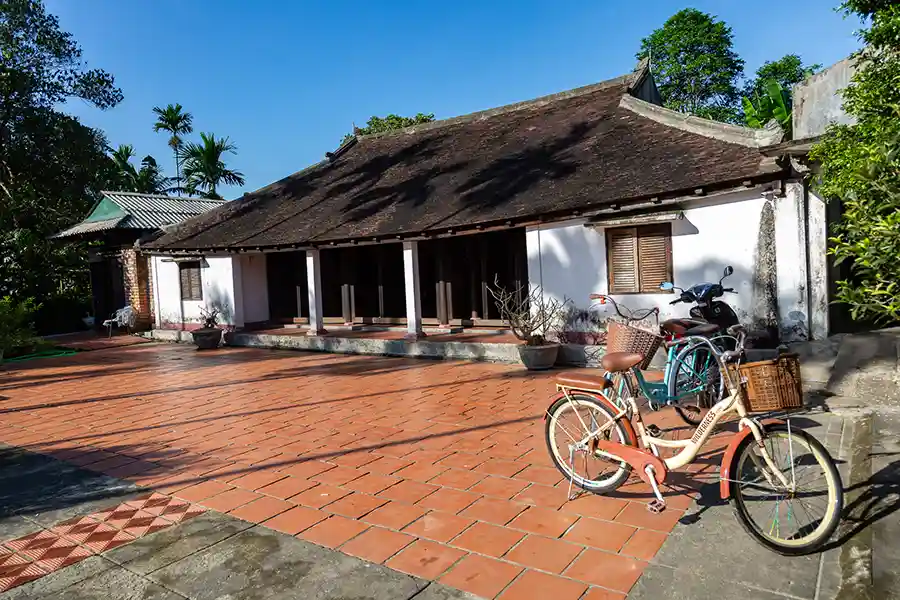
About 7 km west of Hue, this peaceful village is known for its traditional “nha vuon” garden houses and lush Thanh Tra grapefruit orchards. Explore by bike along paths winding between orchards and gardens, taste fresh fruit straight from the source, and even take a Vietnamese cooking class with local families.
Hon Chen Temple
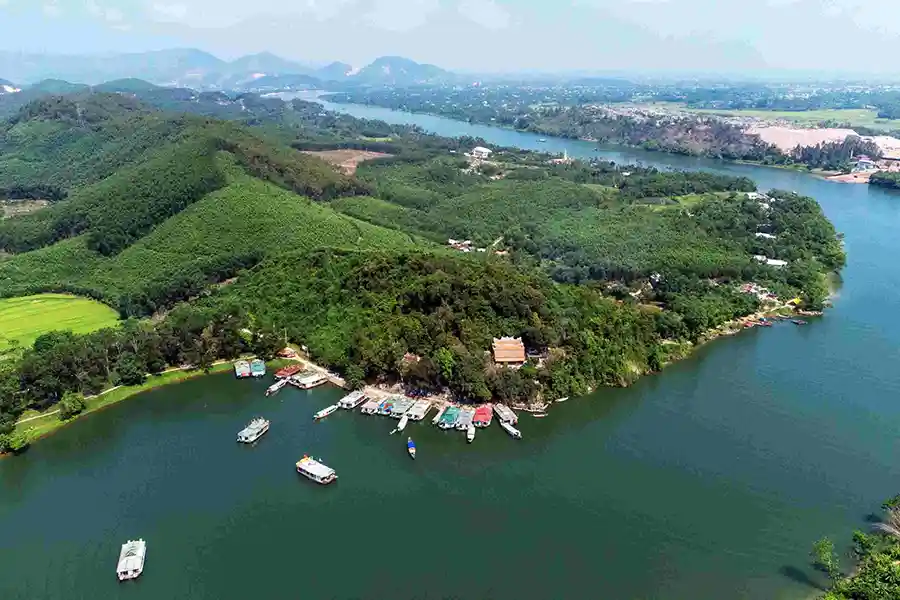
Perched on a hill overlooking the Perfume River, built in the 17th century, this revered site is dedicated to goddess Po Nagar, venerated by both Cham and Vietnamese communities. The temple hosts the famous Hon Chen festival twice a year, in spring and autumn, featuring a striking boat procession on the Perfume River with richly decorated vessels, banners and lanterns.
Phuoc Tich Village
About 40 km north of Hue, founded in the 15th century under the Le dynasty, this is one of Vietnam oldest pottery villages, listed as a national heritage site. Surrounded by the O Lau river, it features centuries-old wooden houses and active potter workshops where visitors can try their hand at traditional pottery-making.
Nature Outings
Thuan An Beach
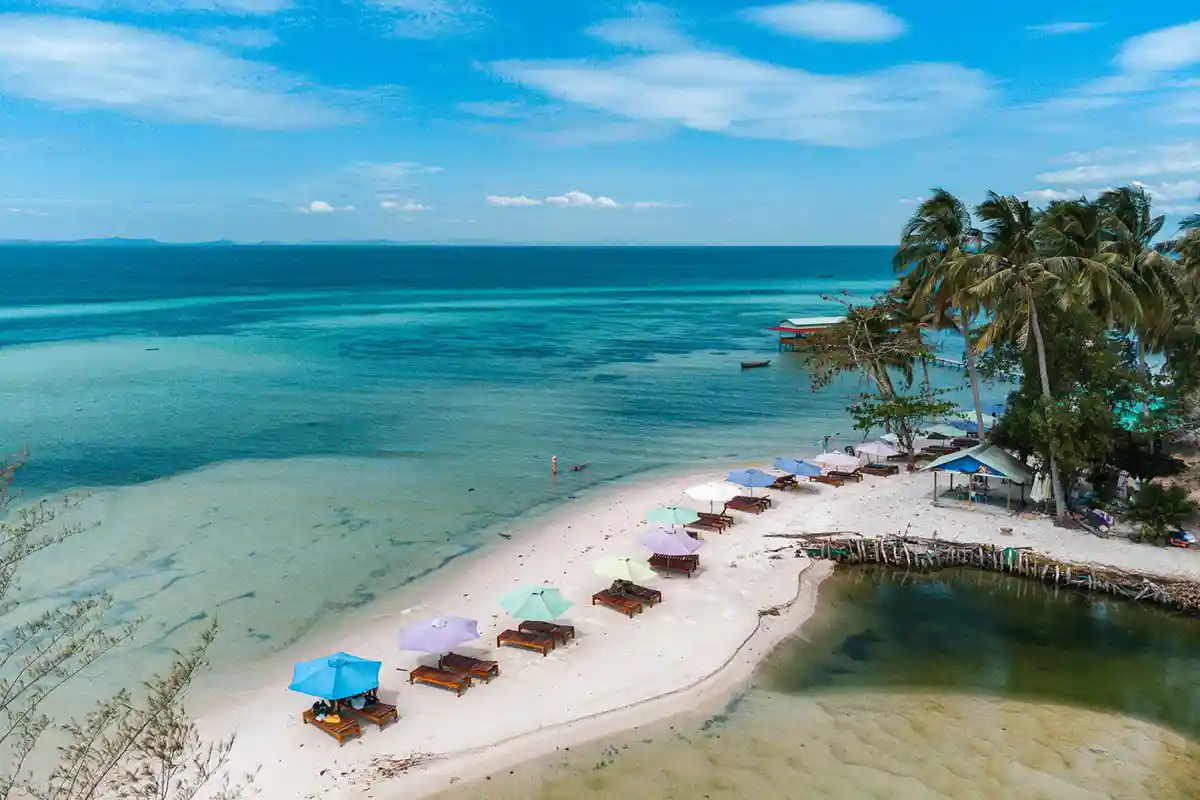
About 15 km from central Hue, this beach offers fine golden sand and calm, clear waters, popular with locals yet still preserved from mass tourism. Enjoy fresh seafood at beachside restaurants, and visit nearby Thai Duong temple, dedicated to the local deity protecting fishermen.
Tam Giang Lagoon
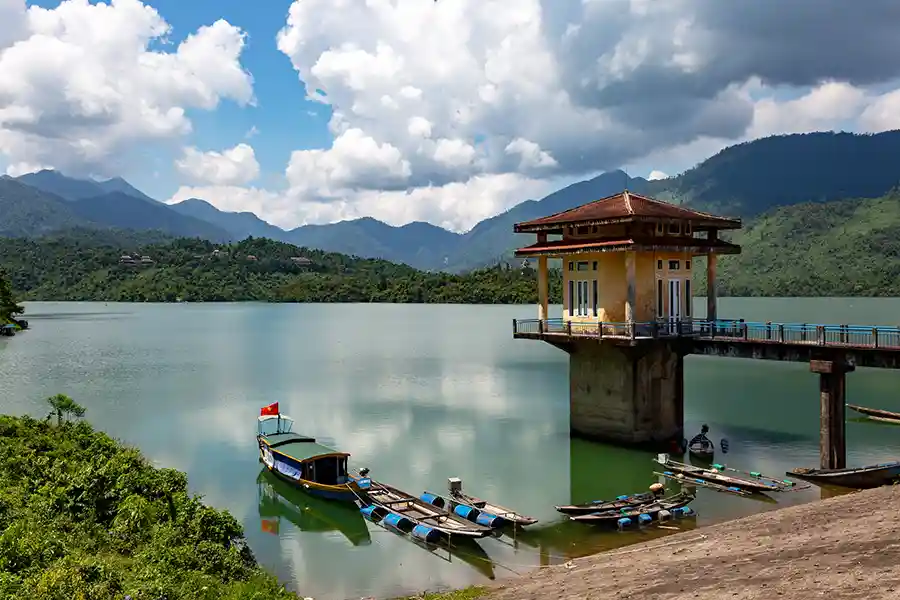
About 30 km north of Hue, Vietnam largest brackish water lagoon, stretching some 70 km along the coast. This unique ecosystem, rich in biodiversity, plays a crucial role in the economic and cultural life of local fishing and farming communities, offering stunning landscapes of traditional villages and wetlands.
Lang Co Fishing Village
About 70 km south of Hue, nestled between the green Annamite mountains and the East Sea, this village offers pristine white sand beaches, a tranquil lagoon and an authentic glimpse into coastal Vietnamese life, still relatively untouched by mass tourism. Nearby, do not miss the legendary Hai Van Pass, rising over 500 meters with breathtaking panoramic views over ocean and mountains, and a short drive from the Bach Ma nature reserve.
Bach Ma National Park
About 40 km south of Hue, spanning over 22,000 hectares, this protected park is one of Central Vietnam natural treasures, famous for its dense tropical forests, picturesque waterfalls, and spectacular panoramas stretching from the Annamite range to the coast. Home to over 1,400 plant species and numerous rare animals, it is a hiker paradise, with the 1,450-meter Bach Ma summit trail leading to the Vong Hai Dai tower for breathtaking views, and the spectacular 300-meter Do Quyen waterfall, reached via a descent of over 600 stone steps.
Unusual Visits
The Abandoned Thuy Tien Water Park
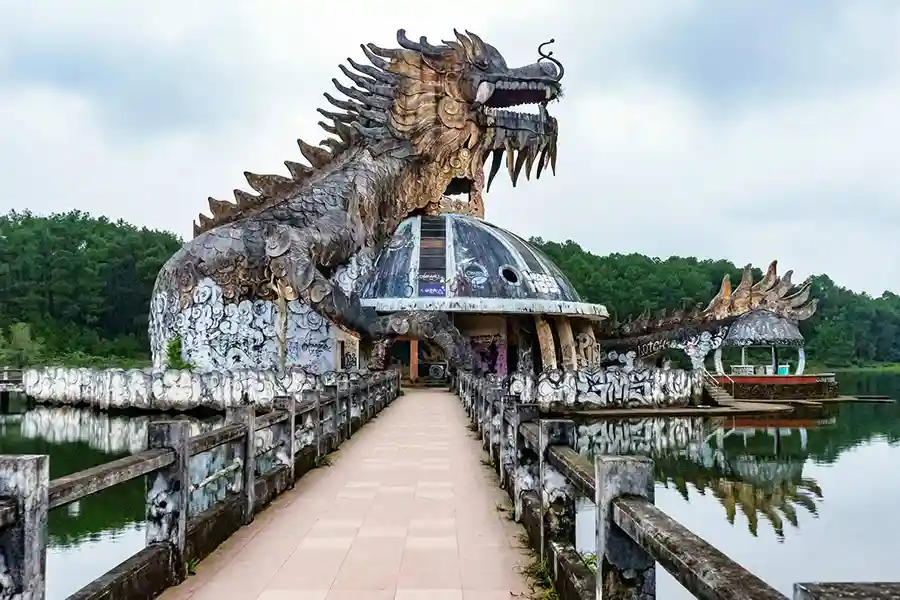
About 10 km from Hue, this water park opened in 2004 but closed shortly after for unclear reasons, leaving behind a vast abandoned complex now reclaimed by nature. The centerpiece is a giant dragon-shaped structure housing a circular exhibition hall, once meant for aquatic shows. Visitors can climb inside the dragon for a panoramic view over the park and surrounding hills, an eerie yet fascinating spot for photography and urban exploration enthusiasts.
An Bang Village of Giant Tombs
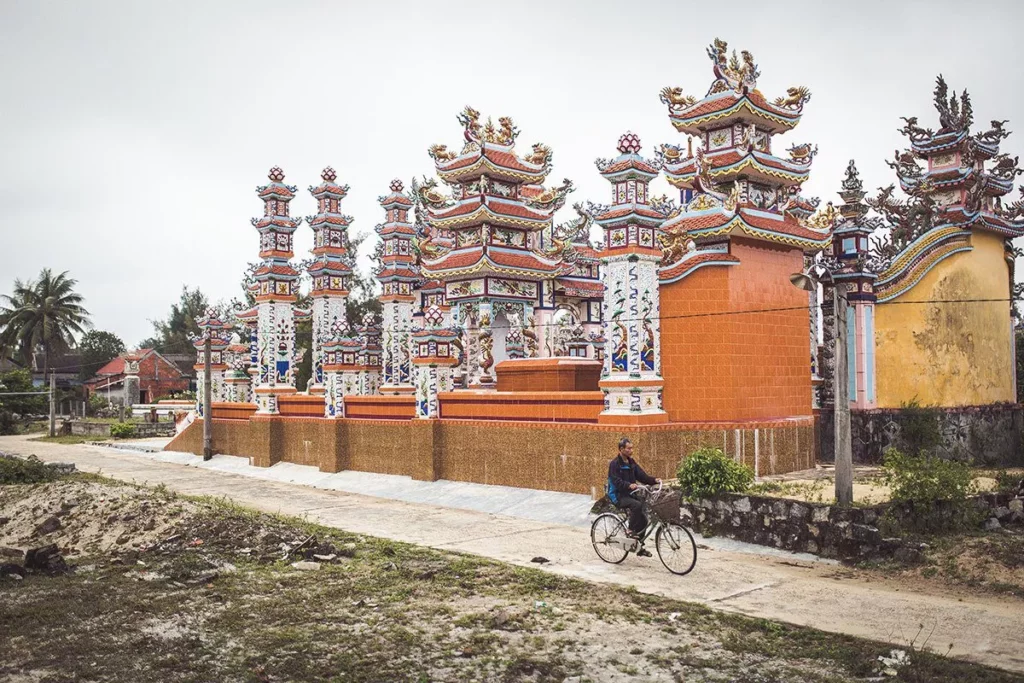
About 30 km southeast of Hue, often nicknamed “the tomb village,” An Bang is famous for its giant tombs and grandiose mausoleums stretching over a vast necropolis. Unlike the modest graves typically found in Vietnamese villages, these are built on an oversized scale, richly decorated in varied architectural styles blending traditional Vietnamese, Western and Buddhist influences. Many are funded by local families who made their fortune abroad, mainly in the US and Europe, and invest significant sums to honor their ancestors, turning this former fishing community into a striking open-air funerary art gallery.
As you can see, the surroundings of Hue, with their rich natural and cultural heritage, offer a wealth of activities and sites to explore. Whether you are a nature lover, a history enthusiast, or simply looking to relax, you will find plenty of fascinating destinations around Hue.