
















Every 10 years, the Vietnamese State carries out a full population census. In 2024, a large-scale intercensal survey updated the key figures between two full censuses (the last one dating from 2019, with the next full census planned for 2029).
What does this latest data, published by the General Statistics Office (GSO) in partnership with the United Nations Population Fund (UNFPA), tell us? Here’s an updated snapshot of Vietnam’s population.
If you’re interested in a trip to Vietnam, feel free to get in touch with us.
How many people live in Vietnam in 2024?
As of April 1, 2024, Vietnam had 101,112,656 inhabitants, according to the General Statistics Office’s intercensal survey.
This figure places Vietnam 3rd in Southeast Asia (behind Indonesia and the Philippines) and 16th worldwide.
Between 2019 and 2024, the population grew by 4.9 million people, with an average annual growth rate of 0.99% — down from 1.22% between 2014 and 2019. Vietnam is following the same path as its Asian neighbors: population growth that is gradually slowing.
What is the male-to-female ratio in Vietnam?
The population breaks down into 50,346,030 men (49.8%) and 50,766,626 women (50.2%), a ratio of 99.2 men per 100 women. This ratio varies sharply by age: it reaches 110.2 men per 100 women among children under 10, but drops to just 53.8 among those over 80, as women live noticeably longer.
What share of Vietnam’s population lives in cities?
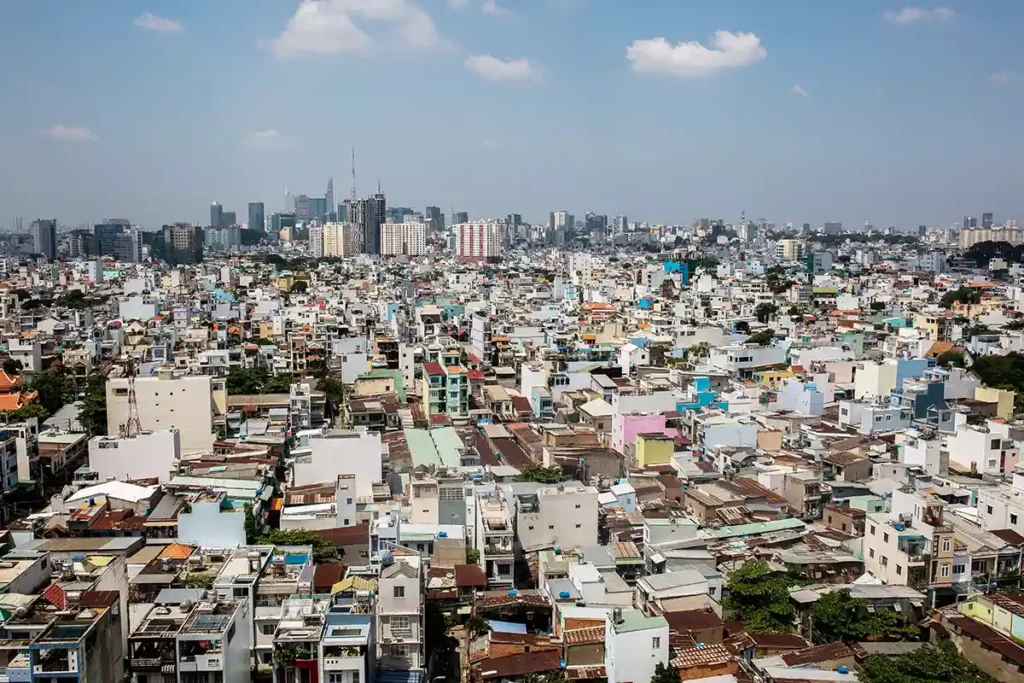
38.2% of Vietnamese people now live in urban areas (38.6 million people), compared with 61.8% in rural areas (62.5 million). This is the most striking trend of the past five years: the urban population grew by 3.06% per year between 2019 and 2024, 1.5 times faster than during the previous period (2.02% between 2014 and 2019).
The country also counts 28,146,939 households, 1.3 million more than in 2019.
What is the population density of Vietnam in 2024?
The average density reaches 305 people per square kilometer, up 15 people from 2019.
Vietnam remains the 3rd most densely populated country in Southeast Asia, behind Singapore (8,539 people/km²) and the Philippines (386 people/km²).
Regional gaps remain wide: the Red River Delta peaks at 1,126 people/km² and the Southeast region (around Ho Chi Minh City) at 814 people/km². By contrast, the Central Highlands have only 114 people/km² and the northern mountainous areas 140 people/km² — regions we regularly explore on our excursions in Northern Vietnam, far less crowded than the big cities.
What is the ethnic breakdown of Vietnam’s population?
The Kinh (Viet) population makes up roughly 85 to 86% of the total population, with the other 53 recognized ethnic groups sharing the remaining 14 to 15%.
The most detailed breakdown by ethnic group still comes from the full 2019 census, the last one to cover this level of detail (the next full census is planned for 2029, though a new socio-economic survey of the 53 minority groups was carried out during 2024):
Six ethnic minority groups had more than a million people in 2019: the Tay (1.85 million), the Thai, the Muong, the Hmong, the Khmer and the Nung. At the other end, eleven groups had fewer than 5,000 people, the smallest being the O Du, with only 428 people.
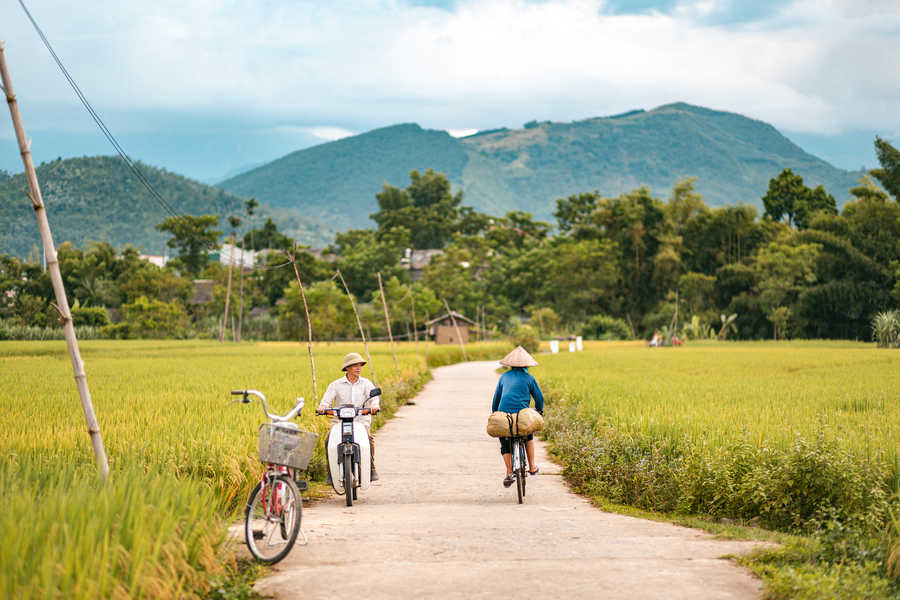
Ethnic minority groups live mainly in the mountainous regions of northern Vietnam and the Central Highlands in the south — the least densely populated regions, as noted above.

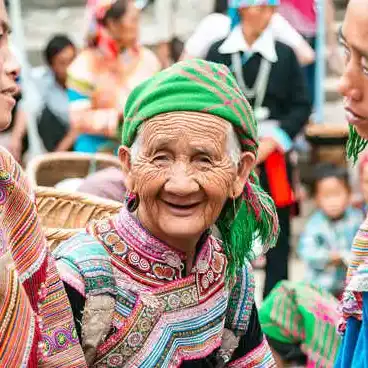
Hmong women in Mu Cang Chai, Yen Bai, Vietnam. Photo credit: Mathieu Arnaudet
What is life expectancy and the age structure of Vietnam in 2024?
Average life expectancy now reaches 74.7 years, having risen steadily for decades.
The median age of the population stands at 33.4 years, and the 15-64 age group still accounts for roughly 67 to 70% of the total population — what’s known as a “golden demographic structure,” very favorable economically.
Is Vietnam’s population aging quickly?
Yes, and it’s one of the indicators that has shifted the most: the aging index reached 60.2% in 2024, up 11.4 points from 2019. The fertility rate, meanwhile, has fallen to 1.91 children per woman, below the generational replacement threshold of 2.1. Vietnam is entering a demographic transition already underway in Thailand and China.
What is the unemployment rate in Vietnam?
The unemployment rate stood at 2.22% at the end of 2025, a historically low level according to the General Statistics Office.
The labor force (aged 15 and over) reaches approximately 53 million people, with a participation rate of 68.7%. Vietnam’s labor market remains highly dynamic, driven by manufacturing and services, in a country whose GDP grew by more than 7% in 2024.
What religions are practiced in Vietnam?
Buddhism and Catholicism remain the two main religions declared in Vietnam, though most Vietnamese people do not identify with any official faith.
The most recent detailed data still comes from the 2019 census: of the 13.2 million Vietnamese people who identified as believers, 44.6% were Catholic and 35% Buddhist. This can be surprising for a country with so many pagodas — the census definition requires strictly following the teachings of Buddha, not simply visiting a pagoda, a practice far more widespread among the population.
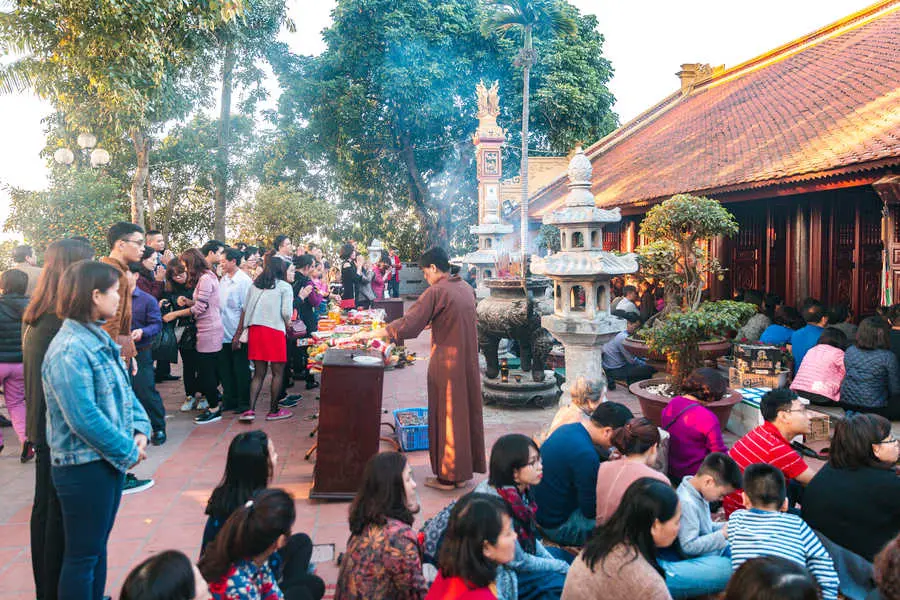
Courtyard of Tran Quoc Pagoda in Hanoi, Vietnam. Photo credit: Mathieu Arnaudet
At what age do people marry in Vietnam?
The average age at first marriage was 25.2 years at the last detailed census in 2019, with women marrying on average four years earlier than men.
Specifically: 23.1 years for women versus 27.2 years for men. Marriage remains a deeply rooted institution: 77.5% of the population over 15 had already been married at least once. Early marriage (before age 18) remains more common in mountainous regions (21.5% of young women) than in the rest of the country.
What should we take away from Vietnam’s demographic trends?
Vietnam is becoming a more urban, older and economically more mature country, while still keeping one of the youngest and most dynamic populations in Southeast Asia.
Population growth is slowing, the country is urbanizing at high speed, and aging is accelerating as fertility declines. For travelers, this translates into something very tangible: fast-changing big cities (Hanoi, Ho Chi Minh City, Da Nang) alongside rural and mountainous regions that retain a much more traditional way of life — and discovering both faces of the country in a single trip is exactly what makes Vietnam so compelling.
Data sources: Vietnam General Statistics Office (intercensal survey of April 1, 2024, 2025 reports), supplemented by the full 2019 census for indicators not covered by the intercensal survey (detailed ethnic breakdown, religion, age at marriage).