









You are planning a trip to Vietnam in August and feeling unsure because of the contradictory information about the weather at this time of year? Between fears of heavy rain in the north, the risk of typhoons in the central region, and oppressive heat in the south, it is not always easy to make sense of it all when preparing your itinerary.
In this article, we guide you region by region, with practical advice to help you fully enjoy your trip despite the whims of the Vietnamese climate in August.
Our English-speaking travel agency can also help you create a tailor-made itinerary optimized for August weather conditions. Contact us for personalized advice.
What is the general weather in Vietnam in August?
Vietnam in August offers a hot and humid climate that can surprise travelers who arrive unprepared.
Vietnam in August offers a hot and humid climate that can surprise unprepared travelers. Based on our experience, temperatures generally range between 25°C and 35°C, with high humidity levels that significantly increase the perceived heat. For an overview of weather conditions throughout the year, check out our article When to visit to Vietnam?
Rainfall varies considerably depending on where you are in this long, narrow country. In the north, you can expect frequent but short showers, while the central region may experience heavier rainfall episodes. In the south, the rainy season is in full swing, with daily showers usually occurring in the afternoon. For comparison, you can also read about Vietnam weather in July.
| Region | Average Temperature | Rainfall |
|---|---|---|
| North (Hanoi) | 28-32°C | 250-300 mm |
| Centre (Da Nang) | 30-34°C | 100-150 mm |
| South (Ho Chi Minh city) | 26-32°C | 200-300 mm |
What is the weather like in Northern Vietnam in August?
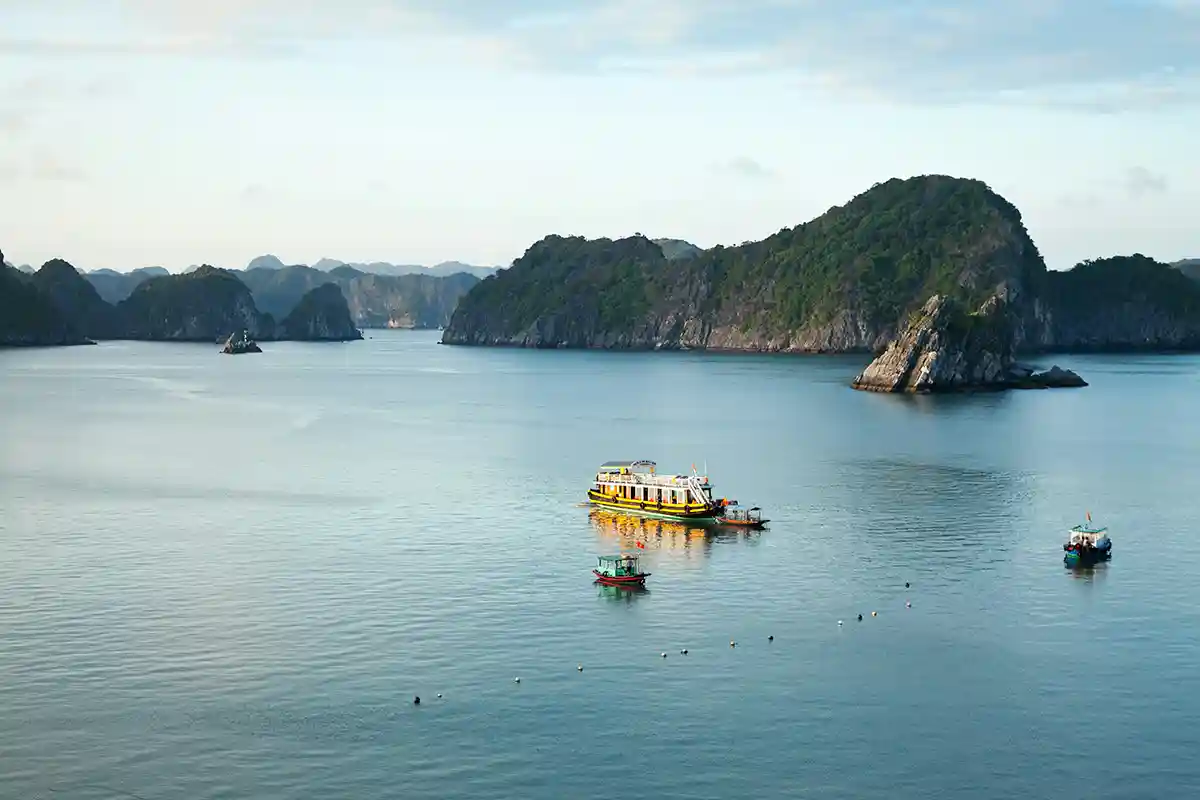
In Northern Vietnam, particularly Hanoi and Halong Bay, August weather is very hot and humid, often above 35°C.
In northern Vietnam, particularly in Hanoi and Ha Long Bay, the weather in August is very hot and humid. Daytime temperatures often rise above 35°C, while humidity levels frequently exceed 80%. Rainfall is significant, with sudden downpours that can occur without warning. Learn more about weather conditions in Northern Vietnam to better prepare for your trip.
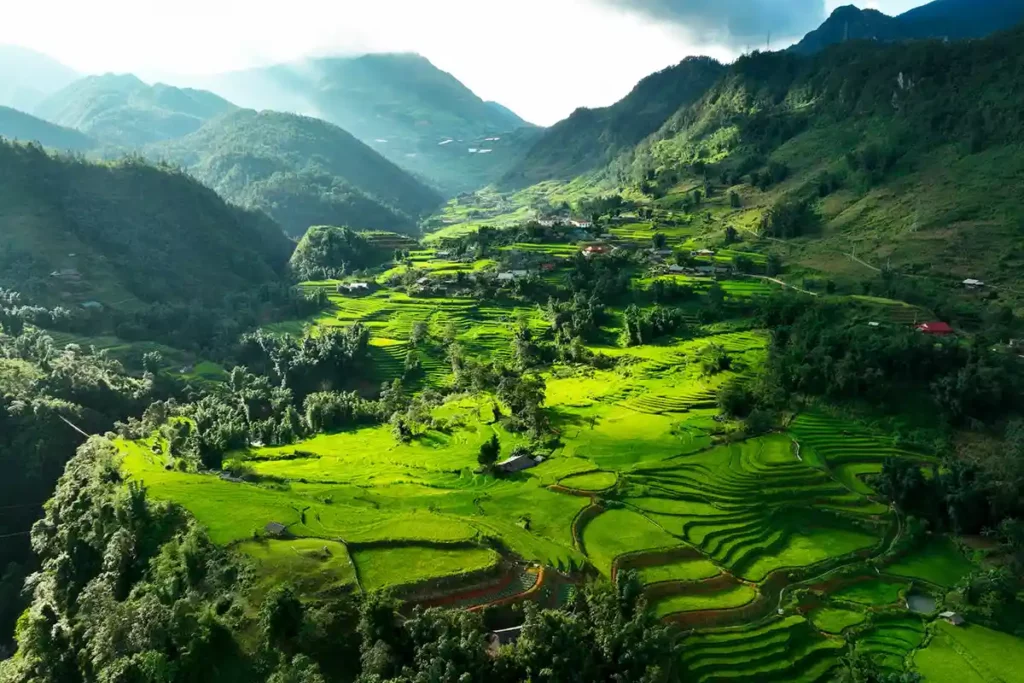
In Sapa and the mountainous regions of the north, the rainy season is at its peak in August. The terraced rice fields become stunning, dressed in vibrant shades of green, but hiking trails can turn into real muddy skating rinks. Clouds often cling to the mountain peaks, creating a mysterious atmosphere while reducing visibility of the panoramas. When planning a visit to Ha Long Bay, it is essential to take into account the rapidly changing weather conditions during this time of year.
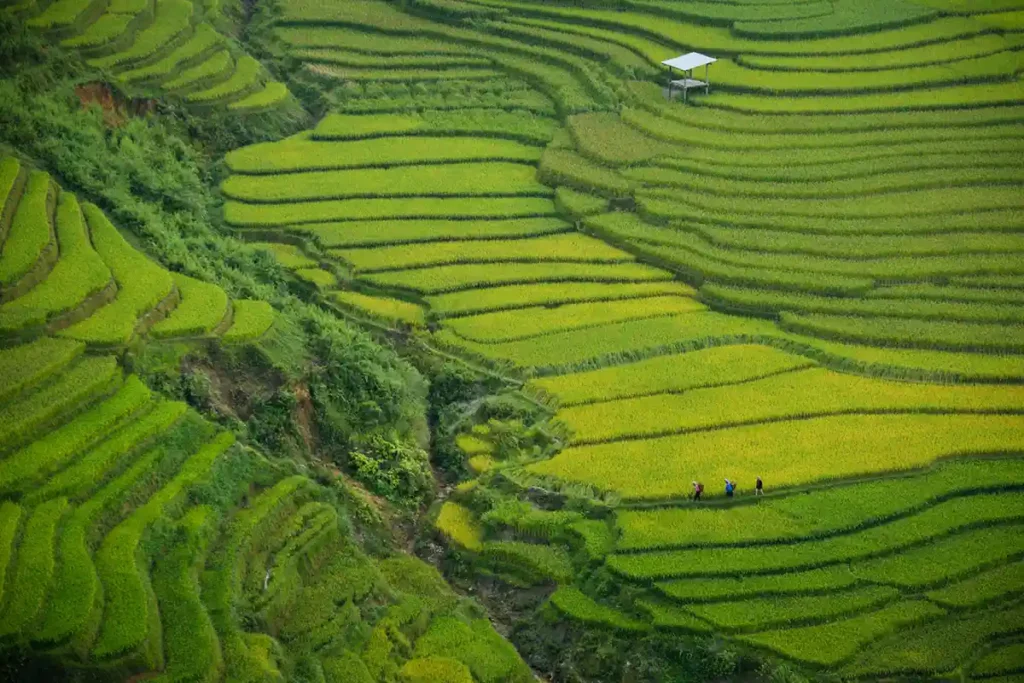
Landscape of Sapa
What is the weather like in Central Vietnam in August?
August in Central Vietnam brings a hot and humid climate, with temperatures generally ranging between 27°C and 35°C.
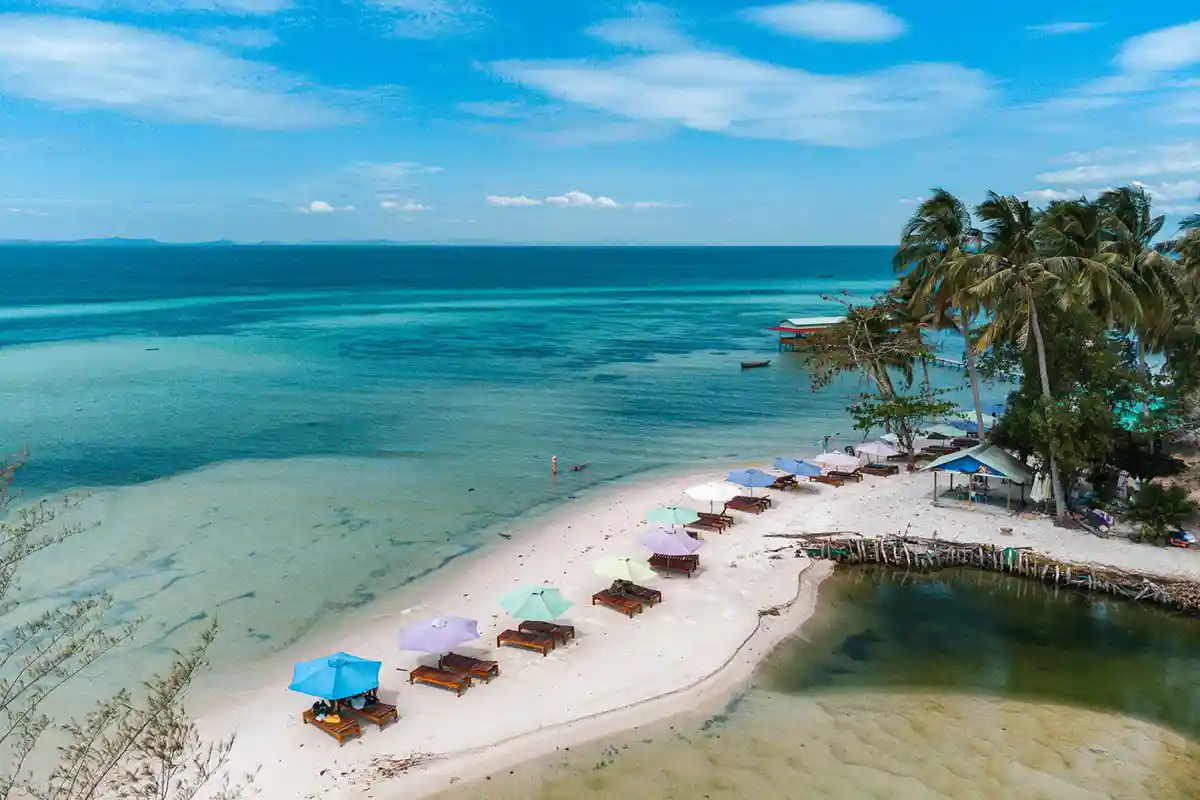
August in Central Vietnam is characterized by a hot and humid climate, with temperatures generally ranging between 27°C and 35°C. This is a period when sunshine is still abundant, especially on the beaches of Hoi An, Da Nang, and Quy Nhon, although showers become more frequent toward the end of the month.
These rains, often intense but short-lived, help cool the air without seriously disrupting sightseeing or beach activities. If you wish to avoid the peak summer crowds while still enjoying bright spells of sunshine, August remains a viable option, provided you plan some alternatives in case of rain.
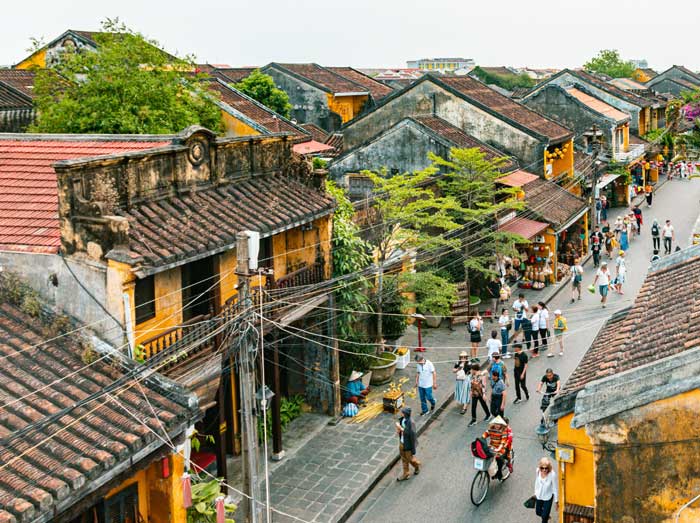
The streets of Hoi An
What is the weather like in Southern Vietnam in August?
In Southern Vietnam, average August temperatures easily exceed 30°C, especially in Ho Chi Minh City and the Mekong Delta.
In southern Vietnam, average temperatures in August can easily rise above 30°C, especially in Ho Chi Minh City and the Mekong Delta. The rainy season is in full swing during this period, sometimes turning streets into small improvised streams. Humidity levels remain particularly high, often above 80%, creating the feeling of walking through an open-air sauna.
Rainfall in the south generally follows a fairly predictable pattern: sunny mornings followed by tropical downpours in the afternoon. These rains can disrupt some outdoor activities but rarely last more than an hour. The Mekong Delta takes on a greener hue during this season, offering lush landscapes that are a delight for photographers. Despite the showers, you can absolutely enjoy a pleasant stay in the south by simply adjusting your daily schedule to the rhythm of the rain.
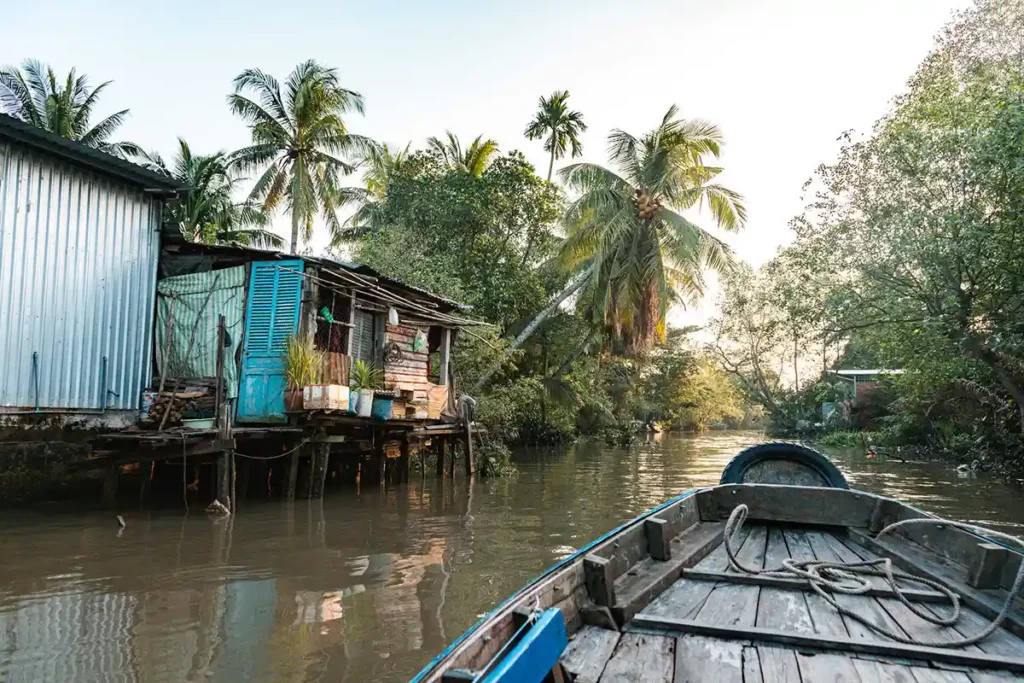
Boat ride in the Mekong Delta
What packing tips help for traveling in Vietnam in August?
After ten years spent in Vietnam, the golden rule for packing in August remains simple: keep it light.
After ten years spent in Vietnam, I’ve learned that the golden rule for packing in August is lightness. Choose cotton or linen clothing that lets your skin breathe in the face of constant heat and humidity. High temperatures will likely make you change outfits several times a day, so plan enough spare clothes.
- Light rain jacket or foldable poncho – essential for sudden downpours
- Strong mosquito repellent (with DEET) – mosquitoes thrive during the rainy season
- Wide-brimmed hat and sunglasses – the sun remains intense between showers
- Waterproof shoes or quick-drying sandals – your feet will thank you
- Small quick-dry towel – handy after a shower or to wipe away sweat
- Waterproof pouch for documents and electronic devices – rain can catch you off guard
I’ve noticed that travelers often underestimate the climatic differences between regions. In the north, especially around Sapa, evenings can be surprisingly cool at higher altitudes, while in Ho Chi Minh City the heat lingers day and night. A light sweater therefore proves very useful to pack for northern Vietnam.
What risks and precautions should you consider in August in Vietnam?
In August, Vietnam faces serious weather-related risks, notably typhoons affecting the northern and central coasts.
In August, Vietnam faces serious weather-related risks, notably typhoons, which mainly affect the northern and central coasts. After ten years spent here, I’ve learned never to underestimate sudden flooding, especially in urban areas like Hanoi, where streets can turn into rivers within minutes. The mountainous regions of the north are also vulnerable to landslides when rainfall intensifies.
To protect your health in this summer climate, drink water regularly to avoid dehydration, which is a real risk for travelers. Protect yourself from mosquitoes with a repellent containing DEET, especially at sunrise and sunset. Stay alert to local weather warnings (apps like Windy are reliable), and if a typhoon is approaching, strictly follow the authorities’ instructions. In my early years in Vietnam, I saw too many tourists ignore these warnings and end up in dangerous situations.
What alternative activities work well in case of bad weather?
When rain disrupts a trip to Vietnam in August, Vietnamese museums provide a welcome cultural alternative.
When rain disrupts your trip to Vietnam in August, don’t panic! Vietnamese museums provide the perfect cultural refuge. The Vietnam Fine Arts Museum in Hanoi immerses you in Vietnamese art, while the History Museum in Ho Chi Minh City tells the country’s fascinating past. Water puppet shows are a unique, typically Vietnamese experience that I love recommending on rainy days.
Take advantage of the unpredictable weather to learn local cuisine. Many restaurants offer cooking classes where you’ll learn to prepare spring rolls (nem) or a traditional pho. Hanoi’s cafés, with their covered terraces, take on a special atmosphere when the rain falls. It’s in these moments that you discover the true soul of Vietnam, far from the usual tourist routes. Since the weather can change quickly, always keep a list of indoor activities handy.
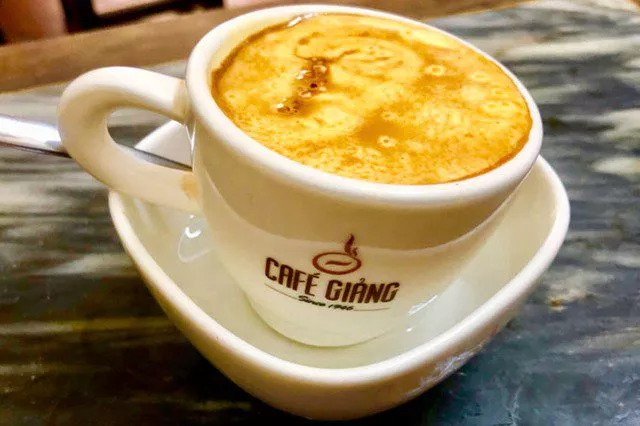
The famous egg coffee of Hanoi
Which region should you choose for a trip to Vietnam in August?
Each region of Vietnam offers a unique experience in August, depending on your travel profile and tolerance for rain.
Each region offers a unique experience depending on your travel profile.
The North appeals to history lovers with Hanoi and its rich cultural heritage, despite the rain showers t hat can appear unexpectedly.
The Central region attracts more flexible travelers who are ready to adjust their itinerary according to weather alerts.
The South is ideal for adventurers who don’t mind a few downpours in exchange for better prices and a more authentic, less touristy experience.
August weather certainly comes with challenges, but it also opens the door to unique opportunities to discover a quieter Vietnam, where locals welcome you with even greater warmth.
| Region | Climate | Recommended activities |
|---|---|---|
| North | Hot and humid, frequent rainfall | Hiking |
| Central Vietnam | Hot and humid | Beaches, cultural visits |
| South | Rainy season, tropical showers | Covered markets, boat excursions |